English
  |


I.C.T
| Quantity: | |
|---|---|
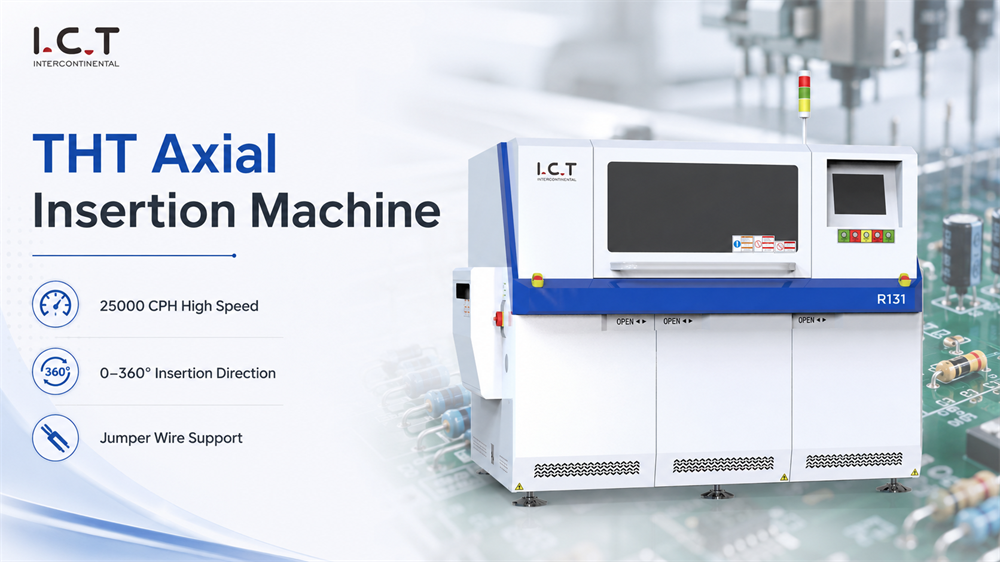
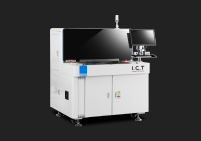
Many THT production lines still depend on operators to insert axial parts, radial parts, and special components by hand. This can slow down production, increase missed insertion risk, and make quality harder to control during long shifts. The In-Line Axial & Radial Insertion Machine solution is designed to help factories move from heavy manual work to a more organized automatic insertion process.
This system can be used in DIP and through-hole PCB assembly for power boards, control boards, LED boards, appliance electronics, and industrial PCBA products. Axial components such as resistors, diodes, inductors, fuses, and jumpers can be inserted automatically before soldering. When the production line also needs radial parts, a Radial Insertion Machine or radial component inserter can be matched into the same through-hole workflow. In this way, the line becomes easier to manage, easier to scale, and more suitable for stable batch manufacturing.
| Product Features
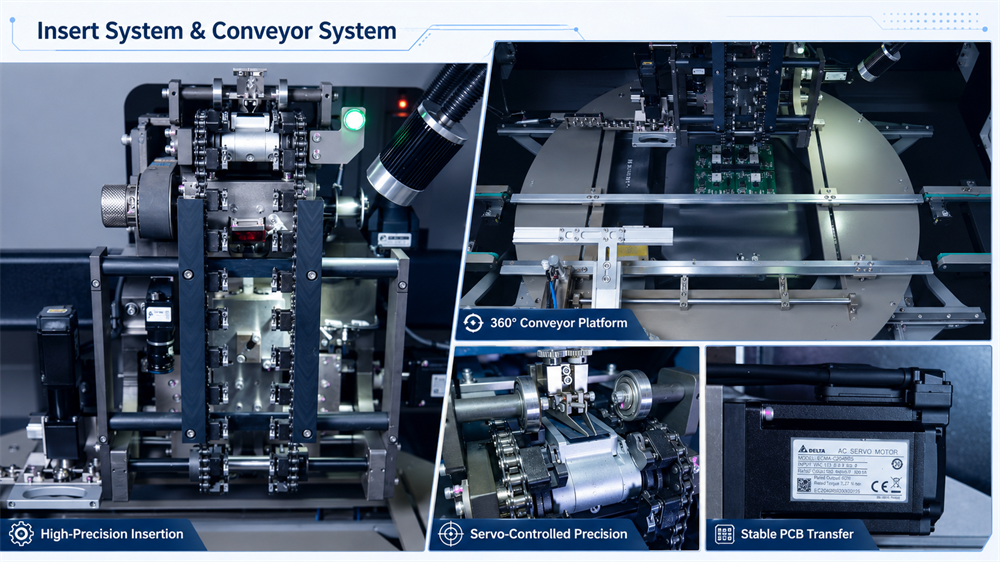
The insert system is built to make repeated component insertion more consistent. It uses a rigid mechanical structure, accurate coordinate movement, and stable insertion control to place axial lead components into PCB holes with less dependence on manual skill. For production teams that handle different PCB models, the system helps reduce variation between shifts and supports a cleaner insertion process before wave soldering or selective soldering.
The conveyor section is designed for steady PCB movement. A rotating platform supports flexible insertion direction, while servo control helps align the angle more accurately. The board is positioned by push plate and mechanical stop structure, then transferred by step belt with sensor detection. This helps the In-Line Axial & Radial Insertion Machine work smoothly inside a connected DIP line, where board transfer, insertion timing, and downstream soldering must stay coordinated.
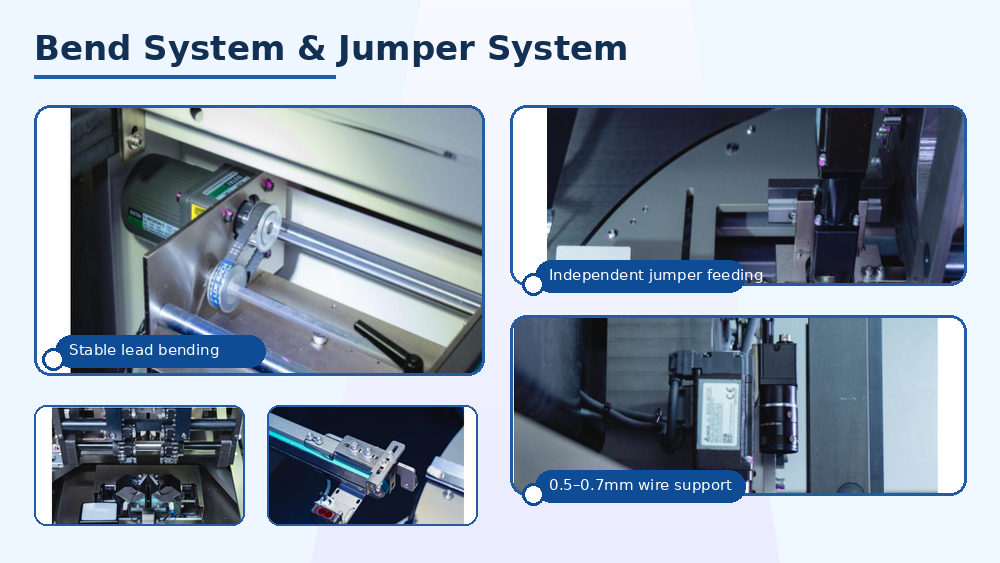
Lead bending is not just a small mechanical step. It directly affects whether the component stays stable before soldering. The bend system helps form the inserted leads after placement, so components can remain secure during board handling and soldering. The structure is designed to avoid unnecessary stress on the PCB and component body. This is useful for Customers who need stable insertion quality in long production runs.
The jumper system supports independent jumper wire feeding. With motor-based feeding control, the system can handle different jumper wire diameters and keep wire feeding more accurate. For PCBA designs that use jumpers together with axial components, this reduces the need for extra manual work. It also makes the automatic insertion Machine more practical for mixed through-hole PCB products.
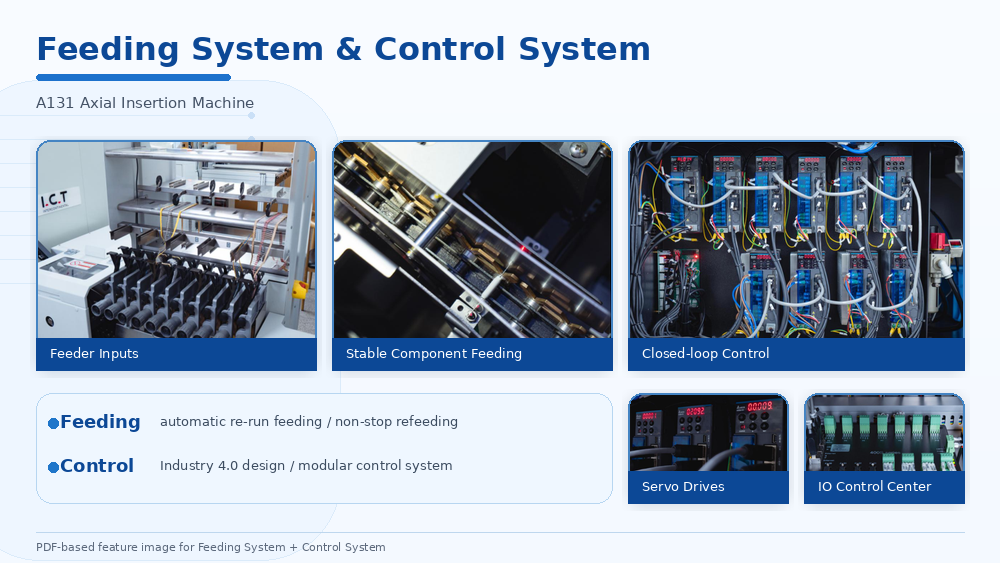
A good feeding system keeps the production rhythm steady. This system supports automatic re-run feeding and non-stop refeeding, helping reduce waiting time caused by material interruption. Different feeder input configurations can be selected according to the number of components and the product mix. For high-mix DIP production, flexible feeding is often more useful than simply chasing machine speed.
The control system is developed for automatic insertion management. It supports clear operation, program storage, and fast response through closed-loop control. Operators can manage production programs through a touch screen interface and change product settings more easily. For factories planning an Insertion mount Machine or a PCBA Auto Insertion Machine process, this control design helps keep insertion, transfer, and line operation easier to monitor.
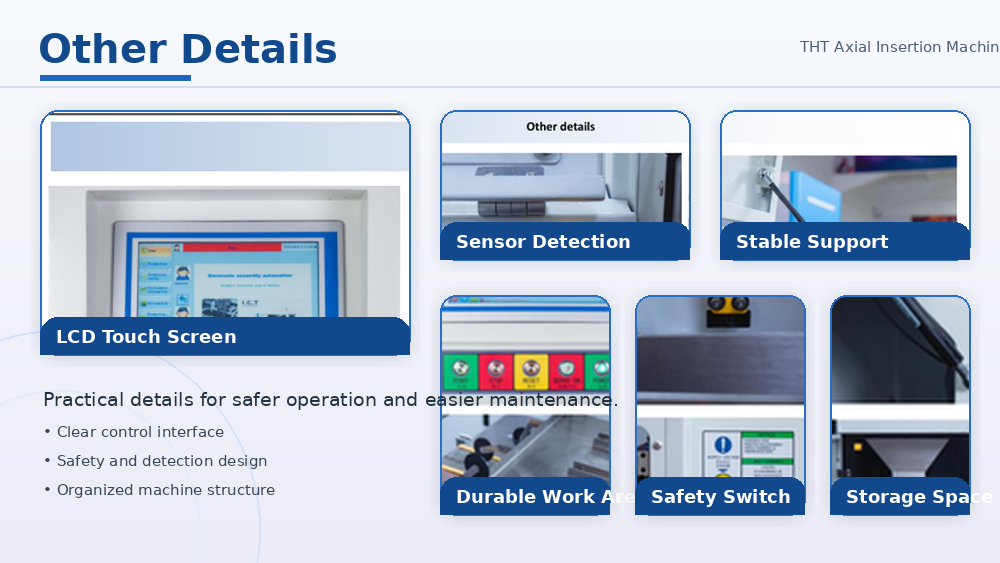
The system supports automatic recovery for certain production issues, helping reduce unnecessary stoppage. Insertion direction can be adjusted within a wide angle range, making it easier to handle different PCB layouts. Lead bend angle and bend length control help prepare components for later soldering. The machine also supports bilingual operation, large program storage, PCB fixing by pin and clamp, and stable air-pressure operation.
For a full THT line, these details matter because every small stop may affect the next process. When combined with an Auto Radial Insertion Machine, wave soldering machine, DIP AOI, and PCB handling equipment, the In-Line Axial & Radial Insertion Machine solution can help Customers build a smoother through-hole assembly process.
| Specification
| Specification | A131M | A131H |
|---|---|---|
| Component Feeder Input | 10pcs (Option: 30, 40, 50, 100pcs) | 20pcs (Option: 30, 40, 50, 100pcs) |
| Insertion Speed | 25000CPH, Max 0.12s/point (0.14s, 0.16s, 0.18s/point changeable) | 25000CPH, Max 0.12s/point (0.14s, 0.16s, 0.18s/point changeable) |
| Insertion Span | Component: 5~22mm, Jumper: 5~26mm | Component: 5~22mm, Jumper: 5~26mm |
| Jumper Feeder | 0.5~0.7mm, Independent Feeding | 0.5~0.7mm, Independent Feeding |
| Insertion Recovery | Auto recovery | Auto recovery |
| Insertion Direction | 0~360° direction by 1° increment | 0~360° direction by 1° increment |
| Component Lead bend Angle | 35°±15° | 35°±15° |
| Component Lead bend Length | 1.2~2.2mm | 1.2~2.2mm |
| Component Type | Jumper, Capacitor, Transistor, Diode, Inductor, Resistor, Fuse etc., 52-90mm Standard Package | Jumper, Capacitor, Transistor, Diode, Inductor, Resistor, Fuse etc., 52-90mm Standard Package |
| Insertion Precision | 0.05mm | 0.05mm |
| PCB Size | 50*50~380*380mm | 50*50~380*380mm |
| Insertion Area | 50*50~370*370mm | 50*50~370*370mm |
| PCB Weight | <1.0Kg | <1.0Kg |
| PCB Thickness | 1.0~2.0mm | 1.0~2.0mm |
| PCB Fixed | Pin + Clamp | Pin + Clamp |
| Transport Height | 900±20mm | 900±20mm |
| Transport Direction | R~L (Optional: L~R) | R~L (Optional: L~R) |
| Transport Time | 3-4s | 3-4s |
| Operate | Microcomputer, LCD Touch Screen | Microcomputer, LCD Touch Screen |
| Language | Chinese, English | Chinese, English |
| Program Quantity | 2000+ | 2000+ |
| Air Pressure | 0.45~0.6Mpa | 0.45~0.6Mpa |
| Air Source Flow | 110L/min | 110L/min |
| Power Supply | 1P, 220AC±10%, 50/60HZ | 1P, 220AC±10%, 50/60HZ |
| Power | 2.0KVA | 2.0KVA |
| Dimension | L2080*W1750* H1600mm | L2080*W1750* H1600mm |
| Feeder Station Size | 10Feeder: 1360*1000*1460mm, 20Feeder: 1860*1000*1460mm, 30Feeder: 2360*1000*1460mm | 10Feeder: 1360*1000*1460mm, 20Feeder: 1860*1000*1460mm, 30Feeder: 2360*1000*1460mm |
| Weight | 1300kg | 1300kg |
*I.C.Tkeepsworkingonqualityandperformance,specificationsandappearancemaybeupdatedwithoutparticularnotice.Ifdifferent,please followthenewlist
| DIP Line Equipment List

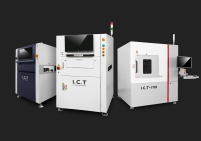
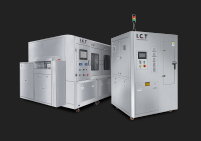
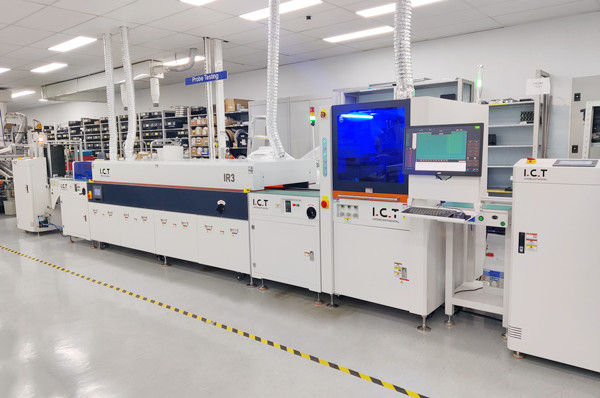
I.C.T can provide full DIP and THT production line equipment based on the Customer’s PCB design, component package, production capacity, and factory layout. Related equipment can include axial component insertion Machine, Radial Insertion Machine, in-line odd form component insertion equipment, manual insertion conveyors, wave soldering machines, selective soldering machines, DIP AOI, PCB loaders, unloaders, buffer conveyors, repair stations, and test equipment.
In a complete through-hole line, axial insertion, radial insertion, odd-form insertion, soldering, inspection, and repair should not be planned separately. They need to match in line direction, conveyor height, board size, production takt, operator position, and maintenance space. I.C.T helps Customers design this process as one connected manufacturing system.

| Product Name | Purpose in DIP Line |
|---|---|
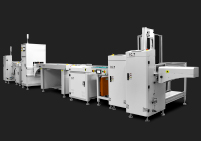
| PCB SMT line | Turnkey Ful-auto SMT assembly line |
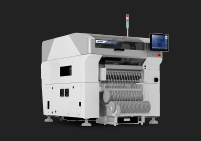
| Automatic Insert Machine | Automatically places components onto PCBs with precision for DIP production line. |
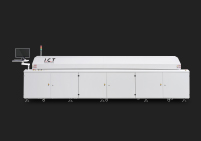
Melts solder to form solid joints on PCBs during THT plug-in process. | |
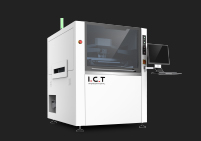
Applies solder selectively to specific areas for accurate THT assembly | |
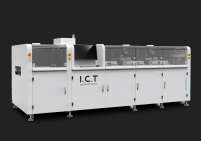
Inspects solder joints and placement defects on DIP assembled PCB. | |
Checks internal solder quality and hidden defects in THT components. | |
| Belt Assembly Line | Transports PCBs smoothly through the DIP line for efficient assembly and inspection. |
| Customer Success Video
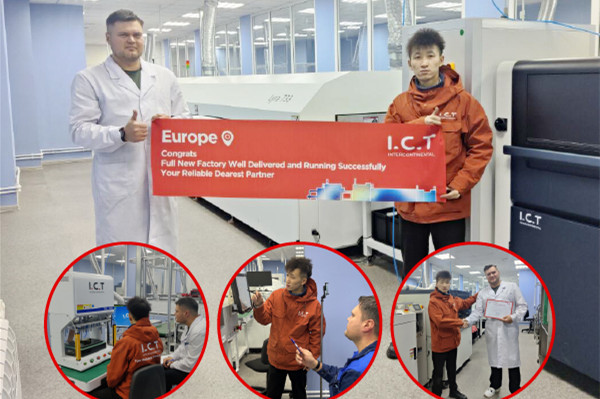
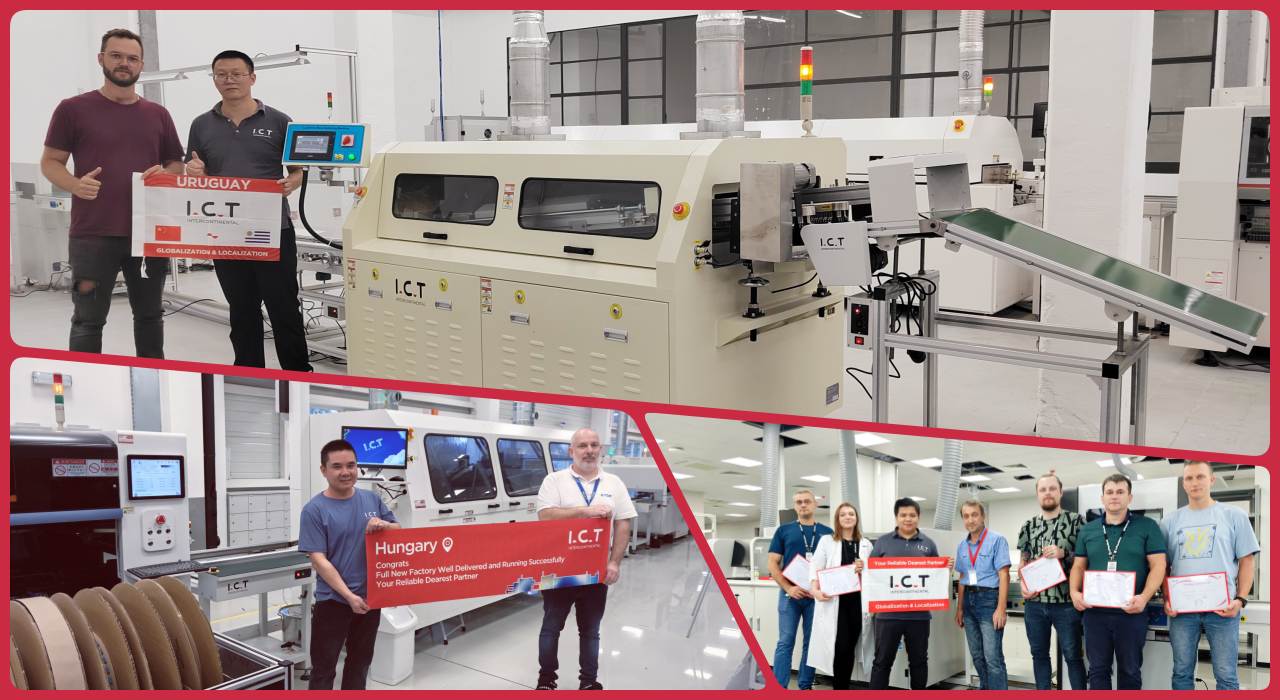
An I.C.T Customer from Hungary visited our factory in early December to check their customized fully automatic THT insertion line. The project was designed for through-hole PCB assembly and included an odd-form insertion system, wave soldering equipment, and DIP AOI inspection. During the project process, I.C.T engineers reviewed machine connection, insertion performance, soldering process, inspection function, and line operation with the Customer.
The Customer also discussed factory production details with our engineering team, including component handling, board flow, process connection, and later production use. This project shows how I.C.T supports Customers who want to reduce manual through-hole work and build a more stable DIP automation line from equipment selection to production preparation.
| Comprehensive Service Support
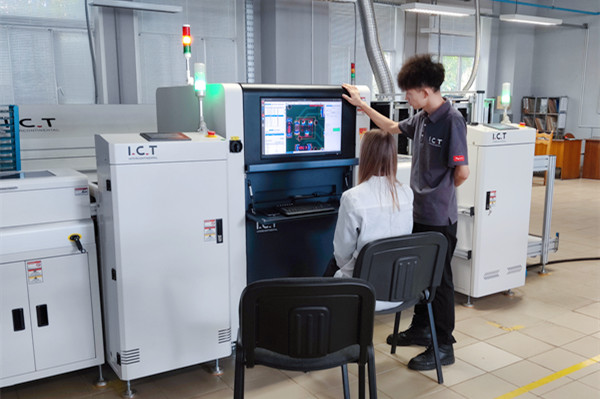
I.C.T supports complete SMT, DIP, and THT line projects from the early planning stage. Before machines are used in production, our team helps check factory layout, board transfer direction, air and power preparation, soldering process, inspection position, operator movement, and maintenance access. During installation and training, engineers guide the Customer’s team step by step, including line start-up, program use, material preparation, safety points, basic troubleshooting, and daily maintenance. For Customers building an automatic insertion line for the first time, this support helps reduce trial-and-error and makes the full production process easier to understand, control, and improve.
| What Clients Say
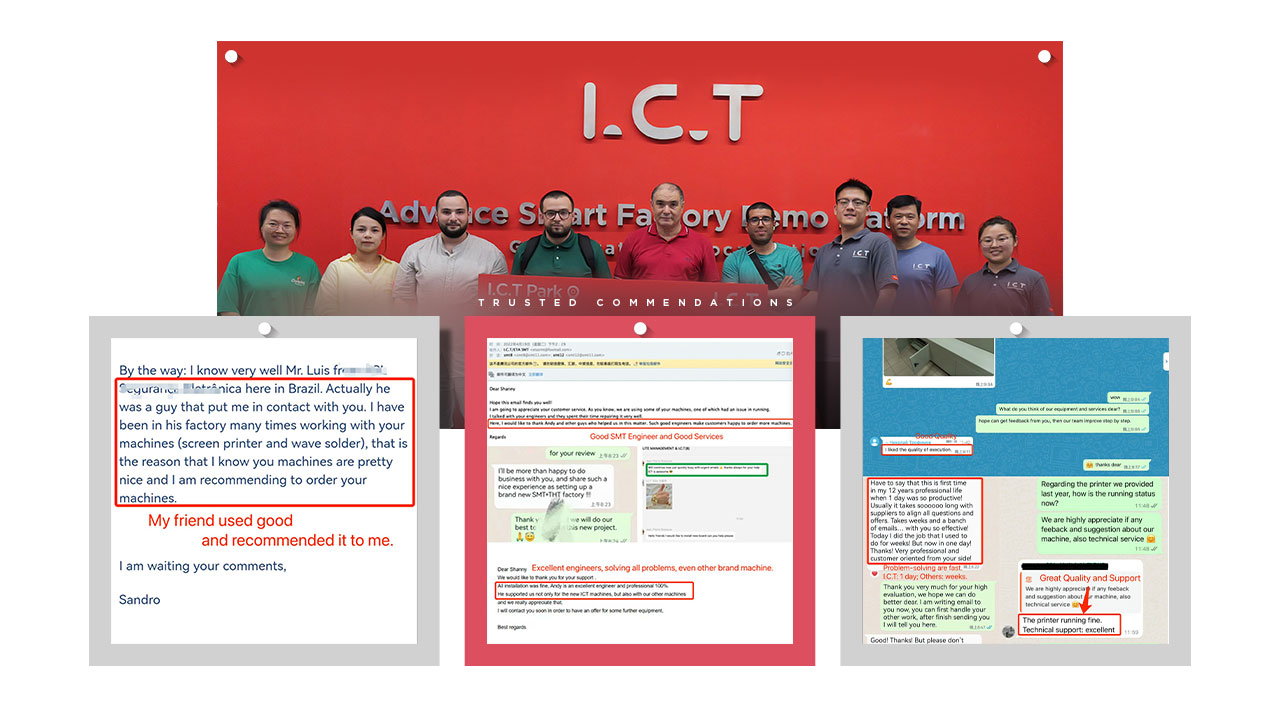
Customers usually care about the final production result more than a single machine parameter. In THT line projects, they often mention that I.C.T gives clear communication, practical layout advice, and patient training during equipment setup. They also value that our engineering team checks how insertion, soldering, inspection, and repair stations connect together. This is important because one unsuitable machine height, board direction, or operator position can affect the whole line. By focusing on these details, I.C.T helps Customers move from scattered equipment purchasing to a more complete electronics manufacturing plan.
| Certifications and Standards
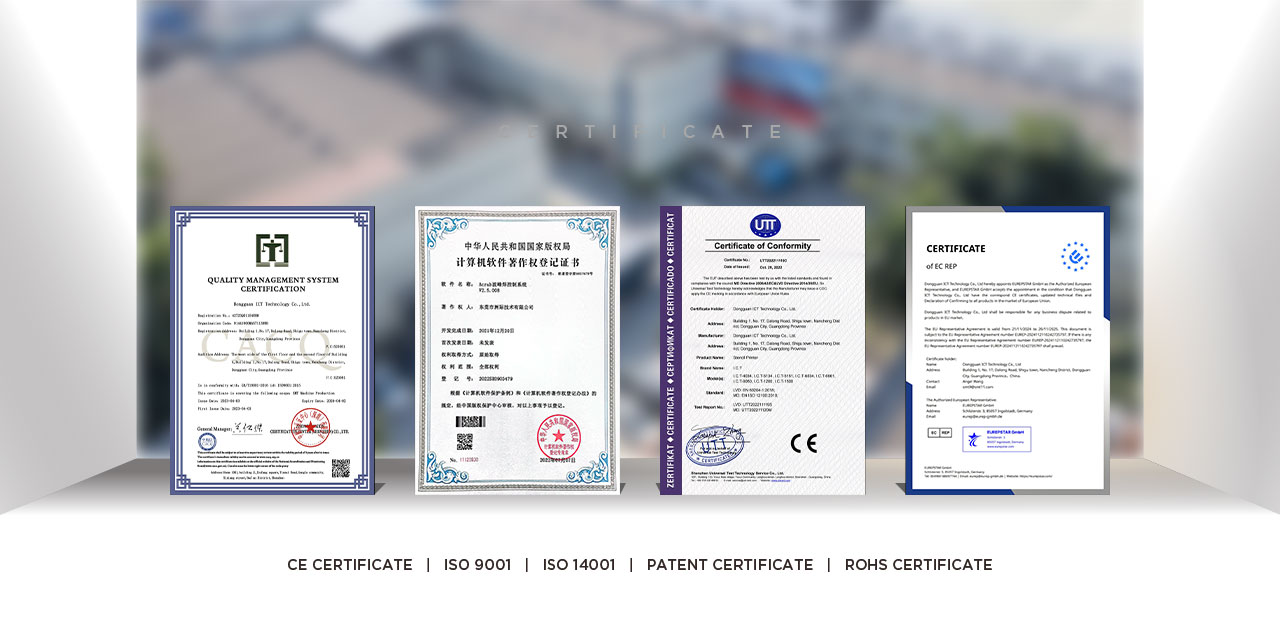
I.C.T follows quality control requirements for complete SMT, DIP, and THT production line equipment. Our equipment and systems can be supported by CE, RoHS, ISO9001, patents, and related quality documents according to the project. For a complete through-hole line, quality control includes more than machine accuracy. It also covers conveyor matching, electrical safety, air supply, mechanical stability, soldering connection, inspection flow, software checking, packing protection, and shipment preparation. Before delivery, equipment is checked through mechanical inspection, electrical testing, functional testing, and packaging review to help Customers receive a more reliable production solution.
| About I.C.T Company and Factory
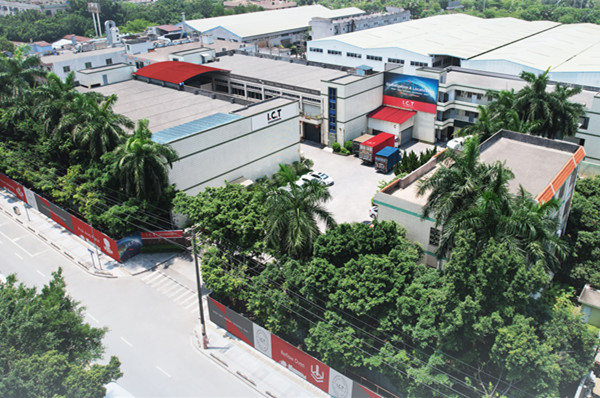
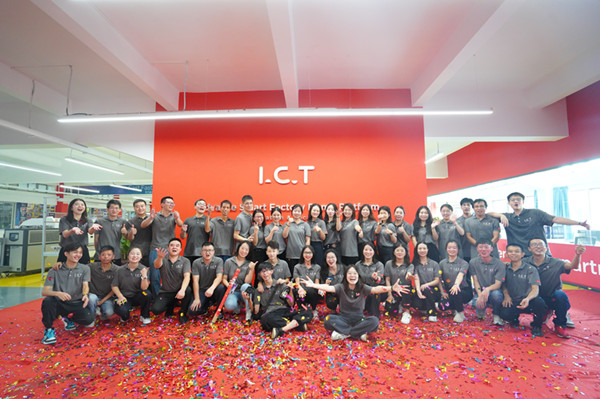
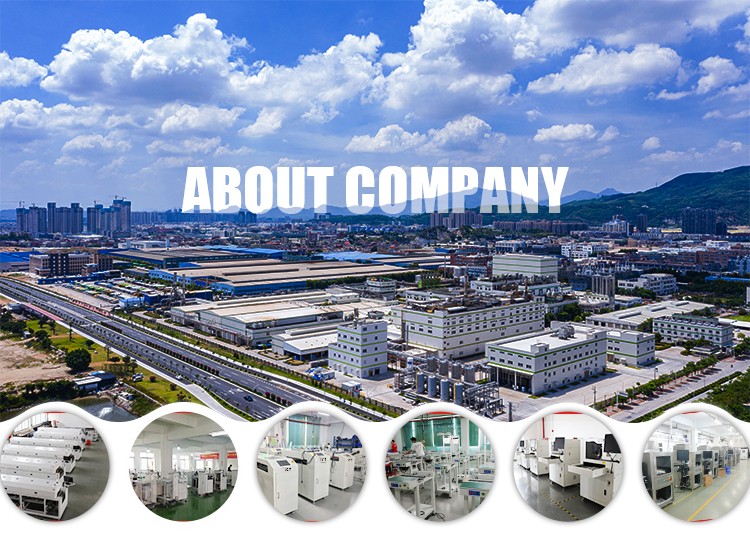
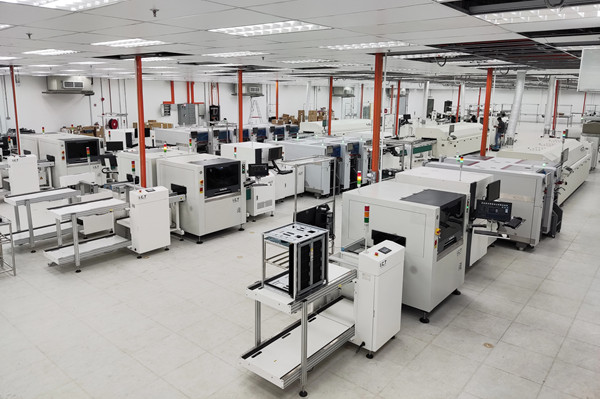
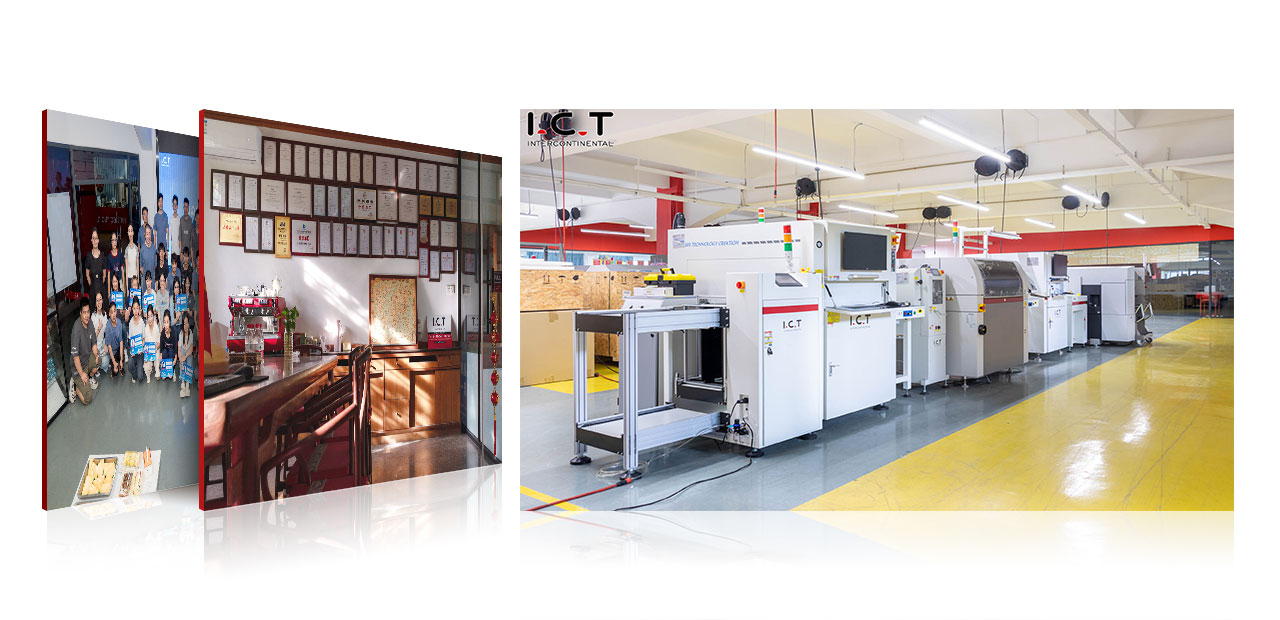
I.C.T is a professional SMT and DIP line solution provider with R&D, production, engineering, sales, and service teams. The company provides SMT lines, DIP lines, coating lines, automation equipment, inspection systems, and full factory planning support for Customers in different electronics industries. Instead of only supplying separate machines, I.C.T focuses on how each machine works inside the Customer’s real production flow. From line design and equipment selection to training and long-term technical support, I.C.T helps Customers build practical electronics manufacturing systems for stable production and future expansion.