English
Views: 0 Author: Vinci Zhang Publish Time: 2026-06-29 Origin: Site
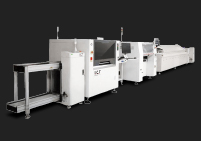
During the third week of June 2026, I.C.T completed the delivery, installation, and on-site training of a full automatic SMT & DIP production line for a power supply manufacturing project in Kazakhstan.
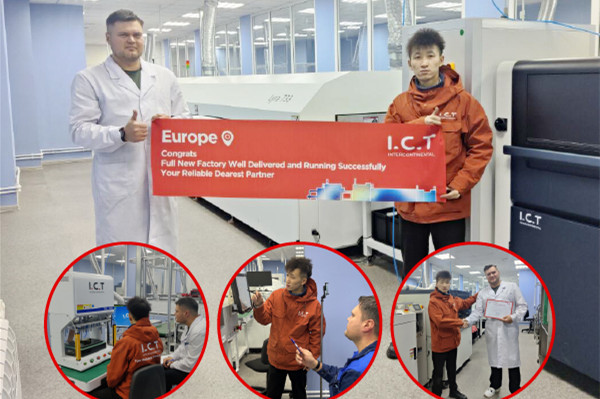
After the equipment arrived at the customer’s factory, I.C.T sent engineers Andy and Billy to provide full technical support. Their work covered machine unloading guidance, line positioning, hardware installation, software setup, process adjustment, trial production, and hands-on training for the customer’s engineering team.
For this project, the goal was not only to make the machines run. The more important goal was to help the customer build a stable production process for power supply PCB assembly and train their team to operate the line independently.
The Customer is a power supply manufacturer in Kazakhstan. Power supply products usually require stable solder paste printing, accurate component placement, reliable reflow soldering, controlled DIP insertion, and strong wave soldering quality.
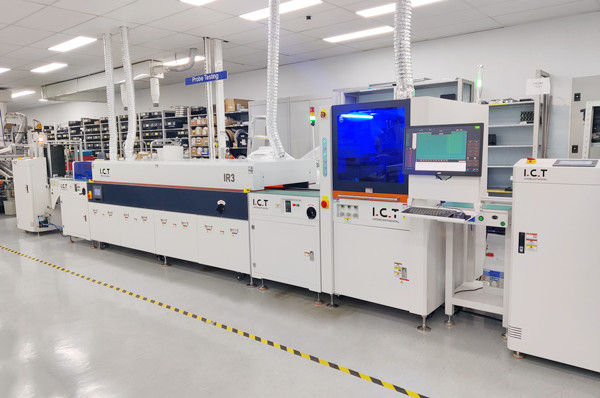
Because power supply boards often include both SMD components and through-hole components, a single SMT line is not enough for the full production process. Based on the Customer’s product structure and factory plan, I.C.T provided one full automatic SMT production line and one DIP production line.
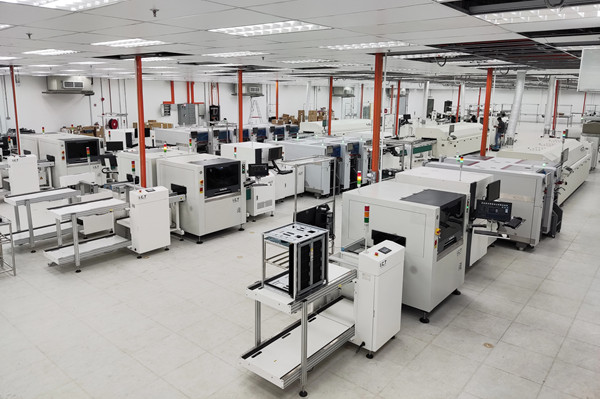
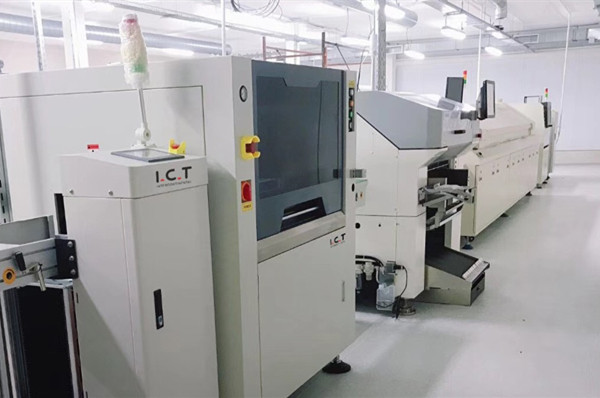
This complete solution helps the Customer finish the main PCBA process from PCB loading, solder paste printing, SMD placement, reflow soldering, AOI inspection, manual insertion, wave soldering, final unloading, and assembly transfer.
To match the Customer’s production needs, I.C.T supplied a complete SMT & DIP line solution instead of only offering single machines. The line was designed for practical factory use, stable daily operation, and future production growth.
Production Section | Main Equipment | Function |
|---|---|---|
SMT Line | Automatically loads PCBs into the SMT line | |
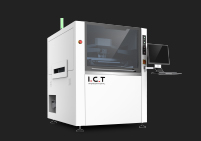
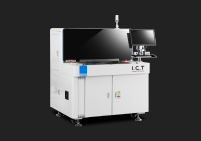
SMT Line | Prints solder paste onto PCB pads | |
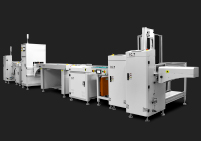
SMT Line | Transfers boards between SMT machines | |
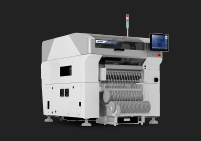
SMT Line | Places SMD components onto PCBs | |
SMT Line | PCB Conveyor | Connects placement and reflow process |
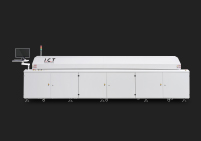
SMT Line | Completes soldering of SMD components | |
SMT Line | PCB Conveyor | Transfers boards after reflow soldering |
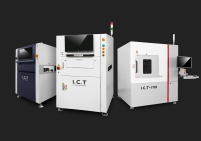
Inspection | Checks soldering and component defects | |
DIP Line | Insertion Line | Supports manual through-hole component insertion |
DIP Line | Sends inserted boards into wave soldering | |
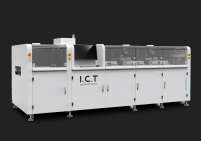
DIP Line | Solders through-hole components | |
DIP Line | Collects boards after wave soldering | |
Assembly | Belt Assembly Line | Supports final assembly and transfer |
Utility System | SA30(HP) Air Compressor Set | Provides compressed air for production equipment |
After arriving at the Customer’s factory, I.C.T engineers first checked the workshop condition, including machine location, power supply, compressed air, exhaust position, and production flow. This step helped make sure the full line could be installed safely and smoothly.
The engineers guided the Customer’s team to place each machine according to the line layout. They adjusted the position of the loader, printer, conveyors, pick and place machine, reflow oven, AOI area, insertion line, wave soldering equipment, unloader, and assembly belt.
After the machines were positioned, the engineers connected the mechanical sections, checked conveyor height, adjusted board transfer direction, and confirmed that PCBs could move smoothly from one process to the next.
The engineers then supported hardware installation and machine connection work. This included checking machine leveling, fixing key parts, connecting air lines, confirming electrical wiring, and testing basic machine movement.
For the SMT line, the team focused on printer setup, placement machine installation, conveyor communication, and reflow oven preparation. For the DIP line, they checked the insertion line, wave soldering loader, wave soldering machine, wave soldering unloader, and belt assembly line.
After the hardware work was completed, the engineers installed and checked the required software settings. They confirmed machine parameters, tested transfer signals, checked alarms, and made sure each machine could run normally before trial production.
This step is important because a full production line is not just several machines standing together. Each machine must work with the next one. The board transfer, process timing, and operator actions all need to match the real production rhythm.
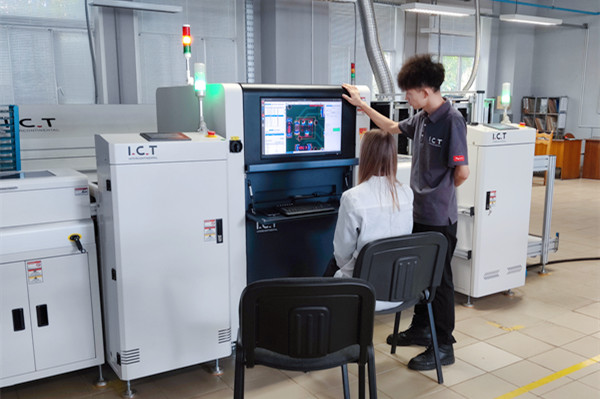
I.C.T engineers provided training directly on the production floor. The Customer’s engineers did not only watch the operation. They practiced machine setup, program creation, adjustment, inspection, and troubleshooting together with Andy and Billy.
For the SMT process, the training covered solder paste printing, PCB positioning, basic printing parameters, pick and place operation, feeder setup, component teaching, placement checking, reflow oven operation, and daily maintenance.
The engineers also explained common SMT quality issues, such as poor solder paste printing, component offset, missing components, wrong polarity, tombstoning, and solder bridging. Instead of giving only theory, they used real boards and real production actions to make the training easier to understand.
For inspection, I.C.T engineers trained the Customer’s team on AOI operation and basic program setup. The training included coordinate import, inspection window creation, component body checking, solder joint checking, false call adjustment, and result review.
This helped the Customer understand how AOI supports process control. The purpose of AOI is not only to find defects after production. It also helps the engineering team improve the upstream process, especially printing, placement, and soldering stability.
For the DIP production line, the training focused on insertion workflow, board handling, wave soldering preparation, soldering process control, and safe operation.
The engineers explained how to place through-hole components correctly, how to keep the board moving smoothly, and how to check soldering quality after wave soldering. They also guided the Customer’s team on daily inspection and basic maintenance of the wave soldering equipment.
During the training, I.C.T engineers also taught the Customer’s team how to handle common production problems. This included alarm checking, simple mechanical adjustment, conveyor transfer issues, basic cleaning work, and regular maintenance points.
For a new production line, this part is very valuable. Operators need to know what to do when a small issue appears. Fast and correct troubleshooting can reduce downtime and keep production stable.
With the support of I.C.T engineers, the full automatic SMT & DIP production line was successfully installed and tested in the Customer’s factory in Kazakhstan.
The Customer’s engineering team gradually became familiar with the complete process flow, from SMT production to DIP soldering and final assembly transfer. After hands-on training, they were able to operate the machines, understand basic process settings, and solve common production issues with more confidence.
This project shows how I.C.T supports customers beyond equipment delivery. For new or expanding electronics manufacturers, overseas installation and training can shorten the learning curve and reduce the risk of unstable production after machine arrival.
After the installation and training were completed, the Customer shared positive feedback about the machines and the support from I.C.T engineers:
“All machines are from China I.C.T. Thank you. Good quality and price. Thank you Andy and Billy for building this line. And training us to use these machines. Thank you very much.”
This feedback reflects the Customer’s satisfaction with the equipment quality, line setup, and practical training. It also shows the value of sending experienced engineers to the customer’s factory, especially for complete SMT & DIP production line projects.
I.C.T continues to support global electronics manufacturers with complete SMT, DIP, coating, dispensing, soldering, inspection, and factory automation solutions. For customers who plan to build a new production line or upgrade an existing factory, I.C.T can provide equipment selection, line layout, process planning, delivery, installation, training, and long-term technical support.
The Kazakhstan power supply manufacturing project is another example of I.C.T’s overseas engineering service. From machine delivery to on-site training, I.C.T helped the Customer move from equipment arrival to production readiness step by step.
For power supply, smart meter, LED, automotive electronics, consumer electronics, industrial control, and other PCBA manufacturing projects, I.C.T can provide customized SMT & DIP production line solutions based on real product needs and factory conditions.