-
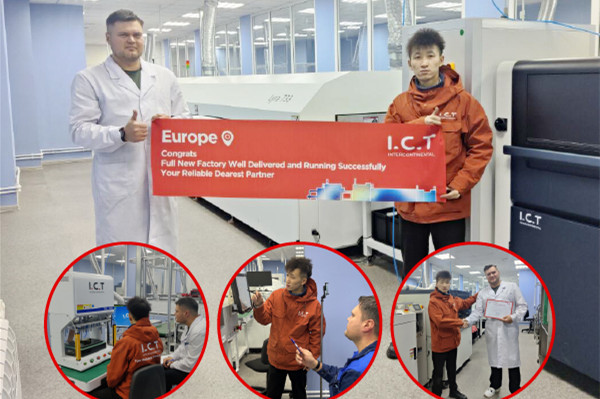
This company news reports on I.C.T engineer Peter’s recent return from Uzbekistan after completing an overseas technical support project. The assignment included installation, commissioning, and training for SMT and DIP production lines used in computer motherboard manufacturing. Through close cooperation with the customer’s team, the project was completed smoothly, ensuring stable production start-up and reinforcing I.C.T’s commitment to global technical support services.
-
This guide provides a complete overview of how to configure SMT production lines based on factory size. It details the key considerations for small, medium, and large-scale factories, including layout planning, automation levels, and workflow efficiency. The article highlights common mistakes to avoid and offers best practices to ensure scalable, flexible, and high-performing SMT operations. Readers will gain actionable insights to optimize production lines for both current needs and future growth, making informed decisions for factory expansion and efficient manufacturing management.
-
For many customers, buying an SMT production line is not the real concern.The real question usually comes later — often quietly, sometimes with hesitation:Will I have to manage everything myself after the equipment arrives?Shipping, installation, factory layout, process setup, operator training, and
-
This article explains how to choose the right SMT production line for LED lighting manufacturing from a practical engineering perspective. It analyzes the unique challenges of LED PCB assembly, including long boards, thermal sensitivity, and long-term reliability requirements. The guide covers key equipment selection factors, inspection strategies, and scalability planning to help manufacturers build stable and sustainable LED SMT production lines.
-
Selecting an SMT line for power electronics PCBA requires a fundamentally different approach from consumer electronics manufacturing. Thick PCBs, high thermal mass components, and long product lifecycles demand greater focus on process stability, thermal consistency, and long-term reliability. This article provides a practical framework for evaluating SMT line capacity, equipment selection, inspection strategy, layout planning, and supplier capability—helping manufacturers reduce operational risk and build scalable, reliable production systems for power electronics applications.
-
Many SMT lines begin to struggle not because of poor equipment quality, but because the layout decision was fundamentally wrong from day one. Problems often appear gradually: adding a single AOI or X-ray forces days of downtime, buffers end up undersized or poorly positioned, and overall throughput
-
This article guides EMS factories in selecting the ideal SMT production line for high-mix, low-volume manufacturing. It emphasizes the importance of flexibility, changeover capability, and stability over speed. The key factors to consider include feeder replacement, program switching, solder paste printing consistency, and inspection systems for quality control. The article also highlights the importance of scalable and engineer-friendly designs, which allow for future growth without compromising operational efficiency.
-
In mid-December 2025, I.C.T sent a team of experienced engineers to India to provide on-site technical support for several local electronics manufacturers. This overseas support trip covered a total of nine factories and focused on helping customers improve their production lines, start new equipmen
-
This article explains how to choose an SMT line for consumer electronics manufacturing by focusing on product characteristics, production stages, and real factory conditions. Instead of comparing machine specifications alone, it examines flexibility, changeover efficiency, inspection strategy, layout planning, and long-term scalability to help manufacturers build stable and adaptable SMT production lines.
-
Selecting an SMT production line for automotive electronics manufacturing is not about building the fastest line on the shop floor. It is about reducing long-term manufacturing risk and ensuring stable, repeatable performance over years of production. Automotive electronics must operate reliably und