English
Views: 0 Author: Site Editor Publish Time: 2026-03-05 Origin: Site

In the world of high-performance electronics, manufacturers face the pressing challenge of ensuring thermal management while maintaining solder joint integrity in heavy and complex components like heat sinks and AI hardware. The wrong reflow soldering solution can result in unreliable products, costly repairs, and unhappy customers.
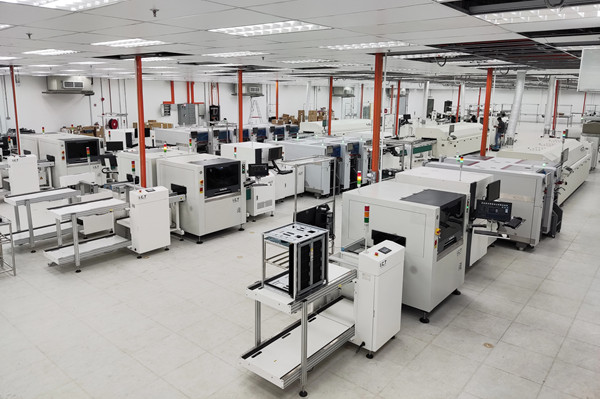
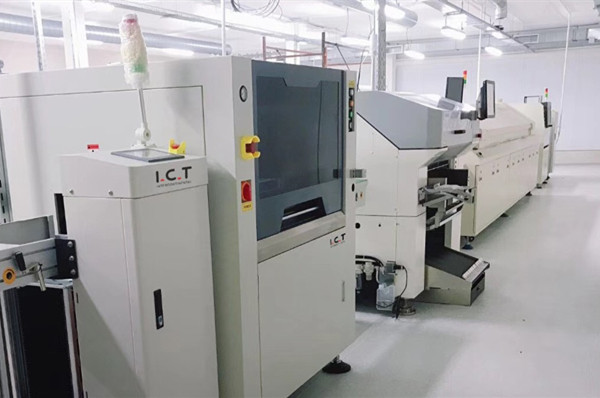
That’s where I.C.T comes in. We specialize in custom reflow soldering solutions that cater to industries with rigorous performance standards, from 5G infrastructure to AI processors, aerospace, and medical devices. Our state-of-the-art systems not only optimize soldering precision but also ensure that your products are built to last under the toughest conditions.

Heat sinks, especially those used in 5G base stations, are heavy, massive components often weighing up to 10kg. These structures, designed to dissipate immense heat, pose a significant challenge during the reflow soldering process due to their high thermal mass. Traditional reflow ovens struggle to provide uniform heating for such large components, leading to:
Uneven temperature rise: Some areas may not heat up enough for proper reflow, while others may overheat.
Cold joints and excessive heat: This imbalance weakens solder joints and compromises the overall mechanical and thermal performance of the heat sink.
Standard conveyor systems used in reflow ovens typically offer minimal support, gripping only the edges of components. The massive weight of a 10kg heat sink leads to:
Misalignment: Over time, the thermal expansion and weight stress can warp the conveyor rails, resulting in product misalignment.
Sagging: Edge-only support causes sagging in the center of heavy components during high-temperature phases, further increasing the risk of inconsistent heating and soldering defects.
The miniaturization of 5G components, such as RF modules, demands precise temperature control. However, many standard reflow ovens struggle to maintain uniform temperature, which leads to:
Temperature fluctuations: Variations of more than ±2°C can cause issues like component warpage, solder voids, or incomplete reflow.
Component failure: These fluctuations can affect the reliability and performance of 5G components, leading to costly repairs and downtime.
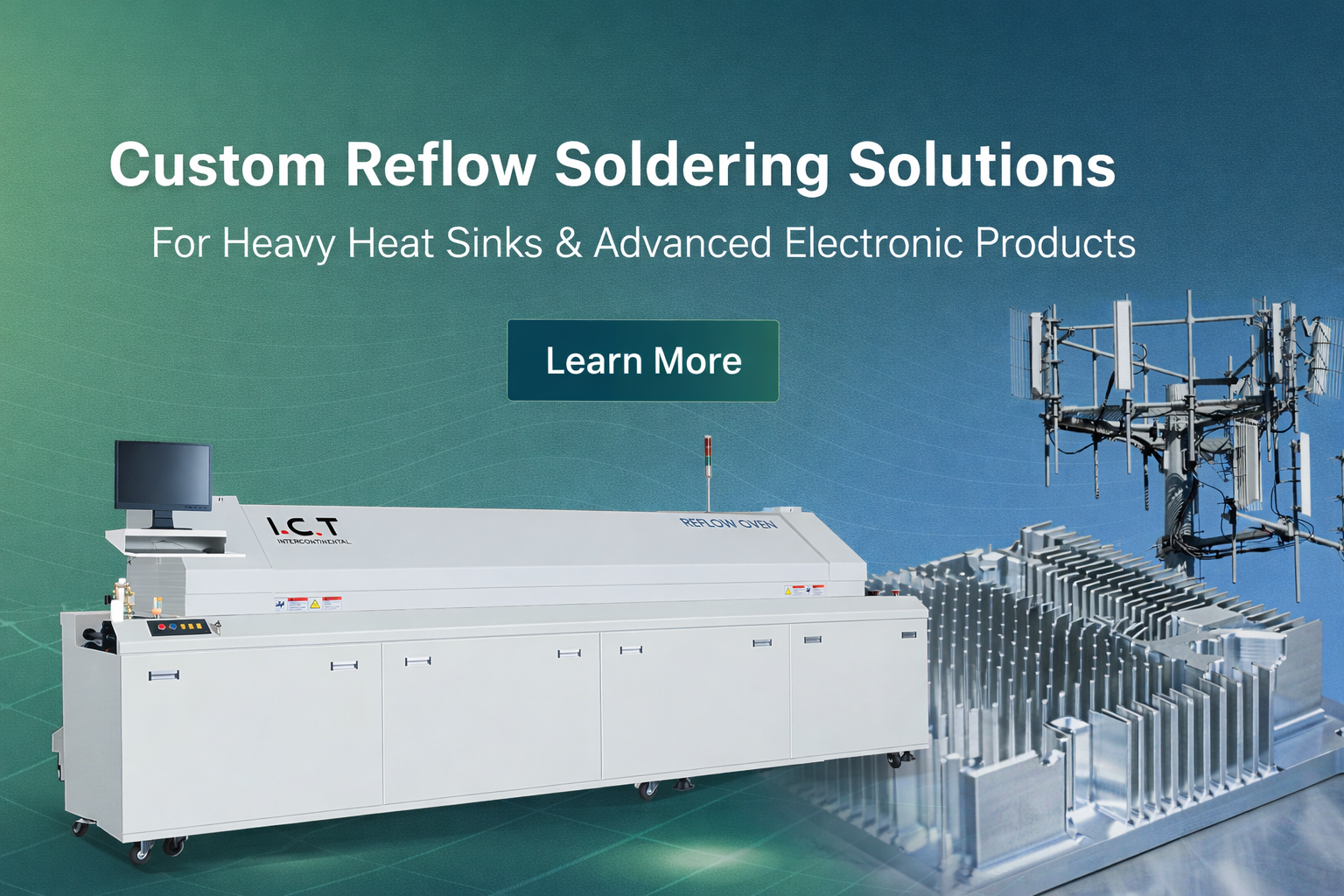
Large heat sinks require a gradual and controlled heating process to ensure uniform temperature distribution. Traditional ovens often fail to manage the massive thermal loads. Key features of custom reflow ovens include:
Multi-zone heating: At least 10 heating zones are necessary for uniform temperature distribution, with 12-24 zones recommended for larger components.
Gradual temperature ramp: This ensures a consistent temperature across the heat sink, minimizing thermal stress and optimizing solder joint performance.
5G components are highly sensitive to temperature fluctuations. To meet the precise needs of these miniature, high-frequency elements, our reflow systems offer:
Zone-by-zone PID control: Allows precise temperature adjustments for each section of the assembly.
Real-time thermocouple feedback: Ensures consistent soldering while protecting sensitive components from overheating.
This level of precision ensures that delicate 5G RF modules maintain their integrity and performance under high-power conditions.
To prevent oxidation during the reflow process, custom ovens integrate:
Nitrogen atmosphere: A controlled, low-oxygen environment minimizes oxidation without excessive nitrogen consumption.
Sealed chambers with oxygen analyzers: These maintain low parts-per-million (PPM) levels of oxygen, improving solder joint quality and corrosion resistance.
This controlled environment enhances the durability and reliability of both heat sinks and 5G modules.
Traditional rail conveyor systems struggle with the demands of heavy heat sink soldering, offering minimal support and being prone to deformation under the weight of large components, like those found in 5G base stations. To address this, I.C.T has developed a reinforced stainless-steel pure mesh belt conveyor, designed to support heavy components efficiently throughout the reflow process.
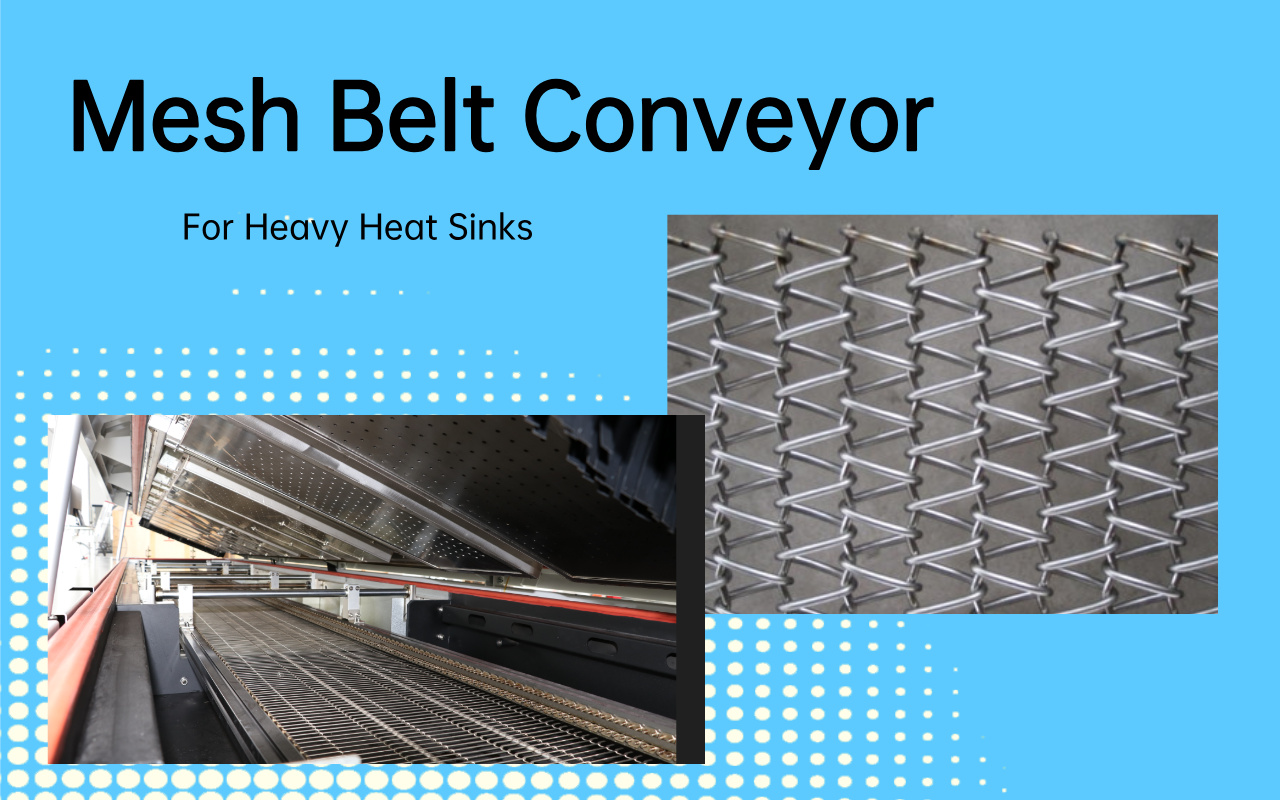
This custom mesh belt:
Evenly distributes load: Supports heat sinks exceeding 10kg, ensuring stability and preventing misalignment.
Prevents sagging and deformation: Even when multiple heavy assemblies are processed at once.
Ensures reliable transit: Guarantees smooth and precise alignment through each temperature zone, optimizing soldering performance.
By replacing traditional conveyor systems, we eliminate the risk of misalignment, ensuring optimal solder joint quality.
Standard conveyor motors can stall or wear out under continuous heavy loads, causing production delays. Our custom systems use high-torque motors and upgraded gearboxes, engineered specifically to handle the weight of large heat sinks while maintaining consistent speed and torque.
Key features of this custom setup include:
Oversized motors: Designed to ensure reliable, continuous transport of heavy heat sinks without stalling.
Adjustable speeds: Ranging from 300–2000 mm/min, allowing for precise, smooth transport.
Minimized vibration: Reduces the risk of misalignment or solder paste disruption during the soldering process.
This setup ensures a stable, undisturbed process, delivering high-quality solder joints every time.
Achieving uniform heating across large, thermally demanding components like heat sinks requires advanced reflow oven configurations. Our systems incorporate 10 or more independently controlled heating zones (top and bottom), creating a stepped thermal profile that allows for gradual, even heating.
Benefits of this multi-zone configuration:
Extended soak phase: Facilitates better heat equalization across the entire mass of the heat sink.
Consistent temperature: Ensures that the heat sink reaches the ideal reflow temperature at the same time, preventing issues like voids or incomplete wetting.
Precise control: Reduces defects, ensuring high-quality solder joints even for large components.
By optimizing the reflow process with multi-zone control, we guarantee optimal soldering quality for large heat sinks in demanding applications.
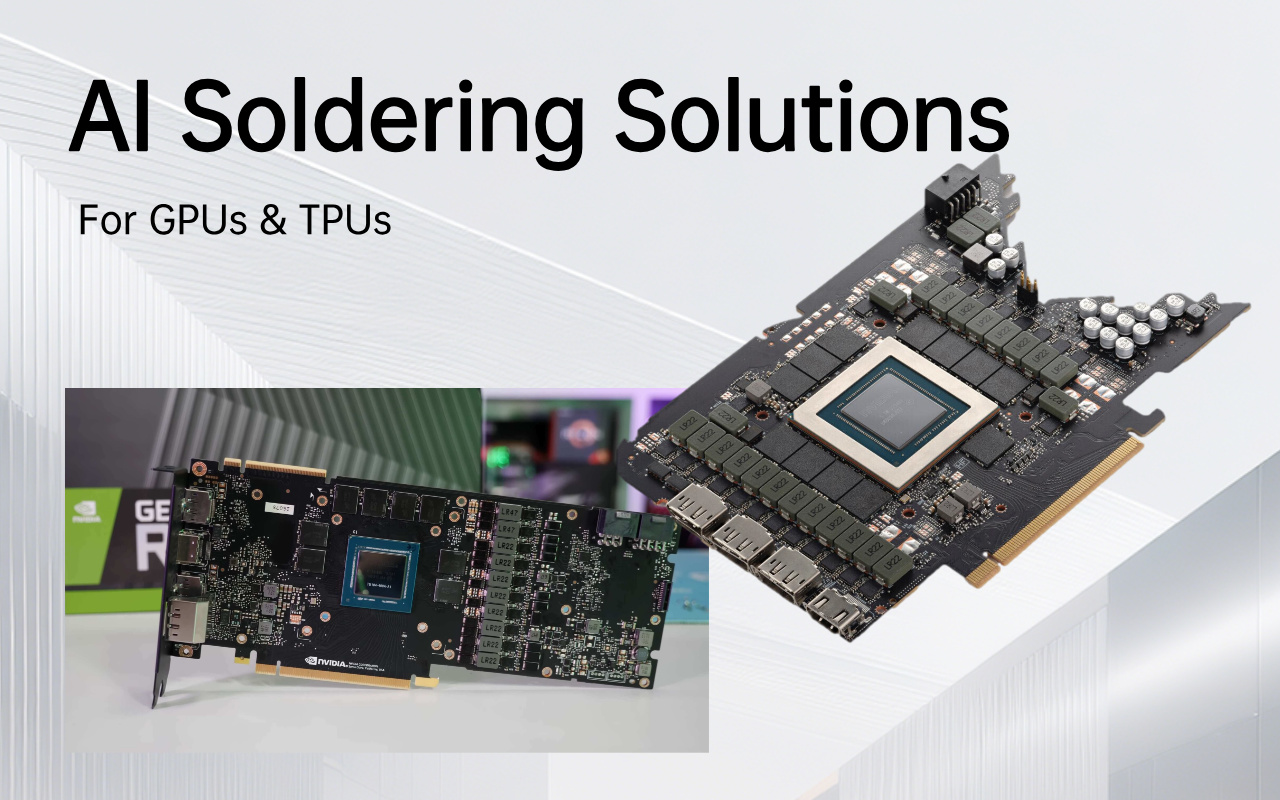
With the rapid growth of AI technology, components like Graphics Processing Units (GPUs) and AI processors have become essential for driving innovation across industries such as automotive, robotics, and deep learning. These high-performance components generate significant heat, making precise thermal management crucial during the soldering process.
Graphics Processing Units (GPUs): GPUs, integral to AI processing, require exact temperature control during soldering to prevent overheating. Our custom reflow soldering solutions ensure that both the GPU and its cooling components are soldered reliably without compromising heat dissipation.
AI Processors (e.g., TPUs): Tensor Processing Units (TPUs) and other AI processors demand specialized temperature profiles to avoid thermal stress and solder joint failures. Our systems provide high-precision temperature control, ensuring optimal soldering without damaging sensitive components.
These custom solutions guarantee the performance and reliability of GPUs and AI processors under demanding conditions.

Beyond traditional applications, several niche products also rely on custom reflow soldering for optimal performance and longevity:
Aerospace Electronics: In aerospace, components such as power management systems and flight control electronics must withstand extreme conditions. Reflow soldering ensures precision solder joints that can endure the stress of high altitudes and temperature fluctuations.
Smart Medical Devices: Portable medical devices like ECG machines and glucose monitors require highly precise soldering to ensure they function accurately and reliably in medical environments. Custom reflow solutions prevent defects, ensuring that these devices remain safe and effective.
Advanced Automotive Electronics: In the automotive industry, components used in electric vehicles (EVs) and autonomous driving systems require robust soldering solutions that handle both lightweight and heavy components. Our systems ensure long-term reliability even in the challenging conditions of vehicle operation.
Wearable Devices: Reflow soldering plays a critical role in wearable technology, where high-density components must be precisely soldered to ensure the durability and performance of devices like smartwatches and fitness trackers. Our solutions meet the stringent requirements for miniaturized and densely packed PCBs.

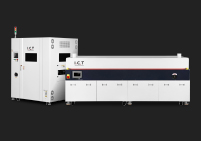
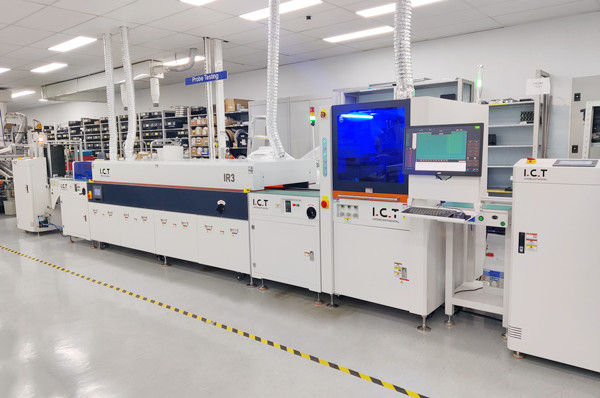
The I.C.T Lyra reflow oven starts with 8–12 zones and can be expanded to 24+ zones as needed. This flexibility, combined with advanced software, allows engineers to store and optimize profiles for different product variants, ensuring precise thermal control for various applications, from large heat sinks to delicate 5G components.
Every L Series reflow oven comes with a reinforced mesh belt and high-power drive system, designed to handle continuous 10kg+ loads. This durable setup ensures reliable operation, preventing sagging and maintaining stable transport, even with heavy components.
We provide end-to-end service, including thermal simulation, profile development, on-site installation, and operator training. Our support ensures quick ramp-up and sustained performance, making the L Series an efficient, long-term solution for your production needs.

In collaboration with Huawei, we developed a 24-zone custom reflow oven specifically designed for their 5G base station heat sink production. The primary challenge was achieving consistent temperature distribution across large, heavy heat sinks, each weighing up to 10kg.
By integrating more heating zones, we created an ultra-gradual thermal profile that ensured precise and uniform temperature across the entire reflow process. This allowed for the elimination of cold spots and maintained a high level of temperature consistency throughout both the soak and reflow phases. The result was improved solder joint quality and stability, meeting the stringent thermal requirements of Huawei's 5G applications.

For another 5G base station project, we worked with a client specializing in metal cavity filters used to filter out unwanted signals and select specific frequency bands. These metal filters, weighing over 13kg, presented unique challenges due to their size and weight.
To meet these challenges, we designed a custom reflow oven with a multi-zone system capable of handling the large metal components while ensuring precise temperature control. This solution prevented warping and ensured proper reflow soldering for all components, preserving the integrity of the metal filter.
The results of this collaboration were evident in the enhanced solder joint reliability and overall performance of the metal cavity filters. The gradual and controlled heating ensured optimal conditions for both the heavy metal structure and the delicate components, contributing to improved product quality and reliability for 5G infrastructure.
At I.C.T, we understand the complexities and challenges of reflow soldering for high-performance products. From heavy heat sinks to advanced AI processors and 5G components, our custom reflow soldering solutions provide the precision and reliability needed to meet the most demanding industry standards.
Contact us today to discuss how our tailored reflow soldering solutions can enhance your SMT production line and ensure the long-term success of your products. Reach out to our team for expert consultation and find the perfect solution to your soldering needs.
Standard ovens usually have 6–8 zones and rail conveyors optimized for lightweight PCBs. A 10kg heat sink has enormous thermal inertia, so insufficient zones cause large temperature gradients—some areas never reach reflow while others overheat. Rails also deform under weight, misaligning the product and risking damage. Custom ovens solve this with 10+ zones for gradual, uniform heating and full-support mesh belts that carry heavy loads without bending.
For 5–10kg class 5G base station heat sinks we recommend a minimum of 10–12 zones, with 24 zones ideal for the most demanding uniformity requirements. Extra zones allow extended soak time to equalize temperature across thick bases and dense fins, preventing voids and ensuring every solder interface fully wets. Fewer zones force aggressive ramps that create hot/cold spots and increase defect risk.
Pure mesh belts provide 100% underside support, distributing weight evenly and preventing sagging or warping of heavy assemblies during heating. Rails grip only edges, so heavy loads bend the rail or cause center droop, leading to misalignment and potential board/oven damage. Mesh belts also simplify cleaning and allow processing of warped or irregular fixtures common in heat sink production.
Yes—modern custom ovens feature recipe storage for dozens of profiles, quick-change conveyor settings, and real-time monitoring. Operators select the appropriate profile (heavy heat sink vs. precision 5G module) at the HMI, and independent zone control plus nitrogen capability ensure repeatability across product types without compromising quality or throughput.