English
Views: 0 Author: Vinci Zhang Publish Time: 2026-10-06 Origin: Site


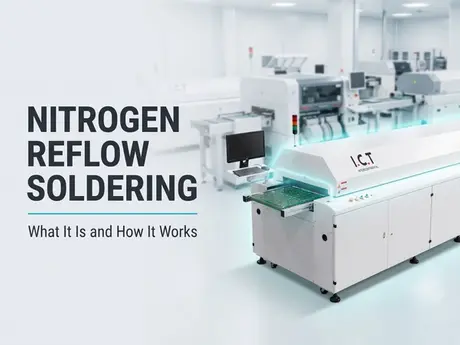
Nitrogen reflow soldering is a surface mount assembly process that uses nitrogen to create a low-oxygen environment while solder paste melts and forms electrical and mechanical connections. The process is common in demanding PCB production because it can reduce oxidation, improve solder wetting, and make difficult assemblies more consistent.
To understand how nitrogen reflow soldering works, it helps to look at the complete process. Nitrogen supply, oven sealing, oxygen control, thermal profiling, solder paste chemistry, board loading, and inspection all influence the final result.
Nitrogen is not a universal replacement for good printing or profiling. It is a process tool. When it is applied to the right product, it can improve process margin and reduce quality risk.

Nitrogen reflow soldering is reflow soldering performed inside an atmosphere with reduced oxygen. Nitrogen enters the oven tunnel and displaces much of the air around the PCB. The board then passes through controlled heating and cooling zones.
The solder paste first becomes soft, then reaches the liquid state, and finally solidifies as the board cools. During the liquid phase, nitrogen reduces the amount of oxygen available to react with exposed metal and molten solder.
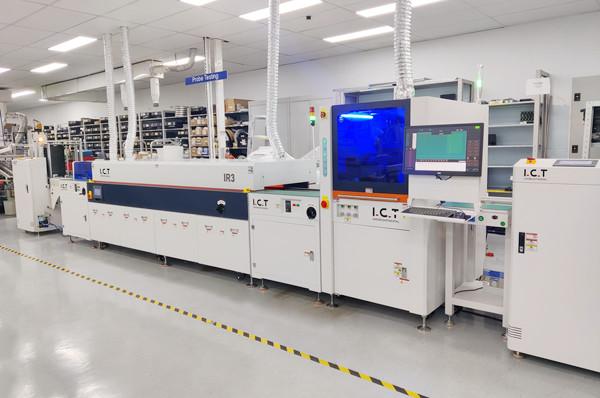
Standard air reflow uses the surrounding air inside the oven. Nitrogen reflow adds atmosphere control to the thermal process. The oven must manage nitrogen flow, exhaust, seals, sensor readings, and alarm limits.
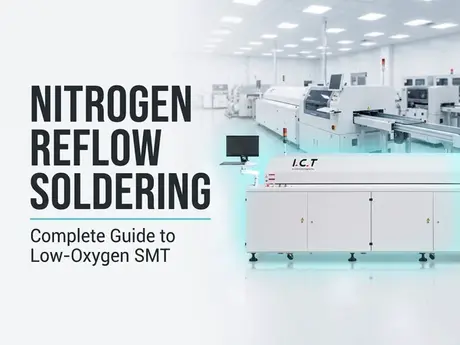
The complete nitrogen reflow soldering guide connects the atmosphere decision with paste selection, thermal profiling, inspection, maintenance, and production cost.

Nitrogen is supplied from a bulk tank, cylinder system, or nitrogen generator. The gas passes through regulators and filters before entering the reflow oven. Distribution manifolds or injection ports spread the gas through the process tunnel.
The oven exhaust removes displaced air and helps maintain a stable internal atmosphere. The objective is not simply to add as much gas as possible. The objective is to create a predictable low-oxygen environment under normal production conditions.
The PCB enters the preheat zone, where the temperature rises gradually. It then passes through the soak zone, where heat becomes more uniform and flux begins to activate. In the reflow zone, the solder reaches liquidus and wets the pads and terminations. The board then enters cooling zones.
Temperature and atmosphere work together. A good nitrogen setting cannot compensate for an incorrect ramp rate, insufficient peak temperature, or excessive time above liquidus.
An oxygen analyzer measures the atmosphere at a defined location. The control system may display the reading, trigger an alarm, or adjust gas flow.
Sensor location is important. Oxygen at the entrance may differ from oxygen near the reflow zone. Board loading, conveyor openings, exhaust settings, and door seals can also change the reading.

When copper, component terminations, and solder powder are heated in air, oxygen can react with their surfaces. Oxide layers may prevent molten solder from spreading evenly.
Oxidation can contribute to nonwetting, dewetting, uneven fillets, solder balls, and inconsistent joint appearance. The effect depends on the metal finish, flux activity, temperature, and exposure time.
Nitrogen is an inert gas under normal reflow conditions. By reducing oxygen concentration, it lowers the opportunity for oxide formation while the board is hot.
The principle behind oxidation control during reflow is straightforward: reduce oxygen exposure during the period when solder surfaces are most reactive.
Flux removes oxides and helps solder spread. In a lower-oxygen environment, the flux may work with less oxidation pressure. This can increase process margin, especially on difficult surfaces.
Nitrogen does not eliminate the need for fresh paste, correct storage, clean boards, or controlled working time. If the flux has already been damaged by poor handling, nitrogen cannot restore it.
The preheat zone raises the board temperature gradually. A controlled ramp reduces thermal shock and allows solvents in the paste to evaporate in a controlled manner.
Atmosphere control begins before the solder melts. Oxidation can occur during preheat, so nitrogen distribution should cover the full process path rather than only the peak-temperature area.
The soak zone balances temperature across the assembly. Large copper areas, connectors, shields, and small passive components may heat at different rates.
A stable soak helps the flux activate and prepares the board for reflow. If the soak is too short or too aggressive, the soldering result may vary even when oxygen is low.
In the reflow zone, the solder reaches its liquidus temperature. Molten solder spreads over the pads and component leads. This is the stage where oxidation control and wetting are most visible.
The board must remain above liquidus for the time recommended by the solder paste supplier. Excessive time can damage components, exhaust flux activity, or increase intermetallic growth.
Cooling solidifies the joints and determines part of the final microstructure. Excessively fast cooling can create stress, while very slow cooling can affect joint structure and throughput.
Nitrogen may continue through the cooling section to protect hot surfaces until the board reaches a safer temperature.

A nitrogen oven needs effective seals around doors, covers, conveyor openings, and service panels. Poor sealing allows room air to enter and increases gas demand.
The tunnel should provide a stable gas path across the board width. Dead zones can create different oxygen conditions on the same assembly.
Flow controllers regulate the amount of nitrogen entering each area. Exhaust removes displaced air and volatile materials. Too much exhaust can pull room air into the oven. Too little exhaust may affect process cleanliness.
Gas flow should be adjusted together with oxygen measurements. A higher flow rate is not always the correct answer to a high reading.
The analyzer should provide reliable readings within the expected ppm range. Sampling lines must be clean and leak-free. Calibration and sensor replacement should follow the equipment manufacturer’s instructions.
Keep records of calibration, maintenance, alarm events, and corrective action. These records help separate a real atmosphere problem from an analyzer problem.
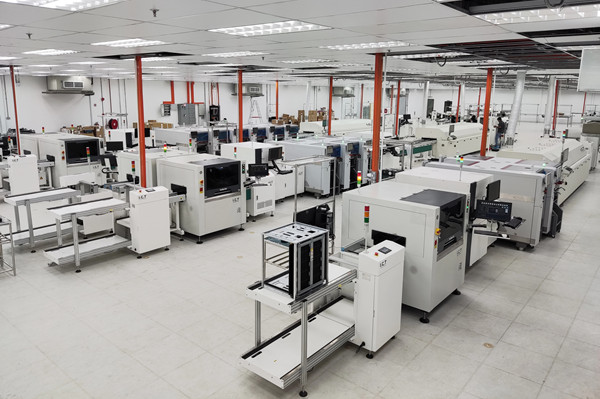
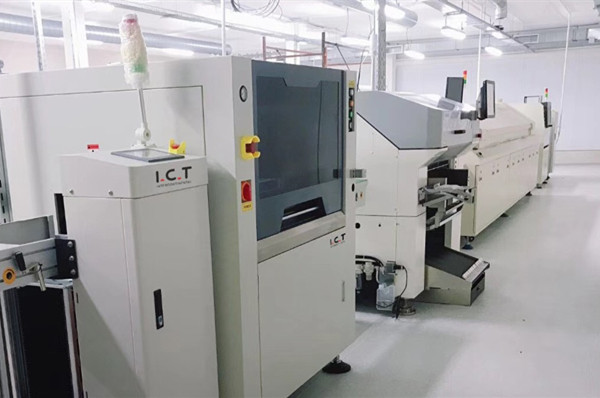
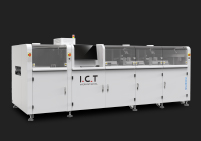
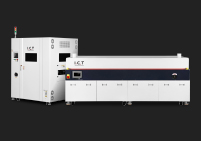
A dependable SMT reflow oven platform should combine temperature uniformity, atmosphere stability, data logging, maintenance access, and recipe control.
For a new factory, the oven should also fit the printer, placement machines, inspection equipment, and traceability system.

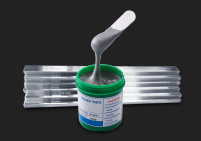
Start with the paste technical data sheet. Review recommended oxygen conditions, peak temperature, time above liquidus, ramp rate, and flux classification.
Different pastes can behave differently under the same atmosphere. A process that works with one paste may not provide the same result with another paste or alloy.
Fine-pitch devices, exposed copper, large thermal pads, bottom-terminated components, and mixed thermal masses can reduce process margin.
When working with fine-pitch SMT assembly, nitrogen may help maintain wetting consistency. It does not replace accurate stencil design, paste deposition control, or placement accuracy.
Lead-free solder generally requires a higher reflow temperature than traditional tin-lead solder. The higher temperature can increase oxidation pressure and make flux behavior more demanding.
The lead-free nitrogen reflow process can support stable wetting when SAC alloys are used with difficult surface finishes.

Run a baseline using the existing air or nitrogen setting. Record paste lot, stencil condition, board revision, placement program, profile, conveyor speed, loading pattern, oxygen level, and inspection results.
Without a baseline, it is difficult to determine whether a lower oxygen level actually improved quality.
Test two or three atmosphere conditions with production-representative boards. Keep all other variables as stable as possible.
Inspect wetting, fillet shape, bridging, tombstoning, solder balls, voiding, and first-pass yield. For high-reliability products, add cross-sections, pull tests, or thermal cycling as required.
The goal is not only to find one good setting. The goal is to define a range that remains stable during normal variation.
Set a normal oxygen target, alert level, and action limit. The nitrogen reflow oxygen level should be connected to documented response steps.
Compare nitrogen cost with rework labor, scrap, line interruptions, inspection effort, and product reliability. A lower defect rate may justify nitrogen even when the gas cost is visible.
Estimate gas use with a nitrogen consumption calculation based on actual flow and operating hours.
High readings may come from door seal damage, loose access panels, excessive exhaust, low supply pressure, faulty valves, blocked filters, incorrect board loading, or analyzer faults.
Check the equipment systematically. Increasing nitrogen flow without identifying a leak may increase cost without solving the problem.
Review flow rates during production, standby, startup, and shutdown. Repair leaks and confirm that exhaust settings are suitable. Lower flow gradually only after verifying oxygen recovery and joint quality.
Nitrogen flow optimization should be based on trend data, not on a single reading.
If nonwetting appears, check oxygen, pad finish, paste condition, profile, and contamination. If bridging appears, check print volume, alignment, stencil apertures, and component placement before changing the atmosphere.
Use documented nitrogen reflow troubleshooting steps so operators respond consistently across shifts.
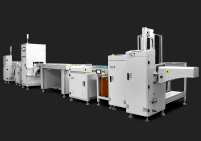
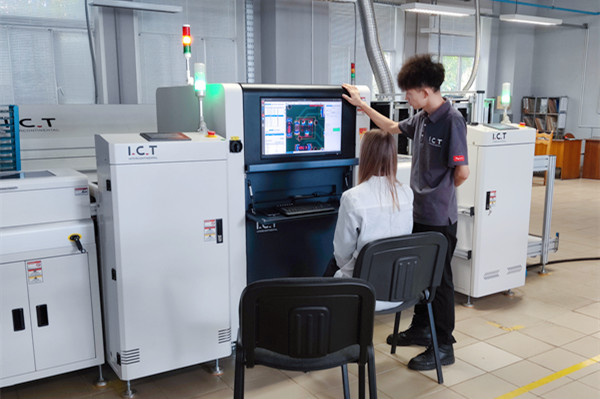
The oven should communicate useful process data to the rest of the line. A complete SMT production line can connect printing, placement, reflow, inspection, and traceability through consistent recipes and records.
For higher flexibility, evaluate a lead-free dual-rail reflow oven under representative loading on both rails.
No. Nitrogen is most valuable when oxidation is limiting wetting or when the assembly has a narrow process window. Many standard boards can run well in air. The best decision comes from a controlled comparison using actual production conditions.
It means the PCB is heated and soldered in an atmosphere that contains very little reactive oxygen. Nitrogen is commonly used because it is chemically stable under normal reflow conditions. The controlled atmosphere reduces oxidation while the solder is molten.
There is no universal number. The target depends on paste chemistry, alloy, board finish, component pitch, temperature, and customer requirements. Start with supplier guidance and validate the result through production trials.
No. Nitrogen can reduce oxidation-related problems, but it cannot correct insufficient paste, poor stencil design, misalignment, contamination, component coplanarity, or an incorrect thermal profile. Defect analysis must consider the entire SMT process.
Compare first-pass yield, rework time, scrap, reliability results, gas consumption, maintenance, and customer requirements. If nitrogen produces no measurable improvement, air reflow may be more economical. If it prevents recurring defects on a high-value assembly, the investment may be justified.
Inspect seals, valves, filters, exhaust settings, and supply pressure. Use suitable standby settings and reduce flow in controlled steps. Confirm that the oxygen level returns to target quickly and that solder joint quality remains stable.
Record oxygen level, nitrogen flow, temperature profile, conveyor speed, board loading, paste lot, inspection results, defects, alarms, calibration, and maintenance. These records make process improvement and troubleshooting much faster.