English
Views: 0 Author: Vinci Zhang Publish Time: 2026-10-06 Origin: Site


Oxidation is one of the hidden causes of unstable reflow soldering. It develops when heated metal surfaces and solder materials react with oxygen. The reaction can reduce solder spread, weaken wetting, change fillet shape, and narrow the process window.
Nitrogen helps by lowering the oxygen concentration around the PCB while the solder is heated. This low-oxygen reflow process does not replace correct printing, component placement, paste control, or thermal profiling. It gives those process steps a cleaner atmosphere in which to work.
This guide explains how nitrogen reduces solder oxidation, where oxidation occurs, how to choose an oxygen target, and how to prove that atmosphere control is improving the assembly rather than simply increasing operating cost.

When copper pads, component terminations, and solder powder are heated, oxygen in the surrounding air can react with their surfaces. The reaction produces oxide films. Some films are thin and difficult to see, but they can still affect solder behavior.
Molten solder must make intimate contact with the pad and component termination. An oxide layer can act as a barrier between those surfaces. The solder may hesitate, pull back, or spread only across part of the available area.
Oxidation can contribute to nonwetting, dewetting, uneven fillets, solder balls, open joints, and inconsistent joint appearance. The exact defect depends on the pad finish, flux chemistry, temperature profile, contamination level, and exposure time.
Oxidation is not always the only cause. A bridging defect may come from excessive paste or poor alignment. A void may come from paste design or trapped volatiles. Good troubleshooting separates oxidation-related defects from defects created earlier in the SMT process.
Lead-free soldering often uses higher temperatures than traditional tin-lead soldering. The higher thermal load can increase the speed of surface reactions and place greater demands on the flux.
For that reason, oxidation control becomes more valuable when the assembly uses lead-free alloys, difficult finishes, exposed copper, or components with small termination areas.

Nitrogen is introduced into the reflow oven through controlled injection points. As nitrogen fills the process tunnel, it displaces much of the room air. The oxygen concentration falls around the PCB, solder paste, and component terminations.
With less oxygen available, the rate of new oxide formation is reduced while the board is hot. This is the basic reason nitrogen reduces solder oxidation.
The most sensitive moment occurs when solder is liquid and must spread across the pad. A low-oxygen atmosphere reduces the oxidation pressure during this stage. Flux can focus more of its activity on existing surface oxides instead of continuously fighting new oxidation.
The result may be faster spreading, more complete pad coverage, and more consistent fillet formation.
Nitrogen cannot remove fingerprints, ionic contamination, damaged finishes, or aged paste. It also cannot repair a pad that is poorly designed or a component that is not coplanar.
Atmosphere control works best when the board is clean, the paste is within its working life, and the thermal profile matches the alloy and component limits.

Oxidation begins before the solder melts. During preheat, the board temperature rises and flux solvents start to leave the paste. Exposed metal surfaces remain in a hot oxygen-containing environment for several minutes.
A nitrogen system should therefore control the atmosphere through the full board path. Protecting only the peak-temperature zone leaves the earlier heating stages exposed.
In the soak zone, temperatures become more uniform and the flux activates. If oxygen remains high, new oxide can form while the flux is working to remove existing oxide.
The relationship between soak time, flux activity, and atmosphere is important. An excessively long soak can consume flux before the solder reaches the liquid state. A low oxygen reading cannot compensate for a poorly matched profile.
When the paste becomes liquid, solder must spread across the intended surfaces. Any remaining oxide or new oxidation can affect this movement.
The reflow zone usually receives close attention because wetting problems become visible there. However, the final result reflects the entire thermal and atmosphere history of the board.
After reflow, the solder cools and solidifies. Hot surfaces can still react with oxygen during early cooling. Continuing nitrogen through part of the cooling area can protect the joint until its temperature falls.
Cooling rate must still be controlled. Atmosphere protection does not replace a suitable cooling profile.

Fresh copper is highly reactive when heated. Oxide formation can reduce solder spread and make a formerly stable process more sensitive to storage time and handling.
Protective surface finishes reduce direct exposure, but they do not make the assembly immune to oxidation. Damaged, porous, or contaminated surfaces may still create wetting problems.
Component leads and end terminations may have different coatings and surface conditions. Some parts wet quickly in air, while others show a measurable improvement in nitrogen.
Mixed assemblies should be evaluated by component family. A process that works well for large gull-wing leads may not provide the same margin for small passive ends or bottom-terminated components.
OSP, ENIG, immersion tin, immersion silver, and other finishes respond differently to heat and storage. The finish, age, handling history, and supplier quality all influence oxidation behavior.
Do not assume that one oxygen limit applies to every finish. Use representative boards and compare the defect types that matter for the product.

Flux removes surface oxides and supports solder spreading. Its activity depends on chemistry, temperature, time, and the condition of the paste.
If the paste has been exposed to moisture, stored incorrectly, or used beyond its working time, the flux may not perform as expected. Nitrogen can reduce new oxidation, but it cannot restore exhausted flux.
Paste suppliers may provide recommended atmosphere ranges. Review the alloy, powder type, flux classification, peak temperature, time above liquidus, and storage requirements.
For demanding SAC assemblies, the lead-free nitrogen reflow approach can support more stable wetting when the paste and profile are correctly matched.
Oxidation is often blamed for defects caused by printing. Check paste volume, transfer efficiency, aperture condition, alignment, and board support before changing the oven atmosphere.
A low-oxygen process can protect a good print. It cannot turn an insufficient print into a reliable joint.
There is no universal oxygen value for every reflow process. Some products run well at a few thousand ppm. More demanding assemblies may require a lower target.
The target should come from paste guidance, product requirements, trial data, and the cost of maintaining the atmosphere. A lower number is useful only when it produces a measurable quality benefit.
Oxygen should be measured at a known point under normal production loading. Record the sensor location, board type, conveyor speed, zone temperatures, and nitrogen flow.
The nitrogen reflow oxygen level should be written as a complete process specification rather than as an isolated ppm number.
An analyzer with a contaminated filter, leaking sample line, or aged sensor can produce misleading data. Follow the manufacturer’s calibration procedure and retain the calibration record.
Compare analyzer readings with process results. If the display remains stable while wetting changes sharply, inspect the measurement system as well as the oven.
Before changing the atmosphere, run a controlled baseline. Use the same board revision, paste lot, stencil, placement program, profile, conveyor speed, and inspection criteria.
Record nonwetting, dewetting, bridging, solder balls, fillet shape, voiding, first-pass yield, and rework time. The baseline gives the nitrogen trial a meaningful point of comparison.
Run representative boards at the current setting and at one or two lower oxygen targets. Allow enough boards to capture normal variation. A single successful board is not enough to prove process capability.
For fine-pitch products, include small passive components and the most sensitive packages in the evaluation. The fine-pitch SMT assembly requirements may reveal a benefit that is not visible on large components.
Automated optical inspection can identify fillet and placement changes. X-ray inspection helps evaluate hidden joints and voiding. Cross-sections can show whether solder has properly contacted the pad and termination.
When reliability is critical, add pull testing, shear testing, thermal cycling, or other qualification methods required by the product specification.
The purpose of validation is to define a range that remains stable during normal variation. Set a normal operating target, an alert level, and an action level.
If two oxygen settings produce the same quality, the setting with lower gas consumption may be the better production choice.
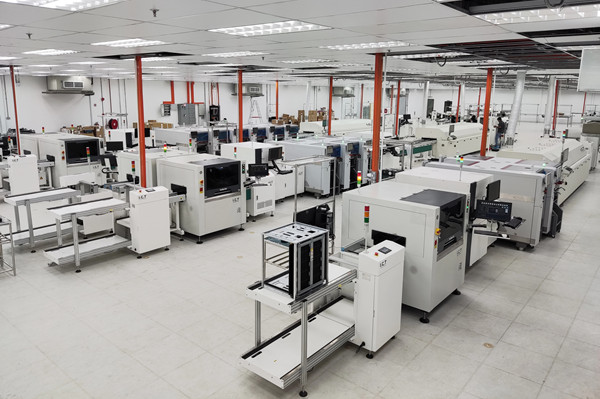
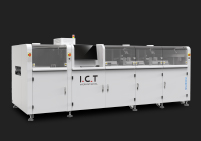
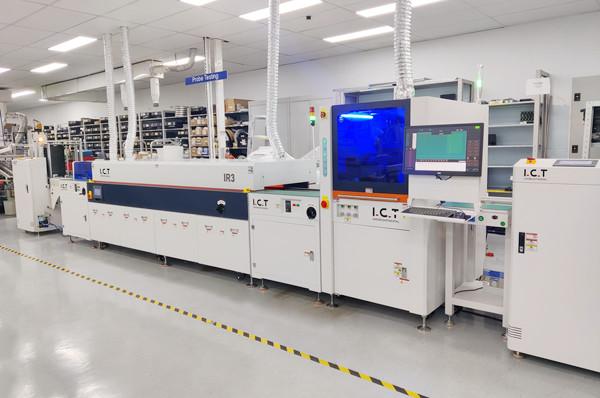
A reliable oven should provide effective tunnel sealing, stable nitrogen distribution, adjustable exhaust, oxygen monitoring, thermal uniformity, and recipe control.
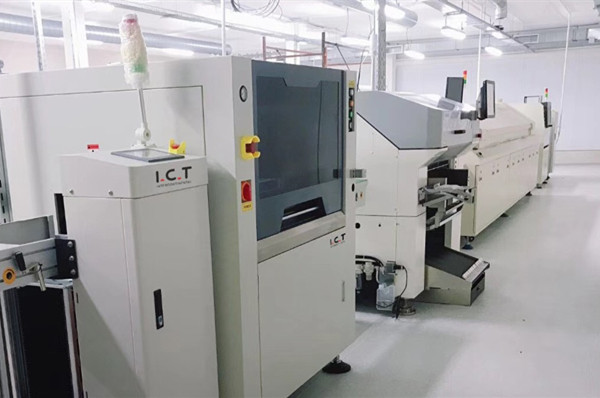
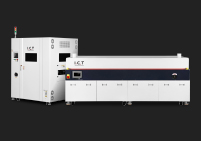
A dependable SMT reflow oven platform should maintain the selected atmosphere under normal board loading rather than only during an empty-chamber demonstration.
Gas use depends on flow rate, operating hours, purge cycles, standby mode, exhaust balance, and leakage. Use a nitrogen consumption calculation based on actual measurements.
After the process is stable, inspect seals, valves, filters, and exhaust settings. Controlled nitrogen flow optimization can lower cost without sacrificing the oxygen target.
High readings may come from damaged seals, loose covers, excessive exhaust, low supply pressure, blocked filters, faulty valves, or a sampling problem.
Do not solve every high reading by increasing gas flow. Find the source first and confirm the result after the repair.
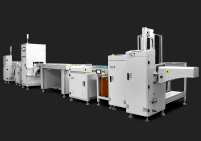
Atmosphere data is more useful when it is connected with profile, inspection, and traceability records. A complete SMT production line can keep the product recipe consistent from printing through final inspection.
For flexible production, a lead-free dual-rail reflow oven should be evaluated for atmosphere uniformity on both rails.
Nitrogen mainly reduces the amount of new oxide that forms on hot metal and solder surfaces. It does not remove every existing oxide layer. Flux, surface finish, cleanliness, and thermal profile still determine how well the joint wets.
No. A lower reading may increase process margin, but it can also increase gas cost without changing quality. The correct target is the lowest practical level that produces stable, measurable improvement for the specific assembly.
It may reduce the oxidation component of the problem, but it cannot repair a damaged or contaminated finish. Confirm board quality, storage history, paste condition, and profile before assigning the defect to atmosphere alone.
A leak, exhaust change, board-loading change, supply-pressure drop, valve fault, or analyzer problem can raise the reading. Check the entire gas path and compare the reading with the normal production condition.
No. Many lead-free assemblies run successfully in air. Nitrogen becomes more valuable when higher temperatures, fine pitch, difficult finishes, or reliability requirements leave little process margin.
Use a controlled comparison with the same board, paste, stencil, profile, loading, and inspection method. Compare wetting, fillet quality, defect categories, first-pass yield, and rework. Reliability testing may be needed for critical products.
Confirm the oxygen reading and analyzer condition first. Then check seals, flow, exhaust, paste age, board cleanliness, profile, print volume, and surface finish. Record the finding and use documented nitrogen reflow troubleshooting steps to keep the response consistent.