English
Views: 0 Author: Vinci Zhang Publish Time: 2026-10-09 Origin: Site


Lead-free solder is harder to work with than the old tin-lead. It wets more slowly and hates oxide. Nitrogen does not change the alloy, but it changes the conditions around it, and that is enough to make lead-free reflow far more forgiving. Here is what happens, and how to set it up.

Lead-free soldering and nitrogen belong in the same conversation. When the industry left tin-lead behind, the alloys that replaced it — the SAC family built on tin-silver-copper — brought higher surface tension, slower wetting, and far less patience for oxide. Under nitrogen, all three traits soften. Wetting improves, joints look better, and the no-clean fluxes that modern assembly depends on finally get to work as designed. That is the short answer to what nitrogen does for lead-free solder paste.
The deeper answer matters if you run lead-free production, because the trade-offs have real consequences for yield, residue, and reliability. Lead-free reflow in air works — plenty of lines run it every day. But it works with a narrower margin than the old processes ever had, and the margin is exactly what atmosphere control restores.
This article explains the alloy chemistry in plain terms, shows where nitrogen helps and where it merely shines, and gives you a practical setup for running SAC paste under a controlled atmosphere. No chemistry degree required — just the working knowledge a process engineer needs on a Tuesday morning.
For the full atmospheric background, start with our complete guide to nitrogen reflow soldering. Here we stay on the alloy side of the story.
To appreciate why lead-free changed the atmosphere conversation, remember what the old alloy did well. Tin-lead solders wet fast. Their surface tension was low, their spreading was generous, and they tolerated mediocre surfaces with good humor. A tin-lead line in air had room for error everywhere: in paste age, in pad condition, in profile drift.
The SAC alloys gave up most of that forgiveness in exchange for higher strength and lead-free compliance. They wet more slowly, spread less, and demand more from every surface they touch. Each of those traits is manageable alone. Together, they turned oxidation — previously an annoyance — into a first-order process variable.
That is the honest summary of the last two decades of SMT process engineering: the industry traded an easy alloy for a demanding one, and then spent years building back the margin. Atmosphere control is one of the most effective ways to build it back.
If you run SAC305 or its relatives, qualify a new lead-free product, or sit between "air works" and "nitrogen costs" in a budget meeting, this article is for you. We will keep the chemistry honest but practical, and every section ends in something you can check on your own line.
Before the chemistry, one warning earned from watching lines make this transition. The most common failure in adopting nitrogen for lead-free is doing everything at once. New paste, new profile, new atmosphere, sometimes a new oven — all in the same month. When results come in, nobody can attribute anything, and the atmosphere gets either the credit or the blame it does not deserve.
The sequence that works is boring and reliable. Atmosphere first, everything else held constant. A week of data. Then, one at a time and only if the data invites it, profile adjustments and paste reviews.
Boring sequences protect attributions, and attributions are what process engineering is built on. Every section that follows assumes you will work this way — one variable, one week, one conclusion.
You do not need a metallurgy background to run nitrogen well. You need three facts about the alloy, and they all connect to the same place: the moment the solder melts.
SAC stands for tin-silver-copper. The workhorse is SAC305 — 96.5 percent tin, 3 percent silver, 0.5 percent copper. Variants adjust the ratios or add small amounts of other elements, tweaking melting range and strength. The details differ; the behavior that concerns us does not.
What matters for atmosphere: these alloys are over 95 percent tin, and tin oxidizes eagerly. Every powder sphere in your paste carries an oxide skin, and every molten drop wants to grow a new one. The alloy's own purity — its silver and copper content — is fragile in the sense that oxides at the surface interfere with everything the alloy is trying to do.
Here is the single most consequential difference between tin-lead and SAC. Molten SAC has notably higher surface tension than molten tin-lead. Surface tension is the force pulling solder into a ball. Low tension means solder spreads; high tension means it beads up and waits for a reason to wet.
Tin-lead alloy in air still spread, because its low tension overpowered the oxide resistance. SAC in air meets oxide with a high-tension alloy — a double penalty. The result is the sluggish wetting every lead-free process engineer knows: contact angles that stay high, fillets that form late, joints that need every second of their window.
Put the two facts together and the lead-free wetting problem comes into focus. The moment your paste reaches liquidus, two clocks start. One measures how fast the alloy wets the pad. The other measures how fast the flux burns off and the joints approach solidification. SAC's high tension slows the first clock; oxidation in air slows it further.
Nitrogen resets the balance. With the atmosphere stripped of oxygen, the high surface tension remains — that is the alloy's nature — but the oxide penalty disappears. The alloy wets as fast as its nature allows, which is visibly faster than it ever manages in air. The entire improvement of nitrogen lead-free reflow flows from this one change: you cannot fix the alloy, but you can fix the environment it works in.
It is worth pausing on one element, because it explains most of what follows: tin. Lead-free alloys are overwhelmingly tin — over 95 percent by weight — and tin is an eager oxidizer. Compare that with the old tin-lead alloy, where lead diluted the tin and, incidentally, its oxide appetite.
Every surface the alloy presents to the world is essentially tin, and every tin surface grows oxide fast, especially hot. The powder spheres in your paste are tin. The molten droplet is tin. The pad finishes are tin-based. The whole soldering system is a tin system, and tin systems live and die by their oxide management.
This reframes the atmosphere question usefully. You are not fighting a mysterious failure mode. You are managing the oxidation rate of one well-understood element across three surfaces at once. Remove oxygen from the oven and all three surfaces calm down together — which is why a single atmospheric change produces such broad results in lead-free production.

The alloy is half the system. The paste's flux is the other half, and lead-free flux design makes the atmosphere matter more than ever.
Lead-free paste powder is nearly pure tin, milled into spheres smaller than a grain of sand. Each sphere carries an oxide skin from the moment it is made. The skin is thin, but the surface area of millions of spheres adds up to a lot of oxide for your flux to handle before the alloy even melts.
This is different from the old days. Tin-lead powders oxidized less eagerly, and their fluxes were formulated with generous activator budgets. Lead-free paste walks a tighter line: more eager oxide, less chemical budget, and finer powder with more surface area. Everything about the system asks flux to do more with less.
Modern assembly mostly runs no-clean or low-residue fluxes. The reasons are good ones: test probes stay clean, conformal coating adheres properly, and boards ship without washing steps. The cost is chemical: these formulations carry small activator loads. They are designed expecting reasonably clean surfaces.
In air reflow, "reasonably clean" is a gamble. The flux spends a large share of its modest budget fighting re-oxidation during heat-up, and whatever remains has to accomplish the actual wetting. On easy boards the math works. On demanding ones, it does not — and the failure shows up as exactly the problems no-clean lines know best: marginal wetting, graping on heavy deposits, and inconsistent residue.
Under nitrogen, the flux budget arrives at liquidus almost intact. Nothing was wasted on oxide during heat-up, because there was essentially none to fight. The paste now behaves like a higher-activity product, without changing a material on the line.
This is the quiet engine behind most of nitrogen's lead-free reputation. The alloy wets faster because surfaces are clean. The flux performs because it was never depleted. The residue stays low because less flux was consumed. Three improvements, one cause.
And the improvement compounds at fine pitch, where paste volumes are tiny and every molecule of activator counts. We treat that combination fully in the article on nitrogen reflow for fine-pitch and miniaturized components.
An honest look at the flux budget has to start before the board reaches the machine. Every hour a printed board sits in open air, its paste grows a little more oxidized, and its flux quietly spends a little more of itself on housekeeping.
Storage discipline therefore multiplies the value of whatever you do in the oven. Boards printed and placed promptly give the process a fresher start. Boards that sit overnight — or over a weekend — arrive with a heavier oxide load and less flux headroom, in air or in nitrogen.
Nitrogen softens this problem more than it solves it. The oven protects the board during the profile; it cannot un-oxidize the paste that entered. If your operation prints ahead of placement by hours, both your air results and your nitrogen results carry that decision. Tighten the print-to-reflow window first, and the atmosphere will reward you with an even wider window than the datasheet suggests.

With the mechanism established, here is what production lines see when lead-free paste meets a controlled atmosphere.
The first thing engineers notice is speed. SAC paste in nitrogen starts wetting the moment it melts, instead of hesitating through the first stretch of its window. Contact angles drop. Fillets rise more completely. Solder that used to stop short of pad edges now reaches them.
The visual signature is a more "finished" board. Joints look complete rather than attempted. On pads where air reflow left borderline coverage, nitrogen coverage is full. This is the wetting improvement in its purest form, and it is measurable with nothing more exotic than your microscope and your defect log.
Lead-free joints are naturally duller than tin-lead ever were — that is the alloy, not your process. But there is dull-even and there is dull-grainy, and the difference matters. Grainy, mottled surfaces indicate oxide interference during solidification. Under nitrogen, SAC joints solidify clean: a uniform, satin finish, consistent across the board.
Treat appearance as a process health indicator. When your lead-free joints' look becomes consistent, your atmosphere is stable. When dull patches return mid-shift or batch-to-batch, something moved — supply pressure, seals, exhaust — and your joints are telling you before the analyzer does.
A practical comparison helps calibration. Keep a sealed reference panel from your last air run somewhere near the inspection station. When someone questions whether the atmosphere is still delivering, the old board beside the new one answers in five seconds. Simple, physical, and immune to the slow drift of memory that makes "it used to look worse" so hard to settle.
Graping deserves special mention because it is a lead-free signature defect. Heavy paste deposits — under large BGAs, big thermal pads, dense connector fields — tend to skin over in air while the interior still outgasses. The result is a cluster of tiny beads instead of one smooth mass.
The atmospheric mechanism is direct. Oxide stiffens the deposit's surface; a mobile surface would coalesce instead of bursting. Nitrogen keeps the surface mobile to the end of the window, and graping largely disappears on well-designed deposits. If graping appears on your lead-free boards even under nitrogen, look at paste volume and stencil design next — the atmosphere will have removed its own contribution.
The last improvement is the one your test department notices first. Flux that does not fight oxide leaves less residue behind. Lead-free no-clean boards coming out of nitrogen are visibly, measurably cleaner — lighter residue patterns, fewer ionizable leftovers, fewer probing troubles.
For lines that skipped washing steps hoping no-clean chemistry would deliver, nitrogen is what makes the promise realistic. The chemistry finally spends itself on the joint, not on the air.
Beyond appearances, lead-free lines that adopt nitrogen usually see a characteristic pattern in their data. It is worth knowing the pattern, so you can recognize a normal result and investigate an abnormal one.
Wetting-related defects drop first and fastest: non-wet opens, cold-looking joints, graping escapes. Bridging follows more slowly, and mostly on fine-pitch categories where hesitant wetting was a contributor. Voids shift least — they are governed by paste and design, as we said — but large-pad coverage tends to improve in X-ray images.
Two things should not change, and their stillness is informative. Solder balling driven by print problems stays. Placement defects stay. If your post-switch data shows movement in those categories, look elsewhere for the cause — and be grateful for the clean signal the stable atmosphere just gave you.
Timeframe matters too. Visual changes appear the same day. Statistical confirmation needs a week or two of production. Anyone who promises an overnight Pareto transformation is selling something; anyone who sees nothing after a month probably never reached their target oxygen level. Both cautions come from the same principle: judge the process at its steady state.

Nitrogen changes the atmosphere, not the thermodynamics. But the wider wetting window creates profile opportunities — and one caution.
A common question: with better wetting, can you lower the reflow peak? Sometimes, modestly. SAC alloys need their metallurgy — the intermetallic bond forms with heat and time, and no atmosphere changes that requirement. What nitrogen allows is operating closer to the minimum of the peak band without wetting penalties. For temperature-sensitive assemblies, those degrees matter.
The honest framing: nitrogen does not lower the alloy's requirements. It removes the extra headroom your profile was carrying to compensate for oxide. That headroom is yours to spend — on sensitive components, on throughput, or not at all.
One caution deserves emphasis. Do not shorten time above liquidus aggressively just because wetting got faster. The intermetallic layer that makes a joint a joint needs its formation time. Fast wetting and adequate TAL are different requirements, and lead-free joints need both.
The safe practice: hold your qualified TAL when you switch atmospheres. Optimize later, in small steps, with cross-section or shear data to back each move. The wider window is an asset only if you spend it deliberately.
There is a secondary benefit worth noting for mixed lines. Temperature-sensitive assemblies — those with warped-housing connectors, ceramic parts, or moisture-classified packages — often sit at the edge of what a lead-free profile allows. The margin nitrogen returns can absorb that edge: enough wetting quality at slightly gentler settings to keep both the components and the joints happy. It will not turn a marginal design into a comfortable one, but it frequently turns an uncomfortable process into a stable one, and stability is where the yield lives.
Cooling slope shapes lead-free microstructure, and the atmosphere plays no role in it. But there is an interaction worth knowing. Joints that formed cleanly — no oxide in the solidifying mass — respond more predictably to your cooling choices. You get the microstructure your cooling curve calls for, without oxide noise.
So nitrogen does not just improve the joint. It improves the predictability of everything you do to the joint, which is a quieter but genuinely valuable form of process control.
A practical question follows the process change: does nitrogen change which paste you should buy? Slightly, yes — in the direction of freedom.
In air, your paste choice is partly dictated by oxide-fighting muscle. Formulations with stronger activator systems earn their place by compensating for the environment. Under nitrogen, that compensation matters less, and other qualities rise in importance: print behavior, stencil life, response to pause, storage tolerance, price.
Some lines use the freedom to step down in activity and enjoy cleaner boards. Others keep their paste and bank the window as insurance. Both are rational. What no longer makes sense is paying premium prices for aggressive chemistry whose main job was fighting your atmosphere — that job is now automated, and cheaper to run.
The one caution repeats from earlier: any paste change is still a paste change. Qualify it as usual, separately from the atmosphere discussion, so your process knowledge stays clean.

Nitrogen helps lead-free everywhere. Three combinations benefit most, and knowing them sharpens any cost discussion.
The sharpest gains live where tiny paste volumes meet high surface area: miniature passives, fine-pitch QFNs, micro BGAs. Here, the flux budget is smallest, the oxide influence is largest, and the wetting window is shortest. Nitrogen's contribution moves from helpful to decisive. The component-level detail lives in our fine-pitch article.
If your portfolio includes these packages, fold that into your equipment thinking early. The oxygen target such products demand is harder to hold, and the machine that holds it cheaply is not the same machine that merely reaches it. Ask about atmosphere performance at demanding setpoints during selection, not after the first demanding product lands on the schedule.
OSP boards and other finishes that degrade during the profile pair badly with sluggish SAC wetting — the finish's protection is gone exactly when the alloy needs clean metal most. Under nitrogen the exposed surfaces stay clean through the hot stretch, and the wetting the alloy delivers approaches its full potential. The two weaknesses cancel.
The same logic extends to thin immersion finishes with warehouse age on them. A board whose protective layer has partially consumed itself during months of storage arrives with less margin than its datasheet claims. Nitrogen lowers the bar for what the flux must rescue during reflow, which turns batch-to-batch surprises — the boards that sat longer — into ordinary production. Lines with variable inventory dwell times feel this benefit as much as any other.
Second-side reflow re-exposes every joint to a full profile, with finishes and prior residues already degraded. In air, the second pass is where lead-free margin runs out. Under nitrogen it survives with room to spare. Mixed lines building double-sided lead-free assemblies consistently rank nitrogen among their most reliable yield protections.
For automotive, medical, and industrial products, the lead-free nitrogen conversation shifts from yield to assurance. These sectors judge joints over years, and their documentation culture expects every process variable to be deliberate. An oxygen setpoint with monitoring records satisfies that expectation in a way an unmanaged atmosphere cannot.
The technical logic holds up too. High-reliability boards concentrate the demanding features — fine pitch, thermal mass, sensitive finishes — that consume margin fastest. Nitrogen returns the margin, and the inspection data that comes with a controlled atmosphere gives the quality system something concrete to audit.
If your customers in these sectors audit your line, walk them through your atmosphere control. It is one of the easiest process disciplines to demonstrate and one of the hardest to fake, which is exactly what an auditor hopes to find.
Three decisions define the setup. Each is simple; each matters.
Most SAC work runs well between 1,000 and 2,000 ppm. Demanding combinations — fine pitch, OSP, high reliability — justify 500 ppm or below. Pick the target from your product's needs, validate it against defect data, and hold it with closed-loop control. Stability beats extremes; a machine that holds its setpoint all shift delivers more value than one that dips to heroic lows between drifts upward.
Write the target into your process documentation, along with the alarm limits and the response when they trip. An unmanaged target drifts; a documented one gets defended. The difference shows up in your joint quality long before it shows up in anyone's memory of why the number was chosen.
The machine decides what each ppm costs. Seal design, tunnel architecture, nitrogen delivery, and recirculation separate ovens built for atmosphere work from ovens with a nitrogen option bolted on. When you compare a reflow oven for lead-free nitrogen duty, ask for consumption at your target setpoint, not a datasheet minimum.
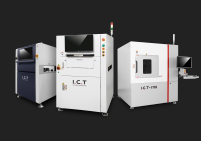
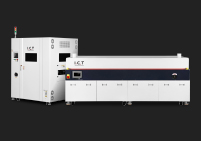
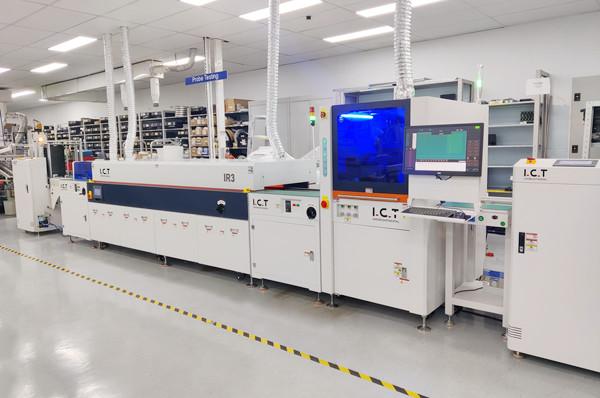
Architecture matters here too. A dual-rail lead-free reflow oven puts two lanes in one sealed chamber — both boards share the same protected atmosphere and the same gas bill. I.C.T's Lyra series is designed around this principle, with full-zone nitrogen availability and inlet-outlet recirculation to keep oxygen low at low consumption. For lead-free lines running volume, that is the difference between a nitrogen process and a nitrogen expense.
Lead-free nitrogen economics deserve a line in the decision before the purchase order, not after the first gas bill. Consumption depends on the machine, the target, and the product mix — and it repeats monthly.
The arithmetic is manageable at the estimation stage. Get the oven's expected consumption at your target setpoint from the supplier, multiply by your shift schedule and your local gas price, and set the number beside your current wetting-defect cost. Rework hours, escape risk, and the audit value of controlled atmosphere all belong on the other side of the ledger.
If the numbers feel uncertain, run the trial from the previous chapter and let a real week generate real data. Uncertainty is a reason to measure, not a reason to decide by instinct. The article on calculating nitrogen consumption in this series walks the estimate step by step when you are ready for it.
The setup ends with verification, and it takes a week: reference panels photographed before and after, AOI Pareto compared across the change, X-ray on any hidden-joint packages. The wetting article in this series outlines the full verification approach. Do it once properly and the result protects the decision for years.
One habit makes the verification stronger: assign it. A named engineer owns the before-and-after record, the photography, and the one-page conclusion. Unowned verifications drift; owned ones close. It takes five minutes to assign and saves the project from the most common ending — a trial everyone remembers as successful and no one can document.
Nitrogen earns trust by being useful, not magical. Four limits keep expectations aligned with reality.
It cannot fix bad prints, wrong volumes, or placement errors. It cannot restore degraded pads or revive aged paste. It cannot change the alloy's melting behavior or the intermetallic chemistry. Every one of those remains exactly as important as before — which, in practice, means your other process disciplines become more visible once the atmosphere stops masking them.
This visibility is worth a moment, because it surprises teams in both directions. The good surprise: print and placement improvements you made months ago show up more clearly, because atmosphere noise no longer buries them. The uncomfortable surprise: old weaknesses show up too, for the same reason. Lines that understand this treat the switch as a diagnostic event — the week the atmosphere went stable is the week your process showed you its true profile.
Simple lead-free boards — generous pads, robust finishes, chunky components — often run fine in air. If your defect Pareto shows no wetting categories, and boards look consistent at inspection, nitrogen adds shine, not yield. The article on when nitrogen reflow is necessary provides a scoring framework for product-level decisions, including the middle-ground targets that split the difference economically.
A nitrogen lead-free process is still a machine with seals, sensors, and supply lines. When oxygen readings drift or joint quality shifts mid-shift, the fix is systematic troubleshooting, not guesswork — check supply pressure, flow settings, seal condition, and analyzer calibration in a fixed order. Our nitrogen reflow troubleshooting guide walks the sequence.
The final limit is procedural. Switch one variable at a time, keep the profile frozen through the transition, and give the data a full production week. The lines that report "no difference" from nitrogen often switched paste, profile, and atmosphere in the same week — and learned nothing usable. Discipline costs a week. It buys a decision you never have to revisit.
To close the loop, here is the transition as a checklist you can lift straight into your process documents.
Before the switch: record your current defect Pareto for four weeks. Photograph reference panels under magnification. X-ray one hidden-joint package per product. Note paste lot, stencil revision, and full profile settings.
Switch week: atmosphere on Monday morning, full purge before first board. No other changes all week. Log oxygen reading at every shift start.
After the switch: one week of production, then pull the same Pareto categories. Photograph the same reference panels. X-ray the same package. Compare, write one page, and file it with the process records.
If the data is ambiguous, extend one more week before concluding. If it is clearly positive, you now own a documented improvement — and if it is clearly negative, check whether the oven ever actually reached your target, because that is the most common reason trials fail.
Yes, measurably. SAC alloys wet slowly because of their high surface tension, and air adds an oxide penalty on top. Nitrogen removes the penalty: pads and powder stay clean, so the alloy wets at its natural speed. The visible results are lower contact angles, fuller fillets, and typically fewer wetting-related defects in your AOI data.
No regulation requires it, but many products practically demand it. Simple lead-free boards can run in air. The combination of SAC paste with fine-pitch components, OSP finishes, no-clean flux, or double-sided reflow is where air reflow's margin runs out and nitrogen becomes the difference between a stable process and a struggling one.
Most SAC work runs well at 1,000–2,000 ppm. Fine-pitch, OSP, and high-reliability assemblies typically justify 500 ppm or below. Choose from your product's sensitivity, validate with defect data, and prioritize holding the level steadily — consistency delivers more value than chasing the lowest number.
It removes the atmospheric cause, which is often the dominant one. Graping forms when a heavy paste deposit skins over in air while the interior outgasses. In nitrogen the surface stays mobile and the beads coalesce. If graping persists under nitrogen, the remaining causes are paste volume, stencil design, or paste condition — and you can address them knowing the atmosphere is no longer contributing.
Sometimes by a few degrees. Nitrogen improves wetting, not alloy metallurgy — the intermetallic bond still needs its heat and time. What nitrogen removes is the extra headroom your profile carried to compensate for oxide. Spend it carefully: adjust in small steps, keep time above liquidus adequate, and back each change with first-article and reliability data.
Yes, and noticeably. Flux that no longer fights oxide during heat-up is consumed more completely at the joint, leaving less residue on the board. No-clean processes benefit most — boards come out cleaner, with fewer test-probe and coating issues. If residue remains a problem under nitrogen, review paste storage and print practices next.