English
Views: 0 Author: Vinci Zhang Publish Time: 2026-10-08 Origin: Site


Oxygen level is one of the most important settings in nitrogen reflow soldering. It affects oxidation, solder wetting, flux performance, process stability, and operating cost. A low reading can improve a difficult assembly, but the lowest possible number is not automatically the correct production target.
The right target depends on solder paste, alloy, PCB finish, component pitch, thermal profile, oven design, board loading, and reliability requirements. This guide explains how to choose a nitrogen reflow oxygen level, how to understand reflow oven oxygen ppm readings, and how to validate low oxygen soldering requirements with production data.

When copper pads, component terminations, and solder powder are heated, oxygen can react with their surfaces. The reaction creates oxide films. Even a thin film can make it harder for molten solder to spread and form a continuous bond.
Flux removes oxides during heating, but flux activity is limited. If new oxidation develops faster than the flux can manage it, wetting becomes less reliable. This is why atmosphere control becomes more important as temperature, exposure time, and product complexity increase.
High oxygen can contribute to nonwetting, dewetting, uneven fillets, solder balls, open joints, and inconsistent joint appearance. It may also reduce the margin available for fine-pitch and lead-free processes.
Oxygen is not the cause of every solder defect. Bridging may result from excessive paste or poor alignment. Voiding may be related to paste design or volatile escape. A useful process investigation separates atmosphere-related defects from printing, placement, and profile problems.
Oxygen should be managed like temperature, conveyor speed, and paste volume. Define a normal operating value, an alert limit, and an action limit. Also document the sensor location and board loading condition used for each measurement.

PPM means parts per million. A reading of 1,000 ppm means that oxygen represents approximately 0.1 percent of the measured atmosphere. A reading of 500 ppm represents approximately 0.05 percent.
Lower ppm means less oxygen is available to react with hot surfaces. However, the value only has meaning when it is measured consistently. Sensor position, sampling line condition, oven temperature, exhaust setting, and board loading can all affect the result.
The value on the oven screen is usually taken at one analyzer location. It may not represent the atmosphere at every point along the conveyor. Oxygen can be higher near door openings, conveyor gaps, access panels, or poorly sealed zones.
For this reason, process teams should record the analyzer position and use representative boards during validation. An empty-chamber reading is not enough to approve a production process.
A stable reading within a reasonable target range is more valuable than a briefly excellent reading that cannot be maintained. Trend the oxygen value during startup, normal production, product changeover, standby, and shutdown.
Recovery time after a board enters the oven is also useful. A line that reaches a low value but recovers slowly may need a different loading or exhaust setting.

Many SMT lines operate in the low-thousands of ppm range. More demanding applications may target below 1,000 ppm, while specialty processes may require several hundred ppm or lower.
These values are examples rather than universal specifications. The solder paste supplier, customer requirement, product risk, and trial data should determine the final target.
A practical specification can include a normal target near 800 ppm, an alert level near 1,200 ppm, and an action level near 2,000 ppm. The actual values must be established for the product and equipment.
The target tells operators where the process should run. The alert limit prompts investigation. The action limit defines when production should be stopped, quarantined, or requalified.
Lower oxygen can improve oxidation control, but it also requires more gas or better sealing. If 1,500 ppm and 700 ppm produce the same wetting and yield, the higher setting may provide a better cost-to-quality balance.
The goal is a stable process with enough margin, not a low number chosen without evidence.

Start with the paste technical data sheet. Review the recommended atmosphere, alloy, peak temperature, ramp rate, soak range, and time above liquidus.
Different pastes can respond differently to the same oxygen level. A process developed for one flux system should not be transferred to another without confirmation.
Review exposed copper, surface finish, large thermal pads, fine-pitch packages, bottom-terminated components, connectors, shields, and mixed thermal masses.
Fine-pitch products often have less process margin. The fine-pitch SMT assembly requirements should be considered before setting an oxygen limit.
Lead-free SAC alloys generally require higher reflow temperatures than tin-lead alloys. Higher temperature can increase oxidation pressure and place greater demands on flux activity.
For these assemblies, the lead-free nitrogen reflow process may provide additional wetting margin when the paste and profile are correctly selected.
Automotive, medical, aerospace, power electronics, and industrial products may have specific atmosphere or reliability requirements. Customer specifications should be reviewed before finalizing the process window.
When no formal oxygen requirement exists, use defect data, rework cost, and reliability evidence to determine whether a lower target creates meaningful value.

Allow the oven to reach thermal stability. Confirm that the nitrogen supply has suitable pressure and purity. Check that doors, covers, access panels, and conveyor openings are correctly closed.
Record zone temperatures, conveyor speed, nitrogen flow, board loading, and exhaust settings with every formal trial. These variables make the reading repeatable.
Use an analyzer designed for reflow service. Calibrate it according to the manufacturer’s instructions. Inspect sampling lines, filters, fittings, and connectors for contamination or leaks.
A slow or inaccurate analyzer can lead to unnecessary gas use or an incorrect process decision. Calibration records should be part of the production quality system.
Boards can change gas movement through the tunnel. A high board load may displace nitrogen, alter local flow, and increase oxygen temporarily.
Measure during normal production rather than relying on an empty-oven reading. Include the heaviest and most difficult board configuration in the validation plan.
Run a baseline at the existing setting. Then test one or two lower oxygen targets while keeping the board, paste lot, stencil, placement program, thermal profile, and inspection method consistent.
Compare nonwetting, dewetting, bridging, solder balls, fillet shape, voiding, first-pass yield, and rework time. This evidence shows whether the oxygen change improved the product.
Door seals, service panels, covers, conveyor openings, and damaged insulation can allow room air into the tunnel. Even a small leak can increase gas consumption and make oxygen unstable.
Inspect seals during preventive maintenance. A low flow setting cannot compensate for a persistent air leak.
Exhaust removes displaced air and process vapors. Excessive exhaust can create negative pressure and pull room air through gaps. Insufficient exhaust may affect cleanliness and vapor management.
Adjust exhaust together with nitrogen flow and verify the result with an oxygen trend rather than a single reading.
Board spacing, panel size, conveyor speed, and product mix influence gas movement. A large panel or tightly packed line may produce a different oxygen pattern from a single small board.
Record loading conditions in the recipe. Operators should know which changes require a process review.
A nearly empty tank, restricted regulator, blocked filter, or unstable generator can reduce effective nitrogen delivery. Gas purity should meet the process specification.
Trend supply pressure and flow beside the oxygen reading. This makes it easier to distinguish an oven problem from a supply problem.
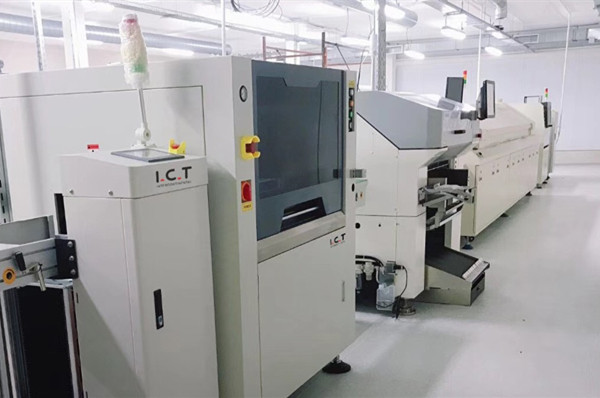
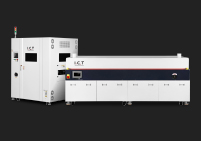
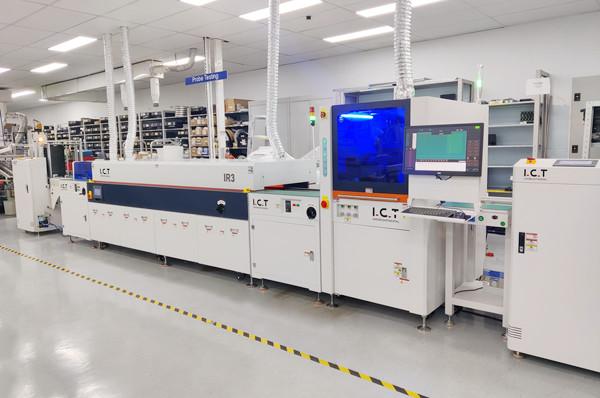
A suitable nitrogen reflow oven should provide reliable sealing, controlled gas distribution, adjustable exhaust, oxygen monitoring, temperature uniformity, recipe storage, and useful alarms.
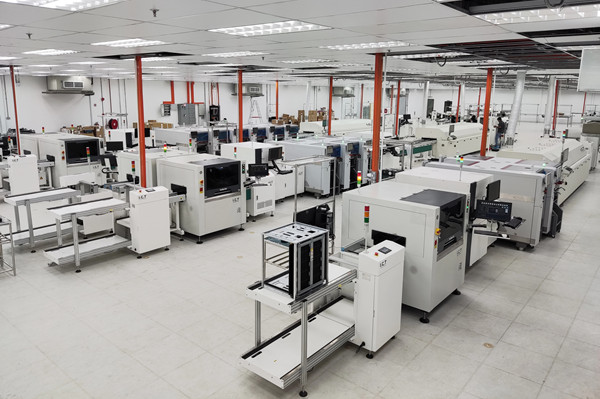
A dependable SMT reflow oven platform should maintain its atmosphere under normal production loading, not only during an empty-chamber demonstration.
Gas consumption depends on flow rate, operating hours, purge cycles, standby mode, startup time, and leakage. Use actual flow data when preparing a budget.
A practical nitrogen consumption calculation can convert flow into hourly, daily, and monthly cost. Include delivery charges, tank rental, generator maintenance, and analyzer service.
Repair leaks, balance exhaust, check valves, and review standby settings before lowering the process target. Once the process is stable, apply nitrogen flow optimization in small steps.
After every change, verify ppm recovery, solder appearance, inspection results, and first-pass yield. Gas savings are successful only when product quality remains stable.
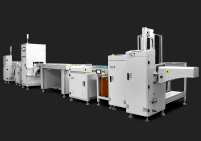
Oxygen settings should be part of the product recipe used across the line. A complete SMT production line can connect printer, placement, reflow, inspection, and traceability information.
For flexible production, a lead-free dual-rail reflow oven should be evaluated for atmosphere consistency on both rails under representative loading.
Confirm analyzer calibration, sampling-line condition, filter condition, and sensor response. Compare the reading with a known reference when available.
A faulty analyzer can lead the team to increase gas flow unnecessarily. Verify the measurement before changing the recipe.
Inspect regulators, valves, filters, pipes, fittings, and injection ports. Confirm that supply pressure and gas purity are within specification.
Look for a valve that does not open fully or a filter that restricts flow. These faults can create high oxygen even when the recipe calls for a normal flow rate.
Inspect tunnel covers, doors, access panels, and conveyor openings. Review exhaust settings and check for recent changes made during maintenance.
If the reading rises when the board load increases, compare the loading pattern with the approved recipe. Board spacing may need adjustment.
When nonwetting or inconsistent fillets appear, check oxygen, paste condition, board finish, print volume, profile, and component placement together.
Use documented nitrogen reflow troubleshooting steps so operators record the evidence and avoid making several uncontrolled changes at once.
The broader nitrogen reflow process guide can be used to connect atmosphere control with thermal profiling, paste selection, and quality verification.
Many production lines operate in the low-thousands of ppm range, while demanding assemblies may target below 1,000 ppm or several hundred ppm. The correct level depends on paste, alloy, board finish, component design, and reliability requirements. Validate the target with representative boards instead of copying a number from another line.
No. Lower oxygen can reduce oxidation, but it may also increase gas consumption and operating cost. If a higher target provides the same wetting and yield, it may be the better production setting. Choose the lowest practical level that creates measurable process value.
Boards can change gas movement and displace nitrogen inside the tunnel. Large panels, tight spacing, conveyor openings, exhaust balance, and weak seals can increase the reading. Measure recovery time and inspect the loading condition before simply increasing flow.
Not always. A leak, low supply pressure, blocked filter, faulty valve, excessive exhaust, or analyzer problem may be the real cause. Check the complete gas and measurement system first. Higher flow without diagnosis can raise cost while leaving the underlying problem unresolved.
Document the normal target, alert limit, action limit, analyzer location, board loading, nitrogen flow, conveyor speed, profile, measurement frequency, and operator response. This turns an oxygen number into a repeatable process control rather than an isolated display value.