English
Views: 0 Author: Elsa Long Publish Time: 2026-10-19 Origin: Site


Ask what a solder paste printer costs and you get an answer spanning nearly two orders of magnitude — from a few thousand dollars for a bench manual printer to several hundred thousand for a fully automatic inline machine with closed-loop control and integrated inspection. That spread is not noise; it is the market pricing three different machines that share a name. A meaningful solder paste printer price therefore cannot be quoted until you know which automation class you are buying, what board size and accuracy you must hold, and which features the price is paying for. The I.C.T solder paste printer range spans that entire ladder, and this guide is written to turn the spread into a set of numbers you can budget against.
The sections below walk the money the way a purchasing decision actually runs. They anchor the price spread in the three automation classes, price each tier honestly including what the sticker hides, name the feature-level drivers that move the number, then convert purchase price into cost per board with a worked amortization model. From there they cover the financing decision — buy, lease or used — and close by building the ROI case that justifies the choice to a CFO rather than just to an engineer. The aim is a price guide you can defend, not a price list you can misread.
Table of Contents
A solder paste printer is not one product at different price points; it is three distinct machine classes that happen to share a job, and their prices differ because their mechanisms, accuracy and throughput differ by an order of magnitude. Understanding the price spread therefore begins not with a number but with a taxonomy — the three automation classes that every vendor's catalog, including ours, is organized around. Once the classes are clear, the spread stops looking arbitrary and starts looking like a map: each dollar of price buys a specific increment of automation, accuracy or capacity, and the only real question is which increments your production actually consumes.
This section establishes that map in three steps. First, it names the three automation classes and the price band each one occupies, so the rest of the guide has fixed reference points. Second, it separates the sticker price from the real acquisition cost — the options, freight, installation, tooling and training that routinely add twenty to forty percent to an invoice that looked settled. Third, it connects price to the two things that ultimately justify it: the process capability the machine delivers and the return on investment the business books, because a price is only ever high or low relative to those.
Every solder paste printer in production belongs to one of three automation classes, and the classes are the cleanest way to anchor any price discussion. Manual printers are the bench-tier entry: an operator positions the board against a stencil by hand, draws a squeegee across it, and inspects by eye — simple, operator-dependent, and priced accordingly. Semi-automatic printers motorize the print stroke and use pneumatic squeegee pressure with a vision or pin alignment aid, removing the most variable human inputs while keeping an operator in the cycle. Fully automatic printers close the loop: motorized transport, automatic vision alignment with closed-loop correction, programmable pressure and speed, and — at the top of the tier — automatic under-stencil cleaning and paste management, running inline at line rate with the operator supervising rather than performing.
The table below sets the working price bands for each class, with the two caveats every purchasing manager should internalize before reading further. First, the bands are wide because the classes are wide: a loaded semi-automatic machine can cost more than an entry full-auto, and the feature list — not the class label — is what sets the final number. Second, the bands are for the machine itself, not the delivered line: options, integration and consumables move the real cost materially, as the next sub-section details. Used as anchors rather than quotations, these bands let the rest of the guide speak about "the entry tier" and "the production tier" without ambiguity.
Automation class | Typical price band | Throughput profile | Best fit |
|---|---|---|---|
Manual / bench | Low single-digit thousands (USD) | Prototype, NPI, very low volume | R&D labs, repair, occasional production |
Semi-automatic | Low-to-mid five figures | Low-to-medium mix, batch production | Growing lines, high-mix, cost-constrained ops |
Fully automatic | Mid five figures to six figures | High-volume, inline, fine-pitch capable | Mainline production, fine-pitch, high repeatability |
The price on a quotation is the beginning of the acquisition cost, not the end, and the gap between the two is where budgets quietly fail. The machine price typically includes the base frame, print head, standard squeegee set and a basic control interface — and nothing else. What it hides is the list that follows: the stencils and squeegees sized to your boards (consumable but bought up front), board support tooling such as dedicated pins or vacuum plates, the vision option that turns "alignment capable" into "alignment automatic," and the transport or stencil-handling options that let the machine actually run your product. Freight, rigging and installation add another line, and training — real, on-your-product training — is often the difference between a machine that prints in a week and one that prints in a quarter.
The disciplined countermeasure is to demand a landed-cost quote, not a machine quote: one figure that includes options, tooling, freight, installation, commissioning and first training, expressed as a line-item list so each can be challenged. Buyers who negotiate the machine price down while the landed cost stays soft have won the wrong argument — the machine price is the most visible and least controllable number, while options, tooling and integration are where both over-spending and under-specification hide. When comparing vendors, compare landed cost against the same specification, because a lower machine price with a smaller feature set is not cheaper if the missing feature arrives as an option on the next line.
A price means nothing until it is divided by what it buys, and what a printer buys is process capability: the deposit accuracy, repeatability and throughput that determine whether your boards solder cleanly and how many you can build per shift. The capability difference across the price ladder is not cosmetic — it shows up in the numbers this guide's companion analysis of why printer repeatability is worth paying for walks through in Cp and Cpk terms. A manual printer's deposit quality varies with the operator's stroke; a full-auto's closed-loop control holds the same deposit within microns across thousands of cycles, and that stability is what lets a high-volume line hit the yield its customers audit.
Price, capability and ROI form a triangle that the rest of this guide keeps closed. The capability you need is set by your product mix and quality obligations; the price that buys it is set by the feature ladder in Section 4; and the ROI is set by whether the throughput and yield the capability unlocks repay the price before the machine ages. The most expensive mistake in the category is buying a price instead of a capability — a machine chosen to minimize the invoice that then cannot hold the fine-pitch tolerance the product demands, and whose apparent savings evaporate into rework within a quarter. Get the three bound together, and the whole solder paste printer cost and ROI question answers itself in arithmetic rather than argument.
The entry tier — manual and semi-automatic printers — is where most lines start and where many should stay, because the machines are inexpensive, simple to maintain and genuinely sufficient for a large share of real production. Pricing this tier correctly is less about finding the lowest number and more about knowing where manual ends and semi-automatic begins, and what that boundary costs. The two classes share a market position but differ sharply in what the operator contributes, and that difference is the single most important line in the tier's value story.
Three sub-sections price the tier from the bottom up. Manual printers come first: what they cost, what they do well, and the operator-dependence that caps their ceiling. Semi-automatic printers come second, as the value sweet spot where a modest price increase buys back most of what manual printing gives away in consistency. The tier closes with the honest question — when is the entry tier the right permanent home rather than a stepping stone — because spending more for automation you do not need is a real and common overspend.
Manual printers occupy the lowest price band in the category, typically a few thousand dollars for a benchtop unit consisting of a frame, a stencil fixture and a hand squeegee. The economics are simple because the mechanism is simple: nothing is motorized, so there is no drive, no controller and no pneumatics to purchase or fail. What the price buys is a repeatable stencil-to-board registration fixture — the frame holds board and stencil in a fixed relationship — plus the operator's skill in controlling squeegee angle, pressure and speed by hand. For prototyping, rework and very low volume, that is exactly enough, and the machine's total cost of ownership is dominated by the stencil and the paste, not the equipment.
The ceiling is equally simple to state: every deposit's quality traces directly to the operator's hand, so consistency across a shift, across operators and across weeks is bounded by human repeatability, and there is no data trail to tell you when that repeatability drifts. Manual printing is therefore a process you trust, not one you control — acceptable where a board is printed once for a prototype, unacceptable where a thousand boards must solder identically for a customer's acceptance test. Buyers who understand that ceiling spend exactly the manual price and no more, and graduate the moment the volume or quality requirement stops being occasional.
Semi-automatic printers motorize the print stroke and apply squeegee pressure pneumatically, removing the two most variable human inputs while keeping an operator in the cycle to load, align and unload. The price sits in the low-to-mid five figures, and the value of that increment is concentrated in one word: repeatability. Where a manual printer's deposit depends on how steadily a hand moves, a semi-automatic applies the same programmed speed and pressure to every stroke, so the dominant variation source stops being the operator and starts being the process — stencil condition, paste rheology, environment — the causes this guide's earlier sections treat as controllable rather than personal. That is a capability threshold, not a convenience, and it is why the semi-automatic class is where genuine production, as opposed to prototyping, typically begins.
The price within the tier varies with the extras that matter most in production: a vision alignment aid instead of manual pin alignment, a table size that fits your board, and squeegee options suited to your paste and aperture mix. This is the tier where a spec-first purchase pays off — see our guide to matching a printer to your line's requirements — because the base machine is sound across vendors and the differences that decide your yield live in the options. For a line whose volume is real but whose budget is not yet mainline, the semi-automatic class is usually the correct landing point, and the cost-per-board arithmetic in Section 5 shows why the step up from manual almost always pays for itself quickly once volume crosses a modest threshold.
The entry tier is not a temporary compromise to be escaped; it is the correct permanent answer for a definable set of operations, and buying past it is an overspend every bit as real as buying below it. The right-buy conditions are concrete: volume low enough that an operator's time at the machine is not the bottleneck, mix diverse enough that a changeover-heavy day spends more time loading stencils than printing, pitch coarse enough that hand or vision-assisted alignment comfortably holds registration, and quality obligations that do not require a machine-generated process record. R&D labs, repair and rework benches, NPI lines and contract manufacturers whose runs are short and varied all live comfortably in this tier for years.
The honest test is whether the operator is the process's weakest link, and if not, whether paying for automation changes a number anyone cares about. A line printing a few hundred coarse-pitch boards a month gains nothing measurable from closed-loop pressure control — the operator's consistency is already adequate, and the money buys features that never turn on. The disciplined buyer therefore prices the entry tier against today's requirement plus a defensible growth margin, not against an imagined mainline future, and lets the semi-automatic step be the graduation that volume — not ambition — triggers. This is the same cost-versus-need logic that runs through every tier of the stencil printing machine category, and it rewards buyers who can name the specific increment they are paying for.
The fully automatic inline printer is where price climbs steeply, and where the climb is easiest to justify on paper because it buys the two things a mainline cannot do without: unattended repeatability and line-rate throughput. These machines motorize everything — transport, alignment, print, cleaning and paste management — and close the loop with vision that measures and corrects its own registration cycle to cycle. The price band runs from the mid five figures for a standard full-auto to six figures for extended-length, specialty and high-accuracy machines, and understanding what each increment buys is the entire skill of pricing this tier.
This section reads the tier from three angles. First, it enumerates what full automation actually adds to the invoice — the closed-loop control, automatic cleaning and data capability that separate it from the semi-automatic below. Second, it distinguishes the standard full-auto from its extended-length and specialty cousins, where board size and niche demands drive price in ways the class label hides. Third, it turns a spec sheet into a value read, so a buyer can tell which line items are capability they will use and which are premium they will not.

The price step from semi-automatic to full-automatic is not a luxury charge; it purchases concrete mechanisms that each appear as a line item. Closed-loop print-head control — pressure, speed and stroke all measured and corrected against setpoints — is the single largest cost driver, because it replaces open-loop pneumatics with servos, sensors and the control software to govern them. Automatic vision alignment with closed-loop correction adds cameras, axis drives and the algorithm layer that measures fiducials and repositions the board, which is what turns repeatability from operator-dependent to machine-guaranteed. Automatic under-stencil cleaning adds a wiping mechanism and its consumables, and at the top of the tier, closed-loop paste management meters and monitors the paste roll itself.
Beyond the mechanics, full automation buys the two capabilities that high-volume production and modern customers actually demand: a process record and line integration. A full-auto machine logs its parameters and alignment results, producing the data trail that quality audits and capability programs — the Cp and Cpk work covered elsewhere in this guide — cannot run without. And it integrates with upstream and downstream equipment through the SMEMA handshake and with inspection through native data exchange, so the printer participates in a coordinated line rather than standing alone. Each of these has a price; none is optional once the line's throughput and auditability requirements reach mainline scale. When specifying, a buyer should be able to point at which of these increments the money is buying, as the spec-read in the third sub-section demonstrates.
Within the full-auto tier, price splits again along a physical axis: board size and the machine rigidity it demands. A standard full-auto handles the common PCB formats — the panel sizes that dominate consumer and industrial electronics — on a compact frame. Extended-length and large-format machines stretch the transport, the stencil frame and the support structure to print boards that a standard machine cannot physically accept: the meter-class LED boards, backplane and server formats, and long control-board panels that drive the dedicated machines in the category, such as the I.C.T 4034 fully automatic printing machine engineered for larger-format production. The price premium is structural: a longer casting, wider transport, larger stencil frame and the stronger support that keeps a long board flat through the print all cost money in proportion to the dimension, not the value.
Specialty machines layer still more price on top for niche capability: high-accuracy variants with tighter alignment for fine-pitch and advanced packaging, dual-lane configurations for parallel throughput, and machines tuned for particular pastes or stencil systems. The purchasing discipline here is to buy dimension and specialty against a named product, never against a hypothetical. An extended-length machine that spends its life printing standard panels is a premium paid for capability that never loads; a standard machine asked to print a long board is a capability gap that shows up as scrap. The correct specification is set by your largest and tightest board, not your average one, and the price is then the honest cost of covering that extreme.
A full-auto spec sheet is a list of capabilities, and the buyer's job is to sort it into three buckets: must-have, pay-if-cheap, and premium-to-skip. Must-haves are set by the product and the audit: repeatability specification sufficient for your tightest pitch, board size covering your largest panel, closed-loop alignment if fine pitch demands it, and the process-record capability your customers or your own capability program require. Pay-if-cheap are the genuine conveniences — automatic paste dispense, faster vision, tooling options — that justify their cost only when the vendor prices them reasonably and the line will actually use them. Premium-to-skip are the headline features that sound valuable but sit idle on most lines: a spec's top accuracy band when your pitch is coarse, dual-lane when your volume does not need it, or specialty options for products you do not build.
The value read then reduces to a comparison against the machine's repeatability and throughput numbers, because those — not the feature count — are what the price ultimately buys. Two machines at the same price can differ by a wide margin in the accuracy that matters; two machines at different prices can be equal where it counts. Buyers who sort the spec into those three buckets and then compare on repeatability, board coverage and support — the drivers named in the next section — routinely find that the "more expensive" machine is the cheaper one once idle premium is removed. The alternative — choosing by feature count — is how lines end up paying top-tier price for mid-tier yield.
Across all three classes, the same feature families set the price, and learning them turns a quotation from a mystery into a menu. Each family adds capability that is either consumed by your product or wasted on it, and the price is justified only in the first case. The three families that dominate are the print head and its control sophistication, the board-and-stencil handling envelope, and the less tangible but decisive factors of brand, support and origin. Understanding them lets a buyer decompose any quote into the increments it actually contains — and see, line by line, what is moving the final solder paste printer price.
The three sub-sections take the families in order of price impact. Print-head and alignment capability comes first, because it is the largest and most defensible driver and the one most directly tied to yield. Board size, stencil handling and line integration come second, as the physical and system envelope that sets hard price steps. Brand, support and origin close the section, because they explain the residual price difference between machines with identical-looking specifications — and they are where the real delivered cost often hides.
The print head is where the price of a printer is concentrated, because it is where repeatability is manufactured. A basic head applies a fixed pneumatic pressure with an open-loop stroke; each step up — programmable pressure, independent per-side control, servo-driven speed and stroke, closed-loop correction against measured force — adds mechanism, sensing and software, and each appears on the invoice. Alignment capability tracks the same curve: manual pin alignment costs least, vision-assisted adds a camera and display, and fully automatic vision alignment with closed-loop correction adds the axis drives and algorithm that make registration a measured, corrected quantity rather than an operator's hope. For fine-pitch work, this is the difference between a process you can hold and one you can only attempt.
The purchasing rule is to price this family against your tightest pitch and your quality obligation, because it is the one place where under-specification is genuinely expensive and hard to fix after the fact. A machine whose repeatability is inadequate for your component mix cannot be fixed with a recipe change or a better stencil; it is a machine-class shortfall that shows up as bridging and opens until the machine is replaced. Over-specification, by contrast, is cheap insurance but still money: paying for a top accuracy band you will never use is a real cost. The correct spec sits where your tightest pitch, with margin for stencil and paste variation, meets the machine's stated repeatability — the same capability arithmetic that ties this price driver back to the Cp and Cpk discussion earlier in the guide.
The physical envelope drives price in hard steps rather than smooth increments. Board size sets the frame, transport and casting dimensions, and beyond a threshold those dimensions grow cost faster than they grow value, because a long machine is heavier, more rigid and more expensive to ship and install. Stencil handling follows: manual stencil change is cheapest, semi-automatic clamping adds mechanism, and automatic stencil storage and changeover — where the machine holds a magazine of stencils and swaps them without operator intervention — adds a substantial line item that only high-mix, high-changeover operations actually consume. Line integration rounds out the family: the SMEMA handshake is baseline, while native data exchange with SPI and MES systems adds interface work that is invaluable for capability programs and irrelevant for a standalone line.
The price discipline for this family is to size it to your changeover reality. A high-mix line that swaps stencils several times a shift should price automatic stencil handling into its budget, because the operator time saved compounds daily; a line running one product all week should not, because the mechanism sits unused. The same logic applies to board size and integration: each is a step function, and buying the step above your need is the most common overspend in this family. The worked cost-per-board model in the next section makes these trade-offs quantitative, showing how many boards a feature must save before its price is recovered.
When two machines carry identical specifications but different prices, the residual is explained by the factors that do not appear on the spec sheet: brand, support infrastructure and origin. Established brands price in the reliability track record, the availability of spares and the engineering support that a production line leans on when a machine misbehaves at 2 a.m. Origin matters through the cost and lead time of that support — a machine whose factory, service engineers and spare-parts stock are local recovers from downtime in hours, while one supported by a distant supply chain recovers in days, and that difference is worth money on a line that earns by the hour. None of this is on the quotation; all of it is in the total cost of ownership.
The purchasing rule is to price the support contract into the acquisition, not around it. A cheap machine with a thin support story is not cheap if its first unplanned stop costs the line a production day that the margin on the machine never covered; a pricier machine with responsive local support converts downtime from a catastrophe into a schedule note. The honest comparison is therefore landed cost plus a quantified support risk, not machine price alone. This is the same total-cost logic that governs the category's operating expenses, and it is why the ROI model in Section 7 weights support and downtime as first-class inputs rather than footnotes.
Purchase price is a one-time number; what a line actually lives with is cost per board — the capital, consumables and labor spread across every board the machine prints over its useful life. The conversion is where a price guide earns its keep, because it is the number that decides whether a machine is expensive or cheap in the only sense that matters: what it costs per unit of output. Two printers with very different prices can post nearly identical cost per board once volume is considered, and a machine that looks expensive on the invoice can be the cheapest in the fleet per board.
Three sub-sections build the model from its parts. Capital amortization comes first, spreading the acquisition cost across board volume and showing how volume, not price, dominates the result. Consumables and labor come second, because they accrue per board forever and frequently outweigh the machine over its life. The section closes with a worked comparison across the three automation classes, using stated assumptions so the arithmetic can be rerun for any line's actual numbers.

The first conversion spreads the landed cost — machine plus options, tooling, freight, installation and commissioning — across the boards the machine will print before it is replaced or written off. The arithmetic is simple and the lesson immediate: a fifty-thousand-dollar machine printing ten million boards over five years contributes half a cent per board in capital; the same machine printing fifty thousand boards over the same period contributes a dollar per board. Capital cost per board is a volume function, not a price function, and it is the reason the automation tier must be matched to throughput — paying full-auto price for semi-automatic volume multiplies the per-board capital cost by the volume gap and guarantees the machine never earns its keep.
The amortization window matters as much as the numerator. Solder paste printers are mechanically durable and electronically replaceable; a well-maintained machine commonly earns ten or more years of service, though five to seven years is the sensible financial write-off window that aligns with the pace of process and product change. Buyers who amortize over too short a window inflate the per-board cost and reject machines that would have been profitable; buyers who stretch the window beyond the product's likely life understate it. The honest model uses a window matched to the production plan — five years for a stable high-volume product, shorter for a line whose mix will churn the machine out of relevance — and states the assumption so the model can be re-run when the plan changes.
Capital is only the first term; the accruing costs of consumables and labor ride on every board the machine prints. Consumables in this category are substantial and recurring: stencils wear and are replaced, squeegee blades erode, under-stencil wiping material is consumed continuously, and paste itself is metered onto every print with a transfer efficiency below unity that leaves residue in the cleaning stream. These are not incidentals — over a machine's life, consumables routinely exceed the purchase price, and the consumption rates are set in part by the machine's own design: a printer whose cleaning regime is efficient wastes less paste and fewer wipes per board than one that is not, a difference this guide's companion piece on what stencil cleaning adds to operating cost quantifies directly.
Labor is the second accruing term and the one automation most directly attacks. A manual printer consumes an operator's full attention per board; a semi-automatic consumes an operator's hands but less judgment; a full-auto consumes an operator's supervision across a running line, which is why the full-auto's labor cost per board collapses at volume even though its capital cost is highest. The correct comparison therefore never pits machine price against machine price; it pits total cost per board — capital, consumables and labor together — against total cost per board. That comparison, worked through in the next sub-section, is where the tier decision becomes arithmetic, and where the price spread that opened this guide finally resolves into a recommendation.
The table below works the three classes through the same model at two volumes — a low-volume line at one hundred thousand boards per year and a high-volume line at one million — using rounded assumptions for landed cost, consumables and labor so the structure, not the specific numbers, is what transfers. The pattern is the lesson: at low volume, capital dominates and the manual or semi-automatic machine wins on cost per board; at high volume, labor and throughput dominate and the full-auto's higher capital is amortized across so many boards that its total per-board cost falls below the manual's, despite the price gap. The crossover is the number a purchasing decision actually turns on.
Reading the table correctly means reading the assumptions as inputs, not verdicts. Every line's numbers differ — wage rates, paste costs, changeover frequency and yield all move the crossover point — and the model's value is that it shows which input moves the answer most, so a buyer can focus the negotiation and the verification where they matter. The next section extends the same disciplined arithmetic to the financing question, and Section 7 closes the loop by adding the revenue and defect-cost terms that turn cost per board into a return on investment.
Automation class | Landed cost (assumed) | Low volume (100k/yr) $/board | High volume (1M/yr) $/board | Dominant cost term |
|---|---|---|---|---|
Manual / bench | $4,000 | Low (capital ~$0.01) | High (labor-bound) | Labor |
Semi-automatic | $35,000 | Low–mid (capital ~$0.07) | Mid (labor + consumables) | Labor / consumables |
Fully automatic | $150,000 | High (capital ~$0.30) | Lowest (labor amortized) | Capital → labor at volume |
The cost-per-board table above counts capital, consumables and labor, but it leaves out the term that frequently dwarfs all three: the scrap, rework and escapes that a printer's repeatability either causes or prevents. A low-capability machine produces deposits that fail at reflow — bridges and opens that either scrap the board, consume rework hours at AOI, or escape to the customer as a field failure. Those costs accrue per board exactly like a consumable, and they are the quiet reason a machine's true per-board cost can be double the visible number while the purchasing report still shows only the capital and labor lines. Folding yield into the model is not refinement; it is the difference between a cost model and a cost fantasy.
The yield term is also where the price-versus-capability decision from Section 1 finally shows its payoff, and where the full solder paste printer cost and ROI picture comes into focus. A pricier printer that holds fine-pitch repeatability converts into fewer defects per thousand boards, and that defect delta, priced honestly, is usually larger than the entire price difference between tiers. Buyers who model yield as a first-class input — measured from their own line's current scrap and rework data, then stress-tested in the sensitivity run — routinely discover the ROI case is won or lost on this one term, which is exactly why the next section and the final ROI build treat it as a headline input rather than a footnote.
How a machine is paid for changes its economics almost as much as what it costs, and the three standard routes — outright purchase, lease or financing, and the used market — each fit a different balance sheet and risk posture. The decision is not purely financial; it is a judgment about cash flow, product horizon and support appetite, and the right answer for a start-up contract manufacturer is often the wrong answer for an established OEM. This section lays out the trade-offs so the financing choice is made deliberately rather than defaulted to.
Three sub-sections cover the routes. Leasing and financing come first, with the cash-flow and risk logic that makes them attractive when they are and expensive when they are not. The used market comes second, pricing its genuine savings against the support and condition risks it imports. The section closes by budgeting the hidden costs beyond the invoice — downtime, training, spares and integration — that attach to every route but land differently on each.
Leasing and financing exchange a lump capital outlay for a recurring payment, and the value of that exchange is cash-flow preservation: a line that must fund growth, materials or payroll out of operating cash may find a monthly payment far easier to absorb than a single capital hit, even if the total paid over the term exceeds the purchase price. The trade-off is explicit — the finance cost is the interest and fees on top of principal — so the decision is whether the preserved cash earns more than the finance cost elsewhere in the business. For a fast-growing operation where every dollar of working capital compounds, financing a printer at a modest rate is frequently rational; for a cash-rich operation with idle balances, it is a premium paid for convenience.
Two conditions sharpen the lease decision. First, the product horizon: financing a machine over five years against a product whose run will end in two strands the payments against a machine that may sit idle, so the term should be matched to the production plan just as the amortization window was in Section 5. Second, the residual and upgrade path: some leases bundle the option to return or upgrade, which matters where process requirements — pitch, board size, inspection integration — are likely to tighten before the machine ages out. Leasing is a decision about time, not just money, and it rewards buyers who know how long they will need the machine and how the need may change.
The used market prices a working printer at a fraction of new — often a third to half for a well-kept machine a few years old — and that discount is real and legitimate, not a trap. For a low-volume or budget-constrained line, a used full-auto or a late-model semi-automatic can deliver mainline capability at entry-tier cost, and many productive lines run entirely on secondhand equipment. The savings are concentrated in the capital term, which matters exactly where volume is low and capital dominates the per-board cost, as the Section 5 model showed. The risk is that a used machine imports its history: worn print-head mechanics, an aging stencil system, an obsolete control platform, and no vendor warranty to catch what the eye cannot see.
The disciplined approach prices the used machine as landed cost plus a support budget, not as the sticker discount alone. The condition questions to answer before buying are mechanical — squeegee and drive wear, stencil-frame flatness, board-support condition — and electronic — controller age, software version and the availability of spares for a discontinued model. The support question is decisive: a used machine from a vendor who still supports the model, or who certifies and warranties it, is a different asset from a private-sale machine with no parts path. Buyers who answer those questions honestly can bank a real saving; buyers who price only the discount often find the discount is what the previous owner knew.
Every route carries costs the invoice does not show, and the honest budget names them before they arrive. Downtime is the largest and least planned: a printer is a single point of failure at the head of the line, and an unplanned stop idles the entire SMT cell, so the cost of a day of downtime — labor, schedule slip, missed shipment — belongs in the acquisition math as a risk-weighted term, not a surprise. Training is the second: a machine that ships without real, product-specific training prints below its capability for weeks, and that gap is a cost whether it appears as scrap or as a consultant's invoice. Spares and consumables stocking is the third: the first consumable shortage stops the line exactly when the parts lead time is longest.
The routes distribute these costs differently, which is why the choice matters. A new machine with a service contract and local support carries the lowest downtime risk and the highest purchase price; a used machine inverts that. A lease may bundle maintenance into the payment, moving the risk to the lessor at a price. The budgeting discipline is to attach an expected value to each hidden cost per route and add it to the landed cost before comparing — the same total-cost discipline this guide has applied throughout. A price guide that ignores these is quoting a number, not a cost, and the difference is what separates a budget that survives production from one that does not.
Cost per board tells you how much a machine costs; return on investment tells you whether that cost is worth incurring, and the two are not the same question. An ROI case converts the machine's effect on throughput, yield, labor and scrap into money, compares that money to the acquisition cost, and states the payback period a CFO can approve against. Built properly, it is what turns this price guide's arithmetic into a purchase order — and what exposes the machines that should not be bought regardless of how attractive their price looks.
Three sub-sections build the case. The ROI model inputs come first, separating the terms that genuinely move the return from the ones that pad a spreadsheet. Sensitivity comes second, because an ROI number is only as good as the assumptions beneath it, and knowing which assumption breaks it is worth more than the point estimate. The section closes with a decision checklist that compresses the whole guide into the sequence a purchasing review actually runs, before the final recommendation.
An honest ROI model for a printer has five inputs, and the discipline is to quantify each rather than gesture at it. Throughput is first: the boards per shift the machine adds, multiplied by the line's earning rate, which is the single largest return term and the reason automation pays at volume. Yield is second: the defect reduction that flows from better repeatability, priced as the scrap, rework and escapes the current process produces — a term that is easy to understate because it hides in AOI and rework hours. Labor is third: the operator time released, priced at loaded wage. The acquisition and operating costs are fourth and fifth, carried over from Sections 5 and 6. Where the alternative process is a different technology entirely, the comparison widens — the cost crossover between stencil and jet printing is worked explicitly in our analysis of the cost crossover between stencil and jet printing, and the solder paste jet printing machines it prices sit on the other side of that line for their niche applications.
The return is then a straightforward discounted cash flow: the incremental operating benefit each year, minus the incremental operating cost, set against the acquisition outlay, with the payback period and the internal rate of return as the two headline outputs. The most common error is double-counting — crediting a yield gain and a throughput gain that are the same boards — and the second most common is leaving a term as a placeholder that then dominates the result. A model where the labor term is "to be confirmed" is not a model; it is a hope with formatting. The correct model quantifies every input from line data or a defended estimate, states the assumptions on the page, and lets the sensitivity analysis in the next sub-section do the arguing.
A single ROI number is a claim; a sensitivity table is a decision. The point of testing the model is to find which input, when moved by a realistic amount, flips the answer from buy to do-not-buy — because that input is where the buyer's verification effort and the negotiation should concentrate. In printer economics the usual suspects are volume and yield. Volume is the fragile one: the ROI of a full-auto depends on the throughput actually materializing, and a line that buys against a projected order that slips converts a strong ROI into a stranded asset. Yield is the uncertain one: the defect reduction the machine promises must be real and measured, and it is the term most often overstated by vendors and most easily verified by a pilot or reference line.
The disciplined practice is to run the model at a base, an optimistic and a pessimistic case, and to read the spread rather than the midpoint. If the pessimistic case still pays back within the amortization window, the decision is robust and the risk is bounded; if only the optimistic case works, the decision is a bet, and the buyer should either renegotiate the price, secure the volume, or walk. Sensitivity also disciplines the after-purchase review: the same inputs that justified the buy become the metrics the line must actually deliver, and a machine that was sold on a yield gain should have that gain measured and reported against the model. This is where the price guide closes the loop it opened — price, capability and ROI bound together, argued with numbers from first quotation to post-install audit.
A computed return only becomes a purchase when it survives the writing down, and the discipline of putting the case on paper catches what the spreadsheet hides. The justification should state, in this order: the automation class and why it matches the volume; the specification set against the tightest product; the landed cost with every line item; the cost per board at real volume; the financing route and support risk; and the ROI with its sensitivity table, naming the input that would flip the decision and what has been done to de-risk it. Writing it in that sequence forces the same logical order the purchase review will demand, and a case that cannot be written in that order usually has a hole the spreadsheet is concealing.
The written case doubles as the after-purchase contract with yourself: the throughput, yield and labor gains it promises become the metrics the line reports against once the machine is installed, and a vendor whose machine was justified on a yield claim should be held to that claim in the post-install audit. This is the final way the guide's three threads stay bound — the price you pay, the capability you get, and the return you book are the same story told from three directions, and the full solder paste printer cost and ROI narrative is only defensible when all three agree. A purchase that passes this written test is one a purchasing manager can sign, an engineer can stand behind, and a CFO can re-read a year later without flinching.
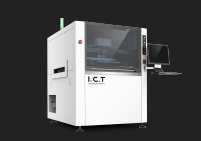
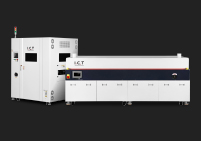
The checklist below compresses the entire guide into the sequence a purchasing review runs, ordered so each step's output feeds the next: class first, specification second, cost third, financing fourth, ROI last. A review that runs the table top to bottom produces a decision with a number, an owner and a defensible basis; a review that skips to price produces exactly the kind of purchase this guide exists to prevent. The two production-tier machines named across the category — the I.C.T Dek fully automatic solder paste printing machine and its extended-length sibling referenced earlier — illustrate the spec-and-price position at the top of the ladder, but the checklist applies unchanged at every tier.
Step | Check | Pass criterion | If failed |
|---|---|---|---|
1 | Automation class vs volume & mix | Class matched to throughput & changeover reality | Re-tier before pricing anything |
2 | Specification vs tightest product | Repeatability, board size, alignment cover the extreme | Re-spec; do not buy a gap |
3 | Landed cost, all-in | Options, tooling, freight, install, training itemized | Demand landed quote; challenge line items |
4 | Cost per board (capital + consumables + labor) | Total cost per board favorable vs alternatives | Rerun at real volume; verify assumptions |
5 | Financing route & support risk | Route matches cash flow & horizon; support priced | Price support/downtime risk explicitly |
6 | ROI with sensitivity | Pessimistic case pays back within window | Renegotiate, secure volume, or walk |
Pricing a printer for your line, not for a brochure
A solder paste printer price only means something against a specification, a volume and a yield target — which is why a real quotation starts with your product, not with a catalog number. The right machine is the one whose repeatability covers your tightest pitch, whose board envelope covers your largest panel, and whose landed cost, cost per board and ROI all clear the thresholds this guide lays out. Across the manual, semi-automatic and fully automatic classes, the I.C.T solder paste printer range spans the entire ladder priced here, with the production-tier machines, extended-length options and the support infrastructure behind them to turn a price into a defensible cost per board rather than a hope. Browse the stencil printing machine category to match a class to your volume, or contact our team with your throughput, yield and labor assumptions — we will run the amortization and ROI model against your numbers, stress-test the sensitivity, and hand back the comparison you can take into the purchase review, before you commit a dollar.
It depends entirely on the automation class: manual bench printers run in the low thousands of dollars, semi-automatic machines typically sit in the low-to-mid five figures, and fully automatic inline printers range from the mid five figures to six figures for extended-length or specialty machines. The wide bands reflect the wide capability gaps between classes, and the delivered cost — with options, tooling, freight, installation and training — runs twenty to forty percent above the base machine price, so always budget against a landed quote rather than a sticker price.
Price is the one-time acquisition number; cost per board spreads capital, consumables and labor across every board the machine prints over its life, and it is the figure that actually decides whether a machine is cheap or expensive. A high-price fully automatic printer can deliver the lowest cost per board at high volume because its labor and yield advantages amortize across millions of boards, while a cheap manual printer becomes expensive per board when an operator's time is the bottleneck. Volume, not price, dominates the result.
Buy when cash is available and the product horizon is long, because it carries the lowest total cost. Lease or finance when preserving working capital matters more than the finance cost, and match the term to how long you will actually need the machine. Buy used when volume is low and capital dominates the per-board cost, but only after verifying mechanical condition and — decisively — that a parts and support path exists for that model. The routes distribute downtime and support risk differently, so price those risks into the comparison rather than comparing sticker numbers alone.
Payback depends on the throughput, yield and labor gains the machine actually delivers against its landed cost, and well-justified purchases commonly pay back in one to three years at production volume. The honest test is a discounted cash flow with a sensitivity table: if the pessimistic case — slipped volume, conservative yield — still pays back within the amortization window, the decision is robust; if only the optimistic case works, renegotiate or secure the volume first. A machine sold on a yield gain should have that gain measured and reported after install.
Three feature families set the price. The print head and its control sophistication — programmable pressure, servo drive, closed-loop correction — is the largest driver, because it is where repeatability is manufactured; alignment capability tracks the same curve from manual pin to closed-loop vision. Board size and stencil handling set hard step-price increases, especially extended-length and automatic stencil-change machines. Brand, support and origin explain the residual difference between identical-looking specs, and they show up in total cost of ownership through downtime and spares, not on the invoice.
For low volume, coarse pitch and varied mix, yes — a manual printer is a legitimate permanent tool, not a compromise, and buying automation you do not need is a real overspend. It stops being enough when consistency or a process record matters: every manual deposit depends on the operator's hand, so across a thousand boards the quality is bounded by human repeatability and there is no data trail. That threshold — where repeatability and auditability begin to matter — is exactly where the semi-automatic tier earns its step up in price.
Budget for four that routinely surprise buyers: downtime, the largest and least planned, since a printer is a single point of failure that idles the whole line; training, because a machine that ships without product-specific training prints below capability for weeks; consumables stocking, because stencils, squeegee blades and wiping material recur continuously and over the machine's life can exceed its purchase price; and spares plus support, where local availability converts an unplanned stop from days into hours. Attach an expected value to each per route and add it to the landed cost before comparing options.
Compare landed cost against the same specification, then compare on the numbers that matter — repeatability for your tightest pitch, board coverage for your largest panel, throughput, and the support and downtime risk behind each machine. Sort each spec into must-have, pay-if-cheap and premium-to-skip, and strip out the idle premium both carry. Finally, run both through the same cost-per-board and ROI model at your real volume, because the more expensive machine is frequently the cheaper one once labor, yield and idle features are counted.