English
Views: 0 Author: Elsa Long Publish Time: 2026-10-19 Origin: Site


A stencil spends its life being gradually clogged. Solder paste dries in apertures, flux residue builds on the underside, and every print after the first few hundred transfers slightly less material than the one before — until the line compensates with pressure, the SPI machine starts flagging, and someone wipes the foil by hand at the machine. A deliberate cleaning program replaces that drift with a controlled restoration step, and the equipment that delivers it matters more than most lines admit: the solder paste stencil cleaning machine for SMT printing you choose determines how completely apertures are cleared, how long a stencil lasts, and how much operator time the whole cycle consumes. It belongs to the stencil-care product family rather than to the printer itself, and the I.C.T solder paste printing machine portfolio is built around exactly that pairing — printers on one side, the stencil care that keeps them printing on the other.
This guide walks the choice the way an engineer would actually make it. It starts with why cleaning decides print quality, then steps through the three method families — manual, ultrasonic and automated spray — and the chemistry each one pairs with. It sizes the mechanical questions: stencil formats, frames, capacity and cycle time. It prices the three methods against each other on total cost of ownership, and closes with a decision checklist matched to volume, product mix and the printer class you run. The aim is a selection you can defend with numbers, in an area of the line where defaults are usually inherited rather than chosen.
Table of Contents
Why stencil cleaning decides print quality — and what a solution includes
The three cleaning methods: manual, ultrasonic and automated spray
Cleaning chemistry: solvent, saponifier and the water-based shift
Stencil cleaning is not housekeeping; it is a print-quality process wearing a maintenance costume. The paste in an aperture is subjected to shear during the print stroke, to drying between strokes, and to slow separation from the aperture walls as residue accumulates — and the transfer efficiency of small apertures degrades measurably as the foil ages between cleanings. Lines that clean on a schedule hold their deposit volumes flat; lines that clean reactively, when an operator notices smearing, run a slow saw-tooth of quality that the SPI machine eventually reports as drift. The cleaning step is also where stencils die early: aggressive manual scrubbing, wrong solvents and metal tools shorten foil life by destroying tension and aperture walls, and a stencil that costs hundreds of dollars is a consumable whose life depends almost entirely on how it is cleaned.
A "cleaning solution" is therefore wider than the machine. It is the method (how the cleaning energy is applied), the chemistry (what dissolves the paste and flux), the mechanical envelope (which stencil formats and frames the machine accepts), the cycle discipline (when and how often cleaning happens), and the verification that proves the stencil returned to service-ready. The subsections below frame these five components and show why each one limits the others — a decision on chemistry constrains the machines available, a decision on capacity constrains the cycle, and so on down the chain that Sections 2 through 5 unpack one at a time.
Three residues compete for the aperture. The first is paste itself: in fine apertures, the last portion of paste to leave the foil on each print is the portion most likely to stay behind, dry, and narrow the opening for every subsequent print. The second is flux residue, deposited on the underside of the foil by contact with the board and thinning progressively until it migrates into apertures and prints as smearing. The third is the reaction product of both — partially cured paste mixed with flux, which after a shift or a weekend becomes the hardened plug that no wipe will move. The rate depends on the process: fine-pitch and small-aperture work clogs fastest, water-wash pastes behave differently from no-clean pastes, and pause time (lunch breaks, shift ends, weekends) is when residue sets hard.
This is why cleaning frequency is a process decision rather than a preference. Understencil wiping at the printer handles the underside between prints; the deep clean of the full foil — apertures, underside, and paste wetted out of the mesh — has to be scheduled before the third residue forms. A line that deep-cleans stencils at the right interval prints with stable transfer efficiency for the life of the foil; the same line cleaning at half that interval spends its shift compensating for clogged apertures. The interval itself is discovered from data — deposit-volume trends and the failure signatures described in the companion SPC program that exposes stencil contamination trends — rather than guessed, and it drives every capacity decision in Section 4.
Because the machine, the chemistry and the discipline are chosen separately and interact constantly, it pays to name the components before comparing any of them. The method is the energy source: a wipe and solvent by hand, cavitation from an ultrasonic bath, or pressurized spray from an automated machine. The chemistry is the fluid: solvent, aqueous saponifier, or plain water in the specific formulations the paste maker licenses for its product. The envelope is the mechanical fit: stencil dimensions, frame formats, and whether the machine handles framed and frameless foils. The cycle is the operating rhythm: how many stencils per day, how long each wash-and-dry takes, and who attends the machine. The verification is the proof: the visual, tension and aperture checks that certify a cleaned foil before it returns to the printer.
The interactions are the reason a solution is chosen as a package. An automated spray machine dictates water-based chemistry or sealed solvent handling; a solvent process may rule out the tap-and-drain simplicity of an aqueous one; a high-mix line whose stencil count per day exceeds the capacity of a bench-top unit will find its chemistry options narrowed to what the larger machine accepts. Sections 2 and 3 take the method and chemistry axes in turn, Section 4 the envelope, Section 5 the cycle and verification, and Section 6 the cost — in that order, because it is the order in which the constraints propagate.
The stencil-care family and the printer are adjacent products, not the same product, and the boundary is worth drawing precisely. The printer performs its own daily understencil wipe — dry, wet or vacuum, on a programmable interval — and that in-line wipe handles the underside residue between prints. The cleaning machine performs the deep clean: a periodic, off-line restoration of the whole foil. The two are complements, and a strong understencil program does not remove the need for deep cleaning; it only extends the interval. The printer class also sets the stakes: a high-speed automatic line printing tens of thousands of deposits a shift magnifies any transfer-efficiency loss, which is why the choice of cleaning hardware scales with the printer class it serves — a point the guide on the printing machine behind a clean stencil develops from the printer side.
The practical consequence for selection is to size the cleaning solution against the printing process it serves, not in isolation. Count the stencils in circulation, the products they serve, the paste types in use and the shift pattern, and the requirements for the cleaning side fall out with surprising precision. A line running two products on a semi-automatic printer has a fundamentally different cleaning problem from a high-mix contract manufacturer with two hundred stencils in rotation — and the sections that follow give both of them a defensible answer.
Every stencil-cleaning operation on the market falls into one of three method families, and the choice between them is the single most consequential decision in this guide. Manual cleaning — wipes, solvent and patience at a bench — costs almost nothing in equipment and everything in repeatability. Ultrasonic cleaning adds cavitation energy to lift residue out of apertures, a genuine step up in completeness for fine-pitch foils at a modest equipment price. Automated spray machines — the closed-loop wash, rinse and dry cabinets that dominate professional SMT — deliver the whole cycle unattended with controlled chemistry, and they are the class of solder paste stencil cleaning machine for SMT printing that production lines ultimately standardize on.
The subsections below describe each family honestly — what it does well, what it costs, where it fails — and the comparison table at the end of the section summarizes the three side by side. The right reading of the table is not "best to worst" but "matched to volume and mix": each method is the correct answer for some production situation, and the checklist in Section 7 turns that matching into a decision.
Manual cleaning is what every line starts with: the stencil held at a bench or at the printer, wiped with lint-free wipes and a solvent from a dispenser, aperture-side brushed where residue resists, and dried with air before returning to the machine. Equipment cost is a bench, gloves, wipes and solvent — a few hundred dollars — and for a low-volume shop cleaning one stencil a day, it is genuinely sufficient. The method's failure modes are equally well known. Completeness depends on the operator's eyes and patience, and fine apertures hide residue that a bench inspection misses; solvent handling by hand is an exposure and flammability question; and the mechanical action that removes stubborn plugs — scrubbing — is the same action that damages aperture walls and disturbs foil tension over repeated cycles.
Manual cleaning also consumes the scarcest resource on most lines: skilled attention. Twenty minutes per stencil does not sound like much until the stencil count per day rises, at which point the bench becomes a bottleneck staffed by the people the line least wants to spare. Manual cleaning scales poorly, documents nothing, and verifies nothing — three properties that matter more as volume and mix grow. Its natural home is the low-volume end of the spectrum, and it pairs sensibly with the low end of the printer range, such as the I.C.T digital manual stencil printer for low-volume lines, where stencil count per day is small and every foil sees an operator anyway.
Ultrasonic cleaning places the stencil in a bath and applies high-frequency pressure waves that nucleate microscopic cavitation bubbles at surfaces; their collapse scrubs residues out of apertures with a mechanical action no brush can imitate, reaching inside apertures too small to see. For fine-pitch and 0201-class foils, ultrasonic cleaning is dramatically more complete than wiping, and it does so with a gentleness that manual scrubbing cannot match — the energy density at the aperture wall is high enough to lift plugs but low enough to preserve foil tension when the process parameters are correct. Equipment cost sits in the low-to-mid thousands of dollars, and the operating cost is fluid, power and the operator minutes to load, run and dry.
The method's constraints are worth naming before the bandwagon effect carries anyone away. Bath chemistry is shared: whatever the bath dissolves accumulates, so solvent baths need management and aqueous baths need periodic renewal. Fixturing matters — a stencil rattling loosely in a bath cleans unevenly and risks edge damage, so proper frames or baskets are part of the purchase. And the drying step is manual: ultrasonic units wash, but drying a wet foil (or a wet frame, whose tension is moisture-sensitive) is a separate operation with lint-free wipes or filtered air, and incomplete drying is a recurring source of paste complaints on the next print. Ultrasonic cleaning is a genuine middle rung: a large step up from manual for fine-pitch work, at equipment cost a fraction of a fully automated line.
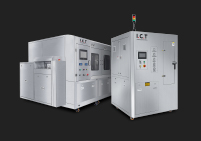
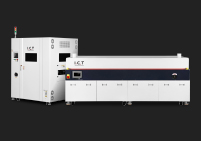
Automated spray cleaning machines are the professional standard for a reason: they close the whole loop. A stainless cabinet holds the stencil, pressurized nozzles apply the cleaning fluid on a programmed cycle, a rinse stage removes the fluid and residue, and a heated air-knife drying stage returns the foil ready for inspection — all unattended, all logged, all with chemistry metered rather than splashed. Machines in this family, such as the automatic aqueous stencil washing machine for inline cleaning, accept framed and frameless stencils, run one-button cycles of twenty to forty minutes, and repeat identically for the two-hundredth stencil as for the first. Repeatability is the product; the operator's role shrinks to loading, pressing start and unloading.
The costs of closing the loop are capital and services. Automated machines occupy real floor space, need drainage and, for aqueous chemistry, water supply and wastewater handling per local rules; they cost more than a bench by an order of magnitude. What they buy is the end of the variability problem: process parameters stored per stencil program, chemistry managed in closed tanks, exposure eliminated, and a cycle that fits into production scheduling instead of competing with it. The subsections that follow — chemistry, envelope, cycle and cost — are in practice the specification sheet of an automated machine, which is why the rest of this guide reads as its buying guide.
Dimension | Manual wipe | Ultrasonic bath | Automated spray |
|---|---|---|---|
Equipment cost | <$500 | $3k–$10k | $10k–$40k+ |
Cycle per stencil | 15–30 min, operator-paced | 10–20 min wash + manual dry | 20–40 min unattended, incl. dry |
Fine-aperture completeness | Poor to fair | Very good | Excellent |
Repeatability / traceability | None | Partial | Full (programs + logs) |
Chemistry handling | Open solvent, hand exposure | Managed bath | Closed tanks, metered |
Operator minutes per stencil | 15–30 | 10–15 | 3–5 |
Best fit | Prototype / very low volume | Low-mid volume, fine pitch | Production lines, high mix |
Most production lines do not run a single method; they run a primary method and keep a secondary one as a layer. The common pattern is an automated spray machine for the scheduled deep clean, with manual wiping retained for in-shift touch-ups and for the quick, between-batches rescue when a stencil is smeared mid-run and cannot wait for a full cycle. The same layering appears at the entry level: an ultrasonic bath as the primary cleaner, with a bench and solvent kept for the frameless foils the bath fixtures do not hold comfortably. A hybrid is not indecision; it is a division of labor in which each method does the job its economics fit, and the automated or ultrasonic tier does the work that must be repeatable.
The selection consequence is to size the primary machine for the repeatable core and to treat the manual tier as a contingency rather than a capacity plan. Two rules keep the hybrid from becoming a quality leak. Chemistry should stay in one family across tiers, so a solvent wipe and an aqueous cabinet are not depositing incompatible residues on the same foil. And verification must not shrink for the manual tier — a hand-cleaned stencil gets the same visual check, because the tier change is exactly where residue survives. Sized and disciplined this way, the hybrid gives low-volume lines a path to grow into an automated machine without a fork-lift change in how they work.
Chemistry is the half of the cleaning decision that determines whether the residue actually leaves, and it is chosen jointly with the method — never after the machine. The residues described in Section 1 respond to different solvency: fresh solder paste dissolves in the solvents its flux carrier loves, hardened paste needs stronger or longer action, and flux residues span a family from no-clean formulations to water-wash fluxes whose removal requirements differ fundamentally. A cleaning program that ignores this matching pays for it twice: in stencils that come back half-clean, and in chemistry that is replaced more often than it is used. When the chemistry is mismatched to the method, the result is not a slower clean but a dirtier one — the solder paste stencil cleaning machine for SMT printing that should be clearing apertures ends up merely circulating the residue it failed to dissolve.
The industry has been moving decisively toward water-based chemistry, driven by safety regulation, environmental rules and the simple operational fact that a closed aqueous machine is easier to live with than open solvent. The subsections below cover the three chemistry families in use, the pairing rules that connect them to paste types and machines, and the wastewater question that aqueous systems raise and every modern machine answers.

Solvent cleaning uses alcohol- or hydrocarbon-based fluids matched to the flux chemistry of the paste in use; it dissolves fresh paste quickly, works at room temperature or modest heat, and evaporates cleanly — which is why it dominates manual bench cleaning. Its costs are the ones solvents always carry: flammability, vapor exposure, and per liter pricing that adds up in open-bath processes. Aqueous saponification is the modern production answer: an alkaline solution converts flux residues into soluble soaps, water carries everything away, and wash tanks are closed, heated and filtered. Aqueous chemistry handles cured paste and heavy flux loads that defeat solvent wipes, and it pairs naturally with automated spray machines. The third family is water alone or with mild additives — viable for water-wash pastes whose flux is designed to release in water, and increasingly the default in factories standardizing on water-wash paste lines.
The matching rule that prevents most chemistry mistakes is written on the paste datasheet: the paste manufacturer specifies which cleaning fluids are qualified for its flux system, and deviating from that list voids more than the datasheet — it voids the transfer-efficiency assumptions the whole process was tuned on. A line running a no-clean paste with a water-only process will see residue persist in apertures; a line running water-wash paste with an aggressive solvent is spending money on solvency the paste does not need. When the factory runs multiple paste types, the cleaning machine's ability to hold separate programs — and separate tanks or rinse regimes — becomes a real selection criterion rather than a feature-list line item.
The shift to water-based chemistry is driven from three directions at once. Regulation tightens on volatile organic compounds and on operator exposure to solvent vapor, and a closed aqueous cabinet removes both problems by construction. Cost behaves better over time: water and saponifier concentrate are cheaper per stencil cleaned than solvent, and closed-loop machines recycle rinse water across cycles. And process control improves: aqueous cycles run at programmed temperatures with metered concentration, so the cleaning result is a process output rather than a bench outcome. This is why the majority of new cleaning-machine purchases across SMT are aqueous spray systems, and why solvent machines persist mainly where legacy chemistry or specific flux systems demand them.
Aqueous chemistry's demands are the price of those benefits, and they are knowable in advance. Machines need drainage, a water supply, and in some configurations compressed air for the dry stage; the wastewater — rinse water carrying saponifier and residue — must be handled per local environmental rules, which for most facilities means a simple collection or neutralization step rather than anything exotic. Tank maintenance is a real, small task: saponifier concentration checked with a titration kit on a schedule, filters replaced, tanks cleaned periodically. None of these demands is onerous, but all of them belong in the facility checklist of Section 7, because a machine that arrives before its drain does is a machine that does not clean anything for a week.
Chemistry misjudged does not merely clean slowly; it destroys stencils. Solvents too aggressive for the foil's protective finishes attack aperture walls and nick tension; alkaline saponifier left too long or too hot can cloud stainless or lift the nano-coatings that fine-pitch foils depend on; and any chemistry followed by an incomplete rinse leaves crystals in apertures that print as defects worse than the residue did. The damage ledger also includes the mechanical half: metal scrapers, abrasive pads and compressed air at unregulated pressure are the enemy of both tension and aperture geometry, which is why stencil makers specify cleaning methods alongside their products — and why a cleaning program that follows those specifications is really an insurance policy on the stencil library.
The cost arithmetic makes the point sharply. A stainless stencil runs from a little under a hundred to several hundred dollars; nano-coated and step-stencil foils run higher. Destroy one foil a month through careless cleaning and the annual loss rivals the price of a serious cleaning machine — before counting the scrap and rework the degraded foils produced on their way out. Processed to the standards the paste and stencil makers publish — including the stencil-design conventions of IPC-7525 and the cleaning guidance that accompanies modern paste systems — a foil survives tens of thousands of prints, and the cleaning step is precisely where that survival is decided.
The mechanical envelope is the least glamorous selection axis and the one most likely to send a machine back. Stencils arrive in more formats than buyers expect: foil-only sheets for frameless systems, foils permanently glued into fixed frames, and tensioned mesh-frame assemblies in standard or proprietary frame sizes; board dimensions push the stencil size from a 370 mm benchtop foil to a 736 mm or larger production frame; and thickness ranges from 60-micron fine-pitch foils to 200-micron power-electronics plates. A cleaning machine has to hold all of this — securely, at the right angle, with the wash energy reaching every aperture — or the finest chemistry in the world cleans only the middle of the foil.
This section covers the envelope from both sides: what the stencil population in your factory actually looks like, and what machine specifications translate that population into a checklist. The subsections take the formats and frames first, then capacity — the size and count of stencils a machine processes per cycle — and finally the fixture quality that separates machines which hold stencils from machines which merely contain them.
The first step of selection is an audit, and it takes an hour: list every stencil in circulation with its dimensions, frame type and thickness. The result defines the machine's required working area and fixture set more honestly than any brochure comparison. A factory running frameless foil systems needs a machine with a foil-clamping or universal basket; a factory whose foils are glued into fixed frames needs the internal clearance to take those frames whole, and the wash geometry to reach a large frame's corners; a factory mixing both needs a machine that accepts each without re-fixturing that eats the operator minutes the machine was supposed to save. Proprietary frame systems from specific printer vendors add a wrinkle — the cleaning machine must be verified against the frame standard, not assumed.
Thickness and construction matter as much as footprint. Thick power-electronics stencils with stepped regions hold residue in the step transitions and need wash pressure and time the thin-foil default program does not deliver; nano-coated fine-pitch foils need chemistry gentle enough to preserve the coating, per Section 3's damage discussion. The stencil population audit also reveals the growth trajectory: a factory whose stencil library grows with every new product — the normal condition of a contract manufacturer — should size the machine for the library it will have in three years, not the one it has today. Machines are bought once; stencil libraries compound.
Capacity is where cleaning economics are won or lost, and it is expressed in two numbers: how many stencils fit in one cycle, and how long that cycle takes. Benchtop machines typically hold one stencil per cycle of twenty to forty minutes; cabinet machines hold one to several depending on size; the largest floor-standing units take multiple frames per cycle. The demand side comes from the audit in Section 4.1 combined with the cleaning interval from Section 1: a line with thirty stencils in rotation and a two-cleanings-per-week-per-stencil discipline demands roughly twelve cleans a day, which at single-stencil cycles means an occupied machine and an attending operator for most of a shift — or a multi-stencil machine that does it in two cycles.
The capacity decision interacts with the printer schedule, because stencils are usually cleaned at changeover. A high-mix line changing products six times a day generates cleaning demand in bursts aligned to those changes, and a single-stencil machine becomes the changeover bottleneck: the printer waits for the washer. Multi-stencil capacity, or a second smaller machine dedicated to quick turnarounds, dissolves the bottleneck — and this is precisely where the automated class earns its capital, running cycles unattended while the line keeps printing with the next stencil. When the cleaning step starts appearing on changeover-time analyses as a line item, the machine upgrade case writes itself, a connection the cost section of the printer guide develops in detail in the cost and ROI arithmetic for the printer itself.
Two machines of identical size and cycle time can deliver different cleaning results, and the difference is the fixture. A stencil that is clamped at the correct angle, sealed at its edges, and positioned so nozzles strike the full surface gets uniform wash energy; a stencil resting loosely in a basket gets whatever the water happens to deliver, cleans unevenly from edge to center, and risks rattling damage in the spray. Fixture design also determines whether framed and frameless stencils can share a machine without dedicated baskets for each — a real cost in high-mix factories where the basket count quietly multiplies.
The specification questions to ask any vendor are concrete. How is the stencil secured — clamped, weighted, or resting? Is the angle fixed or adjustable, and does it drain residue away from the print side? What is the nozzle coverage across the working area at the working pressure? Can framed and frameless stencils run in the same cycle? And what does the fixture look like for your largest and your thinnest stencil — the two ends of the population audit that break assumptions? Machines that answer these precisely, as the dual-squeegee and framed-stencil ecosystem around the I.C.T dual-squeegee semi-automatic stencil printer illustrates from the printer side, are machines built by people who run stencils — and the fixture is where that shows first.
Stencil population trait | Machine requirement | What to verify with the vendor |
|---|---|---|
Frameless foils, small format | Foil basket or clamping fixture | Foil tension support during spray |
Fixed frames, 736 mm class | Large internal clearance | Cycle time at full frame size |
Thick / step stencils | Higher pressure, longer program | Program options and max pressure |
Nano-coated fine pitch | Gentle chemistry, filtered rinse | Chemistry compatibility statement |
High count per day | Multi-stencil or dual-machine | Stencils per cycle at rated time |
A cleaning machine is judged not by how it washes but by what it returns to the line: a stencil that is dry, verified and ready to print, on a schedule the production plan can rely on. The cycle — wash, rinse, dry — is the machine's core sequence, and its length, repeatability and degree of automation decide whether cleaning is a process step or a bottleneck. The verification half of the section is the part most factories skip and most quality engineers regret skipping: a cleaned stencil that was never checked is a stencil whose next print run doubles as its inspection.
The subsections below walk the cycle stage by stage, then build the verification layer — from quick visual checks to automated aperture inspection — and show how the two together turn stencil cleaning from an art into a closed loop with a logged output. The loop matters for a second reason: it generates the evidence trail that ties stencil condition to print quality, which is what allows the cleaning interval of Section 1 to be tuned from data instead of habit.

A proper cycle has three stages and a hidden fourth. The wash stage applies the chemistry — spray pressure, temperature and duration programmed per stencil type — and does the solvency work of Section 3. The rinse stage removes chemistry and suspended residue with clean water, and its quality matters more than it looks: chemistry left in apertures crystallizes and prints as defects, so a filtered, pressure-rinsed second stage is a specification item, not a luxury. The dry stage — heated air knives in automated machines, filtered air and wipes in manual processes — must return the foil and the frame genuinely dry, because moisture in the mesh or at the frame adhesive is a stencil-life question, and a damp foil prints its first boards with voids where water blocked paste.
The hidden stage is cooldown and handling time: a stencil that leaves the machine hot cannot be inspected or tension-checked immediately, and the cycle time printed on the brochure rarely includes the two minutes of handling each side. For capacity arithmetic, use the full door-to-door time. Automated machines compress all three stages into one programmed cycle — twenty to forty minutes door to door for a production stencil — and their advantage over the middle class is as much the drying as the washing: an ultrasonic bath still hands you a wet stencil and an unattended machine hands you a ready one. On a line feeding an inline printer such as the I.C.T 5134 fully automatic screen printer for inline lines, where the next stencil is needed on the changeover clock, that difference is the difference between cleaning on the schedule and cleaning around it.
Verification scales with volume and pitch class, and it has three tiers. The first tier is visual: the foil held under bright light at an angle, apertures checked for shine and clearance, underside checked for film — two minutes, catches the gross failures, and belongs in every process. The second tier adds instruments: a tension meter across the foil (a cleaning cycle that stresses the mesh shows up here before it shows at the printer), and aperture checks under magnification for fine-pitch work where residue hides. The third tier is automated: an automated stencil inspection machine for post-clean checks scans the full foil, reports aperture blockage numerically, and archives the result per stencil — turning verification from a judgment into a record.
Verification tier | Method | Time per stencil | Catches |
|---|---|---|---|
Visual | Bright light, angle check both sides | 2–3 min | Gross residue, film, damage |
Instrumented | Tension meter + magnified aperture check | 5–8 min | Tension loss, hidden fine-pitch plugs |
Automated | Stencil inspection machine scan, logged | 1–3 min machine time | Aperture blockage by count, trend per stencil |
The tier choice follows the stakes: a prototype shop verifies visually and inspects the first print carefully; a fine-pitch production line deserves at least the instrumented tier on every clean and the automated tier on its critical stencils. What every tier shares is the record — a cleaned stencil with a logged check is a process artifact, and the archive it builds is what lets the cleaning interval be tuned, the chemistry be justified, and the stencil library's condition be reported as a number rather than an opinion. That archive is also the natural companion to the maintenance program described in the printer maintenance plan that protects the stencil, which schedules the cleaning step alongside the printer's own care tasks.
Every input to the cleaning-interval decision — deposit volume trends, flag rates, aperture counts from verification — is generated by the line itself, and a mature program reads it back on a schedule. The signature of an interval set too long is familiar from Section 1: transfer efficiency sagging within a stencil's service period and recovering at cleaning. The signature of an interval set too short is quieter and costs money invisibly: stencil life consumed by wash cycles, chemistry spend beyond what the residues justify, and operator or machine hours cleaning foils that were still clean. Both signatures are visible in the same dataset — the print-quality trend on one axis, the cleaning log on the other — and the interval that centers between them is a genuine process optimum, not a compromise.
The tuning loop is deliberately simple: fix the interval, run two weeks, compare volume trends and verification results against the cleaning log, adjust, repeat. Factories that already run print-data analytics have all the inputs in place; for those starting from scratch, the cleaning log and the SPI trend chart alone are enough to move the interval from guess to estimate. The payoff compounds across the stencil library: intervals tuned per stencil class — aggressive for fine pitch, relaxed for coarse — extend total library life by years, which Section 6 prices as the quiet credit in the cleaning machine's favor.
The loop is only as strong as what happens when verification flags a stencil, and a mature program has that path written down before the first flag appears. The disposition ladder has three rungs. A residue failure — apertures still blocked or a film still present — sends the stencil back through the clean, usually with a longer wash or a chemistry concentration check, because systemic residue says more about the bath than about the foil. A tension failure — the meter reading below the stencil maker's limit — is a retirement decision, not a cleaning decision, since no clean restores lost tension. A damage failure — bent corners, lifted mesh, distorted apertures — routes to rework or replacement against the library's documented attrition.
The discipline that protects the loop is simple and relentlessly overridden under schedule pressure: a flagged stencil does not go back to the printer "just this once." Every exception the process grants becomes the new normal, and the SPI trend of Section 1 remembers it. The written disposition rule, plus the logged outcome, is what turns a quality reflex into a standard — and it is the same standard a customer audit reads as evidence that the stencil-care program exists on paper, not only in the technician's habits.
Cleaning is bought three times: as equipment, as chemistry and labor, and as the stencil life it either preserves or destroys. The invoice captures only the first — and it is the first, the machine price, on which a solder paste stencil cleaning machine for SMT printing is usually sold, which is why the rest of this section does the arithmetic the invoice leaves out. A fair comparison of manual, ultrasonic and automated spray methods has to put all three purchases on the same page over the same horizon — and when that is done, the ranking that looks obvious at the invoice level usually inverts. The subsections below name the cost lines, run a worked five-year comparison for a representative mid-volume line, and then collect the hidden costs and credits that most first-pass analyses miss.
The structure mirrors the total-cost-of-ownership discipline used for the printer itself in the guide on what determines stencil printer cost and ROI, and reuses its conventions: a five-year horizon, cost per stencil cleaned as the unifying denominator, and every assumption labeled. The arithmetic below can be overwritten with your own stencil counts and wage base; the shape of the result — manual expensive at volume, automated cheap per clean — will survive the substitution.
Five lines carry the money. Equipment is the invoice plus installation — drainage, water, power for the automated class — and it is the only line most comparisons contain. Chemistry is fluid, saponifier concentrate and rinse water, scaling with stencils cleaned and chemistry family chosen. Labor is operator minutes per stencil multiplied by the loaded hourly rate and the daily stencil count, and at any real volume it is the largest line by an order of magnitude. Stencil life is the quasi-cost: the rate at which foils are replaced, driven by cleaning quality and handling, and it is where the three methods differ most violently. Facility is the residue line — floor space, drainage upkeep, wastewater handling for aqueous, extraction for solvent.
Two accounting choices keep the model honest. First, cost per stencil cleaned, not cost per month, because stencil count varies with mix and the per-clean figure is what survives comparison across factories. Second, stencil replacement entered as a rate — foils per year — rather than a constant, because it is the cleaning method's output: a method that halves foil attrition is earning its keep on a line whose foil budget the cleaning machine never appears to touch. The worked comparison below prices both conventions.
The scenario: a mid-volume line running two shifts, with forty stencils in rotation, cleaning demand of about twelve stencils per day, a loaded labor rate of fourteen dollars per hour, and a foil fleet averaging two hundred dollars apiece. The manual method is modeled as a bench process with an operator at twenty minutes per stencil; the ultrasonic method as a bath unit with ten operator minutes including drying; the automated machine as a cabinet running unattended with three operator minutes of load and unload. Foil attrition is modeled at one foil per month for manual, one per two months for ultrasonic, and one per five months for automated — rates consistent with the damage discussion of Section 3, and deliberately conservative for the automated case.
Cost line, 5 years | Manual bench | Ultrasonic | Automated aqueous |
|---|---|---|---|
Equipment + install | $500 | $6,000 | $22,000 |
Chemistry + consumables | $7,500 | $4,500 | $3,000 |
Labor (12 stencils/day) | $504,000 | $252,000 | $75,600 |
Stencil replacement (fleet attrition) | $12,000 | $6,000 | $2,400 |
Facility (space, wastewater) | — | $500 | $2,500 |
5-year total | ≈ $524,000 | ≈ $269,000 | ≈ $105,500 |
Cost per stencil cleaned | ≈ $19.40 | ≈ $10.00 | ≈ $3.90 |
The result is stark because the arithmetic is honest: at production volumes, labor dominates everything, and the automated machine's three operator minutes per stencil crush the manual method's twenty. The manual bench is the cheapest way to clean one stencil and the most expensive way to clean twelve a day; the ultrasonic unit halves the gap but still pays an operator to stand at a bath and dry foils. The automated machine's premium is repaid against manual inside its first year on labor alone, before counting the stencil-life credit. At a tenth of this volume — two or three cleans a day — the ranking reverses on the equipment lines, which is precisely why the decision checklist of Section 7 starts from stencil count, not from the machine catalog.
Three hidden items deserve a line each. Wastewater handling for aqueous systems is a real, usually small, recurring cost — collection, testing or neutralization per local rules — and it is the automated method's main environmental obligation; budget it rather than discovering it. Chemical storage and fire handling for solvent processes is the manual and ultrasonic equivalent obligation, and in regulated jurisdictions it can exceed the wastewater bill. Floor space is the quietest line: an automated cabinet occupies a square meter or two including service clearance, which in a crowded SMT bay is a real allocation — though one often recovered by retiring the bench, the solvent cabinet and the drying rack the machine replaces.
The credit side is larger and less often counted. Foil life extension is priced in the table above but understates the operational value: a stencil library that lasts three times longer defers capital purchases across years and, more valuably, keeps a known-good foil known-good — the process stability that Sections 1 and 5 built toward. Verification records attached to each clean are an audit asset that customer quality engineers increasingly ask for, and they exist only when cleaning is a logged process. And changeover predictability — a clean stencil ready when the changeover needs it — is worth what the printer's schedule says it is worth, which on a two-shift automatic line is more per month than the machine's maintenance. These credits do not need precise pricing to be real; they need to be named, and they are the reason the automated method wins decision meetings it does not win on the invoice.
Everything so far has built the axes of the decision; this section compresses them into the sequence a selection should actually follow. The order matters because the inputs cascade: stencil count determines capacity, capacity narrows the method, the method constrains chemistry, and the printer class and mix set the verification tier. Worked in that order, the choice usually makes itself by the fourth question — and the checklist below is written so the answers, once gathered, can be defended line by line in the meeting where the purchase order is signed.
The subsections deliver the checklist in three passes: the six questions that size the decision, the integration questions that connect the cleaner to the printing process around it, and the compounding returns that justify the choice beyond the cost table. The intent is a one-page case, the same shape the cost and ROI guide uses for printers, applied to the stencil-care side of the line.
Question one: how many stencils per day need deep cleaning? This is the master input, from the Section 4 audit, and it alone separates the three method families — under three cleans a day favors manual, three to ten favors ultrasonic or a small automated unit, above ten points to automated as the only method that scales. Question two: what are the largest and thinnest stencils in the library? These two extremes set the machine's working area and fixture requirements. Question three: what paste chemistries are in use? The paste datasheets answer this, and the answer constrains the machine's chemistry options per Section 3. Question four: who attends the machine, and when? Capacity bursts at changeovers need unattended cycles; a dedicated person changes the calculus. Question five: what verification tier does the pitch class demand? Fine pitch earns at least the instrumented tier, and the automated tier if the stencils are critical. Question six: what does the facility already have — drain, water, compressed air, wastewater handling — and what must be added?
Answered in order, the six questions eliminate most of the market on their own. The remaining candidates differ on build quality, fixture design and service — the questions of Section 4.3 — and on the vendor terms that the printer-selection guide's quotation-anatomy discussion applies equally here: commissioning scope, spares list, warranty and response commitments. A candidate that answers the six questions with documents rather than assurances is the candidate to shortlist.
A cleaning machine is bought as a component of the print process, and three integration points decide whether it behaves like one. The first is scheduling: the cleaning cycle must fit the changeover plan, which means capacity sized to the bursts of Section 4.2 and, ideally, programs stored per stencil so a changeover needs no setup conversation with the machine. The second is the maintenance program: cleaning tasks belong on the same schedule as the printer's own care, with the interval tuning of Section 5.3 reviewed alongside it — a pairing the maintenance checklist guide develops from the printer side. The third is data: verification records, cleaning logs and the print-quality trends of Section 1 belong in the same review, because the interval optimum lives where they intersect.
The second-order integration is with the stencil library itself. A factory that adopts logged cleaning and verification has, for the first time, a condition history per stencil — and that history changes purchase behavior in the stencil fleet the same way maintenance history changes it in machines: replacements are justified by measured attrition, new products inherit proven foils, and the library becomes a managed asset with a budget line rather than a drawer of metal. None of this requires software beyond a spreadsheet; it requires the cleaning process to produce records, which is an argument for the method classes that log by construction.
The returns that finish the case are the ones that grow with time. Foil life extension compounds across the library every year the program runs. Process stability compounds through the quality system: stable transfer efficiency means fewer SPI flags, fewer inspection false calls and a print process that holds its tuned state — the precondition for the improvement programs this site's print-data guides describe. Changeover speed compounds through scheduling: a cleaning step that is predictable enough to plan around removes a source of variance from every product transition, and on a high-mix line those transitions are the shift's most expensive minutes.
The final return is the simplest to state and the most often forgotten: a cleaning program with verification produces stencils the process can trust, and trust is what lets everything downstream be tuned tighter. Print pressure optimized against a known-clean foil, SPI limits set against a known baseline, first-pass yield reported without an asterisk for stencil condition — these are the working conditions of a mature SMT line, and they start at a stainless cabinet with a logged cycle. The stencil cleaning decision, made deliberately, is one of the quietest upgrades a line can make and one of the few that every later improvement inherits.
Size a stencil cleaning solution to your line
The six questions of Section 7 take an hour to answer and an hour to check against a real machine's specifications — and that comparison is exactly the conversation I.C.T's stencil-care engineers run daily with customers: stencil populations counted, cleaning intervals estimated from print trends, chemistry matched to the paste datasheets in use, and a machine sized for the library the factory will have in three years. Whether the shortlist ends at a bench process, an ultrasonic bath or a closed aqueous cabinet such as the automatic aqueous stencil washing machine for inline cleaning, the decision deserves the same numeracy as the printer beside it.
Bring your stencil audit — formats, frames, count per day — and the paste systems you run, and the returned proposal will map the method, chemistry and verification tier to your volume with the cost lines of Section 6 filled in. The I.C.T solder paste printing machine portfolio exists to serve the whole print cell, and the stencil cleaning decision is where that service usually starts: it is the step that decides whether every other improvement on the line prints through clean apertures.
The interval is a process output, not a rule of thumb: tune it from deposit-volume trends and verification records, with a typical production range of every one to three service days per stencil, tightened for fine pitch and after long pauses. The signature of a too-long interval is transfer efficiency that sags within a stencil's service period and recovers at cleaning; a too-short interval shows up as foil life and chemistry spend with no quality return.
At prototype volumes, yes — with the right solvent, lint-free wipes, soft brushes and a disciplined visual check. At production volumes, manual cleaning's two failure modes dominate: fine apertures retain residue a bench check misses, and the scrubbing that removes stubborn plugs damages aperture walls and tension over repeated cycles. Most fine-pitch production lines land on ultrasonic or automated spray for the deep clean and keep manual wiping for in-shift touch-ups.
Follow the paste datasheet: water-wash pastes are formulated to release in plain or mildly additive water, while no-clean and rosin-based pastes typically need a saponifier or a matched solvent to mobilize their residues. Using the wrong family leaves residue in apertures or spends solvency the paste does not need. Where a factory runs multiple paste types, choose a machine that stores separate programs and manages tanks accordingly.
Twenty to forty minutes door to door for a production stencil on a typical solder paste stencil cleaning machine for SMT printing — wash, rinse and heated drying included — with the exact figure depending on stencil size, soil load and program. For capacity planning use the full cycle plus handling, and compare machines at stencils per hour rather than advertised cycle time, since multi-stencil fixtures change the arithmetic significantly.
Above roughly ten cleans a day, the labor arithmetic alone usually pays for the machine within a year or two; below three cleans a day, a disciplined manual or ultrasonic process is the economical answer. The crossover sits in between and depends on the loaded labor rate, the stencil count growth trajectory, and how much the changeover schedule is hurt by waiting on a clean stencil.
Three tiers, scaled to pitch class and stakes: a bright-light visual check of both sides for every clean; a tension meter and magnified aperture checks for fine-pitch work; and automated stencil inspection that scans the full foil and logs aperture blockage per stencil for critical products. Whichever tier you run, keep the record — the archive is what lets the cleaning interval be tuned and the stencil library be managed as an asset.
Decisively. Gentle, chemistry-correct, verified cleaning is the main reason a foil survives tens of thousands of prints; aggressive solvents, overlong alkaline exposure, metal scrapers and unregulated compressed air shorten it sharply. Since a foil costs from under a hundred to several hundred dollars, the attrition rate a cleaning method causes is a real cost line — and often the largest hidden difference between methods.
Drainage, a water supply, electrical power and usually compressed air for the dry stage, plus a plan for rinse wastewater per local environmental rules — typically collection or simple neutralization rather than exotic treatment. Solvent-based processes instead demand vapor extraction, flammable-liquid storage and exposure controls. Both belong on the facility checklist before the machine is ordered, not after it arrives.