English
Views: 0 Author: Elsa Long Publish Time: 2026-10-27 Origin: Site


The same model number can describe two very different assets. A Hanwha pick and place machine bought new arrives with a known build state, a full warranty and a configuration the factory can read off the datasheet; the same machine bought used arrives carrying a history — service hours, maintenance records, a reason for decommissioning, and a configuration that may have drifted from the brochure over years of running. The difference is not the metal, which left the same line, but the evidence: a new machine ships with its facts attached, while a used machine asks the buyer to reconstruct them before trusting the price. This guide is that reconstruction, applied across the full Hanwha pick and place machine catalog the decision is made against.
The new vs used Hanwha pick and place machine question is really a verification question. It runs in seven passes, each one closing a class of risk that the next pass cannot fix. It begins with machine condition and usage history — the audit of serial number, service hours and maintenance that separates a documented asset from a label. It then works the physical configuration in feeders and tooling, the software and calibration records that prove the machine still places to tolerance, and the spares, transport and installation terms that govern how it reaches your floor. It closes with acceptance, the point where every earlier claim becomes a measured fact, and with a single enquiry-ready framework you can send a supplier before a single quotation is opened. Each pass ends in questions you can put in writing, because on the used side of this decision, the buyer who does not ask is the buyer who later pays.
Table of Contents
The new-versus-used choice is usually framed as a budget question, but it is first a scope question, because the two states demand different kinds of proof. A new machine is sold on its specification — the buyer verifies that the configuration matches the order and that the machine performs as quoted. A used machine is sold on its story, and the story has to be verified before the specification can be trusted at all. The buyer who treats both purchases the same way ends up over-checking the new machine and under-checking the used one, which is exactly backwards: the used machine is the one carrying the unknowns. This opening pass sets the verification scope correctly, so that every later pass asks the right depth of question for the state being bought.
The scope has a clean rule. For a new machine, verification is confirmation — the build state is known, the warranty is attached, and the checks confirm the delivered machine matches the ordered one. For a used machine, verification is reconstruction — the buyer must rebuild the machine's identity, its history and its current condition from evidence the seller may or may not hold. The new vs used Hanwha pick and place machine decision therefore assigns a different checklist depth to each path, and the rest of this guide walks that depth: condition and history first, then configuration, then the software and calibration records that prove the machine still performs, and finally the acceptance that turns every reconstructed claim back into a measured fact. Get the scope right here and the later passes fall into place; get it wrong and the buyer is either paying for questions the new machine never needed, or skipping the questions the used machine cannot afford to skip.
Price is the first thing a used machine advertises and the last thing that should drive the decision, because the price only means something once the machine's state is known. Two used machines of the same model can be offered at the same figure while being different assets — one freshly decommissioned from a clean, low-duty line with a complete logbook, the other pulled from a high-mix floor with unrecorded repairs and a feeder set sold off separately. The first is a bargain; the second is a liability wearing a bargain's price tag. The only way to tell them apart is evidence, which is why this guide treats every claim about a used machine as a claim to be documented, and every absence of documentation as a finding in itself.
The same discipline applies to the new side, in a lighter form. A new machine's price already reflects a known build state, so the buyer's job is to confirm the configuration and the terms rather than to reconstruct a history. But the evidence habit still pays: recording the serial number, the build year, the exact configuration and the warranty terms at order time is what lets the buyer verify the delivered machine against the ordered one later. The habit is the real asset here, because it converts the decision from a gamble on a price into a comparison of two documented states — and a decision made on two documented states is one the buyer can defend for the machine's entire service life.
A new Hanwha machine arrives with four things a used machine cannot match, and the checklist records each because they are the baseline the used option is measured against. The first is a known build state: the machine's serial number maps to a specific configuration built to a specific software revision, with no accumulated wear and no third-party modifications. The second is a full warranty, covering the early-life failures that are statistically concentrated in a machine's first months of production. The third is a current configuration — the latest firmware, the latest vision algorithms, and a feeder and nozzle complement specified to the buyer's BOM rather than inherited from a previous owner. The fourth is a clean support path: software updates, parts availability and service terms are all defined from day one.
The new machine's real cost is that these four things are priced in. The buyer pays the depreciation that a used machine has already absorbed, and for some production profiles that premium buys capability the roadmap will never use — a brand-new platform bought for a chip-dense board whose packages never pass 01005 is capability that sits idle. That is why the new-versus-used decision is never automatic: the new machine's defaults are worth their premium when the roadmap needs them, and wasted when it does not. The checklist's job on the new side is therefore to confirm that the premium is being spent on defaults the factory will actually use, rather than on a specification the budget absorbed for its own sake.
A used machine arrives with none of the new machine's defaults attached, so every one of them must be reconstructed from evidence. The buyer must prove the machine's identity — serial number, build year, exact configuration — because a used machine has had years in which its configuration could have been changed, downgraded or parted out. The buyer must prove its history — service hours or placement counts, the maintenance record, any repairs or accidents, and the reason for decommissioning — because that history is the machine's true condition, and condition is the used machine's entire value proposition. And the buyer must prove its current performance — the most recent calibration, the accuracy the machine still holds, and the software version it is actually running — because the datasheet describes a machine as built, not as it is today.
The deeper the proof required, the more the decision resembles a selection exercise rather than a discount hunt, which is precisely the point. The structured version of that selection — model against model, generation against generation — is laid out in this series' end-to-end Hanwha mounter selection walkthrough, and it applies to the used path unchanged, because choosing a used machine is still choosing a machine; the condition audit is layered on top of the selection, not substituted for it. A buyer who can reconstruct identity, history and current performance has turned a used machine into a defined asset — and a defined asset is the only kind worth comparing against a new one.
The opening pass closes by fixing the scope in writing, before any quotation is opened, so that the same questions are put to both a new-machine supplier and a used-machine seller and the answers can be compared. The table below is that scope: the four verification dimensions, what each requires on the new path, and what each requires on the used path. It exists so that the buyer enters the commercial conversation with the questions already framed, rather than discovering the depth of verification the used path demands halfway through a negotiation the seller controls. Framing the scope first is what keeps the buyer on the front foot, and it is the difference between a disciplined purchase and a reactive one.
Verification dimension | New machine | Used machine |
|---|---|---|
Identity | Confirm serial, build year, exact configuration | Reconstruct serial, build year, as-built and current configuration |
History | Not applicable — no accumulated duty | Service hours, maintenance log, repairs, decommissioning reason |
Current performance | Confirm against datasheet at FAT/SAT | Prove via recent calibration and accuracy record |
Configuration completeness | Specify feeders, nozzles, software to the BOM | Audit what actually ships versus what the brochure lists |
With the scope fixed, the guide moves to the first and most consequential reconstruction on the used path: the machine's condition and usage history. It is the pass that determines whether the rest of the checklist is even worth running, because a used machine whose history cannot be documented is a machine whose condition cannot be priced — and everything that follows assumes a condition that has already been established.
Condition is the used machine's entire value proposition, and usage history is the evidence that establishes it, so this pass is the one that decides whether the purchase proceeds at all. A placement machine is a precision instrument that accumulates wear in proportion to the duty it has seen — a machine that placed ten million components a day for five years is a different physical asset from one that ran a single low-volume product line for two, even under the same model number. The buyer's task is to reconstruct that history from records, and where records are missing, to treat their absence as a finding rather than an inconvenience. On the new side this pass shrinks to a confirmation; on the used side it is the heart of the new vs used Hanwha pick and place machine question.
Three checks structure the pass. The first pins identity — the serial number, build year and build state that anchor every later record. The second reconstructs duty — service hours, placement counts and the production environment the machine lived in. The third audits the maintenance and repair record and the reason for decommissioning, which together say more about the machine's true condition than any single number. Each check produces a written record, and the three records together become the condition file that the acceptance pass will later verify against the physical machine.
Identity comes first because every other record — service hours, maintenance entries, calibration results, software entitlements — attaches to a serial number, and a used machine offered without one is a category rather than an asset. The checklist asks for the serial number in the quotation, matches it to the physical plate at inspection, and checks it against the build year and the configuration the factory shipped. The build year matters more on the used side than the new: a model in its first production year and the same model three years later can carry different firmware, different feeders and different reliability fixes, and the used buyer is entitled to know which revision they are paying for. The build state is the third element — the configuration as built, which becomes the reference against which any later changes are detected.
The identity check also surfaces the first red flag a used buyer should be alert to: a serial number that does not match the quotation, a plate that has been altered, or a build year that does not line up with the claimed service history. None of these is automatically disqualifying — machines are legitimately moved, re-plated and even re-serialized by refurbishers — but each is a point that must be explained in writing before the purchase proceeds. Identity established this way is the foundation for the duty reconstruction that follows, because hours and placements only mean something when the machine they are attached to has been identified beyond argument.
Duty is the measure of wear, and the checklist reconstructs it from three angles rather than trusting a single figure. The first is time — the machine's total service hours or powered-on years, which bound the accumulated mechanical fatigue on gantries, spindles and feeders. The second is volume — the total placement count, which is the more telling number for a placement machine, because wear scales with the components placed, not the hours the machine sat powered. The third is the duty cycle — the mix of products, the package range, and whether the machine ran a stable high-volume product or a rotating high-mix load, because the same placement count inflicts different wear depending on how the machine was worked. A machine that ran a single stable product at high speed wears differently from one that changed over three times a day.
The duty reconstruction is also where the buyer connects history to the machine's remaining life. Service hours and placement counts, held against the platform's expected life, estimate how much of the machine's useful span has been consumed, and that estimate is what makes a used price comparable to a new one on a per-remaining-year basis. It is also where the used inventory becomes concrete rather than abstract: a low-duty chip shooter such as the HM520 pre-owned chip shooter can carry a chip-dense load for years at a fraction of new cost when its history is clean, and the same logic applies across the range. The output of this check is a documented duty record — hours, placements, duty cycle — that the condition audit and the acceptance pass both build on.
The maintenance record is the machine's health history, and it is the single most revealing document a used seller can produce. A complete log — preventive maintenance performed on schedule, worn items replaced, calibrations re-run at interval — describes a machine that was cared for and is likely to be sound; a sparse or missing log describes a machine whose condition is unknown, and an unknown condition is itself the finding. The checklist asks for the maintenance log and reads it against the duty record: does the service interval match the duty the machine actually saw, and were the high-wear items — nozzles, spindles, vacuum lines, feeders — replaced on a schedule that matches the placement count? A log that lines up with the duty record is evidence; a log that does not is a question.
Repairs and the decommissioning reason complete the picture, and they are where honesty about the machine's past surfaces. The checklist asks about any accident or repair history — dropped heads, crashed axes, board-handling incidents — and reads the answer for what it implies about the machine's precision going forward. The decommissioning reason is the final check: a machine retired because a line was upgraded or a product line ended is a different asset from one retired because it could no longer hold accuracy, and a seller who will not state the reason is stating it by omission. These two answers, held against the maintenance log and the duty record, turn a used machine's history from a story into a condition file — and the condition file is what the configuration pass next assumes. A multi-function tier that has lived a clean, documented life, for instance the DECAN L2 multi-function placement platform, is priced on that file; the same tier without one is priced on hope.
Some findings in the condition file are questions to be answered, and some are reasons to end the negotiation, and the checklist keeps the two apart. A missing maintenance entry is a question — it may simply mean the seller never kept the log, and the price should reflect the uncertainty. A seller who refuses to provide the serial number, or offers one that does not match the physical plate, is a red flag, because identity is the one fact that costs nothing to disclose and everything to hide. The same line separates a vague decommissioning reason, which is common and often innocent, from a seller who will not state it at all, which is an answer by omission the buyer should read for what it is. Red flags are not disqualifications by themselves, but each one must be resolved in writing before the price anchors the deal.
The walk-away threshold is set by what cannot be reconstructed at any price. A machine whose accuracy cannot be verified because no calibration record exists and none can be arranged before sale is a machine the buyer would be accepting blind, and no discount justifies a placement machine whose precision is unknown. The practical test is the acceptance pass that closes this guide: if the seller will not agree to a defined FAT and SAT that re-verifies the machine on the buyer's own panels, the condition file has not closed the uncertainty, and the disciplined answer is to walk. The checklist's value is not that it always finds a machine — it is that it always finds the truth, and sometimes the truth is that this particular machine is not the one to buy.
Condition established, the next pass audits what the machine is actually configured to do, because a used machine's configuration has had years to drift from the datasheet. The brochure describes the machine as it left the factory; the used machine on the seller's floor is whatever configuration survived its service life — feeders kept, feeders sold off, nozzles worn and replaced, options fitted and removed. This pass of the new vs used Hanwha pick and place machine framework reconciles the two, so that the buyer prices a configuration that exists rather than one the brochure remembered. On the new side the same pass is a specification exercise; on the used side it is an audit.
The figure below shows the head and feeder hardware this pass inspects. Four checks structure it: the as-built configuration versus the current one, where the machine's actual capability is established; the feeder package, where a used machine's value most often leaks away; the nozzles and tooling, the small items that determine whether the machine can place what the BOM demands; and the configuration-drift audit that catches the missing and substituted items before they become the buyer's first service order.

The first configuration check establishes what the machine is, in hardware, today. The buyer requests the as-built configuration tied to the serial number — head count, spindle arrangement, vision configuration, rail option, feeder complement — and then asks what has changed since: which options were fitted, which were removed, and which were downgraded or replaced. The two lists, as-built and current, are rarely identical on a machine with years of service, and the differences are where the machine's real capability diverges from its brochure. A head that was rebuilt, a camera that was swapped for a different generation, a rail option that was changed — each is a fact the buyer must know before trusting the specification.
The reconciliation matters because the used machine's price is quoted against a specification that may describe the as-built state, not the current one. A machine quoted with its original vision configuration but now running an earlier or third-party camera is not the machine the datasheet describes, and the difference surfaces as a capability gap the buyer discovers after delivery. The checklist therefore requires the current configuration in writing, line by line, reconciled against the as-built record, with every change explained. The discipline is the same one this series' component-mix to mounter configuration method applies on the new side, but on the used side it runs against a machine whose configuration has a history — and the history is exactly what the audit exists to expose.
Feeders are where a used machine's value most often leaks away, because they are detachable, resellable and frequently stripped before a machine is sold. The checklist counts the feeder package the same way it would on a new purchase — tape feeders by width and quantity, electric versus pneumatic drive, tray stations, stick feeders, and the docking carts — but it does so against the machine's current inventory rather than against the seller's summary. The question is not how many feeders the machine can hold but how many it ships with, and a used machine offered at a low headline price with a thin feeder complement is not a bargain; it is a frame with the expensive part sold separately. The feeder audit is therefore the single highest-value check in this pass.
The check runs in three steps. First, derive the feeder requirement from the BOM census — the peak concurrent tape load across the families the machine will run — using the same arithmetic a new purchase would use. Second, inventory what the used machine actually ships, feeder by feeder, with widths, drive types and condition noted. Third, price the gap, because the feeders the buyer must add later are bought at parts prices, not at the bundled price a new package would carry. A used machine whose feeder package covers the BOM's peak load with the carts included is a complete asset; one whose package falls short is a machine plus a follow-on order — and the checklist surfaces that follow-on order before the purchase, not after the machine is running.
Nozzles and tooling are the smallest components in the purchase and the most consequential to verify on the used side, because they are the parts that physically contact the components and the parts that wear the fastest. The checklist inventories the nozzle set against the package census — fine-bore nozzles for micro chips, mid-range for ICs and QFPs, larger for BGAs and connectors — and checks each against its condition, because a used nozzle set may be present but worn, and a worn nozzle drops parts intermittently in a way that looks like a machine fault. The tooling audit extends to grippers, force-control hardware and upward-vision options, and to the wear items — vacuum lines, spindle components, feeder drive parts — that the machine has consumed during its service life.
The commercial point mirrors the feeder check: a used machine whose nozzle set is complete and in tolerance is a machine that can place its full package range from day one, while one whose set is worn or partial transfers the replacement cost to the buyer. The checklist therefore records the nozzle and tooling inventory with condition noted, and prices the replacements, holding the set against concrete hardware rather than a category. The replaceable nozzle hardware is well-defined across the platform, and a seller should be able to map it directly to the BOM — the SMT nozzle replacement set for the Hanwha heads being one concrete reference for what the platform consumes. The output is a nozzle-and-tooling manifest, with condition, that joins the feeder manifest in the condition file.
The closing check of the pass is the drift audit: the systematic comparison of what the brochure and quotation describe against what the machine's current inventory actually contains, with every gap named and priced. Configuration drift takes predictable forms on a used machine — feeders sold separately, nozzles replaced with a cheaper set, options removed, software modules deactivated, accessories separated from the main unit — and the audit is designed to catch each before it becomes a delivery surprise. The checklist works down the configuration line by line, marks each item as present, present-but-worn, or missing, and attaches a cost to the worn and missing lines, so that the quotation's headline price is corrected to the machine's true delivered price.
The drift audit is also where the buyer learns whether the seller is describing an asset or a story. A seller who can produce the current configuration in writing, reconciled against the as-built record, with condition noted and gaps priced, is describing an asset; a seller who cannot or will not is describing a story, and the story is what the buyer would be paying for. The completed drift audit — as-built record, current inventory, condition notes, priced gaps — closes the configuration pass and hands a defined machine to the next pass, where the software and calibration records are checked to prove the machine still performs to the specification the configuration claims.
A used machine's specification is a promise about its performance, and this pass checks whether the machine still keeps that promise. Two kinds of evidence carry the check: the software state, which bounds what the machine can do and which reliability fixes it carries, and the calibration and accuracy records, which show whether the machine still places to tolerance today. On the new side these are confirmation exercises — the software is current and the machine calibrates to the datasheet because it just left the factory. On the used side they are the proof the whole new vs used Hanwha pick and place machine decision rests on, because a used machine's accuracy is its current property, not its historical one, and only records can establish it.
Three checks structure the pass. The first audits the software — the control version, the licensed modules and the offline programming path — because a used machine often sits on an old build or a deactivated module set. The second audits the calibration record and the machine's current accuracy, the evidence that the mechanical wear documented in the condition pass has not already eroded the placement quality. The third audits the verification trail itself — which records exist, which are missing, and what the absence means for the price. The table that follows condenses the records this pass demands, so the buyer can request them by name rather than by description.
The software state of a used machine is a specification in its own right, and it is checked the same way as the hardware. The control-software version bounds the component libraries the machine recognizes, the vision algorithms it runs and the reliability fixes it carries; a used machine on an early build is a different asset from the same machine on a current build, and the difference is paid for in upgrade cost if the buyer needs the later version. The checklist asks for the current version, its release date and its change history, and records it against the serial number from the condition pass. The version check then extends to the license model — which modules are perpetual, which are subscription, and which have lapsed — because a used machine's software entitlements do not always transfer cleanly with the metal.
The module audit is where used-machine software costs most often hide. Feeders-verification, traceability and line-control modules can be present on the machine but no longer licensed, and the buyer who assumes the modules follow the machine may discover a paid re-licensing after delivery. The checklist therefore asks which modules are active, which are installed-but-inactive, and what it costs to restore them, and it checks the offline programming path the same way — which environment is included, and whether the CAD and BOM import the buyer needs is a standard module or an extra. A used machine whose software is current and fully licensed is worth its price; one whose modules are lapsed is a machine plus a licensing bill, and the bill belongs in the quotation, not after it.
The calibration record is the used machine's proof of performance, and it is the document that most directly answers the question a used buyer is really asking: does it still place accurately? A placement machine holds accuracy through calibration — the periodic re-establishment of the head, camera and stage alignment against a known standard — and a machine that has been calibrated recently, by a competent party, to a documented result, is a machine whose accuracy can be trusted for the immediate future. A machine whose last calibration is years old or unrecorded is a machine whose accuracy is unknown, and an unknown accuracy is a machine the buyer is gambling on. The checklist asks for the calibration history, the most recent result, the standard it was measured against, and who performed it.
The accuracy question is also where the machine's generation and the buyer's roadmap meet, and it is the same matching this series treats in the throughput accuracy and board-size matching article: a machine bought for 0201 work must still hold the tight accuracy envelope that work demands, and the calibration record is where that is confirmed rather than assumed. The check closes with the measured accuracy held against the buyer's smallest package and finest pitch, so that the machine's current performance is verified against the application's actual requirement — the only comparison that matters, because a machine that no longer holds the accuracy the BOM needs is a machine the buyer should not own, whatever its price. Where the record is measured under the same IPC-9850 placement-machine acceptance discipline the industry uses, the result is comparable rather than anecdotal.
The software and calibration checks both reduce to the same underlying question: what documentation exists, and what does its absence mean. A used machine with a complete documentation trail — build records, maintenance log, calibration history, software entitlements — is a machine the buyer can verify; a used machine with gaps in that trail is a machine whose price must reflect the uncertainty. The checklist therefore treats documentation itself as an asset class: each record the seller can produce reduces the risk the buyer is carrying, and each record the seller cannot produce increases the price discount the buyer should demand. Documentation is not a courtesy on the used side; it is the product.
The audit runs the trail end to end and marks each record present or missing, so the buyer can see the risk profile at a glance. The table below lists the records by name, what each establishes, and what its absence means — the practical form of the rule that on a used machine, a missing record is a finding, not a footnote. The completed table joins the condition file, and it is the bridge into the physical pass that follows: once the machine's condition, configuration and performance are all documented, the remaining question is how the machine gets from the seller's floor to the buyer's in the state the records describe.
Record | What it establishes | What its absence means |
|---|---|---|
Serial and build record | Identity, build year, as-built configuration | Asset cannot be verified; price as unknown |
Maintenance log | Care, worn-item replacement, service discipline | Condition unproven; demand discount |
Calibration history | Current placement accuracy against a standard | Accuracy unknown; do not trust specification |
Software and license record | Version, active modules, transferable entitlements | Possible re-licensing cost after delivery |
Repair and incident record | Accidents, rebuilt heads, crashed axes | Hidden precision risk |
The machine is now defined — its condition reconstructed, its configuration audited, its performance documented — and what remains is the physical journey from the seller's floor to the buyer's, in the condition the records describe. This pass covers the three links in that journey: the spares that travel with the machine and keep it running after commissioning, the transport that moves a calibrated precision instrument without disturbing its accuracy, and the installation that re-establishes that accuracy on the buyer's floor. Each is a place where a used purchase can quietly lose the value the earlier passes secured, and each is therefore specified rather than assumed.
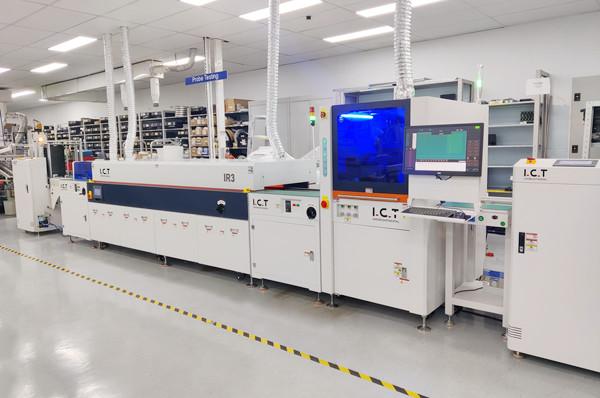
The figure below shows a machine positioned on the floor with its service lines run — the end state this pass is preparing for. Three checks structure it: the spares and consumables that ship with the machine, which determine how the first production year survives its inevitable wear; the transport, packaging and insurance that govern whether the machine arrives as it left; and the installation, leveling and re-calibration that convert a delivered machine into a running one.

Spares are the used machine's running guarantee, and the checklist inventories what ships with the machine the same way it inventoried the feeders and nozzles. Nozzles clog, feeders wear, vacuum lines age, and the high-touch spindle and feeder components have finite service lives; a used machine bought with a spares kit sized for the first year of production resumes quickly after a failure, while one bought bare converts the same failure into a parts-order lead time during which the line sits down. The checklist asks what spares are included, by part number, and checks the list against the wear items the condition pass already identified as due for replacement — because the spares kit on a used machine should anticipate the wear the machine has already accumulated, not just the wear of a new one.
The commercial discipline is the same as the feeder check: spares included at purchase are bought at order prices, while spares reordered later are bought under production pressure. The checklist therefore prices the spares gap explicitly, and it ties the spares list to the remaining-life estimate from the condition pass — a machine with years of life left needs a spares kit that matches that horizon, not a token set. The check also extends to consumables and documentation, the same items a new purchase would specify, because on a used machine the manual and the spare-part list are part of what transfers, and a machine whose documentation is thin converts every future maintenance action into a support request. The spares check closes the pass's first link: a machine that can be kept running from the parts that travel with it.
Transport is where a calibrated machine's accuracy is put at risk, and the checklist specifies the journey the way it specified the machine. The buyer asks who arranges and pays for transport, where the risk of loss or damage passes, and what insurance covers the route — and records the answer, because the international movement of a placement machine crosses carriers and customs, and a claim with ambiguous responsibility is a claim the buyer ends up carrying. On the used side the question is sharper, because a machine with an established calibration is only worth moving if that calibration survives, and a transport plan that treats it as generic cargo is a plan to undo the accuracy the calibration record documented. The shipping terms, stated in writing, are the difference between a machine that arrives insured and one that arrives with a story.
Packaging is the physical half of the same check, and it matters whether the machine is new or used. A placement machine ships with its gantry and head secured against movement, its sensitive axes locked, and its optics protected against shock and humidity; the checklist asks how the machine will be crated and whether the gantry is mechanically locked for transit. For a used machine the seller's added protection matters more than the original packaging's condition, and a seller who sends a calibrated mounter as ordinary freight — the kind of instrument a SM481 Plus entry-level placement unit is — is sending a signal the buyer should read. The check closes with a written transport plan — route, carrier, insurance, responsibility — against which arrival can later be verified, and it hands the machine to the installation link that follows.
Installation is where the machine is landed and its accuracy re-established, and on a used machine it is the step that re-validates the calibration record against the buyer's own floor. The machine must be moved into position by handlers who understand its weight and lifting points, leveled on its feet, and re-calibrated against the standard the accuracy pass relied on; the checklist asks whether the supplier's installation service covers rigging, leveling and re-calibration, or whether the buyer arranges it, and who signs off that the machine was moved and set without incident. A used machine installed without this re-verification is a machine whose accuracy is still the seller's claim, not the buyer's measured fact.
The re-calibration is the point where the earlier calibration record is tested against reality, and it deserves the same formality as a new machine's commissioning. The checklist asks for the leveling and calibration procedure, the measurement standard, and the documented result, and it compares that result against the accuracy the buyer's smallest package demands. The interaction between the site the machine lands on and the accuracy it is expected to hold is the same one the specification matching guide develops, and it applies on the used path unchanged — a machine re-calibrated to tolerance on a proper floor is a machine whose documented accuracy is now the buyer's fact. The installation pass closes the physical journey and hands the machine, running and verified, to the acceptance pass that follows.
Acceptance is where every claim this guide has reconstructed is tested against the physical machine, and on the used side it carries more weight than on the new, because the used machine's entire value rested on evidence the buyer was asked to trust. Acceptance converts that trust into measurement: the machine is run against a defined script, its performance compared to the figures the records promised, and the result recorded as the buyer's own fact rather than the seller's assertion. A used machine accepted on defined criteria is one the buyer owns with evidence; one accepted without is one the buyer owns on faith — and faith is the one thing this guide has been systematically removing.
Three checks structure the pass. The first is the proof structure itself — the Factory Acceptance Test and Site Acceptance Test that give the verification a defined pass line. The second is what to measure, the specific figures that matter for a used machine rather than a generic checklist. The third is the warranty and service scope, which on a used machine is negotiated differently and must be priced into the decision. Together they close the new vs used Hanwha pick and place machine question the way it should always have been closed: with a machine whose state is measured, not described.
The two standard acceptance tests give the verification a structure the buyer can hold the seller to. The Factory Acceptance Test runs before the machine ships, in the seller's environment, verifying that the machine performs to specification — cycle rate, placement accuracy, the demonstration board — before it is committed to transit. The Site Acceptance Test re-runs the same figures after transport and installation, on the buyer's floor and the buyer's own panels, to confirm the journey did not undo the calibration the earlier pass documented. For a used machine the FAT has a special value: it is often the first time the buyer sees the machine run against a defined script rather than a demonstration the seller controls, and it is where the reconstructed claims finally meet a measurement.
The two tests together define the pass line that settles disputes before they start. The checklist asks the seller to name the FAT and SAT criteria in writing — what is measured, on what part, against what limit — and to commit to them in the order, because a used machine whose acceptance criteria are undefined is a machine whose performance will be argued from memory later. The structure also disciplines the seller: a used-machine seller who will agree to a defined FAT and SAT is one who believes the machine will pass them, and a seller who resists defining the criteria is signaling something the buyer should price. The proof structure, agreed in advance, is what turns acceptance from a formality into the final audit of the used machine's condition.
The measurements at acceptance are the specification restated as tests, and on the used side they are chosen to re-verify the specific claims the earlier passes reconstructed. The checklist measures realistic throughput — not the rated figure but the rate the machine sustains on the buyer's panels at production cadence — because a used machine's rated speed can be eroded by the wear the condition pass documented. It measures placement accuracy on the buyer's smallest package and finest pitch, the figure the calibration record promised, to confirm the machine still holds the tolerance the BOM demands. It measures the board-size envelope on the buyer's largest panel, the feeder and nozzle function at peak concurrent setup, and the software and CAD-import path with the buyer's own files. Each measurement is a named figure with a pass limit, so acceptance is a script rather than a judgment call.
The measurement set also includes the changeover, because on a used machine the changeover time is a window into its mechanical state — a machine whose feeders and carts have been neglected changes over slowly, whatever its placement speed. The acceptance run therefore times a changeover between two buyer families, and it holds the result against the quoted setup time. The logic is the same one this guide has applied throughout: every number the seller claims is restated as a test, and the test is run on the buyer's parts, not the seller's demonstration. A machine that passes this measured acceptance is one the buyer can sign for with evidence in hand — and the acceptance table in the final pass below is where that evidence is recorded for good.
The warranty on a used machine is negotiated, not inherited, and the checklist prices it explicitly because it is where the used-versus-new premium is partly reclaimed or partly lost. The buyer asks the duration of any warranty, what it covers and excludes, and whether it is parts, labor or both — a parts-only warranty on a machine whose failures are mostly labor to diagnose is narrower than it sounds. The checklist also asks about the service response and escalation path, because a used machine's support path is not automatically as defined as a new machine's, and a buyer who assumes the seller's service carries over may discover the support ended with the previous owner. These terms, written into the order, are the difference between a used machine that is supported and one that is self-insured.
The service scope also reaches back to the spares and documentation the earlier passes checked, because on a used machine the support relationship is only as good as the parts and manuals that back it. The checklist confirms which spares the seller commits to stocking for the machine's expected remaining life, their lead times, and the documentation that transfers with the machine, so that the support path is continuous rather than a gap the buyer fills. For a starting line the used option is often the right one precisely because the support can be structured — a low-cost entry unit such as the SCM1-D used starter SMT machine becomes a defined asset once its warranty, spares and service terms are written down. The acceptance pass closes the used machine's journey from reconstruction to evidence, and it hands the buyer to the final pass: the single enquiry-ready framework that compresses everything into one document.
The entire guide compresses into a single framework the buyer can send to a supplier before the first quotation is opened, and that is the point: the new vs used Hanwha pick and place machine decision is won or lost in the questions asked before the price is discussed. The seven passes this guide has walked — scope, condition, configuration, software and calibration, spares and transport, acceptance, and the closing framework — each end in written questions, and those questions, collected, are the enquiry. A buyer who sends them gets back a machine that is defined; a buyer who sends only a model number and a budget gets back a price, and the price is the only thing the seller was asked to provide.
The framework below is that collected enquiry, in decision order, with each pass reduced to the questions that matter. It exists so the buyer enters the conversation on the front foot, with the depth of verification already mapped to the state being bought — lighter on the new side, deeper on the used. Two checks close the guide: the framework table itself, the one page that converts the seven passes into a ready-to-send document, and the summary that places this guide inside the larger purchasing discipline this series has built.
The framework runs in the order the questions actually arise, and the order matters because each pass's output feeds the next. The scope pass fixes whether the machine is being bought new or used, which sets the depth of everything that follows. The condition pass reconstructs identity and history on the used side, producing the condition file that the configuration pass then audits against. The configuration pass produces the feeder and nozzle manifests and the drift audit, which the software and calibration pass builds on to prove the machine still performs. The spares and transport pass specifies the journey that preserves that performance, and the acceptance pass measures it. The closing framework then collects all of it into the questions that go to the supplier — and the table below is that collection, ready to send.
The framework's real value is that it removes the asymmetry that dominates used-machine purchases. The seller knows the machine's history; the buyer does not. The framework redresses that by forcing the history into the open, question by question, before the price anchors the negotiation. A seller who answers all seven passes in writing is selling a defined asset, and the buyer can compare it to a new machine on equal terms — two documented states, priced on evidence. That is the entire purpose of the new vs used Hanwha pick and place machine discipline, and it is why the framework, not the price, is the first thing the buyer should put in front of a supplier.
The table below is the collected framework, one line per pass, ready to paste into an enquiry. Its last column asks for the written answer each pass requires, so the buyer receives back a machine that is defined rather than a price that is bare. It is the same discipline this series' pre-purchase mounter verification checklist applies to the purchase as a whole, focused here on the question that frames every other: new or used, and what evidence settles it. Keep the completed table in the purchase file, because the rows it answers are the rows the acceptance pass re-verifies, and a framework recorded at enquiry becomes the buyer's standing reference for every later dispute over what was ordered.
# | Pass | Question to put in writing |
|---|---|---|
1 | Scope | New or used, and which verification depth does the state require? |
2 | Condition | Serial, build year, service hours, placements, maintenance and decommissioning reason |
3 | Configuration | As-built versus current configuration, with every change named and priced |
4 | Feeders and tooling | Itemized feeder package, nozzle set and tooling, with condition noted |
5 | Software and calibration | Version, active modules, licenses, calibration history and current accuracy |
6 | Spares and transport | Spares kit, shipping terms, insurance, rigging and re-calibration |
7 | Acceptance | FAT and SAT criteria, warranty, service response and transferable documentation |
Run the new-versus-used verification with I.C.T before you buy
Every pass in this framework is a question our engineers answer with customers daily, and the fastest way to a defensible decision is to run the framework against the actual machines. Tell us whether you are weighing new against used, share your component census, your product families and your budget, and we will return the evidence the framework demands — the serial and build record, the service hours and maintenance history, the current configuration with feeders and nozzles itemized, the software and calibration records, and a defined transport, installation, acceptance and service scope — so the machine you buy, new or used, is one you have verified rather than hoped for. Whether the answer is a new SM or DECAN platform, a clean low-duty used machine that starts a line for a fraction of the cost, or a mixed configuration, it arrives as a documented state with the acceptance criteria attached. Browse the range in the full Hanwha pick and place machine catalog, or share your BOM and your new-versus-used question to schedule a quotation that closes every pass of this framework — your machine, your evidence, your acceptance criteria, itemized and verified before any commitment is requested.
Decide on evidence, not on price. A new machine carries a known build state, a full warranty and a current configuration, which is worth the premium only when your roadmap uses that capability. A used machine is decided by its documentation — serial number, service hours, maintenance log, calibration record and the reason for decommissioning. Reconstruct the used machine's identity, history and current performance, then compare the two states as documented assets. The right choice is the one whose evidence matches your BOM's component range and your volume, not the one with the lower headline figure.
Ask for the serial and build record, the maintenance log, the calibration history with the most recent result, the software version and license status, and the repair and decommissioning record. Each establishes a different fact: identity, care, current accuracy, software entitlements and hidden precision risk. Treat every missing record as a finding that should lower the price, not a footnote — on a used machine, documentation is the product, and its absence means the buyer is carrying the uncertainty.
Feeders are detachable and resellable, so they are the first thing stripped from a used machine before sale. A machine offered cheaply with a thin feeder complement is a frame with the expensive part sold separately. Derive the feeder requirement from your BOM's peak concurrent tape load, inventory what the machine actually ships feeder by feeder, and price the gap — because the feeders you add later are bought at parts prices, not the bundled price a new package would carry.
Ask for the calibration history and the most recent result, including the standard it was measured against and who performed it. Hold that accuracy against your smallest package and finest pitch, because the machine only matters if it still holds the tolerance your BOM demands. Then confirm the accuracy again at the Site Acceptance Test on your own panels — the calibration record is the seller's claim, and the SAT is where it becomes your measured fact.
The Factory Acceptance Test verifies the machine performs before it ships, and the Site Acceptance Test re-verifies it after installation on your floor. Both should measure realistic throughput, placement accuracy on your smallest package, the board-size envelope, feeder and nozzle function at peak setup, the software and CAD-import path, and a timed changeover. Name the measurements and pass limits in writing before signing, so acceptance is a script rather than a judgment call.
Not automatically. The control-software version and the active modules must be checked: some modules — feeders-verification, traceability, line control — can be installed but no longer licensed, and the buyer may face a paid re-licensing after delivery. Ask which modules are active, which are installed but inactive, and what it costs to restore them, and confirm the offline programming and CAD-import path. A machine with lapsed modules is a machine plus a licensing bill, and the bill belongs in the quotation.
It is often the right call when your volume and component range are modest and the budget does not justify new. The discipline is identical to a new purchase: document the serial number, service hours, maintenance and calibration record, and the reason for decommissioning. A clean, documented used machine with a complete feeder and nozzle set starts a line for a fraction of new cost; a used machine sold without history is a price, not an asset. Hold the used option against the new one on documented condition.
Negotiate the warranty explicitly — duration, coverage, and whether parts, labor or both — plus the service response time and escalation path, because a used machine's support does not automatically carry over from the previous owner. Confirm which spares the seller commits to stocking for the machine's remaining life, their lead times, and the documentation that transfers with it. These terms written into the order are the difference between a supported used machine and one the buyer is self-insuring.