English
Views: 0 Author: Elsa Long Publish Time: 2026-10-27 Origin: Site


A pick-and-place purchase goes wrong not at the specification sheet but at the line items nobody verified. Two buyers can sign for machines with the same model number and receive different assets — one with a complete feeder package and a licensed software stack, the other with a bare frame that drains the budget in add-ons over the following year. The difference is the checklist: the pre-purchase verification of model, condition, feeders, nozzles, software, power, transport, installation, training and service that converts a quotation into a defined machine. This guide is that checklist, organized in the order the questions actually arise, and it is built around the Hanwha SMT mounter product lineup the verification is applied against.
The Hanwha pick and place machine buying checklist runs in seven passes, each closing a class of risk that a later pass cannot fix. It starts with model and condition — the identity audit that tells you exactly which machine is being offered, new, used or somewhere between. It then works the physical configuration in two passes, the feeder package and the nozzle and tooling set, because these two line items are where the quoted price hides most of its margin. Software and licenses follow, then the site conditions — power, air and floor — that must be true before the machine can be installed at all, then transport and installation, and finally the closing trio of training, acceptance and service scope. Every pass ends in questions you can put to the supplier in writing, and together they turn a purchase order from a hope into a definition.
Table of Contents
The first pass of the checklist is identity, and it is the one pass that makes every other pass meaningful. A quotation names a model, but "SM481 Plus" and "DECAN L2" are families with configuration variants, and "used" is a range rather than a state — a machine can be freshly decommissioned, refurbished by the vendor, or sold as-is with its wear intact. Before feeders, nozzles or software are worth discussing, the buyer must know exactly which machine is on the table, in which condition, at which build state. Getting this wrong does not just misprice the deal; it cascades into every downstream check, because the feeder package, the software version and the service terms all attach to a specific serial number in a specific condition, not to a brochure name.
The pass runs four checks. The first confirms the exact model, series and configuration variant against the quotation and the datasheet. The second audits condition — new, used or refurbished — with the evidence each claim requires. The third places the machine in its generation, using the SM-versus-DECAN distinction that this series' comparison article lays out. The fourth pins the identity to a serial number and a build year, so that the machine described on paper is the machine that arrives on the truck.
A model number is a key, not a description, and the first check is to confirm the key opens the right door. Ask for the full model designation, the series it belongs to, the generation, and the configuration suffix if one exists — head count, rail configuration and vision options all live behind suffixes that a truncated model name hides. The Hanwha families are not interchangeable in the ways that matter: the SM471Plus is a dual-gantry chip shooter, the SM481Plus widens IC reach, the SM482Plus stretches to wide bodies and long boards, and the SM485 exists for insertion work, while the DECAN line restarts the capability ladder a generation tighter. A quotation that names only "an SM481" has not yet told you which of several machines it is.
The check is written down rather than spoken, because configuration claims are where ambiguity hides. For the exact model, record the rated CPH, the head count and spindle arrangement, the component-size window, the board-size envelope, the vision configuration, and the rail option — and require each figure to be confirmed against the datasheet for that exact model, not against a family description. Where the quotation and the datasheet diverge, treat the divergence itself as the finding: either the quotation is optimistic or the configuration is non-standard, and both need to be resolved in writing before the commercial conversation continues. A model confirmed this way becomes the anchor for every later pass, because each subsequent checklist item references a machine that actually exists.
Condition is the single largest price driver in a mounter purchase, and the checklist treats it as an auditable claim rather than a label. A new machine carries a known build state, a full warranty and a known configuration; a used machine carries history, and the value of that history depends on what the seller can document. The audit asks, for a used unit, the same questions a buyer would ask of any capital asset: service hours or placement counts since new, the maintenance record, the reason for decommissioning, any accident or repair history, and the results of the most recent calibration. A seller who produces the machine's logbook on request is describing the asset; a seller who cannot is describing only a price.
Refurbishment is the middle state, and it deserves the strictest definition. A genuinely refurbished machine has had worn high-wear items — nozzles, spindles, feeders, vacuum lines — replaced to a stated standard, been re-calibrated, and been re-tested to a documented specification; the buyer should ask which components were replaced, to what standard, and with which parts, new or reconditioned. Where the market's used inventory matters to the decision, the lower-cost route is worth holding against the higher-capability one explicitly: a used chip shooter such as the HM520 used Samsung chip mounter can absorb a chip-dense load at a fraction of new-machine cost, and an entry used unit like the SCM1-D used low-cost SMT mounter can start a line that a new purchase would over-build. The point is not to prefer either state but to price it on evidence: condition, documented, converts the used-versus-new question from a gamble into a line item.
Placing the machine in its generation is the third identity check, and it protects against the most common mis-purchase in the range: buying a machine whose generation does not match the product roadmap. The SM and DECAN families answer the same production questions a platform generation apart, and the differences are not cosmetic — the DECAN generation holds a tighter accuracy envelope, extends the micro-chip floor to 03015, and restructures speed around a newer architecture, while the SM generation remains the proven, high-value workhorse for chip-dense and mixed boards. The structured treatment of that choice, model against model, is laid out in the SM and DECAN series side-by-side comparison, and it is worth reading before the condition audit closes, because the right generation is a selection question and the right condition is a pricing question, and they should not be answered in the wrong order.
The identity check produces one line for the checklist: the machine's generation, stated, and the reason it fits the roadmap rather than merely the budget. A buyer who needs 03015 capability but is quoted a used SM471Plus is looking at the wrong generation however attractive the price; a buyer whose roadmap never passes 01005 and whose volume is chip-dense is paying for a generation they will not use if they default to the newest platform. Recording the generation decision in writing keeps the later passes honest — the software pass, for example, asks different questions of an SM platform than of a DECAN platform, and the answer only makes sense once the generation is fixed.
The identity pass closes by pinning the machine to facts that cannot be argued: the serial number, the build year, and the configuration as actually shipped. Request the serial number in the quotation, match it to the machine's physical plate at inspection, and keep both in the purchase file — the serial number is the key that unlocks service history, software entitlements and warranty coverage, and a quotation without one is describing a category, not an asset. The build year matters because it bounds the platform revision: a model built in its first production year and one built three years later can carry different firmware, different feeders and different reliability fixes under the same model number, and the buyer is entitled to know which they are paying for.
Configuration truth is the last check, and it is verified against the serial number rather than against the seller's summary. Ask for the as-built configuration — heads, cameras, rail option, feeder complement, software modules — tied to that serial number, and reconcile it against the quotation line by line. This is where the earlier model check pays off: a machine quoted with a stage-vision option that the serial number's build sheet does not include is a different asset than the one described, and discovering that after delivery converts a purchasing detail into a dispute. The identity pass, done this way, produces a machine that is defined before it is priced — which is the only foundation on which the physical-configuration passes that follow can stand. Table 1 condenses the model reference the pass leans on, so the exact designation can be confirmed against the range at a glance.
Model | Series | Positioning |
|---|---|---|
SM471Plus | SM | Dual-gantry chip shooter, 78,000 CPH |
SM481Plus | SM | Extended IC reach, 40,000 CPH |
SM482Plus | SM | Wide-body, long boards, 30,000 CPH |
SM485 | SM | Force-controlled insertion, 22,000 CPH |
DECAN S1 | DECAN | Single-gantry speed entry, 47,000 CPH |
DECAN F2 | DECAN | Dual-gantry value speed, 80,000 CPH |
DECAN S2 | DECAN | Flagship dual gantry, 92,000 CPH |
DECAN L2 | DECAN | Multi-function, LED-optimized, 56,000 CPH |
The feeder package is where the quoted price most often hides its margin, and it is the first physical-configuration pass for a reason: a placement machine without the right feeders is a fast frame that cannot run a single board. Feeders are not a uniform accessory but a system — tape feeders in multiple widths, electric and pneumatic drives, tray stations for parts that do not come on reels, stick feeders for tubed components, and the docking carts that let setups swap as a unit. Two buyers paying the same headline price can receive materially different machines, because one's feeder package matches its BOM's supply mix and the other's was assembled from whatever the seller had in stock. The Hanwha pick and place machine buying checklist therefore prices the feeder package as its own line item, counted, specified and verified before the order is placed.
The pass runs four checks: counting the feeders correctly — types, tape widths and quantities — against the BOM's peak concurrent requirement; the electric-versus-pneumatic split and the docking-cart architecture that turns feeders into swappable setups; the tray, stick and specialty supply that absorbs the BOM's non-tape tail; and finally the discipline of treating the whole package as a priced, documented line item rather than a bundle that arrives in a box of unspecified content.
The feeder count starts from the BOM, not from the seller's bundle, and it is the one arithmetic in the purchase that a spreadsheet can make airtight. List every tape-fed line item across the product families the machine will run, segment the list by tape width — 8 mm positions are not fungible with 12, 16 or 24 mm positions, and a body-hungry BOM exhausts wide-tape capacity long before its headline count suggests — and convert the result to the peak concurrent requirement, the feeder load demanded when the families that change over fastest run back to back. That peak, typically 30 to 50 percent above any single board's count, is the number the feeder package must cover, and it is the number the quotation is checked against.
The count also has a growth correction, and it belongs in the order rather than in next year's budget. Roadmaps add packages, and feeder positions are the first thing a growing BOM exhausts; a package bought to today's census converts a minor product addition into a mid-run feeder shortage, the most expensive kind of interruption a placement line suffers. The checklist records three figures for the tape system — the single-board count, the peak concurrent count, and the position count with growth margin — and requires the supplier to confirm the package covers all three in writing, feeder by feeder. A feeder package confirmed this way is capacity the buyer owns; a bundle confirmed only as "complete" is a claim the buyer will test the hard way on the first product changeover.
The drive type of the feeder is a configuration decision, not a preference, and the checklist makes it explicit. Electric feeders, with their controlled feed indexing, are the presentation standard the fine-pitch and micro-chip rows demand — a 01005 chip mis-presented at the pick is already a defect — while pneumatic feeders remain viable for the coarser majority of the BOM at lower cost. The split follows the BOM census: the fine-pitch and micro-chip rows go on electric drive, the coarse majority on pneumatic, and the ratio is recorded per product family rather than assumed per machine. The logic for mapping that component census to the physical configuration is developed in this series' component-range-to-configuration mapping guide, and it applies here unchanged — the feeder package is where the BOM becomes hardware.
The docking cart is the other half of the supply system, and it is what makes the feeder package a changeover asset rather than a fixed load. Feeders load onto carts off-line, carts verify and stage the next product's setup, and the changeover becomes a cart swap instead of a feeding session at the rail. The checklist therefore asks how many carts the package includes, whether the verification scanner is included per cart or per machine, and how the software ties cart contents to product recipes — all standard items that nonetheless appear as options on quotes, and all cheaper to specify than to retrofit. For high-mix operations the cart count is as consequential as the feeder count, because setups queue on carts, and a machine with more feeder positions than staged carts changes over at half its potential tempo.
Not everything on the BOM arrives on tape, and the supply system's remaining three pieces absorb the rest. Tray stations hold the parts that ship in JEDEC trays — large ICs, BGAs, connectors, modules — and their count follows the same census logic as tape: how many distinct tray parts per board, how many tray stations the machine offers, and whether the BOM's tray load fits the quoted configuration. Stick feeders handle tubed components, occupying feeder positions at their own widths, and specialty presentations cover odd-form parts and the vendor-specific fixtures particular packages demand. Each of these is a configuration row triggered by a named BOM line, and the checklist records each one with its count rather than folding them into an "other" that arrives unspecified.
The multi-function tier exists in large part to serve this mixed supply load well, and it is worth holding the option explicitly: the DECAN L2 LED-optimized placement machine pairs its 56,000 CPH with the wide recognition and the feeder, tray and specialty-station capacity that a rotating mixed portfolio generates, and on the SM side the same load is answered with cart count and feeder fraction rather than a different machine. The check that closes the pass is packaging-level, not machine-level: before adding specialty feeders, review the odd packaging rows with the distributor, because a connector available on both tape and stick at the same piece price converts a specialty-feeder requirement into a standard position at no cost. The supply system is negotiable at the packaging level in ways it is not at the machine level, and the checklist surfaces that negotiation before the order closes.
The closing discipline of the pass is commercial: the feeder package is a priced, itemized line, not a bundle. Require the quotation to list feeders by type, width, drive and quantity, the cart count, the tray stations, and the stick and specialty positions, each with its price — and reconcile the list against the census the earlier checks produced. A package priced as a lump sum is a package whose content you will discover at delivery, and feeder shortfalls discovered at delivery are the most expensive kind to close, because the line is down and the seller's leverage has returned. Itemization also makes comparison possible: the same machine quoted by two suppliers can differ by the feeder package far more than by the frame price, and the itemized list is what exposes the difference.
The itemized list then lives in the purchase file alongside the census, so that the delivered package can be verified against the ordered one, feeder by feeder, at commissioning. This is the pattern the whole checklist repeats: every pass produces a written artifact that the later passes verify against — the identity pass produced the serial-number record, this pass produces the feeder manifest, and the next pass produces the nozzle and tooling inventory. The artifacts are what convert the checklist from a memory aid into a contract, and the contract is what protects the buyer when the truck opens and the boxes are counted.
Nozzles are the smallest components in a mounter purchase and among the most consequential, because a placement machine only places as well as the tooling its head carries. The nozzle set is what actually contacts the component: a fine-pitch nozzle that does not fit the smallest chip, a missing large-body nozzle for the connectors, a worn set that drops parts intermittently — each is a yield problem wearing the shape of a purchase detail that was skipped. Tooling also reaches beyond nozzles to the grippers, force-control hardware and special heads that odd-form and insertion content demands. This pass of the Hanwha pick and place machine buying checklist inventories all of it, so that the machine's capability, confirmed on paper in the earlier passes, is actually present in the physical tooling that ships.
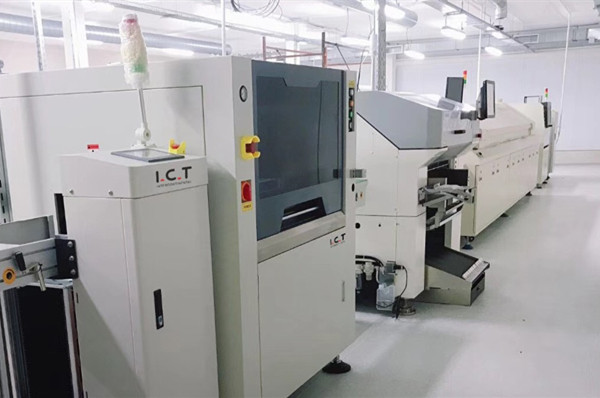
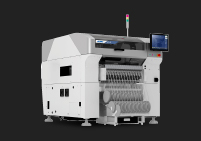
The figure below shows the head and nozzle hardware this pass audits, and three checks structure it: the nozzle set the BOM requires, matched to the package census; the special tooling — grippers, force control, upward vision — that the odd-form rows pull into the configuration; and the spares and wear inventory that keeps the tooling performing after commissioning.

The nozzle set is derived from the component census, and the derivation is mechanical once the BOM's package range is known. Each package class needs a nozzle scaled to its body — micro chips need fine-bore nozzles that hold a part smaller than most dust particles without vacuum instability; ICs and QFPs need the mid-range sizes; BGAs and larger bodies need the wider-bore and larger-contact set — and the head's spindle layout must carry the mix the BOM requires at each product. A machine quoted without its nozzle complement specified is a machine whose placement capability is still partly theoretical, because the nozzles are what deliver the accuracy figures the datasheet promises.
The checklist therefore asks for the nozzle set as an itemized list, matched to the package census: which nozzles, in which sizes and quantities, are included, and which are consumables the buyer will reorder. The commercial point is that nozzles are where small line items aggregate into real money over a machine's life, and a package that omits the fine-pitch set or the large-body set quietly transfers that cost to the buyer's first service order. For the Hanwha range, the standard nozzle families are well-defined, and a supplier should be able to map them to the BOM's package classes directly — the Samsung CP45 CN110 series SMT nozzle set being one concrete example of the replaceable nozzle hardware the platforms consume. The output of this check is a nozzle manifest, package class by package class, included and priced.
Beyond vacuum nozzles, the odd-form and insertion rows in the BOM pull specialized tooling into the configuration, and the checklist inventories it by BOM line rather than as a category. Gripper nozzles hold irregular bodies that vacuum alone cannot secure; force-controlled placement sets pin-in-paste and insertion parts at a controlled force instead of a fixed stroke, protecting both the part and the paste; and upward vision inspects fine-pitch leads and BGA ball arrays from below, catching co-planarity faults before reflow. Each of these is a configuration row triggered by a named BOM line, and the machine whose odd-form rows are automated without the corresponding tooling has been specified on hope.
The check is the same one this series' component guide applies to the BOM census: for every odd-form or insertion row, confirm either that the quoted configuration carries the tooling that row requires, or that the row is deliberately routed downstream to a manual or selective station. A board with pin-in-paste content and no force-controlled head is a board that will be inserted by hand, at a cost the automation was supposed to remove; a board with fine-pitch BGA content and no upward-vision option is a board whose co-planarity escapes will surface at reflow. The honest configuration is the one that matches tooling to the rows that justify it and declines the rows that do not — and the checklist records that decision in writing, because it is a capability decision the later acceptance pass must verify.
Tooling is a wear item, and the purchase is incomplete without the spares and wear inventory that keeps it performing. Nozzles clog, grippers wear, vacuum lines age, and the high-wear spindle and feeder components have finite service lives; the checklist asks what spares are included at purchase and what the recommended wear-replacement schedule is for the high-touch items. A machine bought with a spares kit sized for the first year of production resumes quickly after a nozzle or vacuum failure; a machine bought bare converts the same failure into a parts-order lead time during which the line does not run.
The inventory check also carries a commercial discipline. Spares and consumables are recurring revenue for the supplier, and the buyer who specifies the initial spares kit at purchase — at order-negotiation prices, bundled with the machine — pays less than the buyer who reorders piecemeal under production pressure. The checklist records the included spares by part number, the recommended replacement intervals, and the lead times for the parts not held in stock, so that the maintenance plan that follows commissioning is a plan rather than a series of emergencies. Tooling, specified and spares-stocked, is the physical guarantee behind every capability the earlier passes claimed on paper — and the bridge into the software pass, where the next class of overlooked line items lives.
Software is the quiet third of the machine's value, and it is where a quotation's omissions most often become a buyer's post-purchase costs. The placement machine is a computer with a motion system attached: its embedded control software runs the placement, its offline programming environment prepares the recipes, and its optional modules — feeders verification, line control, traceability — extend what the machine can do. A machine quoted without its software stack specified is a machine whose price does not yet include half of what makes it useful. This pass of the Hanwha pick and place machine buying checklist audits the software the same way the earlier passes audited hardware: what is included, at what version, with what license terms, and who owns the data the machine produces.
Three checks structure the pass: the control software and its version, which bounds the machine's actual capability and the reliability fixes it carries; the offline programming and CAD-import path, which determines how fast a new board becomes a running recipe; and the license, integration and data-ownership terms, which decide what the buyer may do with the machine's output and what they must pay to unlock it.
The control software is the machine's operating brain, and the version number is a specification in its own right. Versions differ in the component libraries they recognize, the vision algorithms they run, the feeders they support and the reliability fixes they incorporate; a machine running an early software build is a different asset from the same machine on a current build, however identical the hardware. The checklist asks for the software version, its release date, and the change history that separates it from the latest available, and it records the version against the serial number from the identity pass — so that the software state and the hardware state are documented together, as one asset.
The version check also bounds upgrade cost. Software upgrades range from included-in-warranty to paid, and a buyer who assumes upgrades are free may discover a paid migration to the version their roadmap requires. The checklist asks explicitly: which upgrades are included, for how long, and what the paid tier costs — and it ties the answer to the machine's generation, because the SM and DECAN platforms have different software lineages and different upgrade paths. Recording the version and the upgrade terms in the purchase file turns a murky area of the quotation into a defined entitlement, which is exactly the pattern the rest of the checklist enforces.
Offline programming is where the machine's software value shows up in day-to-day productivity, and it deserves its own check. A modern placement line prepares recipes away from the machine — importing CAD coordinates and BOM data, defining the feeder map and the nozzle plan, simulating the placement sequence — so that the line keeps producing while the next product is being programmed. The checklist asks which offline environment is included, whether CAD and BOM import are native or require translation, and whether the simulation and optimization tools are part of the standard package or priced separately. A machine whose offline programming is an extra is a machine whose changeover efficiency was never really specified.
The check extends to the data formats the environment accepts, because the interface to the buyer's existing tooling matters. CAD files arrive in the format the customer's design team produces; BOMs arrive as the buyer's ERP exports them; and the programming path that requires manual re-keying at any step is a source of errors the automation was supposed to remove. The checklist records the supported import formats and the integration points, and it verifies the path with a real board — the buyer's own CAD and BOM, imported end to end — during the acceptance pass. Software that is demonstrated rather than merely described is the same principle this series applies to placement capability, applied to the programming stack that feeds it.
The license and integration terms are where software passes from a capability into a commercial relationship, and the checklist treats them with the same formality as the hardware line items. Licenses can be perpetual, subscription, or machine-tied, and the distinction determines what the buyer owns versus what they rent; a machine whose feeders-verification or traceability modules are subscription-gated carries an ongoing cost the purchase price does not show. The MES and factory-software interface is the second question — whether the machine exposes the data and control points the buyer's manufacturing system expects, and whether the integration is included or a paid service — because a mounter that cannot report into the factory's traceability system is a machine the factory cannot fully use.
Data ownership is the third question, and it is the one buyers most often discover late. The machine generates placement data, traceability records, recipe files and performance logs; the checklist asks who owns that data, whether it is exportable in an open format, and whether the buyer's access survives the end of the support relationship. A machine that holds its data in a proprietary format, exportable only through paid tooling, has sold the buyer a capability and then rented back the output. Recording the license model, the integration points and the data terms in writing closes the software pass the way the serial number closed the identity pass — with an entitlement the buyer holds rather than an assumption they hope holds.
Before a mounter can be transported or installed, the site must already satisfy the machine's physical requirements, and this pass verifies that the site and the machine agree. Power, compressed air, vacuum, floor load, footprint and environmental conditions are not details to be discovered at commissioning; they are preconditions that determine whether the purchase is even installable in the space the buyer has in mind. A machine specified perfectly on paper and then found to need a transformer, a larger compressor or a reinforced floor that the budget never included is a machine that arrives expensive, whatever the invoice said. The Hanwha pick and place machine buying checklist therefore checks the site against the machine's requirements before any transport is arranged.
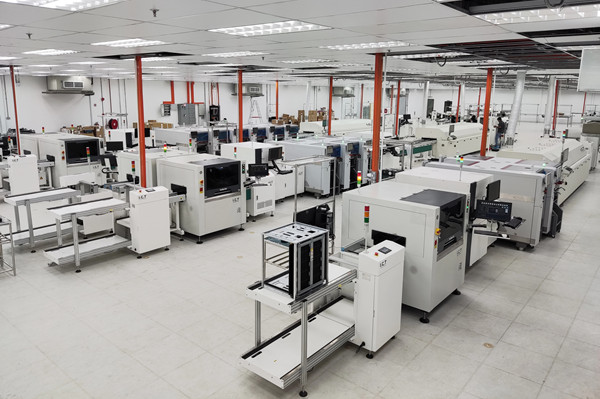
The figure below shows a mounter installed with its service lines run — the end state this pass is preparing for. Three checks structure the pass: the electrical requirements and earthing, which are non-negotiable and safety-critical; the compressed-air and vacuum supply, which the machine's pick-and-place operation consumes continuously; and the floor, space and environmental envelope, which bounds where the machine can physically and reliably live.

The electrical check is the first and least negotiable, because it is a safety and reliability matter before it is a cost. The machine's voltage, phase, frequency and rated current must match the site's supply, and the difference between the two is paid for in a transformer or a dedicated circuit that the project must budget. The checklist asks for the machine's electrical specification — nominal voltage and tolerance, phase, frequency, full-load current and inrush — and compares it against the site's available supply, in writing, before transport. A mismatch discovered at commissioning means the machine sits idle while a transformer is sourced, and that idle time is a cost the checklist exists to prevent.
Earthing and power quality are the second half of the same check. Placement machines are sensitive to electrical noise and to supply quality, and a poor earth or an unstable feed produces the intermittent faults that are the most expensive to diagnose because they look like machine defects. The checklist asks the supplier for the earthing and power-quality requirements — dedicated earth, voltage stability range, and any recommended conditioning — and confirms the site meets them, with the confirmation recorded against the machine's specification. The electrical pass, closed properly, means the machine can be powered safely and reliably on day one, which is the precondition every other commissioning step assumes.
Pick-and-place operation runs on pneumatics, and the air supply is a continuous production requirement rather than a one-time provision. The machine consumes compressed air for feeder actuation, nozzle vacuum and board clamping, and the checklist asks for the machine's air specification — pressure range, flow rate, and air quality in terms of filtration and dryness — and compares it against the site's compressor and dryer capacity. An undersized compressor or an unfiltered air supply degrades placement reliability in ways that accumulate as intermittent defects, and the fix, like the electrical one, is a capital item the project must carry if it was not planned.
Vacuum deserves its own line, because it is generated at the machine but depends on the air supply feeding it, and its stability is what holds the smallest components at the nozzle. The checklist confirms the vacuum system's specification, its maintenance points, and whether the machine includes vacuum sensing that reports a degrading supply before it becomes a defect. The air and vacuum check closes with a written comparison of the machine's specification against the site's capacity, plus the capital items — compressor, dryer, filtration — that the gap, if any, requires. A site that passes this check commissions cleanly; a site that skips it commissions with a machine that intermittently drops parts and a diagnosis that takes weeks to find.
The physical envelope is the last site check, and it covers what the machine needs in floor, footprint and environment. The machine's weight must sit on a floor rated for it, its footprint plus service access must fit the planned position, and its clearance must accommodate the board-handling and operator access the line requires. The checklist asks for the machine's weight and floor-load requirement, its dimensions with service clearance, and any anchoring or anti-vibration recommendation, and it checks these against the site's floor and layout — because a machine placed on an unrated floor or in a space that cannot accept its service access is a machine the factory cannot actually use.
The environmental envelope completes the check, and it interacts directly with the specification the machine was chosen for. Temperature and humidity ranges, dust control and air-conditioning requirements all affect the accuracy figures the earlier passes relied on — a placement machine specified for ±25 micron work does not hold that tolerance in an unconditioned space — and the board-size and panel decisions the machine was sized for set the floor space the line will occupy. The interaction between the site envelope and the machine specification is developed in this series' CPH accuracy PCB size matching guide, and the site check is where that matching becomes physical reality. A site verified against the machine's electrical, air and environmental requirements is a site ready to receive the machine — which is exactly what the transport and installation pass that follows assumes.
The machine is specified, configured and site-checked; what remains is getting it from the seller's floor to the buyer's, in the condition the earlier passes paid for. Transport and installation are where physical damage and hidden liability live — a placement machine is a heavy, precision-calibrated instrument, and a journey that treats it as ordinary freight can leave it accurate on paper and drifting on arrival. The Hanwha pick and place machine buying checklist therefore specifies the journey as carefully as it specified the machine, assigning responsibility, packaging, insurance and acceptance at each handoff so that the buyer knows who owns the machine at every point between the seller's dock and the buyer's floor.
Three checks structure the pass: packaging and transport, where the responsibility and insurance for the journey are defined and the machine's calibration is protected; rigging, placement and leveling, where the machine is moved into position and its accuracy re-established; and the commissioning checks that confirm the delivered machine is the specified machine before the line is trusted with production.
The transport check starts with responsibility, because a precision instrument in transit is only as safe as the party who owns the risk. The checklist asks who arranges and pays for transport, where the risk of loss or damage passes from seller to buyer, and what insurance covers the journey — and it records the answer, because the international movement of a placement machine crosses carriers, customs and warehouses, and a claim that arrives with ambiguous responsibility is a claim the buyer may end up carrying. The shipping terms, stated explicitly, are the difference between a machine that arrives insured and one that arrives with a story.
Packaging and protection are the physical half of the same check. A placement machine ships with its gantry and heads secured against movement, its sensitive axes locked, and its optics and electronics protected against shock and humidity; the checklist asks how the machine will be crated, whether the gantry is mechanically locked for transit, and whether the packaging is rated for the route's handling. For machines with a used or refurbished history, the condition of the original packaging matters less than the protection the seller adds now, and a seller who treats a calibrated placement machine as generic cargo is sending a signal the buyer should read. The check closes with a written transport plan — route, carrier, insurance and responsibility — against which the arrival can later be verified.
Rigging and placement are where the machine is physically landed and where its calibration is re-established, and the checklist treats them as a specified service rather than an afterthought. The machine must be moved from the dock to its position by handlers who understand its weight, its lifting points and its sensitivity — the SM481 Plus low-cost SMD placement machine and its siblings are precision instruments, not pallet goods, and a rigging plan that does not respect that risks the accuracy the whole purchase was built around. The checklist asks whether the supplier's installation service includes rigging and placement, or whether the buyer arranges it, and who signs off that the machine was moved and set without incident.
Leveling and alignment follow placement, and they are where the machine's accuracy is re-established on the buyer's floor. The machine must be leveled on its feet, its axes re-checked, and its calibration confirmed against the standard the earlier accuracy pass relied on; the checklist asks for the leveling and calibration procedure, the measurement standard used, and the documented result. A machine installed without this re-verification is a machine whose accuracy is still the seller's claim rather than the buyer's measured fact — and the acceptance pass that follows is where that fact gets recorded for good.
Commissioning is the verification that the delivered machine is the specified machine, and it re-opens the earlier passes' artifacts one by one. Against the serial-number record, confirm the delivered machine matches. Against the feeder manifest, count the feeders, carts and stations as they come out of the crates. Against the nozzle and tooling inventory, verify the set is complete. Against the software record, confirm the version and the licensed modules. Against the specification, run the machine through its self-tests and a first board, and confirm the measured result meets the quoted figures. Commissioning, done this way, is not a formality but the point at which the entire checklist is checked against physical reality.
The commissioning check also produces the baseline that the service relationship will be measured against later. Record the machine's state at commissioning — placement accuracy, cycle performance, software version, feeder and nozzle inventory, calibration results — as the reference against which future drift is judged. A machine with a documented commissioning baseline is one whose performance can be managed over years; a machine commissioned without one is one whose later problems are argued from memory. The pass closes the physical journey and hands the machine to the line, ready for the last pass: the training, acceptance and service terms that define what happens after the machine is running.
The machine is on the floor and commissioned; what protects the investment from here is the human and contractual layer the checklist closes with. Operators and engineers must be trained to run and maintain it, the machine's performance must be formally accepted against the figures the purchase promised, and the service terms must define what happens when something fails. These are not administrative formalities — they are the difference between a machine the factory owns competently and a machine the factory owns by invoice. The final pass of the Hanwha pick and place machine buying checklist therefore specifies training, acceptance and service the way the earlier passes specified hardware: in writing, itemized, and verified.
Four checks close the guide: the training scope and documentation, which determine how quickly the line becomes self-sufficient; the FAT and SAT acceptance criteria, which convert the specification into a pass-or-fail test; the warranty, service response and spares terms, which price the years after commissioning; and the one-page closing checklist that compresses the entire guide into a single artifact ready for the supplier meeting.
Training is the transfer of competence, and the checklist specifies what the buyer receives rather than assuming a day of instruction covers it. The questions are concrete: how many operator and engineer seats, for how many days, covering which topics — operation, recipe programming, feeder setup, nozzle handling, preventive maintenance, fault diagnosis — and whether the training is at the supplier's site, the buyer's site, or both. A line staffed by people trained only to load feeders and press start is a line that cannot recover from its own faults; a line whose engineers were trained on diagnosis and maintenance is one that fixes problems in minutes instead of service-call days.
Documentation is the durable half of training, and it matters more over the machine's life than the sessions themselves. The checklist asks what documentation is included — operator manuals, programming guides, maintenance schedules, spare-part lists, electrical and pneumatic diagrams — in what language, and whether it ships with the machine or arrives later. A machine whose documentation is complete at commissioning is one the buyer can maintain and even train future staff on independently; a machine whose documentation is thin converts every personnel change into a support request. Recording the training seats, topics and documentation list closes the competence pass the way the serial number closed the identity pass — as an entitlement the buyer holds in writing.
Acceptance is where the specification becomes a contract, and it takes two standard forms the checklist should name explicitly: the Factory Acceptance Test, run before the machine ships, and the Site Acceptance Test, run after installation on the buyer's floor. The FAT verifies the machine performs to specification in the seller's environment — cycle rate, placement accuracy, the demonstration board — before it is committed to transit; the SAT re-verifies the same figures after transport and installation, on the buyer's own panels, in the buyer's environment. A purchase whose acceptance criteria are undefined is one whose performance disputes will be argued from memory; a purchase with named FAT and SAT criteria has a defined pass line both parties can measure against.
The acceptance criteria themselves are the specification restated as tests. For each figure the earlier passes relied on — rated and realistic throughput, placement accuracy on the smallest package, the board-size envelope, the feeder and nozzle function — the checklist names the measurement, the acceptance limit and the part or panel it is measured on, so that acceptance is a script rather than a judgment call, with the accuracy figures measured under the same IPC-9850 discipline the datasheet uses so the result is comparable rather than anecdotal. The demonstration discipline this series applies to machine selection — bring your own panels and parts, count the results — applies unchanged to acceptance, and the acceptance table below is the one page where the specification becomes a pass-or-fail record. A machine that passes a defined SAT is one the buyer can sign for with evidence; a machine accepted without one is one the buyer has accepted on faith.
Acceptance item | Measured on | Pass criterion |
|---|---|---|
Realistic throughput | Buyer's panel, production cadence | Meets quoted realistic rate with margin |
Placement accuracy | Smallest package, finest pitch | Within quoted accuracy class, verified |
Board-size envelope | Largest panel in the family | Transports and places without fault |
Feeder and nozzle function | Peak concurrent setup | Full census loads and runs correctly |
Software and data path | Buyer's CAD and BOM | Imports end to end, recipes verified |
Changeover time | Two buyer families, timed | Meets quoted setup time |
The service pass prices the years after acceptance, and it asks the questions that determine what a failure costs. Warranty is the first: its duration, what it covers and what it excludes, and whether coverage is parts, labor, or both — because a parts-only warranty on a machine whose failures are mostly labor to diagnose is a narrower promise than it sounds. Service response is the second: the promised response time, the support channels, and whether on-site service is included or billable, with the escalation path for a line-down situation. A machine's price is not its cost, and the service terms are where the difference between the two is set in writing.
Spares and support continuity are the third and fourth questions. The checklist asks which spare parts are recommended to be held on site, their lead times when ordered, and the parts the supplier commits to stocking for the machine's expected life — because a machine whose critical spares are not stocked anywhere within a supportable lead time is a machine the buyer is effectively self-insuring. And it asks about the support path itself, tied back to the whole-line planning this series' step-by-step Hanwha mounter selection guide describes — because the service terms for a single machine sit inside the service plan for the line it joins. The service pass, closed properly, produces a machine whose first failure is a managed event rather than the beginning of a negotiation.
The entire guide compresses onto one page, and the purchase is ready to sign when every line has a written answer. The table below is that page, in decision order — the same order the seven passes followed. Its last line, the acceptance record, is what converts the first lines from analysis into evidence: a proposal that arrives without answers to these rows is not a proposal, it is a quotation with a serial number missing. Keep the completed page in the purchase file, because the rows it answers are the rows the acceptance pass re-verifies, and a checklist recorded at signing becomes the buyer's standing reference for every later dispute over what was ordered.
# | Checklist line | Answer required |
|---|---|---|
1 | Model, series, generation | Exact designation confirmed against datasheet |
2 | Condition (new / used / refurbished) | Evidence-backed, serial number recorded |
3 | Feeder package | Itemized: types, widths, counts, carts, stations |
4 | Nozzles and tooling | Itemized set matched to the package census |
5 | Software and licenses | Version, modules, terms, data ownership |
6 | Site conditions | Power, air, floor and environment verified |
7 | Transport and installation | Responsibility, insurance, rigging, calibration |
8 | Training, acceptance, service | Seats, FAT/SAT criteria, warranty and response |
Run this buying checklist against the Hanwha range with I.C.T
Every line in this checklist is a question our engineers answer with customers daily, and the fastest way to a defensible purchase is to work the list against the actual machines. Send your component census, your product families and your site constraints, and we will return a quotation that is already checklist-complete — the exact model and generation, an itemized feeder package and nozzle set, the software and license terms, the site requirements, and a defined transport, training, acceptance and service scope — so the machine you sign for is the machine your floor receives, line item by line item. Whether the answer is a new SM or DECAN platform, a proven used machine that fits a starting line, or a mixed configuration, it arrives as a completed checklist with the acceptance criteria attached. Browse the range in the Hanwha SMT mounter product lineup, or share your BOM and site details to schedule a quotation that closes every pass of this checklist before any commitment is requested — your model, your feeders, your nozzles and your service terms, itemized and verified in writing.
A new machine has a known build state, full warranty and current configuration; a refurbished machine has had its high-wear items — nozzles, spindles, feeders, vacuum lines — replaced to a stated standard, re-calibrated and re-tested. The difference is evidence: ask what was replaced, to which standard, and for the maintenance and calibration record. A refurbished machine can be excellent value, but only when its condition is documented rather than asserted, so price it against the machine's service hours and replacement history, not against the label.
Size the feeder package to the peak concurrent requirement, not a single board's count: list every tape-fed line item across the families the machine will run, segment by tape width because 8 mm and 24 mm positions are not fungible, and add 30 to 50 percent for the families that change over fastest, plus roadmap growth. Itemize feeders by type, width, drive and quantity in the quotation, and include the docking carts, tray stations and stick positions in the same list.
The nozzles are what physically place the components, so the set must match the package census: fine-bore nozzles for micro chips, mid-range for ICs and QFPs, larger for BGAs and connectors. A machine quoted without its nozzle complement specified is one whose capability is still partly theoretical, and a missing fine-pitch or large-body set becomes the buyer's first service order. Ask for the nozzle set as an itemized list, matched package class by package class, with the spares and wear items included.
Confirm the control-software version and its change history against the serial number, because versions differ in component libraries, vision algorithms and reliability fixes. Ask which offline programming and CAD-import tools are included versus priced separately, whether licenses are perpetual, subscription or machine-tied, and whether the MES interface and data export are included. Record the version, the modules and the data-ownership terms in writing — software is where a quotation's omissions most often become post-purchase costs.
Verify power, air and floor before transport. Confirm the electrical supply matches the machine's voltage, phase and frequency with a documented comparison, check earthing and power quality, and confirm the compressed-air capacity, filtration and dryness meet the machine's specification. Check the floor is rated for the machine's weight, the footprint and service clearance fit the space, and the temperature and humidity stay within the accuracy envelope the machine was specified for. A site that fails these checks commissions late and expensive.
The Factory Acceptance Test verifies the machine performs to specification before it ships, and the Site Acceptance Test re-verifies it after installation on your floor and your panels. Name the measurements and pass limits for each: realistic throughput, placement accuracy on your smallest package, the board-size envelope, feeder and nozzle function at peak setup, the software and CAD-import path, and a timed changeover. Acceptance is a script, not a judgment call — a machine accepted on defined criteria is signed for on evidence.
It can be the right call when the volume and component range are modest and the budget does not justify new. The discipline is the same as new: document the serial number, service hours, maintenance and calibration record, and the reason for decommissioning. A used machine with a clean, documented history and a verified nozzle and feeder set starts a line for a fraction of new cost; a used machine sold without history is a price, not an asset. Hold the used option against the new one on documented condition, not on the label.
Four things: warranty duration and whether it covers parts, labor or both; the promised service response time and escalation path for line-down situations; the spare parts you should hold on site, their lead times and what the supplier commits to stock; and the training scope — operator and engineer seats, topics, and the documentation that ships with the machine. These terms price the years after acceptance, and they should be written into the order, not discovered at the first failure.