English
Views: 0 Author: Elsa Long Publish Time: 2026-10-28 Origin: Site


A placement machine is bought on a specification and paid for on a test. The quotation promises a cycle rate, an accuracy class and a board envelope; the purchase only becomes safe when those promises are run, measured and signed off as evidence — and that is what the Factory Acceptance Test and the Site Acceptance Test are for. The FAT verifies the machine performs as quoted before it leaves the seller's floor; the SAT re-verifies the same performance after it lands on the buyer's floor, on the buyer's own panels, in the buyer's own environment. This guide is the checklist for both, organized around the Hanwha pick and place machine lineup the tests are run against.
The Hanwha SMT machine FAT and SAT checklist runs in seven passes, each closing a class of risk the next cannot fix. It begins with the acceptance baseline — the model and configuration that every later measurement is compared against. It then runs the first article and the trial board, the physical proof that the machine can build the buyer's product at all, and follows with the placement results and accuracy evidence, the measurements that decide whether the machine meets the tolerance the BOM demands. Programs, feeders and line integration come next, because a machine that places perfectly but cannot load the buyer's recipes or talk to the buyer's line is not accepted. Training and issue closure then bind the human and corrective layers, and the closing sign-off converts the whole run into a contract. The new-versus-used question shapes every pass, because a used machine's acceptance must additionally re-prove the condition and history a new machine ships with by default — the same discipline the new vs used Hanwha pick and place machine decision demands.
Table of Contents
Acceptance is the point where a placement machine stops being a claim and becomes a fact. A quotation is a promise: it names a model, quotes a cycle rate and an accuracy class, and describes a board envelope the machine is said to handle. The Factory Acceptance Test and the Site Acceptance Test are the two events that test that promise before money fully changes hands — the FAT on the seller's floor, before the machine ships, and the SAT on the buyer's floor, after it is installed. Between them they cover the two halves of the risk: whether the machine can perform at all, and whether it still performs after transport, installation and re-calibration on a different floor. This opening pass sets the structure the rest of the checklist follows.
The pass runs four checks, in the order they matter. The first defines what the two tests are and why both are needed, because a buyer who signs off on a FAT alone has accepted a machine that has not yet survived the journey. The second folds in the new-versus-used dimension, because a used machine's acceptance has to re-prove things a new machine ships with by default. The third fixes the checklist's scope, mapping the nine acceptance angles — model, configuration, trial board, placement results, programs, feeders, line integration, training and issue closure — onto the seven passes. The fourth pins the acceptance baseline, the model and configuration reference every later measurement is compared against, and the table below condenses the model reference the pass leans on.
The Factory Acceptance Test is the machine's proof run in the seller's environment, before it is committed to transit. It verifies the machine performs to the quoted specification — the rated and realistic cycle rate, the placement accuracy on the demonstration parts, the board envelope, the feeder and nozzle function — so that a machine that cannot meet its own datasheet is caught before it is crated. The Site Acceptance Test is the same proof re-run after delivery, on the buyer's floor, on the buyer's own panels, in the buyer's environment, so that the journey and the installation are shown not to have disturbed the performance. The two tests are not alternatives; they bracket the risk, and a purchase that defines only one has left the other half of the risk unmeasured.
The reason both matter is that a placement machine is a precision instrument that lives or dies by its calibration, and calibration is the first thing transport and re-installation can disturb. A machine that passed its FAT at the seller's site can still arrive drifting, because the gantry, the vision system and the stage all sit on alignment that a rough journey or an unlevel floor can shift. The SAT is what catches that shift, re-measuring accuracy on the buyer's own panels before the line is trusted with production. The disciplined buyer therefore defines both tests in the purchase order — with named measurements, named parts and named pass limits — and treats acceptance as the moment the specification becomes evidence. The selection logic that leads to the machine being tested is developed in this series' Hanwha mounter selection guide for PCB assembly lines, and it applies here unchanged: you can only accept what you have already chosen.
Acceptance does not mean the same thing for a new machine and a used one, and the checklist carries that difference through every pass. A new machine ships with a known build state, a current configuration and a full warranty, so its acceptance is confirmation — the FAT and SAT verify that the delivered machine matches the ordered one and performs as quoted. A used machine ships with a history, and its acceptance is partly re-proof — the tests must additionally confirm that the machine's condition, its configuration as currently configured, and its current accuracy still meet the specification, because the datasheet describes a machine as built, not as it is today. The new vs used Hanwha pick and place machine decision therefore sets the depth of acceptance: the new path confirms, the used path re-proves.
The practical difference shows up in the first article and the accuracy passes. On the new side the first article proves the configuration is correct and the machine places well; on the used side the same first article is also probing for the wear and drift that the machine's history may have accumulated. The checklist keeps the two paths separate in its depth, but not in its structure — the same seven passes run either way, because acceptance is acceptance, and the evidence it produces is what converts a new-versus-used decision from a gamble into a signed fact. A machine accepted this way, new or used, is one the buyer owns with measurements rather than with hope.
The nine acceptance angles the buyer is asked to verify — model, configuration, trial board, placement results, programs, feeders, line integration, training and issue closure — do not sit flat; they form a sequence, and the checklist follows that sequence because each pass produces the reference the next one measures against. The model and configuration are verified first, because they are the baseline every later number is compared against. The trial board and the first article come next, because they are the physical proof the machine can build the buyer's product at all. Placement results and accuracy follow, the measurements that decide whether the machine meets the tolerance the BOM demands. Programs, feeders and line integration then prove the machine works inside the buyer's actual process, and training and issue closure bind the human and corrective layers. The sign-off compresses it all into a contract.
The order matters for a practical reason: a failure found late is more expensive than one found early. A configuration error caught in the baseline pass costs a conversation; the same error caught in the line-integration pass costs a re-test after the machine has been installed and the line has been waiting. The checklist therefore runs the cheap-to-fix checks first and the expensive-to-fix checks last, so that acceptance surfaces its problems in the order that is cheapest to resolve. That discipline is the point of the whole document — acceptance is not a ceremony at the end of a purchase, it is the verification sequence that makes the purchase defensible, and it should be agreed in writing before the machine is ever ordered.
The baseline is the first thing the acceptance pass pins down, because it is the reference every later measurement is compared against. Before any trial board or accuracy figure means anything, the buyer must know exactly which machine is being tested — the model, the series, the generation, and the configuration as ordered — so that a passing or failing result can be attributed to the right asset. The baseline records the rated CPH, the head count and spindle arrangement, the component-size window, the board-size envelope, the vision configuration and the rail option, each confirmed against the datasheet for that exact model rather than against a family description. Table 1 condenses the model reference so the exact designation can be confirmed at a glance.
Model | Series | Positioning |
|---|---|---|
SM471Plus | SM | Dual-gantry chip shooter, 78,000 CPH |
SM481Plus | SM | Extended IC reach, 40,000 CPH |
SM482Plus | SM | Wide-body, long boards, 30,000 CPH |
DECAN S1 | DECAN | Single-gantry speed entry, 47,000 CPH |
DECAN F2 | DECAN | Dual-gantry value speed, 80,000 CPH |
DECAN S2 | DECAN | Flagship dual gantry, 92,000 CPH |
DECAN L2 | DECAN | Multi-function, LED-optimized, 56,000 CPH |
The baseline, once written, becomes the single source of truth for the acceptance run. The next pass develops it in full: how to confirm the exact model and configuration, and how to record the result so that every later test measures against something that actually exists.
The baseline is not a formality to be ticked; it is the foundation the entire acceptance run stands on, because a measurement only means something when it is attributed to the right machine. A buyer who signs off a passing accuracy test without first confirming the machine's exact model and configuration has accepted a result that may belong to a different asset than the one on the truck. This pass of the Hanwha SMT machine FAT and SAT checklist therefore establishes the machine's identity and configuration in writing, before any board is placed, and it is where the new-versus-used distinction first bites, because a used machine's configuration has to be re-proven rather than assumed.
Four checks structure the pass. The first confirms the exact model and series against the quotation and the datasheet, because a model number is a key, not a description. The second audits the configuration truth — heads, vision, rail and the feeder and nozzle complement — because those are where a machine's actual capability lives. The third fixes the baseline as the reference every later test is compared against. The fourth records the baseline in the acceptance file, so that the FAT and the SAT are both measured against the same definition.
The model check starts from the serial number, because every later record — the configuration, the calibration history, the warranty — attaches to it, and a machine offered without a serial number is a category rather than an asset. The buyer asks for the full model designation, the series it belongs to, the generation, and any configuration suffix, and confirms each against the datasheet for that exact model, not against a family description. The Hanwha families are not interchangeable in the ways that matter: the SM471Plus is a dual-gantry chip shooter, the SM481Plus widens IC reach, the SM482Plus stretches to wide bodies and long boards, while the DECAN line restarts the capability ladder a generation tighter, from the S1 single-gantry speed entry up through the F2 value platform to the S2 flagship and the L2 multi-function tier. A quotation that names only "an SM481" has not yet said which machine is being accepted.
The check is written down, because configuration claims are where ambiguity hides, and the acceptance baseline is only useful if it is unambiguous. For the exact model, the buyer records the rated CPH, the head count and spindle arrangement, the component-size window, the board-size envelope, the vision configuration and the rail option, and requires each figure to be confirmed against the datasheet for that exact model. Where the quotation and the datasheet diverge, the divergence itself is the finding, and it must be resolved in writing before the acceptance run begins, because a machine accepted against a mis-stated model has been accepted against the wrong reference. A model confirmed this way becomes the anchor for the configuration pass that follows.
The configuration audit moves from the model to the machine's physical truth, and it is where a used machine most often diverges from its brochure. The buyer confirms the head count and spindle arrangement, the vision configuration — the cameras and the upward-vision option — the rail option, and the feeder and nozzle complement, each against the as-built record, and on a used machine additionally against the current state, because a machine with years of service has had years in which its configuration could have been changed, downgraded or parted out. A used machine quoted with its original vision configuration but running an earlier or third-party camera is not the machine the datasheet describes, and the difference surfaces as a capability gap the acceptance run would otherwise miss.
The audit produces a configuration manifest that the trial-board and accuracy passes will lean on, because those passes only mean something when they are run on a machine whose configuration is known. The manifest lists the heads, cameras, rail and the feeder and nozzle set with condition noted, and it is reconciled against the order line by line, the same discipline this series' new versus used Hanwha mounter verification guide applies to the purchase as a whole, carried forward into acceptance. A configuration manifest confirmed this way is the physical definition of the machine being tested, and it is the reference the first article will be judged against.
The baseline's purpose is to give every later measurement a fixed reference, so that the FAT and the SAT are measuring the same thing on the same definition. The trial board tests against the component-size window the baseline recorded; the accuracy pass tests against the accuracy class the baseline recorded; the line-integration pass tests against the board envelope and the feeder complement the baseline recorded. When the baseline is written down and agreed, a later result is simply a pass or a fail against a known reference; when it is not, a later result is an argument about what the reference was. The baseline, in other words, is what turns acceptance from a negotiation into a measurement.
The baseline also carries the new-versus-used depth forward. On the new side the baseline is the ordered configuration, and the tests confirm the delivered machine matches it. On the used side the baseline is the as-built configuration, re-proven against the current state, and the tests additionally confirm the machine has not drifted from the performance its history implied. Either way, the baseline is recorded once and referenced everywhere, and the discipline of recording it once is what keeps the whole acceptance run coherent. The next pass takes the baseline and puts it to its first physical test: the first article and the trial board.
The baseline is only as good as the file that holds it, and the pass closes by recording it in the acceptance file in a form the later passes can reference. The file carries the serial number, the exact model and series, the configuration manifest, and the dated specification against which the machine will be measured, and it is the document the FAT and the SAT both open against. The file also records the new-versus-used status of the machine and the depth of verification that status demands, so that the acceptance team knows at a glance whether it is confirming a new machine or re-proving a used one. The purchasing discipline that should precede this file is laid out in this series' Hanwha mounter purchase verification checklist, and the acceptance file is where that discipline's output is handed to the test team.
The recording step is deliberately boring, and that is its value: a baseline written down in the acceptance file is a reference that survives the personnel changes, the time gaps and the memory that otherwise erode a verbal understanding. When the trial board fails a component three months after the FAT, the acceptance file is what tells the buyer whether the component was inside the baseline's window or outside it, and that answer decides whether the failure is the machine's or the specification's. The file, kept from this point forward, is the backbone of the acceptance run — and the next pass starts the run in earnest with the first article and the trial board.
The first article is the moment the baseline meets the buyer's real product, and it is the single most telling test in the whole acceptance run. Up to this point the machine has been described — its model confirmed, its configuration manifest written, its baseline recorded. The first article is where the machine is asked to do the one thing the purchase was for: build the buyer's board, correctly, on the first attempt. A machine that passes this test has demonstrated that the configuration matches the product; a machine that fails it has exposed a gap the paper checks could not see, and exposing that gap early is exactly why the trial board comes before the accuracy measurements rather than after them.
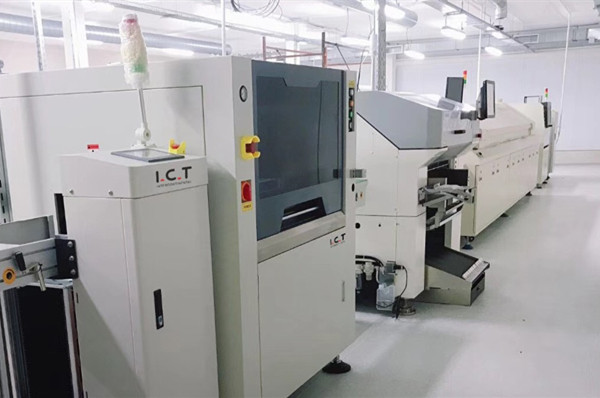
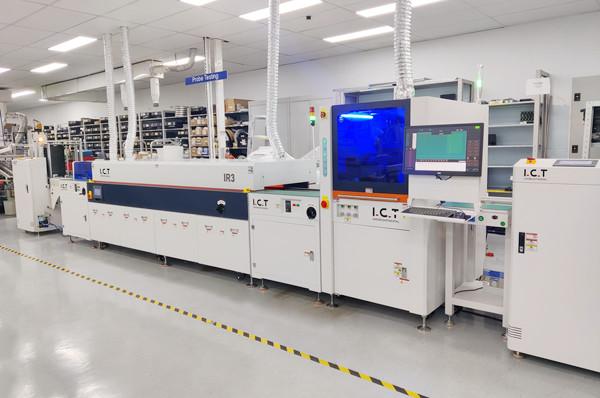
The figure below shows the kind of inspection this pass involves. Three checks structure it: why the first article is the acceptance's anchor, the single test that ties every earlier check together; how the trial board and its materials are prepared, because a first article is only as meaningful as the panel it is built on; and how the first article is run and judged, the disciplined reading that separates a real pass from a lucky one.

The first article is the anchor because it is the one test that exercises everything at once — the machine, the configuration, the program, the feeders and the product — and a pass or a fail on it is therefore information about the whole system, not about a single part. The model and configuration checks confirmed what the machine is on paper; the first article confirms what it does in practice, on the buyer's own board, with the buyer's own components. A machine whose configuration is wrong, whose feeder complement is incomplete, or whose program was built against the wrong BOM will all fail the first article, and the failure points at the gap in a way the paper checks could only hint at. That is why the first article comes before the accuracy measurements: it is the cheapest test that exercises the most, and it should fail first if anything is going to fail.
The first article also anchors the new-versus-used distinction in physical fact. On a new machine the first article proves the configuration is correct and the machine places well; on a used machine the same first article is additionally probing for the wear and drift that the machine's history may have accumulated, because a used machine that passes its paper checks can still fail its first article if its current accuracy has slipped. The new vs used Hanwha pick and place machine distinction therefore shows up here as a difference in what a first-article failure means: on the new side it is a configuration or program problem, on the used side it may be a condition problem, and the acceptance team must be ready to read the difference. The first article, run this way, is the acceptance run's most valuable single test.
A first article is only as meaningful as the panel it is built on, and the preparation is the difference between a test that proves the machine and one that proves the seller's demonstration skills. The buyer prepares the trial board from the product families the machine will actually run — the real panel, the real component census, the real paste and the real program — rather than accepting a seller's demonstration board that has been pre-optimized. The trial set should include the smallest package and the finest pitch the BOM demands, because those are the components that will stress the machine's accuracy, and it should include a representative spread of the package types so the first article exercises the full component-size window the baseline recorded. A trial board built to the buyer's census is the machine's honest test; a board built to the seller's convenience is not.
The materials preparation also matters, because the first article is measuring the machine, not the feedstock. The buyer supplies known-good components, verified paste and a program built from the buyer's own CAD and BOM, so that a first-article failure can be attributed to the machine rather than to a bad reel or a mistranslated recipe. The program is loaded and verified before the run, the feeder map is set to the BOM's census, and the nozzle plan is confirmed against the package set, so that the machine starts the first article from a known state. This is the same preparation discipline that the accuracy pass will assume, and it is where the trial board is set up to produce an answer the buyer can trust. The value mounter that runs the trial is chosen to match the product; a dual-gantry value platform such as the DECAN F2 dual-gantry value placement machine covers a chip-dense trial with its 80,000 CPH, and the trial board is where that choice is put to the test.
The first article is run as a scripted event, not an open-ended demonstration, and the script is what makes the result a measurement rather than an impression. The buyer runs the trial board through the full placement cycle — load, align, place, and the board-handling exit — and then inspects the result against the baseline: the component presence, the polarity, the rotation and the placement position on each of the packages the board carries. The inspection is a count, not a glance: every missing, reversed or mis-rotated component is recorded, and the pass line is the one the buyer set before the run, so that a board with three defects is judged against a number, not against a feeling. The first article that meets the agreed pass line has demonstrated the machine can build the product; the one that does not has exposed a gap the acceptance run exists to catch.
The judgment also reads the pattern of any failure, because the pattern is the diagnosis. A cluster of defects on one package class points at the nozzle or the feeder for that class; a scatter of rotation errors points at the vision or the component library; a consistent offset points at the alignment or the calibration. Each pattern maps to a correction, and the correction is recorded and re-tested before the acceptance run moves on, so that the first article does not merely pass or fail but tells the team what to fix. This is the pattern the whole checklist repeats: every pass produces a result that is either a pass against the baseline or a named correction to be re-tested, and the first article is where that discipline is established for the accuracy measurements that follow.
Placement accuracy is the figure the whole purchase was ultimately about, and this pass measures it as a recorded fact rather than a quoted promise. The datasheet states an accuracy class — the placement repeatability the machine holds on a given package — and the first article showed the machine can build the board at all; what remains is to measure whether it builds the board to tolerance, on the buyer's smallest package and finest pitch, under the same conditions the factory will run. The new vs used Hanwha pick and place machine question matters acutely here, because a used machine's accuracy is its current property, not its historical one, and only a measurement on the buyer's parts establishes it.
Four checks structure the pass. The first measures placement accuracy at the FAT, using a defined part and a defined metric rather than a demonstration. The second measures throughput, because the realistic rate is the number the buyer's capacity plan actually depends on. The third records the accuracy evidence against the industry standard, so the result is comparable rather than anecdotal, and the table below condenses what that record must contain. The fourth compares the FAT results to the SAT re-run, the step that proves the journey did not undo the machine's accuracy.
The accuracy measurement is the acceptance run's most technical check, and it is done with a defined part, a defined metric and a defined pass limit, so the result is a fact rather than a claim. The buyer measures the placement offset on the smallest package and the finest pitch the BOM demands — the components that stress the machine hardest — using a measurement method agreed in advance, whether that is a vision-measured offset on a test panel or a full automated optical inspection on the first-article board. The result is compared against the accuracy class the baseline recorded, and a machine that holds the tolerance on the buyer's parts has demonstrated the accuracy the purchase was for. The matching of that accuracy to the BOM's component range is developed in this series' placement CPH accuracy board-size matching guide, and the FAT measurement is where that matching is confirmed rather than assumed.
The measurement also distinguishes the rated figure from the realistic one, because the two are not the same and the acceptance pass must test the one the factory actually runs on. The rated accuracy is the machine's best-case repeatability under ideal conditions; the realistic accuracy is what it holds on the buyer's actual panels, at production cadence, with the buyer's components. The checklist measures both, records both, and holds the realistic figure against the BOM's requirement, because a machine that only holds its accuracy class in a quiet demonstration is a machine the buyer cannot rely on in production. The measurement, done this way, converts the datasheet's accuracy claim into a recorded fact the buyer owns.
Throughput is the second half of the placement results, and it is measured with the same realism the accuracy pass applied. The rated CPH is the machine's headline speed under ideal conditions; the realistic rate is what it sustains on the buyer's panels, with the buyer's component mix, including the loading, the alignment and the board-handling time the headline number leaves out. The checklist runs the machine at production cadence on the trial board, times the full cycle, and converts the result into a realistic placements-per-hour that the buyer's capacity plan can actually use. A machine that meets its rated speed in a demo but falls short on the buyer's mix is a machine whose capacity was overstated, and the acceptance pass exists to surface that before the line is sized on it.
The throughput check also folds in the changeover, because a machine's effective throughput across a high-mix week depends as much on how fast it changes over as on how fast it places. The checklist times a changeover between two buyer families — the feeder swap, the program load and the re-verification — and holds the result against the quoted setup time, the same way the first article held its pass line. A single-gantry speed entry such as the DECAN S1 single-gantry speed mounter answers a chip-dense volume with its 47,000 CPH, and the acceptance pass confirms that speed survives the buyer's real changeover cadence rather than only a clean-room demo. The throughput measured this way is the number the factory can plan a shift on.
The accuracy evidence is only useful if it is recorded against a standard the buyer and the seller both recognize, and the checklist records it under the same IPC-9850 placement-machine acceptance discipline the industry uses, so the result is comparable rather than anecdotal. The record names the part measured, the metric used, the pass limit, the measurement method and the result, and it is dated and signed, so that a later dispute over accuracy opens a file rather than a memory. A machine whose accuracy is recorded this way has a documented performance baseline the buyer can manage against over years; a machine accepted without one has a performance that will be argued from memory at the first drift. The table below is the record's structure, and it is the page the acceptance pass produces.
Accuracy item | Measured on | Pass criterion |
|---|---|---|
Placement offset | Smallest package, finest pitch | Within quoted accuracy class, measured |
Repeatability | Consecutive panels, same part | Within stated spread across the run |
Realistic throughput | Buyer's panel, production cadence | Meets quoted realistic rate |
Changeover time | Two buyer families, timed | Meets quoted setup time |
Board-size envelope | Largest panel in the family | Transports and places without fault |
The FAT result is a promise about the machine's performance at the seller's site; the SAT re-run is the proof that the performance survived the journey, and the comparison between the two is the acceptance run's closing accuracy check. The buyer re-runs the same measurements on the buyer's floor — the same smallest package, the same pass limit, the same panel — and compares the SAT result against the FAT record, so that any drift introduced by transport, rigging or re-calibration is caught and corrected before the line is trusted with production. A machine whose SAT matches its FAT has been shown to hold its accuracy through the move; a machine whose SAT has drifted has exposed a problem the re-calibration pass exists to fix, and the fix is re-tested before sign-off.
The comparison is also where the new-versus-used depth pays off, because a used machine's FAT-to-SAT comparison re-proves the accuracy the machine's history implied, on the buyer's own floor, in the buyer's own environment. The new vs used Hanwha pick and place machine distinction that shaped the earlier passes therefore closes here: the new machine's SAT confirms the journey did no harm, and the used machine's SAT confirms both the journey and the history did no harm. Either way, the comparison produces a single documented conclusion — the machine places to tolerance on the buyer's floor — and that conclusion is the foundation for the process pass that follows, where programs, feeders and line integration are put to the same test.
A machine that places perfectly but cannot load the buyer's recipes, feed the buyer's components, or talk to the buyer's line is a machine the factory cannot actually use, and this pass tests those three integrations before sign-off. The program is the bridge between the buyer's design data and the machine's motion; the feeders are the bridge between the BOM's components and the machine's pick point; and the line integration is the bridge between the machine and the rest of the factory. Each is a place where a machine can be individually excellent and systemically useless, and the Hanwha SMT machine FAT and SAT checklist therefore treats them as acceptance items in their own right rather than assumptions that will sort themselves out.
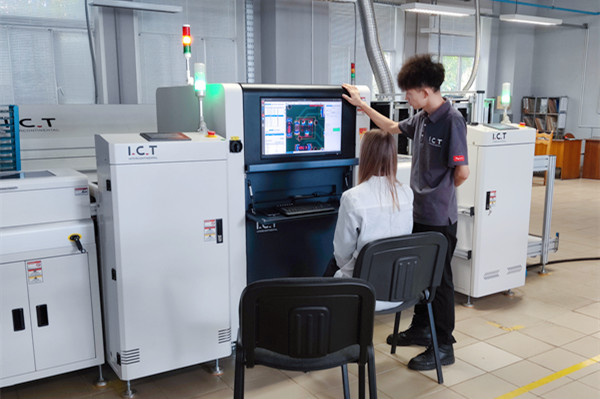
The figure below shows the operator-facing side of this pass. Four checks structure it: program verification, the proof that the buyer's CAD and BOM become a running recipe without re-keying; feeder and nozzle function, the proof that the BOM's census actually loads and feeds; line integration, the proof that the machine works inside the buyer's actual line rather than as a stand-alone; and the data and traceability handshake, the proof that the machine reports into the factory's systems.

The program is where the buyer's design data becomes the machine's motion, and the acceptance pass verifies that translation end to end rather than assuming it. The buyer supplies the real CAD and the real BOM for the trial product, the program is built and imported, and the acceptance team confirms the coordinates, the component library mapping and the feeder map all arrived intact — because a placement machine whose program path requires manual re-keying at any step is a machine whose errors the automation was supposed to remove. The check runs the imported program on the first article and compares the placed result against the BOM, so that a missing component, a swapped part or a mistranslated coordinate is caught at acceptance rather than discovered on the production line. A program path verified this way is the proof that the buyer's products can actually be built on the machine.
The verification also covers the recipe's day-to-day usability, because a program that only works in a demonstration is a program the factory cannot run. The checklist confirms the recipe saves, recalls and edits cleanly, that the component library carries the buyer's package set, and that the optimization and simulation tools the buyer will use for changeover are present and working. The program pass is where the machine's software value shows up in measurable terms, and it is the same demonstration discipline this series applies to placement capability, applied to the programming stack that feeds it. A machine whose program path is verified with the buyer's own files is one the buyer can program without the seller's help from day one.
The feeder and nozzle pass verifies that the BOM's component census actually loads and feeds, because a machine with the wrong feeder complement or a worn nozzle set is a machine that cannot run a single board at the peak the buyer needs. The acceptance team loads the feeder package against the BOM's peak concurrent requirement — tape feeders by width, tray stations, stick feeders and the docking carts — and runs them through the first article, checking that every feeder presents its component at the pick point without mis-feeds or jams, and that the nozzle set holds each package class without drops or misfires. A feeder or a nozzle that fails at acceptance is a parts problem the buyer would otherwise discover mid-production, and the pass exists to catch it while the seller is still on the line.
The check also covers the feeder and nozzle hardware as a priced, itemized line item rather than a bundle, because that is where a used machine's value most often leaks away. The acceptance team reconciles the delivered feeders and nozzles against the order's manifest, feeder by feeder and nozzle by nozzle, and notes the condition of each, so that a missing or worn item is caught at acceptance and corrected before sign-off. The replaceable feeder and nozzle hardware is well-defined across the platform, and a seller should be able to map it directly to the BOM — the SMT tape feeder for Hanwha Samsung placement machines being one concrete reference for what the platforms consume. The pass closes with a feeder-and-nozzle manifest, condition noted, that joins the configuration manifest in the acceptance file.
Line integration is where the machine stops being a stand-alone asset and becomes part of the buyer's process, and it is the heart of the Site Acceptance Test. The machine must hand boards off to the upstream and downstream equipment, receive and return the board-handling signals, and run at the line's takt without becoming the bottleneck or being starved by it. The checklist tests the machine in its installed position, on the buyer's actual line, with the upstream loader and downstream printer or reflow in place, and confirms the board flow works end to end at production cadence. A machine that passed its FAT as a stand-alone but stalls the line at the SAT is a machine the buyer has not really accepted, and the SAT is where that is caught.
The integration check also re-runs the accuracy and throughput figures on the buyer's floor, because the SAT is not a formality but the re-proof that the journey and the installation did not disturb the machine's performance. The buyer re-measures the placement accuracy and the realistic rate in the installed position, compares them against the FAT record, and confirms the re-calibration the installation pass performed has restored the machine to the baseline. A multi-function tier that sits at the line's most demanding position, such as the DECAN L2 flexible multi-function mounter, is judged here on how it serves the line's mixed load, and the integration pass is where that judgment is made on evidence rather than on the datasheet. A line integrated and re-verified this way is a line the buyer can run.
The last integration check is the data path, because a modern placement machine is also a data source, and a machine that cannot report its results into the buyer's traceability and manufacturing systems is a machine the factory cannot fully use. The checklist confirms the machine exports its placement data, traceability records and performance logs in a format the buyer's MES can consume, and that the interface — whether it is the feeders-verification, the traceability module or the line-control link — is actually wired and working, not merely licensed. A machine whose data path is verified at acceptance is one the factory can trust with its quality records; a machine whose data path is a promise is one whose traceability the buyer will have to build later.
The data check closes the integration pass the way the baseline closed the identity pass, with a written record of what the machine reports and to whom. The buyer records the data formats, the integration points and the ownership terms, so that the machine's output belongs to the buyer and survives the support relationship. This is the same discipline the software and data pass applies on the purchase side, carried forward into acceptance, and it is the bridge into the human layer that follows — because once the machine, the program, the feeders and the line are all verified, what remains is the people who run them and the issues that still need closing.
The machine, the program and the line are now verified; what remains is the human and corrective layer that determines whether the verified machine stays verified. Operators and engineers must be trained to run and maintain it, and the issues the acceptance run has surfaced must be tracked to closure, because an acceptance that leaves either undone has left a machine the buyer owns on paper but not in practice. This pass of the Hanwha SMT machine FAT and SAT checklist therefore treats training and issue closure as acceptance items with the same pass-or-fail discipline as the accuracy measurements, because a machine handed over without a trained team or an open issue list is a machine handed over half-finished.
Three checks structure the pass. The first is training, the transfer of competence that determines how quickly the line becomes self-sufficient. The second is issue tracking, the discipline that turns every failure the earlier passes found into a named, owned and dated item. The third is the punch list and the re-test, the mechanism that closes those items and confirms the correction before sign-off. Each check produces a written artifact that the sign-off pass will later require.
Training is the transfer of competence, and the acceptance pass specifies what the buyer receives rather than assuming a day of instruction covers it. The checklist asks for the operator and engineer seats, the days and the topics — operation, recipe programming, feeder setup, nozzle handling, preventive maintenance and fault diagnosis — and whether the training is delivered at the supplier's site, the buyer's site, or both. A line staffed by people trained only to load feeders and press start is a line that cannot recover from its own faults; a line whose engineers were trained on diagnosis and maintenance is one that fixes problems in minutes instead of service-call days. The training pass is where the machine's capability is handed to the people who will use it, and it is measured by the same standard as everything else: a defined scope, delivered and confirmed.
The training check also covers documentation, because it is the durable half of competence and it matters more over the machine's life than the sessions themselves. The checklist asks what documentation is included — operator manuals, programming guides, maintenance schedules, spare-part lists, electrical and pneumatic diagrams — in what language, and whether it ships with the machine or arrives later. A machine whose documentation is complete at acceptance is one the buyer can maintain and even train future staff on independently; a machine whose documentation is thin converts every personnel change into a support request. For a starting line the training and documentation are especially consequential, and a budget used machine such as the SCM1-D budget used SMT placement machine only becomes a self-sufficient asset once its operators and engineers are trained and its documentation is in hand. The training pass, closed properly, hands the machine to a team that can keep it running.
The acceptance run will surface issues — that is its job — and the discipline of tracking them is what separates an acceptance that improves the machine from one that merely documents its faults. Every failure the earlier passes found, from a first-article defect pattern to a feeder mis-feed to a data-path gap, is recorded as a named issue with an owner, a date and a severity, so that nothing is left to memory or to the goodwill of the seller. The issue list is the acceptance run's living record, and it is reviewed pass by pass, so that a problem found in the trial board is not forgotten by the time the line integration runs. A machine accepted with an open issue list is a machine accepted with known problems, and the discipline of tracking exists to prevent that.
The tracking also assigns each issue a closure path, because an issue without a correction is an issue that will recur. Each item is classified as a fix, a workaround or an accepted deviation, with the correction named and the owner assigned, and the classification is reviewed at sign-off. An issue that is fixed is re-tested; an issue that is worked around is documented with its risk accepted; an issue that is accepted as a deviation is recorded with its impact priced. The closure discipline turns the acceptance run from a pass-or-fail gate into a corrective process, and it is the mechanism by which the machine actually gets better between the FAT and the sign-off.
The punch list is the issue list compressed into the items that must be closed before the machine is accepted, and the re-test is the proof each closure actually worked. The checklist produces the punch list from the tracked issues, ordered by severity, with the correction and the re-test defined for each, and the sign-off is conditional on the list being cleared. A punch-list item that is fixed is re-run through the test that found it — a first-article re-run, a feeder re-load, a data-path re-check — so that the closure is demonstrated rather than asserted. The re-test is the acceptance run's final guard: it is the difference between a correction that was made and a correction that was merely said to be made.
The punch list also carries the new-versus-used depth forward, because a used machine's punch list is typically longer, reflecting the condition items its history raised, and the re-test is where those items are shown to be closed. The new vs used Hanwha pick and place machine distinction that shaped every earlier pass therefore ends here as a difference in the punch list's length and the re-test's scope, not in the discipline that applies to both. A punch list cleared and re-tested is the last evidence the buyer needs before the sign-off, and it hands the machine to the closing pass with every known issue either fixed or explicitly accepted. The next and final pass turns the whole run into a signed contract.
The entire acceptance run compresses into a single checklist, and the purchase is ready to sign when every line has a measured answer. The seven passes this guide has walked — baseline, first article, placement results, programs and feeders, line integration, training and issue closure — each end in a test, and those tests, collected, are the acceptance record. A machine signed off on this record is one the buyer owns with evidence; a machine signed off without it is one the buyer owns on faith, and the faith is exactly what the Hanwha SMT machine FAT and SAT checklist has been systematically removing. This closing pass compresses the run into a single artifact and defines the sign-off that turns it into a contract.
Two checks close the guide. The first is the acceptance table itself, the one page that maps every pass to its test and its pass line, so the buyer can see at a glance whether the machine has been accepted or merely described. The second is the sign-off, the act that binds the seller to the results and hands the buyer a machine whose performance is a documented fact rather than a remembered claim. The table below is that page, in the order the passes ran.
The table below is the acceptance record compressed to one page, one line per pass, with the test each pass runs and the pass line it must meet. Its last line, the punch list, is what converts the earlier lines from analysis into evidence: a machine that has cleared its punch list has had every known issue either fixed or explicitly accepted, and a machine that has not has not finished its acceptance. Keep the completed table in the acceptance file, because the lines it answers are the lines the buyer will reference for the machine's entire service life — when accuracy drifts, when a feeder fails, when a data path goes dark, the table is what tells the buyer whether the machine was ever accepted against that item, and on what measurement. A checklist recorded at sign-off is the buyer's standing reference for every later dispute over what was accepted.
# | Acceptance pass | Test and pass line |
|---|---|---|
1 | Model and configuration | Serial, series and configuration confirmed against the datasheet |
2 | First article | Trial board built on the buyer's census, meets the agreed defect pass line |
3 | Placement results | Accuracy and realistic throughput measured, within quoted figures |
4 | Programs and feeders | Buyer's CAD and BOM import end to end; feeder and nozzle census loads and feeds |
5 | Line integration | Board flow verified on the buyer's line at production cadence |
6 | Training | Operator and engineer seats delivered, documentation in hand |
7 | Issue closure | Punch list cleared, every correction re-tested or deviation accepted |
The sign-off is the act that converts the acceptance run from a series of measurements into a contract, and it is the one step that makes the whole checklist legally and commercially binding. The buyer signs against the acceptance table, not against a general impression, so that the sign-off attaches to the specific results the table recorded — the measured accuracy, the verified program path, the cleared punch list — and the seller's obligations continue from those results rather than from a vague "the machine works." A sign-off defined this way protects both parties: the buyer gets a machine whose performance is documented, and the seller gets a clean hand-off against an agreed standard. The sign-off is the moment the specification finally becomes evidence, and it is the only honest way to end an acceptance.
The sign-off also carries forward the warranty and service terms the purchase established, because acceptance and warranty are the two halves of the same hand-off. The checklist confirms the warranty period, its coverage and its exclusions, and the service response the seller commits to, so that the machine's post-acceptance support is as defined as its acceptance was. The new-versus-used depth shows up one last time here, because a used machine's sign-off typically re-confirms the condition and remaining-life terms its history raised. A machine signed off with its warranty and service terms attached is one the buyer can operate for years with a defined support path; a machine signed off without them is one whose first failure will open a negotiation instead of a service call. The sign-off, done this way, ends the acceptance run the way it began — with a machine whose state is measured, documented and owned.
Run this FAT and SAT checklist against the Hanwha range with I.C.T
Every line in this checklist is a test our engineers run with customers daily, and the fastest way to a defensible acceptance is to work the list against the actual machine. Share your component census, your product families and your trial board, and we will return an acceptance plan that is already checklist-complete — the exact model and configuration baseline, a defined first-article run, the placement accuracy and realistic throughput measurements with pass limits, a verified program and feeder path, a line-integration plan for your floor, and a training and issue-closure scope that ends in a signed record. Whether the machine is a new SM or DECAN platform or a clean, documented used machine that starts a line, its acceptance arrives as a measured fact rather than a remembered claim, with the punch list cleared and the sign-off terms attached. Browse the range in the Hanwha pick and place machine lineup, or share your board and your acceptance date to schedule a FAT and SAT that close every pass of this checklist — your machine, your measurements, your sign-off, itemized and verified in writing before any commitment is requested.
The Factory Acceptance Test verifies the machine performs to specification before it ships, on the seller's floor, before it is committed to transit. The Site Acceptance Test re-verifies the same figures after delivery, on the buyer's floor, on the buyer's own panels, to confirm the journey and installation did not disturb the performance. They bracket the two halves of the risk — whether the machine can perform at all, and whether it still performs after the move — so a purchase should define both, with named measurements and pass limits.
Build the first article on your own trial board — the real panel, the real component census, the real paste and the real program — and include the smallest package and finest pitch your BOM demands, because those stress the machine's accuracy. Run the full placement cycle and inspect for presence, polarity, rotation and position, judged against a defect pass line you set before the run. Read the pattern of any failure, because a cluster on one package points at the nozzle or feeder while a scatter of rotation errors points at the vision or component library.
Measure the placement offset on your smallest package and finest pitch, using a measurement method agreed in advance — vision-measured offset or full AOI on the first-article board — and compare it against the accuracy class the baseline recorded. Measure both the rated and the realistic accuracy, because the realistic figure on your actual panels is the one the factory runs on. Record the result under the same IPC-9850 discipline the industry uses so it is comparable rather than anecdotal.
Yes. A new machine ships with a known build state, current configuration and full warranty, so acceptance is confirmation — verify the delivered machine matches the ordered one. A used machine ships with a history, so acceptance is partly re-proof — additionally confirm its condition, its current configuration and its current accuracy still meet the specification, because the datasheet describes a machine as built, not as it is today. The seven passes run either way, but the used path re-proves what the new path assumes.
A machine can place perfectly as a stand-alone yet stall the line once it must hand boards to upstream and downstream equipment. The Site Acceptance Test verifies the board flow works end to end at production cadence, in the installed position, with the loader, printer and reflow in place, and re-measures accuracy and throughput on your floor against the FAT record. A machine that passes its FAT alone but stalls the line at the SAT has not really been accepted.
Load the feeder package against your BOM's peak concurrent requirement — tape feeders by width, tray stations, stick feeders and docking carts — and run them through the first article, confirming every feeder presents its component without mis-feeds and every nozzle holds its package without drops. Reconcile the delivered feeders and nozzles against the order's manifest item by item, with condition noted, so a missing or worn item is caught at acceptance rather than mid-production.
Record every failure as a named issue with an owner, a date and a severity, classify each as a fix, a workaround or an accepted deviation, and compress the open items into a punch list ordered by severity. Each fixed item is re-run through the test that found it, so the closure is demonstrated rather than asserted. The sign-off is conditional on the punch list being cleared, with every correction re-tested or every deviation explicitly accepted and priced.
Sign against the acceptance table, not a general impression, so the sign-off attaches to the specific results — the measured accuracy, the verified program path, the cleared punch list. Confirm the warranty period, coverage and exclusions, and the service response the seller commits to, so post-acceptance support is as defined as the acceptance was. A sign-off defined this way gives the buyer a machine whose performance is documented and a support path that is written down.