English
Views: 0 Author: Vinci Zhang Publish Time: 2026-09-28 Origin: Site


Most buyers open the conversation with one question: "How much does an SMT production line cost?"
That is the wrong first question. A better one is: "What am I paying for, and which parts of the price can I actually control?"
The honest range is enormous. A compact entry-level line and a high-mix line built for a Tier 1 automotive customer can sit at wildly different price points, even when both are called "an SMT line." The difference is not one big number. It is a stack of small decisions — placement rate, feeder count, inspection depth, automation level, and how much of the project the supplier has to carry.
This article breaks that stack apart. It shows the six cost blocks inside almost every SMT line quotation, the variables that move each one, and the costs that only appear after the machines are installed. By the end you should be able to read a quotation and know exactly which line item you are paying for, and why.
An SMT line price is the sum of six blocks: the machines, the inspection and software, the peripheral handling equipment, the engineering and integration work, the installation and training, and the commercial terms around warranty and spare parts.
The machines get all the attention. They are usually the largest single block. But they are rarely more than half of the true project cost.
Here is the part most buyers underestimate. Two suppliers can quote the same three machines and land 40% apart on total price. One line includes a stencil cleaning loop, an automatic loader and unloader, an offline programming seat, a spare feeder set, and two weeks of on-site commissioning. The other ships machines in crates and calls the job done.
Neither quote is dishonest. They are different projects wearing the same label.
The number on the purchase order is the entry fee, not the cost of the line. Cost is what you spend over the life of the equipment, and that is shaped far more by uptime, changeover time, and first-pass yield than by the invoice.
Run a simple test on any quotation. Ask what the line will need in feeders, nozzles, and spare parts in year two. Ask how long a product changeover takes. Ask what the expected first-pass yield is on a typical board, and what happens to rework labor when it dips. A slightly more expensive line that changes over twice as fast often costs less per board within a year.
Here is a rough illustration. One line costs 800,000 and takes 90 minutes to change over. Another costs 900,000 and takes 40 minutes. If you change over three times a week, you recover about 130 hours of production a year. That is roughly two and a half extra working weeks of capacity for about 12% more capital. Whether that trade is right for you depends on your product mix — but you should be making that calculation, not skipping it.
Scope, mostly. And scope hides in the details buyers skim past: training days, spare parts lists, whether the quote includes utilities layout, whether the software licenses are perpetual, and who pays for travel when a service engineer flies out.
There is one more reason. Quotations are often written by sales teams, not process engineers. If the person writing the quotation has never had to hold a process window at 3 a.m. on a Saturday, they may leave out exactly the items that keep your line running. Comparing quoted prices before comparing quoted scope is the single most common budgeting error in this industry.
So the real question is not "which line is cheaper." It is "which project am I comparing, and what will I still have to buy after the invoice is paid." Most unpleasant surprises in SMT projects live in the second half of that sentence.
Almost every professional SMT line budget sorts into six blocks. Knowing them makes a quotation readable instead of mysterious.
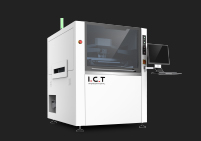
Block 1 — Process machines. Stencil printer, placement machines, reflow oven. This is the core of the line and the biggest single decision.
Block 2 — Inspection and software. SPI, AOI, X-ray where the product needs it, plus offline programming, line monitoring, and traceability software.
Block 3 — Peripheral and handling equipment. Loaders, unloaders, connecting conveyors, buffers, magazine handling, stencil cleaners, paste storage, and the internal transport that ties the line together.
Block 4 — Engineering and integration. Factory layout planning, utility planning, line balancing, program creation, and the work of making one supplier's printer talk to another supplier's placement machine.
Block 5 — Installation, training, and ramp-up. Shipping, rigging, alignment, calibration, operator training, engineer training, and the first weeks when your team is still learning the line.
Block 6 — Commercial terms. Warranty length, spare parts package, service response commitment, payment schedule, and any ongoing software or support fee.
For a typical mixed-product line, the distribution tends to look like this. Treat these as planning ranges, not quotes. Your product mix and automation level will shift them.
Cost block | Typical share of total project | What moves it most |
|---|---|---|
Process machines (printer, placement, reflow) | 45-60% | Placement rate, feeder count, oven zones |
Inspection and software | 8-15% | Whether SPI, AOI, and X-ray are included; traceability depth |
Peripheral and handling equipment | 8-15% | Automation of loading, buffering, and stencil handling |
Engineering and integration | 3-7% | Line balancing work, number of mixed brands |
Installation, training, ramp-up | 5-10% | Travel distance, visa and labor rules, training depth |
Commercial terms and spares | 5-10% | Warranty, spare feeder and nozzle sets, service terms |
The point of the table is not decimal accuracy. It is to show you which lever you can pull.
If you need to cut 15% from a project, cutting the placement machine by 15% changes the whole line's capability, and it changes it permanently. Cutting the spares package and the buffering equipment by the same amount hurts, but you can recover later. That distinction should drive every negotiation.
Two blocks deserve a note here, because they are the easiest to strip and the most painful to miss. Inspection is not a cost center in a shop that ships anything with a safety function, a warranty, or a brand risk. And engineering is the block that decides whether your printer, placer, and oven behave as one line or as three expensive machines standing in a row. A cheap integration budget becomes an expensive integration project.
Take any quotation and map every line to one of the six blocks. What is missing is what you will buy later, at retail, with no negotiating leverage.
This exercise also exposes padding. Some quotes list "miscellaneous accessories" or "installation service" as a lump sum. Ask for those to be itemized. A supplier who cannot itemize installation probably has not planned it.
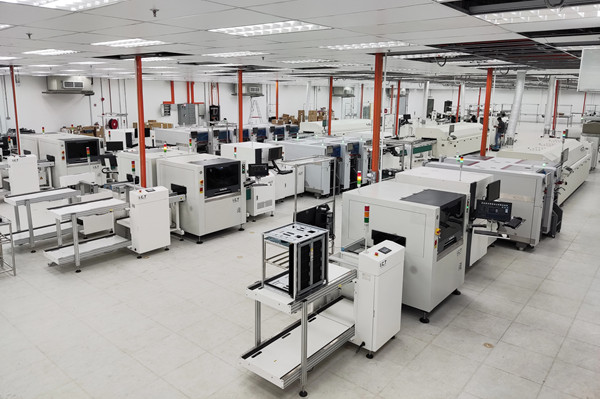
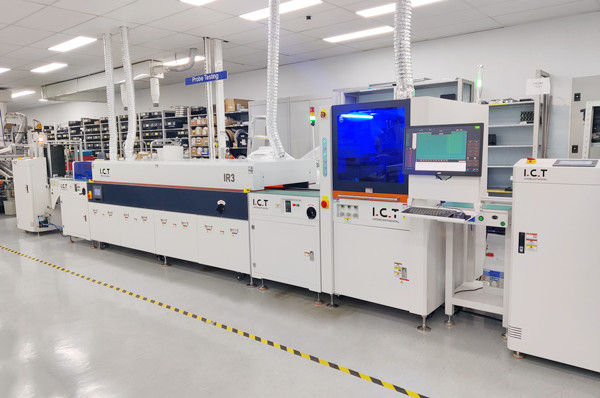
If you are still working out what the line should be, it helps to look at a full SMT production line the way a project engineer would — as a working system rather than a list of machines bolted together.

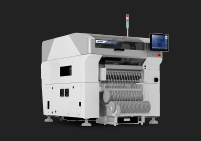
The placement machine usually decides the price of the project. Everything else negotiates around it.
Why? Because placement is the hardest job on the line and the market for it is the most fragmented. Two machines that both claim "60,000 CPH" can differ by a factor of three in price.
The gap comes from real engineering differences, not marketing copy:
Actual throughput under real conditions. A rated speed measured on a simple pattern is not the speed you get with 400 components, a mixed board, and twenty feeder changes per shift.
Placement accuracy and repeatability. Tight-tolerance work — 01005 parts, fine-pitch QFNs, small BGA — needs better vision, better motion control, and better thermal stability.
Feeder capacity and feeder type. A machine with 80 slots and electric feeders costs far more than one with 40 slots and mechanical feeders. It also changes what you can run without stopping the line.
Component range. Placing a 0.4 mm pitch connector and a 30 mm connector on the same platform is a capability you pay for.
Heads and changeover flexibility. Multi-head gantries, automatic nozzle changers, and quick-change feeder carts all add cost. They also add capacity you can actually use.
There is a pattern in that list. Every item that raises the price by more than 20% is also an item that determines whether the machine can make your product at all. That is why the placement machine decision should follow the product definition, not lead it.
Printers are priced mainly by accuracy, board size range, stencil handling, and whether they do automatic paste inspection or closed-loop adjustment.
A printer that holds its process window reliably is worth more than one that needs a skilled operator to hold it for it. Poor printing remains one of the most common root causes of solder defects, and those defects show up far downstream, after you have already paid for the components and the machine time.
Buying a low-cost printer to save 30,000 on a two-million-dollar project is a bad trade. You are saving 1.5% of the budget while risking a yield problem that costs more than that every quarter.
The same logic applies to reflow. A cheap oven that runs an unstable profile produces defects that look random and take weeks to trace back to their source. Process stability is not a premium feature. It is the baseline for a line that has to run unattended overnight.
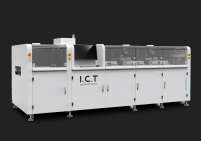
Reflow ovens are priced by zone count, heating technology, conveyor width, and atmosphere control.
Nitrogen-capable ovens cost more to buy and considerably more to run, because nitrogen is not free. They are often necessary for particular flux chemistries and fine-pitch assemblies. They are unnecessary for plenty of other products. Let your process engineer own this decision. It should not be made by whoever is holding the spreadsheet.
Conveyor width deserves a mention too. If you buy a 400 mm oven and later need to run a 450 mm board, you buy a new oven. Choosing the next width up at the time of purchase is usually far cheaper than replacing it later.
One more cost factor hides inside the machine price and rarely gets discussed: spare part availability over the machine's life. A machine class that is widely used in your region has local stock, local engineers, and a healthy second-hand market when you eventually sell it. A rare model can be cheaper on the invoice and far more expensive to keep running. Ask how many units of that model are running within a day's travel of your factory. The answer tells you more about year three than the datasheet does.
If you want a useful reality check on price, look at a cost-effective SMT assembly line for PCB production and study what is inside the scope. Those line items are the same ones that should appear, or conspicuously not appear, in every other quotation you receive.
Speed is the most overbought feature in SMT. Buyers routinely pay for throughput they cannot feed.
Run this check before you accept any speed upgrade.
Real output = rated CPH × utilization × balance factor × yield
Factor | Typical real-world value | Why it matters |
|---|---|---|
Utilization | 70-85% | Changeovers, feeder reloads, breaks, minor stops |
Balance factor | 60-80% | The slowest machine in the line sets the line's speed |
Yield and rework flow | 95-99% | Rework and re-inspection consume time and labor |
A machine rated at 60,000 CPH inside a modest line often delivers an effective 25,000 to 35,000 CPH once those three factors are applied. If your product needs 30,000 placements a day — not per hour — an entry-level machine may already be enough.
That calculation changes the budget conversation completely. The extra 200,000 you would spend on speed might be better spent on a second feeder bank, better inspection, or a buffer station that protects the line from small stoppages.
Speed upgrades are not evenly priced. Moving from 30,000 to 60,000 CPH might cost 60% more. Moving from 60,000 to 120,000 CPH frequently costs 150% more, because it usually means a different machine class, different feeders, more floor space, and more demanding utility requirements.
There is also a staffing consequence. Faster machines need faster material flow. If your warehouse cannot deliver components and stencils fast enough, the extra placements per hour sit idle.
The right question is not "how fast can it go." It is "how fast does it need to go, on my board, on my worst shift, with my material flow." If you are already thinking this way, you will recognize the logic in optimizing SMT line capacity, speed, and flexibility — where the objective is a balanced line, not a fast machine sitting beside a slow one.
This is the part that surprises buyers most.
Over the life of a placement machine, the feeder investment often exceeds the price difference between speed options. Feeders are what make changeover possible. A line with enough feeders to change a product in under fifteen minutes will out-produce a faster line that stops four times a shift to reload carts.
When you negotiate, ask how many feeders ship with each machine, how many are electric versus mechanical, and what a spare feeder cart costs. Then compare that number against the speed option. In many projects, the better purchase is fewer placements per second and more setups per day.
There is also a hidden cost to buying speed you cannot use. Fast machines demand faster feeders, tighter nozzle maintenance, and more careful program optimization. They are less forgiving of messy material flow. Teams that buy speed before fixing their material handling often report that the line runs no faster after the upgrade, because the constraint simply moved to the warehouse. Find your real constraint first. Then spend.

The peripheral block is where budgets quietly grow or quietly get cut, and both outcomes have consequences.
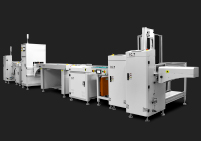
Peripheral equipment usually includes board loaders and unloaders, connecting conveyors, buffer stations, magazine handling, stencil cleaners, paste handling and storage, and any manual workstations in the flow. On a fully automated line this becomes a serious number.
A single-product, high-volume line wants inline flow with fixed stations. A high-mix shop wants modular cells that can be reconfigured, which means more buffer positions, more quick-change carts, and more planning effort.
The two layouts have different cost shapes. The difference shows up in the peripheral equipment at least as much as in the machines. If you are weighing this choice, inline or modular SMT line layout walks through the trade-offs in practical terms.
A quick way to decide: count your product changeovers per week, then measure the spread between your highest-volume and lowest-volume product. A wide spread and frequent changes favor modular. A narrow spread and steady volume favor inline. Most real factories sit somewhere in between and end up with a hybrid, which costs a little more than either pure form and buys the most flexibility.
Dual-lane conveyors, bottom-side support, and automatic width adjustment cost more. They also cut changeover time and reduce board damage. For a shop running twenty product changes a week, that pays back quickly.
Buffers look like optional extras, and they are usually the first thing cut when a project runs over budget. In practice they absorb the small stoppages that would otherwise stop the entire line. A line without buffers has almost no resilience. When a feeder jams, everything behind it stops. With a buffer, the upstream machines keep working while the operator fixes the problem.
There is a physical cost that rarely appears in the quotation: floor space, power, compressed air, exhaust, and cooling.
A bigger line needs a bigger room, a larger transformer, more air capacity, and more air conditioning. In some markets, building or renting that space costs more per year than the line payment does. This is why your facilities team needs a seat in the budget conversation from the beginning. Retrofitting power distribution and exhaust after installation is expensive, slow, and occasionally impossible without shutting down production.
Add a startup power study to your project plan. It is a small cost that prevents a large one.
Floor space deserves a number attached to it too. A full inline line with buffering, inspection, and manual stations commonly needs 15 to 25 meters of length, plus clearance on both sides for safe access and maintenance. If your building has structural columns, a low ceiling, or a goods lift under 1.5 meters wide, those constraints change the line design and therefore the price. Walk the space with the supplier's engineer before the layout is frozen, not after.
Automation is a trade between capital now and labor later. The break-even depends on your labor cost and your shift pattern, and both vary enormously from country to country.
Here is the simple version. Manual loading and unloading is cheap to buy and expensive to run. Automatic loading, unloading, and board transfer costs more up front and removes one or two operators per shift.
Configuration | Up-front cost | Operators per shift | Best fit |
|---|---|---|---|
Semi-automatic (manual load, assisted print) | Lowest | 3-5 | Low volume, high mix, prototype work |
Full line, manual board loading | Medium | 2-3 | Moderate volume, flexible product mix |
Full line with automatic handling and inspection | Highest | 1-2 | High volume, tight traceability needs |
Now do the arithmetic for your own market. Take the fully loaded annual cost of one operator, including benefits, supervision, and turnover. Multiply by the operators you remove and by the shift count. In a high-wage market, the payback on automatic handling is often under two years. In a low-wage market with plenty of available labor, it may be five years or more — and in that case the money is better spent on inspection and process stability instead.
Be careful with the framing. Automation does not only remove labor cost. It removes variation.
An automatic loader positions every board the same way. A manual loader does not. If your defect rate is sensitive to board position in the conveyor, automation buys you yield as well as headcount. That yield gain often shows up faster than the labor saving, and it is easier to defend internally because it turns into measurable units.
The trade-offs between these approaches are covered in more depth in fully automatic vs semi-automatic SMT lines, including the situations where a semi-automatic line genuinely produces better results than an automated one. Those situations are more common than the market admits, especially in high-mix, low-volume work where flexibility beats raw speed.
One rule of thumb that holds up: automate the tasks that are repetitive, position-critical, or inspection-critical first. Automate the tasks that are variable and judgment-heavy last.
A word on the middle option. Manual board loading on an otherwise automatic line is often the right compromise for a first installation. It keeps capital cost down, it lets you learn your actual labor demand, and it is the easiest automation to add later, because it happens at the ends of the line rather than in the middle. Buyers who start there usually upgrade handling before they upgrade placement speed.

The invoice is not the end of the spending. These are the items that surprise first-time SMT buyers most often, usually inside the first eighteen months.
Spare parts and consumables. Nozzles, feeders, belts, sensors, filters, and heater elements wear out. A reasonable planning figure is 2-5% of machine value per year in spare parts, depending on utilization. If your supplier cannot give you a spare parts list with prices before you sign, treat that as a warning, not a detail.
Feeder and nozzle expansion. Most lines are bought slightly under-tooled on feeders. The moment your product mix shifts, you buy more. A spare feeder set is often worth adding to the original order, when the price is better and the shipping is already paid.
Programming and process engineering time. Someone has to build and maintain every program, tune the profile, and manage the feeder database. This is real labor, and it does not appear in any machine quote. Some buyers fund one process engineer per line from day one. Others discover the need around month three, in the middle of a yield problem.
Yield learning curve. A new line does not run at target yield on day one. Expect a ramp period where scrap and rework sit above steady state. Budget for it, and plan your launch around a product you can afford to learn on. Launching your highest-margin, tightest-tolerance product on week one is a decision people regret.
Plan the ramp deliberately. Pick a simple, forgiving board for the first two weeks. Let the operators get confident on the basic flow before you introduce fine-pitch parts and tight inspection criteria. The cost of this decision is a little lost production time. The cost of skipping it is a team that stops trusting the equipment by day four.
Utility and facility running costs. A full line with reflow and nitrogen generation draws serious power. Add compressed air, exhaust, cooling, and floor maintenance on top.
Software licenses and updates. Programming seats, traceability modules, and monitoring dashboards sometimes carry annual fees. Ask what is perpetual and what is subscription before you build the budget.
Training turnover. You train two operators. One leaves. Retraining costs time and travel, and it costs more if the supplier charges for return visits. Ask how many training days are included, where they happen, and what a repeat visit costs.
There is a category of cost that only appears when goods cross a border.
CE marking for the European market, local electrical compliance, machine safety documentation, and customs clearance all take time and money. They are cheap when planned into the schedule and expensive when discovered at the port. If your line is being installed in a market you have not shipped to before, ask your supplier which documentation they provide and which you must arrange locally.
For larger projects with several lines or a new factory building, sequencing these costs matters as much as their total. That is the territory covered in planning a complete turnkey SMT production line — where installation, facilities, and ramp-up are scheduled as one plan instead of argued as three separate problems.

A defensible budget is one you can explain line by line to your own management, and one that survives the first unexpected cost.
Step 1 — Define the product first. List your top five boards. Record component count, smallest component, finest pitch, largest component, board size, and annual volume. Everything in the line specification follows from this list. Without it, you are buying someone else's idea of a line.
Step 2 — Set the capacity target from real demand. Use peak monthly demand, not average. Add a realistic growth allowance of 20-30%. Convert it to placements per hour using the utilization and balance factors from Section 4. That number sets the machine class, not a brochure.
Step 3 — Write the scope before you read the quote. List every block from Section 2. Then check each quotation against your list. Anything missing is a cost you will pay later, at retail. Anything extra is a negotiation point.
Be specific when you write that scope table. "Full line" means nothing inside a quotation. Write down the printer, the number of placement machines and their feeder capacity, the oven zone count and conveyor width, the inspection stations, the number of loaders and buffers, the training days, the spare parts included, and the warranty term. A scope table with twenty lines is not overkill. It is the document that keeps the whole project honest.
Step 4 — Normalize the quotes. Ask every supplier to quote against the same scope table, in the same currency, with the same Incoterm, and with the same number of training days. This single step removes most of the confusion in line purchasing. Differences that remain are real differences.
Step 5 — Price the three-year total. Add purchase price, spare parts, expected feeder expansion, utilities, software fees, and the labor your configuration requires. Then compare three-year totals rather than purchase prices.
Step 6 — Keep a contingency. For a new installation, 8-12% of project value is a reasonable contingency, and it usually gets spent. That is not waste. It is the difference between a project that finishes and a project that stalls waiting for approval on an extra twenty thousand.
One caution about comparing totals. A lower three-year total can come from a supplier who simply under-specified the line.
Cut the inspection, the buffering, and the spare feeders, and the numbers look better while the line runs worse. This is why you compare capability first and price second, inside the same capability.
A good way to stress-test your numbers is to run them against a product category with heavy price pressure. If you are choosing an SMT line for consumer electronics, the cost structure is unforgiving, and it forces honest decisions about where to spend. Budget creep usually traces back to process decisions made early, and the mistakes that hurt line performance tend to show up in the numbers about six months later.
Finally, get a written quotation that states what happens when something breaks. Response time, spare availability, and who pays for travel are budget items, even when they appear in a service agreement rather than a price list. A supplier who is vague about warranty scope is telling you something about year two.
If you already own a line, the budget conversation changes shape. Rebuilding and replacing are different exercises with different numbers, and it is worth deciding between upgrading your existing line and buying a new one before you commit to either path. Whichever path you choose, the supplier carries most of the remaining risk — so the work of qualifying a turnkey SMT line supplier deserves more than one afternoon.
There is no single number, because scope varies too much. As a broad industry reference, a compact entry-level line can start in the low hundreds of thousands of US dollars, while a fully automatic high-mix line with SPI, AOI, automatic handling, and traceability commonly runs well into seven figures. The useful figure is not the headline price. It is the total of machines, peripherals, engineering, installation, training, and three years of running cost — measured against the capacity you actually need.
Placement usually takes the largest single share, often somewhere between 40% and 60% of the machine budget, while the machine budget is typically 45-60% of the total project. It dominates for a simple reason: placement is the most complex process on the line and the most fragmented market in the industry. If your product needs fine-pitch placement, tight accuracy, or a wide component range, expect that share to rise.
It can be, with conditions. Refurbished lines lower the entry cost significantly and are a reasonable fit for stable, well-understood products. The risks are inconsistent spare parts, obsolete software, and thin service support. Before buying refurbished, confirm that feeders, nozzles, and control boards are still available, that the supplier will support the machines in writing, and that someone can service them locally. If any of those three answers is weak, the savings usually get spent later.
Yes, and the price climbs faster than the speed does. Going from a mid-range placement rate to a high one usually means a different machine class, which brings different feeders and software, and often a larger footprint. Before paying for speed, calculate your real requirement from peak demand, utilization, and the balance factor of the whole line. Many buyers discover they need less speed and more feeders.
Plan for spare parts at roughly 2-5% of machine value per year, feeder and nozzle expansion, process engineering time, software license or update fees where applicable, and facility costs including power, air, exhaust, and cooling. Also budget for the ramp-up period, when yield sits below steady state. If you add these up before you buy, the first year of ownership holds no surprises.
Often yes, but only if the line is planned for it from the beginning. Conveyor heights, machine footprints, utility drops, and floor space all need to accommodate the later step. The worst outcome is buying a semi-automatic line with no upgrade path, then discovering that going automatic means replacing everything. Ask the supplier to describe the upgrade path in writing, including which components would be reused and which would be replaced.
Ready to price a line against your actual product mix?
Send us your top five boards with component counts, board sizes, and monthly volumes. We will come back with a line configuration, a scope table, and a cost breakdown you can compare directly with any other supplier's quotation.