English
Views: 0 Author: Site Editor Publish Time: 2026-01-12 Origin: Site

Selecting an SMT production line for consumer electronics manufacturing is rarely a simple matter of comparing machine specifications. Unlike industrial or automotive electronics, consumer products operate under fast-changing market conditions, shorter product lifecycles, and intense cost pressure. These realities place unique demands on SMT line design, configuration, and long-term operational flexibility.
Many manufacturers discover—often too late—that an SMT line optimized only for speed or initial investment cost may struggle once real production begins. Frequent model changes, mixed component types, unstable demand forecasts, and limited factory space all introduce challenges that are not obvious during equipment selection.
This article approaches SMT line selection from a practical manufacturing perspective. Instead of focusing on individual machines, it examines how product characteristics, production stage, and factory conditions should guide decisions when building or upgrading an SMT line for consumer electronics manufacturing.
Consumer electronics manufacturing operates under a fundamentally different logic from industrial or automotive PCBA production. Automotive electronics prioritize long product lifecycles, strict regulatory compliance, and highly controlled processes that remain stable for many years. Industrial electronics often focus on robustness and low variation.
Consumer electronics, by contrast, evolve quickly. Product revisions are frequent, time-to-market is critical, and production volumes can change rapidly in response to consumer demand. These conditions require SMT lines that can adapt without sacrificing yield or efficiency.
An SMT line that performs well in a single-product, long-run environment may become inefficient when required to handle frequent changeovers, mixed component libraries, and compressed production schedules.
Most consumer electronics factories operate in a high-mix environment, even when overall output is large. Individual SKUs may run for only a few weeks or months before being replaced or revised. Engineering change orders are common, and production planning often needs to adjust with little notice.
In this context, real productivity is determined less by nominal machine speed and more by how quickly and reliably the line can switch between products. Setup time, program management, and operator interaction all play a significant role in daily output.
Product design decisions directly shape SMT line requirements. Compact consumer devices often combine fine-pitch components, dense layouts, shielding structures, and mixed thermal mass on a single PCB. These characteristics increase sensitivity to variation in printing, placement, and reflow processes.
From an operational perspective, understanding these design-driven constraints early helps avoid costly reconfiguration or process tuning after mass production begins.

High-density consumer electronics typically involve fine-pitch BGAs, QFNs, CSPs, and miniature passive components. PCB layouts are tight, and soldering margins are narrow. In these applications, consistency matters more than peak performance.
The limiting factor is rarely whether a machine can achieve a given specification under ideal conditions. Instead, the challenge is maintaining repeatable results across long production runs, multiple shifts, and frequent material changes.
Products such as TWS earbuds present a different set of challenges. PCBs are extremely small, panelization tolerances are tight, and product variations are frequent. Fixture accuracy, board handling stability, and quick program switching become critical.
In these environments, even small inefficiencies during changeover can significantly affect overall throughput. An SMT line designed for flexibility often outperforms a higher-speed but less adaptable configuration.
Smart home devices and consumer control boards usually feature moderate component density combined with a wide variety of SKUs. Production volumes may vary significantly between models, and demand forecasting is often uncertain.
For these products, SMT line design must strike a balance between flexibility and stable output. Equipment should support both frequent model changes and sustained production without excessive setup effort.
Cost-sensitive consumer electronics emphasize yield control and operational efficiency. Although component density may be lower, volumes are often high, and even small defect rates can have a noticeable impact on profitability.
In such cases, equipment reliability, ease of maintenance, and long-term process stability typically deliver greater value than advanced features that offer limited practical benefit.

During prototype and new product introduction stages, production volumes are low and designs change frequently. The SMT line should support rapid program creation, easy feeder setup, and intuitive operation.
Over-investing in high-speed automation at this stage often leads to underutilized capacity and unnecessary complexity. Simpler, more flexible configurations tend to support faster learning cycles and smoother transitions into mass production.
Once a product enters stable volume production, priorities shift. Consistent output, predictable quality, and reduced operator dependency become more important than absolute flexibility.
At this stage, process control and inspection integration play a larger role in sustaining yield over time. Equipment selection should emphasize reliability and repeatability rather than headline specifications.
Fast-growing consumer electronics brands face a different challenge: scaling production without locking themselves into inflexible systems. SMT lines should be designed with expansion in mind, allowing additional capacity or automation to be added without major disruption.
From a strategic standpoint, modular layouts and standardized interfaces provide a safer path to growth than highly customized, rigid configurations.
From practical manufacturing experience, most long-term SMT issues are not caused by extreme technical limits, but by small inconsistencies that accumulate over time.
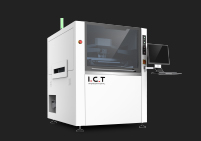
Solder paste printing remains one of the most critical processes in consumer electronics SMT lines. Initial setup accuracy is important, but long-term repeatability is often the true differentiator.
A printer that maintains stable performance after stencil changes, material swaps, and operator transitions contributes more to yield consistency than marginal improvements in cycle time.
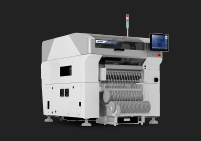
Pick and place machines must accommodate a wide range of component sizes, packaging types, and orientations. In high-mix production, feeder management, vision stability, and efficient program switching have a greater impact on real productivity than maximum placement speed.
Equipment that reduces setup complexity and minimizes operator-dependent adjustments often delivers better overall performance.
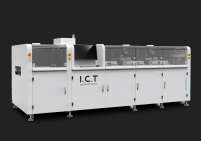
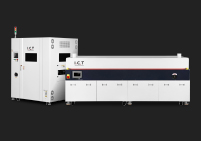
Reflow ovens are frequently underestimated during SMT line planning. Compact consumer boards with mixed thermal mass require stable and repeatable thermal profiles to avoid defects such as tombstoning, voiding, or insufficient wetting.
A reflow system should deliver consistent thermal behavior across different products without requiring constant profile adjustments.
Inspection adds the most value when it supports process control rather than acting solely as a defect filter. Proper placement of SPI and AOI enables early detection of process drift, reducing scrap and rework.
The objective is not maximum inspection coverage, but actionable feedback that improves upstream processes.

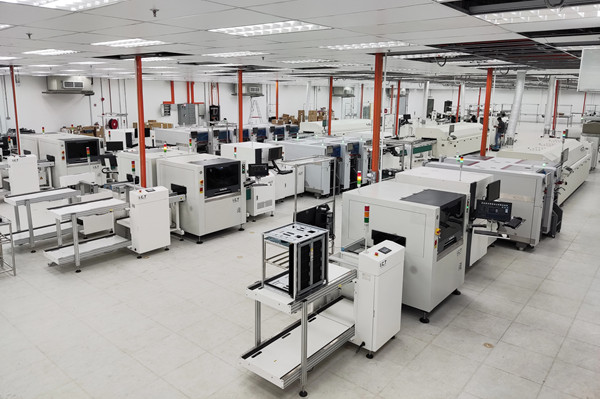
Factory space is often limited in consumer electronics manufacturing. Straight-line layouts are simple and efficient but require more floor space. U-shaped layouts can reduce footprint and improve operator interaction, though they demand careful planning of material flow.
The optimal choice depends on product mix, labor availability, and future expansion plans.
Efficient material flow reduces handling errors and changeover time. SMT line layout should support intuitive operator movement, clear material paths, and minimal cross-traffic.
In high-mix environments, small inefficiencies in material handling can accumulate into significant downtime.
Future expansion should be considered from the initial design stage. Allowing space for additional equipment, using standardized conveyor interfaces, and maintaining layout flexibility help protect long-term investment.

Automation should be applied selectively. Fully automatic SMT lines deliver high efficiency in stable, high-volume scenarios but may reduce flexibility during frequent changeovers.
Semi-automatic solutions often provide a balanced approach for manufacturers handling diverse consumer electronics products.
Local labor costs and workforce skill levels influence the optimal degree of automation. In regions with moderate labor costs and experienced operators, excessive automation may not deliver proportional benefits.
Equipment selection should reflect realistic operating conditions rather than theoretical efficiency gains.
Over-automation can increase setup complexity and maintenance burden. During early production stages, simpler systems often support faster adaptation to design changes and evolving demand.

Strategic inspection placement enables early identification of process issues. Redundant inspection increases cost without necessarily improving quality.
Effective inspection strategies focus on preventing defect propagation rather than documenting failures.
Inspection data should feed back into process adjustments. Without structured data analysis, inspection results provide limited value.
A connected data workflow supports continuous improvement and long-term yield stability.
While consumer electronics generally face fewer regulatory traceability requirements than automotive products, basic traceability supports quality analysis, warranty management, and supplier accountability.
These mistakes are rarely visible during factory acceptance tests, but often emerge several months after mass production begins.
Focusing solely on speed or initial cost often leads to higher long-term expenses due to downtime, rework, and process instability.
Changeover time directly affects output in high-mix environments. Lines optimized only for nominal throughput may perform poorly in daily operation.
Maintenance accessibility, spare parts availability, and technical support quality significantly influence long-term equipment performance.
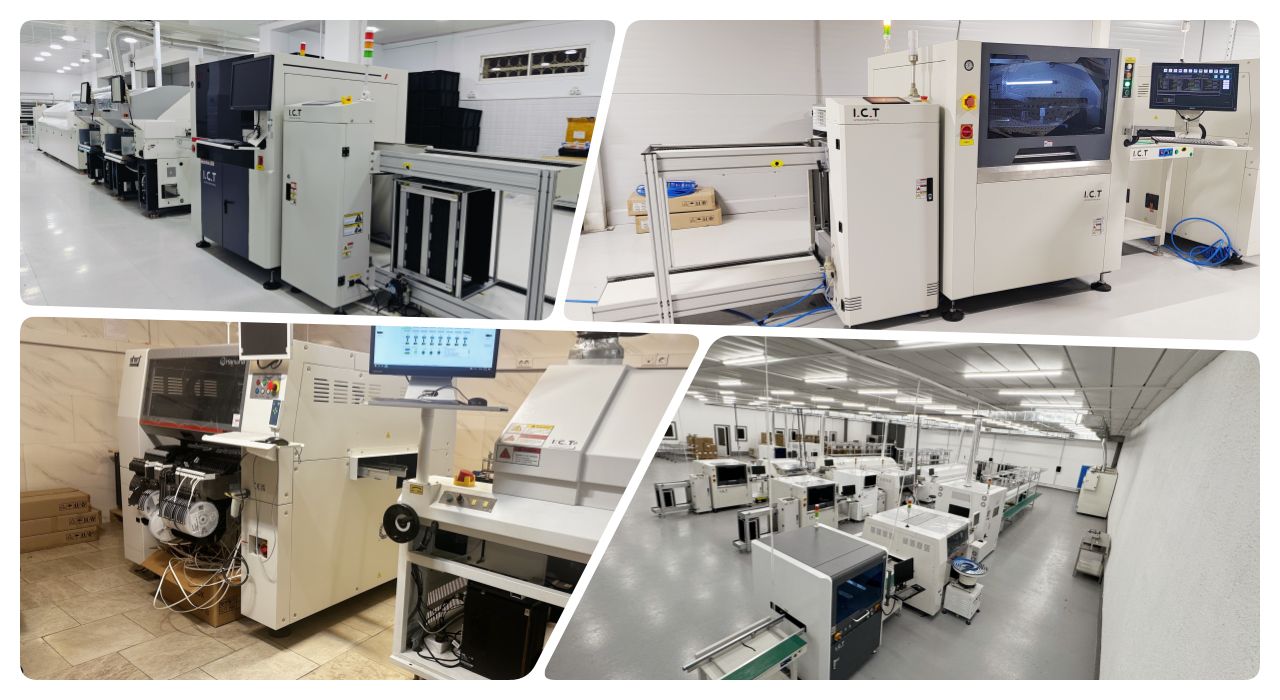
Such lines prioritize flexible placement systems, compact board handling, and efficient program management to support frequent product changes.
A balanced configuration emphasizes stable printing, adaptable placement, and moderate automation to accommodate varying production volumes.
Scalable designs allow manufacturers to start with a basic configuration and expand capacity as demand grows, reducing upfront risk.
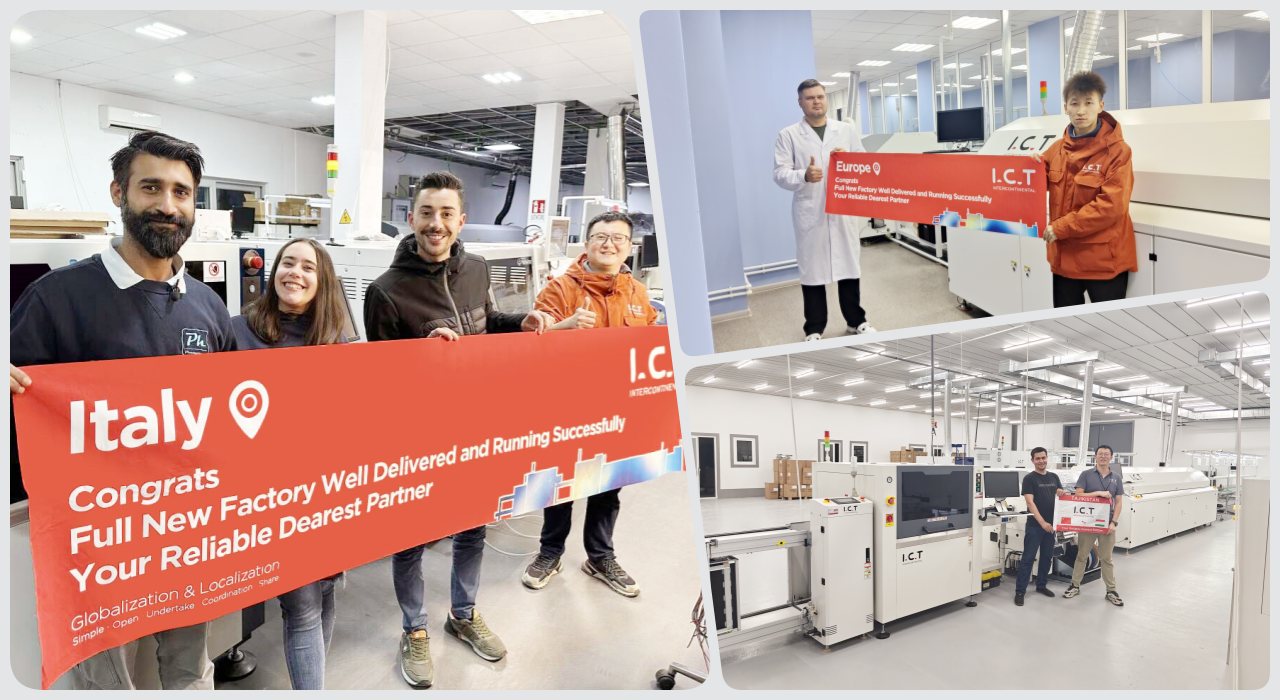
Suppliers with practical consumer electronics experience are better positioned to anticipate production challenges and recommend suitable configurations.
Effective installation and training shorten ramp-up time and help operators reach stable production sooner.
Reliable lifecycle support reduces unplanned downtime and protects long-term investment.
Product type and PCB characteristics
Current and future production volume
Factory space, workforce, and growth plan
A well-chosen SMT line is not defined by individual machines, but by how effectively the entire system supports product evolution, production stability, and business growth. In consumer electronics manufacturing, success depends on building a production line that can adapt as quickly as the market itself.
If you are planning or optimizing an SMT line for consumer electronics manufacturing, a clear understanding of your product and production stage is essential. For a practical, engineering-focused discussion based on real factory conditions, feel free to get in touch. > > > > > >
1. What makes SMT lines for consumer electronics different from other industries?
Consumer electronics SMT lines must support high mix, frequent changeovers, and fast ramp-up, rather than long-term single-product stability.
2. Is a fully automatic SMT line always necessary for consumer electronics?
No. For early-stage or frequently changing products, semi-automatic or modular SMT lines often deliver better real efficiency.
3. Which SMT process has the biggest impact on yield?
Solder paste printing and reflow thermal control typically have the greatest influence on yield consistency.
4. How should SMT inspection be planned?
Inspection should be positioned to provide actionable process feedback rather than simply detecting defects.