English
Views: 0 Author: Site Editor Publish Time: 2026-02-04 Origin: Site
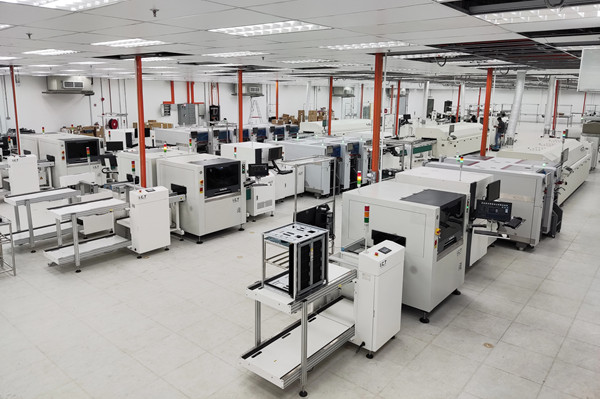
In the world of Surface Mount Technology (SMT), optimizing the SMT production line capacity is a complex balancing act. Manufacturers must address three core factors: speed, flexibility, and cost. While each of these elements is crucial for the success of a production line, achieving the ideal balance is often challenging. This article explores how to optimize SMT line capacity by understanding the trade-offs between speed, flexibility, and cost. We’ll also look at how advanced solutions help address these challenges, enabling manufacturers to achieve high-performance, cost-effective production lines.

The key to optimizing SMT production lines lies in understanding that speed, flexibility, and cost are interdependent. Choosing the right SMT production line is crucial in balancing these factors to meet industry-specific needs. It’s nearly impossible to maximize all three at once. For instance, while increasing speed might result in higher throughput, it could limit the flexibility required for switching between different products or reduce cost-effectiveness. Conversely, focusing solely on flexibility might increase costs and slow down production times.
Manufacturers must make strategic decisions to determine which factors are most important for their specific needs and how to find a balance that minimizes trade-offs. This requires effective planning, equipment selection, and process optimization.
To achieve the right balance, manufacturers need to understand the three core elements—process, equipment, and production demand. The production process determines how the line operates, while the choice of equipment dictates the efficiency, speed, and flexibility of the line. Production demand varies based on factors such as order size, product mix, and production schedules, all of which influence decisions about speed, flexibility, and cost.

Speed in SMT production is a critical factor for meeting customer demand and maintaining a competitive edge. The main drivers of line throughput include the speed of component placement, the efficiency of the pick-and-place machines, and the speed at which the reflow oven and other machinery can process boards.
For instance, high-speed pick-and-place machines and reflow ovens are designed to handle a high number of units per hour (UPH) without sacrificing quality. These machines help achieve the desired throughput while minimizing downtime.
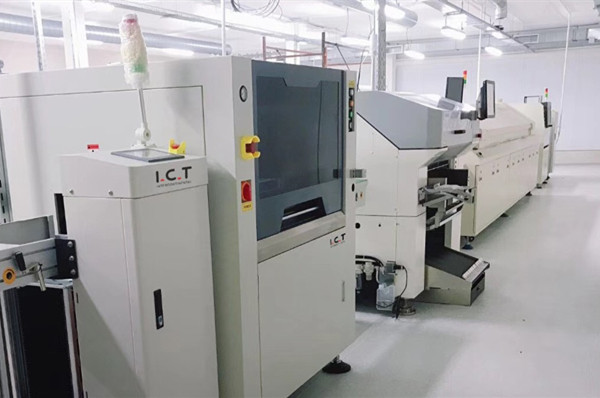
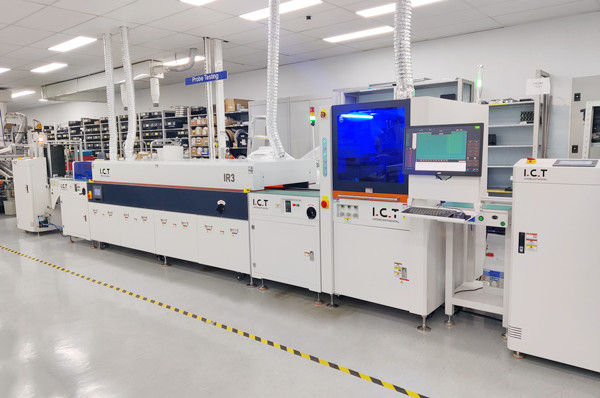
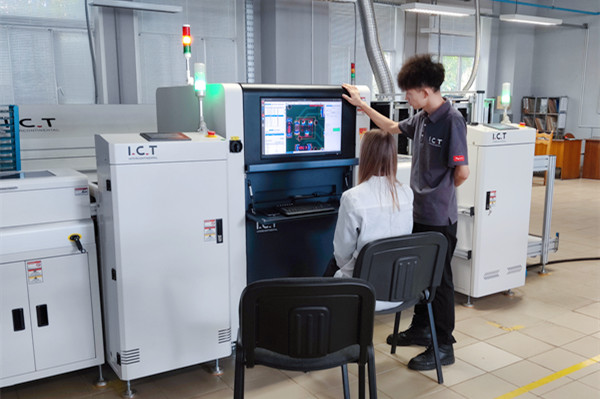
Achieving high speed in an SMT line depends largely on the equipment and processes chosen. SMT line for EMS factories focuses on achieving high throughput while maintaining flexibility and cost control. Pick-and-place machines with higher placement speeds, coupled with efficient conveyor systems, ensure smooth board handling. Automated optical inspection (AOI) systems also play a crucial role in speeding up the verification process by detecting defects immediately and allowing for quick corrections.
Selecting equipment that minimizes bottlenecks and increases line synchronization is key to maximizing speed while maintaining product quality.
Advanced equipment designed to optimize placement accuracy, minimize downtime, and maximize throughput can significantly improve production speed. High-speed soldering systems, for example, help improve cycle times while maintaining high-quality standards, reducing manual intervention and errors during the production process.

High-mix, low-volume (HMLV) production is a common challenge in modern SMT lines. Manufacturers are often required to switch between a variety of products with different specifications, making it essential to have flexible systems in place. The main challenge lies in minimizing changeover time while ensuring high-quality production across multiple product types.
Reducing changeover time is a key strategy for achieving flexibility. SMT lines for consumer electronics need to be flexible enough to handle a wide variety of product types without sacrificing production quality.
Implementing quick-change tooling systems and automatic setup procedures can significantly reduce the time it takes to switch between products. Smart equipment that allows for easy adjustments and fast transitions between product types is essential to increasing flexibility and minimizing downtime.
Additionally, adopting smart automation and real-time monitoring allows manufacturers to better manage changes in production demands, facilitating faster adaptation to new product designs and variations.
Flexible manufacturing solutions can facilitate product switching without compromising quality. Reflow ovens with multi-zone capabilities, for example, allow for quick adjustments to temperature profiles when switching between different products. This ensures that production remains smooth and efficient, even when transitioning between products with different requirements.

When designing an SMT line, manufacturers must consider both the initial equipment investment and the long-term costs associated with maintenance, energy consumption, and consumables. Investing in high-performance, energy-efficient equipment may have a higher initial cost but can lead to significant savings over time due to reduced energy consumption and longer equipment lifespan.
Manufacturers can save costs while maintaining performance by investing in automated systems that reduce labor costs, upgrading to energy-efficient equipment, and implementing preventive maintenance programs. Equipment designed for durability and long-term performance can also contribute to reducing maintenance and replacement costs over time.
A well-designed production line that balances cost and performance can help manufacturers maintain profitability without sacrificing quality.
Investing in cost-effective solutions that deliver long-term value is crucial for manufacturers looking to optimize their SMT lines. By focusing on energy-efficient equipment, reducing operational costs, and minimizing waste, manufacturers can achieve a high level of performance while keeping costs under control.
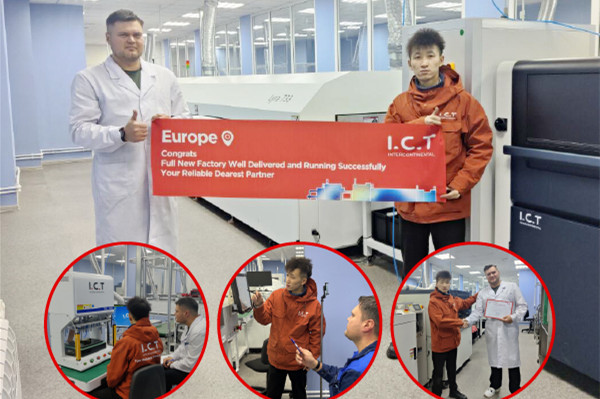
In the Middle East electronics market, manufacturers often face the challenge of achieving high throughput while ensuring versatility across mixed technologies. In late 2025, I.C.T completed a turnkey factory solution in Saudi Arabia that included three coordinated production systems — SMT production lines, a DIP assembly line, and a conformal coating line — for a local electronics manufacturer focusing on wireless modules, power supplies, and control boards.
The objective was to build a production ecosystem capable of large‑volume throughput with consistent soldering and coating quality.
Not all manufacturers target massive volume; many require flexibility to handle complex boards with diverse component types. In a late‑2025 case in Uzbekistan, an electronics manufacturer specializing in PC motherboard assembly sought a scalable solution to support both surface mount and through‑hole assembly processes.
Rather than opting for standalone machines, the customer chose a fully integrated SMT + DIP production solution tailored to the product’s high density and mixed technology requirements.
For medium-sized manufacturers, the balance between speed, flexibility, and cost is key. A balanced approach ensures that production remains efficient, adaptable, and cost-effective. By optimizing throughput and minimizing downtime, medium-sized manufacturers can improve their overall production efficiency without stretching their budgets.

The first step in optimizing an SMT line is assessing the current production needs. This involves understanding the product mix, production volume, and specific customer requirements. By identifying which factors—speed, flexibility, or cost—are most critical to the production line, manufacturers can begin planning the necessary upgrades.
Once the needs are understood, manufacturers should map their priorities and constraints. Factors such as budget, available space, and existing equipment limitations must be taken into account when making decisions about speed, flexibility, and cost.
When selecting equipment and layout, manufacturers need to consider the trade-offs between speed, flexibility, and cost. Inline or modular SMT line layout should be considered when optimizing for speed, flexibility, and cost in modern production environments. Equipment should be chosen with the specific goals of the production line in mind, ensuring that each element of the line contributes to achieving the desired balance.
Optimizing SMT line capacity requires careful planning and an understanding of the trade-offs between speed, flexibility, and cost. By choosing the right equipment, implementing automation, and prioritizing the key elements that align with their production goals, manufacturers can achieve a well-balanced production line.
While flexibility can reduce speed due to the time required for changeovers, smart automation and quick-change equipment can minimize this loss.
Yes, with the right equipment and careful optimization of processes, manufacturers can balance speed and cost. Choosing efficient equipment can help achieve high speed without increasing costs significantly.
Changeover time can vary depending on the complexity of the products being produced, but modern SMT lines are designed to enable fast transitions, minimizing downtime.
A well-balanced SMT line will achieve optimal speed, flexibility, and cost performance. Regular assessments and KPIs related to throughput, changeover time, and cost efficiency can help manufacturers evaluate their line’s performance.
The future of SMT production lies in the integration of smart manufacturing and the Internet of Things (IoT). These technologies enable real-time monitoring, predictive maintenance, and smarter decision-making, leading to significant optimization of SMT lines. By leveraging these technologies, manufacturers can enhance efficiency, reduce downtime, and ensure optimal machine performance, contributing to the overall advancement of the manufacturing industry.
Artificial Intelligence (AI) and Machine Learning (ML) are poised to revolutionize the SMT industry by optimizing production processes in real-time, improving decision-making, and enhancing overall line efficiency. These technologies will enable manufacturers to achieve higher levels of flexibility, precision, and automation, making production lines smarter and more adaptable to changing demands.