English
Views: 0 Author: Site Editor Publish Time: 2026-01-09 Origin: Site

Selecting an SMT production line for automotive electronics manufacturing is not about building the fastest line on the shop floor. It is about reducing long-term manufacturing risk and ensuring stable, repeatable performance over years of production. Automotive electronics must operate reliably under vibration, temperature extremes, and extended service life, which places far higher demands on process stability, traceability, and control. Standards such as IATF 16949 reinforce this reality by prioritizing defect prevention, data traceability, and audit-ready manufacturing systems rather than short-term throughput gains.
For manufacturers evaluating or upgrading an SMT production line, understanding these differences is the first critical step. Automotive electronics cannot be approached in the same way as consumer or general industrial products, because the expectations for durability, consistency, and accountability are fundamentally higher. Before discussing equipment selection or line configuration, it is essential to first examine the unique manufacturing demands that define automotive electronics production and shape every downstream process decision.
Automotive electronic modules are expected to remain in service for 10 to 15 years, sometimes even longer. Unlike consumer electronics, there is no room for gradual performance degradation or early-life failures. A solder joint that performs well during initial testing but drifts after years of thermal stress can become a serious safety risk.
For this reason, automotive manufacturers must focus on SMT production lines that deliver consistent results over thousands of operating hours. Equipment configurations optimized only for short-term throughput may appear efficient at first, but they often introduce long-term drift, variation, and maintenance instability that are unacceptable in automotive production.

Automotive electronics operate in some of the harshest environments among all electronic products. Extreme temperatures ranging from -40°C to +125°C, continuous vibration, humidity exposure, and repeated thermal cycling place constant stress on solder joints and PCB assemblies.
If SMT processes are not tightly controlled, these stresses can lead to common long-term failures such as solder cracks, opens, or void-related weaknesses. An automotive-grade SMT line must therefore ensure robust solder joint formation through stable solder paste printing, accurate placement, and highly consistent reflow conditions. These factors directly determine whether a product will survive years of real-world vehicle operation.
In automotive electronics manufacturing, traceability is not a best practice—it is a requirement. Standards such as IATF 16949 demand full visibility into materials, processes, and inspection results to enable rapid root-cause analysis and containment in the event of field issues.
Each PCB must be linked to its solder paste batch, component lot, process parameters, and inspection data. SMT production lines without integrated data logging and SPC capabilities not only increase quality risk, but also struggle to pass customer audits. Over time, the lack of traceability significantly raises the cost and impact of recalls, making it one of the most critical selection factors when designing an automotive SMT line.
In automotive electronics manufacturing, higher placement speed does not automatically translate into higher productivity. Ultra-high-speed SMT lines often operate closer to their process limits, where small variations in placement, printing, or thermal control can accumulate over time. These subtle variations may pass initial inspections but later manifest as field failures after years of operation, highlighting why automation strategies in SMT line productivity must focus on stability rather than raw speed.
For automotive applications, mid-to-high speed equipment with well-controlled process windows typically delivers far better long-term results. By operating within stable margins rather than at the edge of performance, manufacturers reduce variation, simplify process control, and significantly lower the risk of latent defects.

When selecting SMT equipment for automotive electronics, repeatability matters more than peak specifications. Key performance indicators include stable placement accuracy, consistent solder paste volume, and uniform thermal profiles across extended production periods.
More importantly, equipment must maintain these capabilities over time. Automotive manufacturers should look beyond datasheet values and focus on demonstrated long-term stability. Machines that can maintain process performance after thousands of operating hours, with minimal recalibration and predictable drift behavior, provide a much stronger foundation for automotive-grade production.
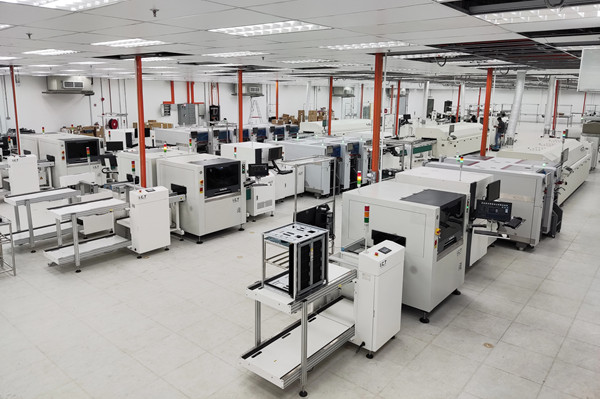
A well-designed automotive SMT line balances output capacity with robustness at every process step. This typically includes stable solder paste printing, reliable mid-speed placement, convection-dominant reflow soldering, and comprehensive in-line inspection.
Rather than optimizing each machine independently, successful manufacturers design the line as an integrated system. The objective is not short-term yield optimization, but maintaining high and repeatable process capability across years of production, even as products, volumes, and operating conditions evolve.
In automotive electronics manufacturing, many long-term reliability issues can be traced back to solder paste printing variation. Inconsistent solder volume or misalignment at this stage often leads to weak solder joints, voids, or uneven wetting that are difficult to detect later in the process.
Modern stencil printers designed for automotive applications emphasize closed-loop control, precise alignment, and stable pressure regulation. Maintaining tight solder volume consistency is especially critical for fine-pitch components and BGA devices commonly used in automotive control modules.

Stencil performance plays a central role in maintaining printing stability during long production runs. Optimized aperture design and surface treatments help reduce solder paste adhesion and bridging risks, particularly when printing fine features.
Equally important is consistent stencil cleaning. Automated under-stencil cleaning at defined intervals prevents gradual paste buildup that can otherwise lead to insufficient deposits or short circuits over time. In automotive production, disciplined stencil maintenance is a preventive measure that protects both yield and long-term product reliability.
Statistical process control is essential for managing solder paste printing in automotive SMT lines. By continuously monitoring key parameters such as solder height, volume, and area, SPC systems provide early warning of process drift before defects reach downstream stages.
This proactive approach allows maintenance and process adjustments to be scheduled based on data rather than failure events. As a result, manufacturers can maintain stable output quality across extended production campaigns while minimizing unexpected downtime and scrap.
Automotive SMT lines often operate under a unique combination of requirements: the same control module may be produced continuously for years, while periodic design updates or variant models are introduced along the way. This production pattern places high demands on both flexibility and long-term stability.
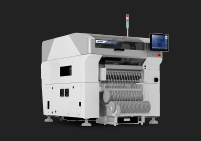
Pick and place machines used in automotive electronics must support fast and reliable changeovers without disrupting validated processes. At the same time, they must maintain placement accuracy during extended, uninterrupted operation lasting weeks or months, without frequent recalibration. Machines that perform well only during short production runs often struggle to maintain consistency under these long-run conditions.

Program changes in automotive production are not limited to switching products. They often involve component substitutions, package changes, or supplier updates driven by long lifecycle management. Each change introduces potential risk if feeder performance, vision recognition, or pickup behavior is not fully stable.
Automotive-grade pick and place machines rely on robust feeder systems, repeatable indexing accuracy, and mature vision algorithms to ensure consistent pickup and placement across a wide range of components. This includes moisture-sensitive devices, fine-pitch components, and occasional odd-form parts. Stable changeover performance reduces setup errors and prevents variation from being introduced during otherwise routine adjustments.
In automotive electronics manufacturing, placement accuracy must be evaluated together with repeatability over time. A machine that meets accuracy targets only immediately after calibration may still introduce long-term risk if nozzle wear, mechanical drift, or head variation is not well controlled.
Automotive SMT applications typically require placement performance that remains stable across extended production periods. Consistent placement behavior helps prevent issues such as skewed components, uneven solder fillets, or tombstoning, all of which can reduce vibration resistance and long-term joint reliability. For automotive manufacturers, predictable placement control is a key contributor to maintaining product integrity throughout the vehicle’s service life.
In automotive electronics manufacturing, more heating zones do not automatically result in better soldering quality. What truly matters is how precisely temperature can be controlled and how evenly heat is distributed across the entire PCB.
Large automotive boards often contain mixed component densities and copper distributions. Without uniform thermal control, excessive temperature differences can cause board warpage, incomplete solder wetting, or overstressed components. SMT reflow systems designed for automotive applications focus on tight PID control and stable convection to maintain low temperature variation across the board, ensuring consistent solder joint formation.

Short-term thermal accuracy is only part of the equation. Automotive electronics production requires reflow ovens that maintain stable thermal performance over years of continuous operation.
Robust blower designs, reliable heaters, and balanced airflow systems help prevent gradual profile drift that may go unnoticed during daily production but slowly degrades solder joint quality. Long-term thermal consistency reduces the need for frequent re-profiling and lowers the risk of latent solder defects emerging late in the product lifecycle.
Solder joints in automotive electronics must survive thousands of thermal cycles during vehicle operation. Improper reflow profiles can accelerate intermetallic compound growth or introduce internal stress, increasing the risk of cracks over time.
Well-optimized reflow profiles emphasize controlled ramp rates, sufficient soak time, and stable cooling conditions. These parameters work together to produce mechanically robust solder joints that maintain integrity throughout extended service life, even under harsh operating conditions.
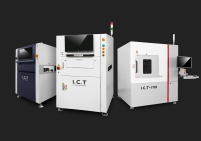
In automotive SMT production, SPI plays a preventive role rather than serving as a simple inspection checkpoint. By measuring solder paste volume, height, and area in three dimensions, SPI systems identify printing variations before components are placed.
Early detection of printing drift allows corrective action to be taken upstream, preventing defects from propagating through the rest of the line. This proactive approach reduces rework, protects yield, and stabilizes long-term production performance.

AOI systems in automotive electronics manufacturing are not limited to defect detection. They act as continuous monitoring tools that verify placement accuracy, polarity, solder appearance, and component presence while collecting valuable process data.
By linking inspection results to individual board serial numbers, AOI enables detailed traceability and trend analysis. This data-driven visibility supports faster root-cause analysis and improves process decision-making across extended production runs.
Traceability is a foundational requirement in automotive electronics manufacturing. Integrated data collection across SPI, AOI, and process equipment ensures that every PCB can be traced back to its materials, process parameters, and inspection history.
When inspection and production data are consolidated through MES or line-level data systems, manufacturers gain audit-ready records that support IATF compliance and rapid containment actions. This level of traceability not only satisfies customer and regulatory requirements, but also significantly reduces the cost and impact of quality incidents.
Automotive electronics programs rarely remain static. New vehicle platforms, revised control logic, and component substitutions often require PCB size changes, layout updates, or new package types. An SMT production line designed only for current products can quickly become a constraint rather than an asset.
Flexible line architectures based on modular equipment, adjustable conveyors, and scalable software platforms allow manufacturers to adapt to new PCB designs without major reinvestment. This approach protects long-term capital investment while supporting ongoing product evolution, which is especially important in automotive and EV electronics programs with frequent design updates.

Many automotive electronic modules require additional protection beyond standard SMT assembly. Conformal coating, selective soldering, and potting are commonly introduced to improve resistance to moisture, vibration, and environmental stress.
When planning an SMT line, physical layout and material flow should anticipate these downstream processes from the start. In several automotive and new energy vehicle projects, including EV charging and power electronics applications, I.C.T has supported customers by integrating SMT lines with dedicated PCBA coating lines, ensuring smooth board transfer, stable curing, and consistent quality without disrupting upstream production. Designing for these extensions early avoids costly line modifications later.
Automotive production volumes often ramp up gradually rather than all at once. An SMT line must therefore support capacity increases without compromising process stability or requiring complete redesign.
Buffer conveyors, intelligent line balancing, and parallel process options allow output to scale while preserving consistent quality. Lines designed with controlled expansion points enable manufacturers to respond to demand growth while maintaining the same validated process conditions used during initial qualification.
The ramp-up phase is one of the most critical stages in automotive electronics manufacturing. Initial setup decisions directly influence long-term yield, stability, and audit performance.
Structured process validation, including controlled parameter optimization and documented trials, helps establish stable operating windows early. In automotive SMT projects supported by I.C.T, ramp-up activities typically focus on building repeatable, data-backed processes rather than pushing for immediate maximum output, reducing early-life defects and long-term variability.

Even the most advanced SMT equipment depends on consistent human operation. Clear documentation, standardized procedures, and comprehensive training reduce variation caused by operator turnover or shift changes.
Effective training programs ensure that operators understand not only how to run the line, but also why specific parameters and checks matter. This shared understanding shortens troubleshooting time and helps maintain stable production across extended automotive programs.
Automotive electronics manufacturing places high demands on responsiveness and technical depth when issues arise. Local support teams with automotive project experience can significantly reduce downtime and prevent minor process deviations from escalating into larger quality events.
Beyond equipment supply, long-term partners who understand automotive standards, process validation, and system-level integration provide lasting value. Through on-site support and project-based collaboration, I.C.T has worked closely with automotive and EV electronics manufacturers to build SMT production lines that remain stable, compliant, and scalable throughout their operational lifetime.
Real-world automotive SMT projects consistently show that line stability and system integration matter more than individual machine performance. Automotive electronics manufacturing involves not only SMT assembly, but also downstream processes such as reflow optimization, conformal coating, and data-driven traceability.
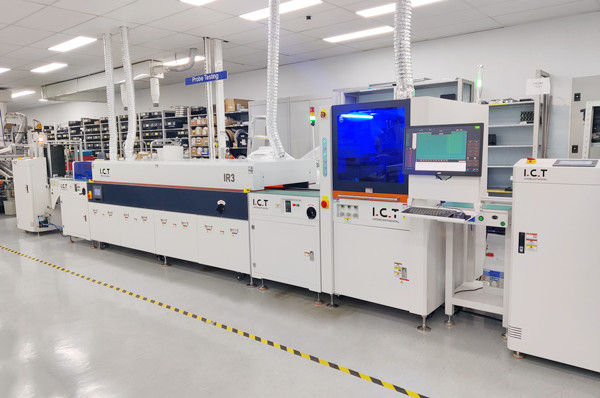
In multiple automotive and EV-related projects, I.C.T has supported customers with complete SMT production lines, including reflow soldering solutions for automotive electronics, PCBA coating lines for NEV three-electric systems, and smart factory solutions for EV charging pile manufacturing. These projects demonstrate that success comes from treating the production line as an integrated system rather than a collection of standalone machines.

Many issues observed in automotive SMT production can be traced back to early design decisions. Over-specifying placement speed while neglecting process stability often increases variation and maintenance burden. Similarly, underestimating traceability requirements leads to costly retrofits when audit or customer demands increase.
Another common mistake is selecting equipment suppliers without proven automotive manufacturing experience. While individual machines may meet specifications, a lack of system-level understanding often results in inefficient layouts, incomplete data integration, and extended ramp-up periods. These problems typically cost far more to correct after installation than to prevent during line design.
Automotive electronics manufacturing rewards experience over theoretical performance. Suppliers who understand automotive requirements—from process validation and documentation to long-term drift control—are better positioned to reduce risk throughout the product lifecycle.
Rather than focusing solely on datasheet specifications, manufacturers benefit most from partners who can translate automotive standards into practical, repeatable production systems. This experience-driven approach provides stability not only during initial launch, but also through years of continuous production and model updates.
No. While consumer electronics benefit from maximum speed, automotive production prioritizes consistency and low variation. Ultra-high-speed machines can introduce placement variation that accumulates into reliability issues under vibration and thermal stress. Mid-speed machines with superior accuracy and repeatability often deliver better long-term results. For example, maintaining ±25µm placement accuracy over continuous runs proves more valuable than occasional bursts above 100,000 CPH. The underlying principle: automotive defects often appear after years in the field, not during initial testing—making process stability the true performance metric.
IATF 16949 requires complete forward and backward traceability to enable rapid containment if field issues arise. A single faulty batch could affect thousands of vehicles, triggering expensive recalls. Consumer products rarely face this regulatory scrutiny. Traceability includes material lots, process parameters, inspection images, and test data linked to each serial number. Without it, manufacturers cannot prove due diligence during audits or investigations. Practical implementation involves MES integration across printing, placement, reflow, and inspection—creating audit-ready records automatically.
Zone count matters less than thermal uniformity and control precision. Many reliable automotive lines use 8–10 zone ovens with excellent convection design rather than 12+ zones. The goal achieves delta-T below 5°C across large boards while maintaining profile stability over years. Poorly designed 12-zone ovens can drift more than well-maintained 8-zone systems. Focus on convection efficiency, blower longevity, and PID tuning capability instead of counting zones.
Rarely without major investment. Consumer lines often lack the data infrastructure, inspection depth, and process controls required for IATF compliance. Retrofitting traceability, upgrading to automotive-grade printers, and validating long-term stability prove costly and disruptive. Starting with automotive-capable equipment from the beginning avoids these pitfalls and provides better ROI over the typical 10+ year module lifecycle.
Most automotive modules require coating for environmental protection. Planning conveyance, space, and material handling for coating integration from the start prevents expensive line modifications later. Some modern lines incorporate selective coating cells with bottom-return functionality, improving efficiency while maintaining traceability—particularly valuable for NEV power systems.