English
Views: 0 Author: Site Editor Publish Time: 2026-01-15 Origin: Site
Selecting the right SMT line for an EMS (Electronics Manufacturing Services) factory is a complex decision, especially for high-mix, low-volume environments. Unlike mass production setups that prioritize speed and efficiency, EMS factories face unique challenges that demand flexibility, repeatability, and easy changeovers.
This article explores the key considerations for choosing an SMT line that aligns with the operational needs of high-mix, low-volume EMS production.

In high-mix, low-volume manufacturing, speed is not the main concern. Instead, the focus is on control, repeatability, and flexibility. EMS factories serve a variety of customers, each with different PCB designs, component mixes, and quality expectations. With small batch sizes and frequent order changes, the challenge lies in the ability of the SMT line to adapt quickly to new products.
An SMT line in this context isn't just a machine; it's an operational system that must be able to handle constant changes without causing stress for operators or engineers.
Before selecting equipment, the first step is to understand your production needs. If your EMS factory fits the following criteria, you are likely in the high-mix, low-volume category:
Multiple active SKUs on the same line
Small batch sizes (from dozens to a few thousand boards)
Frequent order switching within the same day or week
Regular new product introductions (NPI) and prototype builds
Customers from various industries with differing quality standards
If these apply to your factory, your SMT line must be able to handle frequent changeovers with minimal disruption to stability.
One of the most common mistakes EMS factories make is assuming that mass-production SMT configurations are the best fit for their needs. Mass production focuses on:
Maximum UPH (Units per Hour)
Long production runs
A stable product mix
In contrast, EMS factories prioritize:
Quick changeovers
Process repeatability across multiple products
Engineering efficiency
Speedy placement machines may look appealing, but if they require long setup times, complex feeder changes, or extensive engineering involvement with each product change, overall efficiency will suffer.
Automation is also a double-edged sword. While it can help speed up production, over-automation reduces flexibility and places a higher dependency on skilled engineers. In EMS environments, simplicity often outperforms complexity.

For EMS factories, changeover time is often a more critical factor than placement speed. A well-designed SMT line should enable operators to change products with minimal intervention, while a poorly designed one can tie up engineers on the floor all day.
Key changeover factors include:
Feeder replacement and verification
Program switching and parameter recall
Material preparation and error prevention
First-article confirmation speed
Every minute counts between the last board of the previous product and the first good board of the next product. Here, stable SMT pick-and-place machines with intuitive software and flexible feeder management become essential.
The goal isn't zero changeover time; it's predictable and repeatable changeovers.

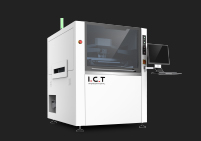
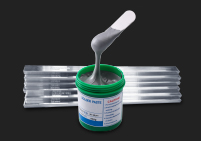
Solder paste printing is often the first source of variation in high-mix EMS environments. Different PCB designs require different stencil layouts, pad sizes, and paste volumes. If the printer needs constant manual adjustment, it leads to instability in quality.
The ideal SMT stencil printer should offer:
Stable print pressure control
Repeatable alignment accuracy
Easy recipe switching
Consistent cleaning performance
When paste printing is stable, it reduces downstream issues like placement and reflow defects.

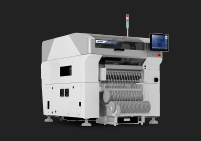
While high-speed placement machines are often emphasized, placement stability is far more critical. EMS factories handle a wide variety of components, from fine-pitch ICs to BGAs, QFNs, connectors, and odd-shaped parts. Consistent placement stability across different component types significantly reduces:
Rework
False defects
Engineering debugging time
A flexible SMT pick-and-place machine that handles a mixed component array smoothly will deliver better long-term efficiency than a high-speed machine that struggles with variation.

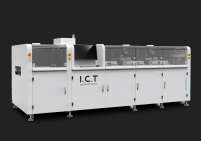
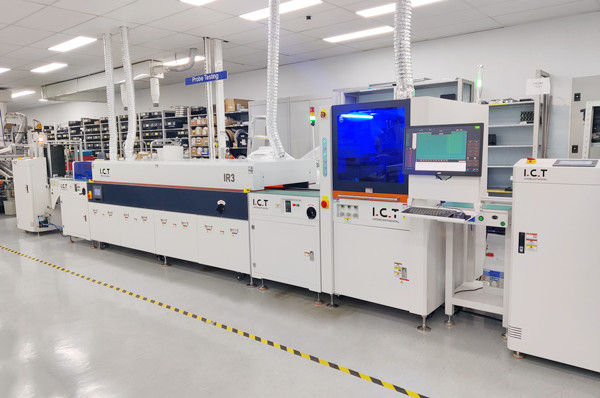
High-mix EMS factories often run multiple thermal profiles due to the variation in PCB copper density, component mass, and thermal behavior. The key requirement is not extreme temperature precision but process window width and repeatability.
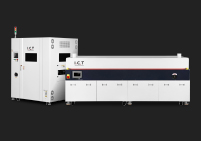
A reliable SMT reflow oven should offer:
Uniform heating across the conveyor width
Stable airflow and temperature recovery
Easy profile storage and recall
Consistent performance after frequent profile changes
When reflow soldering is stable, defect rates naturally decrease, and engineers spend less time troubleshooting intermittent soldering issues.
Inspection systems should be viewed as risk-control tools, not optional add-ons. EMS factories face higher quality pressure due to:
Multiple customers sharing the same line
Varying quality standards
Unclear responsibility boundaries
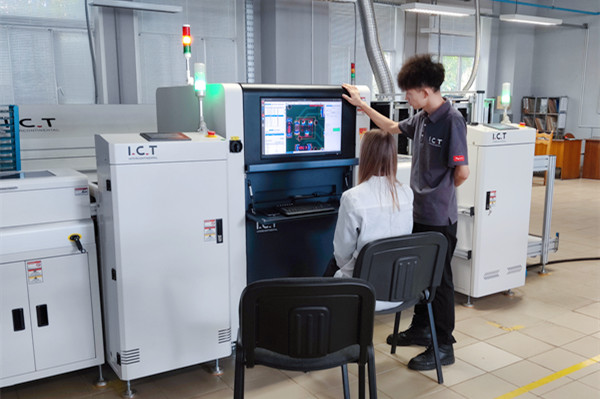
Effective AOI inspection systems can catch issues early, isolate problems quickly, and prevent small defects from turning into customer claims.
For high-mix production, inspection systems should allow:
Easy program creation
Fast product switching
Clear defect classification
Traceability data tracking
Inspection is not about catching every defect but about ensuring consistency and preventing costly quality issues.

Traceability is crucial in industries like automotive, industrial, and power electronics. Being able to track:
Production parameters
Inspection results
Process changes
helps EMS factories respond quickly when issues arise, fostering trust with customers and showcasing professionalism and accountability.
Engineers are a factory’s most valuable asset. A well-designed SMT line minimizes engineering time spent on firefighting, allowing engineers to focus on process improvement.
Key design elements include:
Clear machine interfaces
Logical parameter structures
Easy backup and restore functions
Reduced manual adjustments
An engineering-friendly SMT line enables fast training for new operators without negatively impacting yield, fostering growth and stability for the EMS factory.
EMS factories often start small but aim for future growth. The ideal SMT line should allow:
Adding placement capacity
Expanding inspection coverage
Incrementally increasing automation
without the need to replace the entire line. Modular designs and open integration ensure the line can scale as the business grows, without restrictions.

When reviewing SMT proposals, EMS factories should ask:
How long does a full product changeover take in actual operation?
How much engineering involvement is required per changeover?
How stable is the process across different products?
How easy is it to scale the system for future needs?
Avoid focusing solely on speed, brand name, or initial cost. The best SMT line reduces daily stress and improves overall operational efficiency.
For high-mix, low-volume EMS factories, the best SMT line is not the fastest or the most complex. It is the line that:
Handles frequent changeovers smoothly
Delivers stable quality across many products
Protects engineering resources
Supports future growth
Choosing the right SMT line is not about acquiring machines. It’s about selecting a production system that fits the operational needs of your EMS factory. When the SMT line complements the factory’s operations, everything becomes easier.