English
Views: 0 Author: Vinci Zhang Publish Time: 2026-09-28 Origin: Site


Choosing an SMT line supplier is not like choosing a component vendor. You are not buying a part you can test and replace. You are buying a system, an installation, a training program, and a relationship that will still matter in five years.
That is why "reliable" is such a slippery word in this market. Every supplier will tell you they are reliable. Every brochure has the same words on it: quality, service, turnkey solution, one-stop.
The problem is that reliability is not a claim. It is a set of capabilities you can check. Some of them are visible in an afternoon. Others only become clear when something breaks at 2 a.m. and you find out whether anyone answers.
This article breaks supplier evaluation into the things that actually predict outcomes: engineering depth, manufacturing base, overseas support, spares, and the honesty of the documentation. Section 8 turns all of it into a scorecard you can fill in during your next supplier visit.
A reliable turnkey SMT supplier does four things well. They design a line that fits your product. They deliver it when they said they would. They commission it to a measurable standard. And they still support it three years later.
That is the whole definition. Everything else — brand names, catalogue size, how many machines they have shipped — is context, not proof.
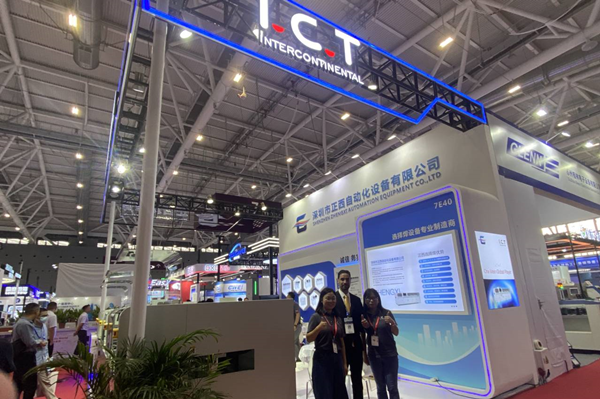
The reason buyers get this wrong is that they evaluate suppliers on the things suppliers like to talk about. Number of units sold. Number of countries served. Size of the exhibition booth. Those are proxies for scale, and scale matters, but scale is not the same as fit for your project.
A large supplier with a poor engineering team will sell you a standard line that half-fits your product. A smaller supplier with a strong process team will design a line around your boards and stay involved until it runs. Both exist. Your job is to tell them apart before you sign.
If you remember nothing else from this article, remember these four questions. Ask them of every supplier, and listen to how the answers are given.
"How will this line be balanced for my five main boards?" A process-driven supplier answers with cycle times and a balance sheet. A sales-driven supplier answers with machine specifications.
"What does the commissioning plan look like, day by day?" A serious supplier has a plan document. A weak one improvises.
"Who fixes this when it stops at night in my country?" The answer reveals whether they have regional support or a long flight.
"What have you stopped doing that you used to do?" This one is unusual, and it produces the most revealing answers. Suppliers who cannot admit a past mistake are usually hiding a current one.
One more practical point. Reliable suppliers document things. Scope tables, balance sheets, commissioning plans, spare parts lists with part numbers, training records, and a written handover.
Unreliable suppliers also document things — but only the parts that protect them. If you ask for a spare parts list and get a paragraph instead of a table, that is not a communication problem. It is an information problem, and it will still be an information problem when you need a control board in eighteen months.
There is a related test that costs nothing. Ask the supplier to name the three things that most often go wrong during a commissioning, and how they prevent them. A supplier who has commissioned two hundred lines will answer instantly and specifically. A supplier who has commissioned ten will also answer, but the answers will be general. Both may be honest. Only one has the experience you are paying for.
The word "turnkey" is used loosely. It is worth separating three business models, because they carry different risks.
The supplier designs and builds the core machines and also integrates the peripheral equipment into a working line. This model gives you the deepest engineering access, the most direct spare parts route, and the clearest responsibility when something fails.
The trade-off is that their own machines may not be the best option for every station in your line. A good supplier will tell you that themselves. A weaker one will fill every station with their own product whether it fits or not.
The supplier does not build machines. They select equipment from multiple manufacturers, integrate it, and take responsibility for the line. This model can give you the best technical fit per station, because nothing is forced.
The trade-off is complexity. Spare parts come from several sources, service calls may involve several manufacturers, and the integration layer is where problems usually appear. This model works well when the integrator has strong process engineering and clear supplier agreements.
The supplier sources equipment and ships it. There may be limited engineering capability behind the transaction.
This model is not automatically bad, and it is usually the cheapest on paper. It becomes a problem when the line needs to be balanced, commissioned to a standard, or supported locally. If you buy from a trading company, make sure you know who provides the engineering and who provides the service, and get both in writing.
Your situation | Model that usually fits best |
|---|---|
First SMT line, limited in-house process experience | OEM with integration capability, or a strong integrator |
Complex mix of product types and brands | Integrator with deep process engineering |
Adding to a line you already understand well | Any model, if support is clear |
Tight budget, strong in-house engineering | Trading company plus your own engineering |
Products with safety, traceability, or compliance requirements | OEM or integrator with documented processes |
The wrong question is "which model is best." The right question is "which model leaves me with the fewest unmanaged risks for this specific project."
Suppliers often advertise a one-stop service: machines, peripherals, installation, training, and service from one contract. When it is real, it is genuinely valuable. You have one number to call and one party accountable.
When it is a marketing label, it means one sales contact and several unconnected suppliers. Ask directly: "If the printer and the placement machine disagree about a board transfer signal, who resolves it?" If the answer involves you coordinating two manufacturers, it is not one-stop.
Many buyers start the conversation with a brand requirement. That is understandable, and it is sometimes correct. Named brands carry known performance, known spare parts, and known resale value.
The risk is that a brand list replaces a requirement. If your specification says "Printer A, Placer B, Oven C," you have defined a line by reputation rather than by fit. A better approach is to state the performance you need — placement rate on your board, accuracy for your smallest component, oven zones for your thermal profile — and then let suppliers propose platforms that meet it.
You will sometimes find that the brand you wanted is not the best fit for one station. You will also find that a supplier who proposes an alternative has thought about your product, which is itself useful information.
If brand compatibility matters because you already run a fleet, say so explicitly. Service knowledge, spares commonality, and operator familiarity are legitimate reasons to stay with a platform, and a good supplier will respect them.

This is the single strongest predictor of how your project will go, and it is also the hardest to judge from a catalogue.
A supplier with real engineering capability will ask about your products before they quote. They will ask for component counts, board sizes, panel layouts, volumes, and quality requirements. They will push back on specifications that do not make sense. They may tell you a machine you asked for is the wrong choice.
A supplier without engineering depth will send a quotation within two days and never ask about your product at all.
Ask them to walk you through a line balance for your product mix. Then watch what happens.
Do they ask follow-up questions about your boards?
Do they produce cycle times per station, or just machine speeds?
Do they identify a bottleneck, or claim everything is fast enough?
Do they mention changeover time, or only steady-state output?
Do they ask about your stencil and paste handling?
A process engineer will enjoy this conversation. A salesperson will try to move it back to price.
Line balancing and simulation. Ask whether they model the line before quoting. A supplier who can show you a balance sheet for a similar product is demonstrating capability, not just promising it.
Stencil and printing process knowledge. Printing causes a large share of solder defects. Ask what stencil thickness and aperture design they recommend for your smallest pitch, and whether they will review your stencil design. The reference most process engineers work from is IPC-7525, Stencil Design Guidelines. A supplier who can discuss it fluently is a different kind of supplier from one who cannot.
Reflow profile development. Ask how many thermal profiles they develop during commissioning, and on which boards. "We will set a profile" is not the same as "we will develop and document a profile for each of your three main products."
Inspection strategy. Ask where they would place SPI and AOI on your line, and why. The answer should reference your defect risk, not their catalogue.
Data and traceability. Ask what data the line exposes and in what format. If traceability matters in your market, this is a specification item, not an afterthought. The practical side of this is covered in MES integration requirements.
Ask one question that reveals a lot: "How many engineers work on process, and how many work on sales support?"
Suppliers with strong process teams will give you a number and be willing to introduce the person. Suppliers without them will answer vaguely or redirect to the sales team. You are not looking for a big number. You are looking for engineers whose job is making lines run, not making quotations look good.
There is a simple way to tell whether engineering is real or decorative. Ask the supplier to review a defect problem you already have.
Bring a real issue from your factory: a specific component that shifts during reflow, a paste printing problem on a fine-pitch part, or a recurring solder ball defect. Describe the conditions. Then listen.
A supplier with real process capability will ask about stencil aperture design, paste type, reflow profile, board support, and component thermal mass. They will offer two or three plausible causes and a way to test each one. They may ask for a sample board.
A supplier without that capability will suggest a machine upgrade, a new brand, or a training session — solutions that involve you buying something rather than them diagnosing something.
This test costs you nothing except a phone call, and it is more informative than any brochure.
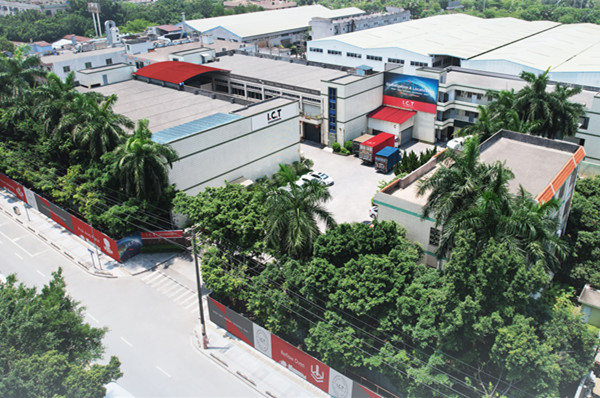
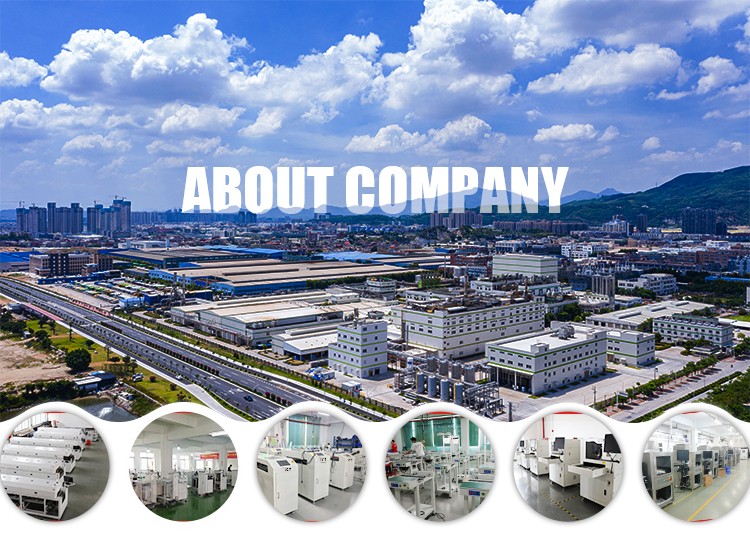
A factory visit is the most efficient hour you can spend in a supplier evaluation. You are not there to admire the showroom. You are there to answer one question: can this company deliver a line on schedule and to specification?
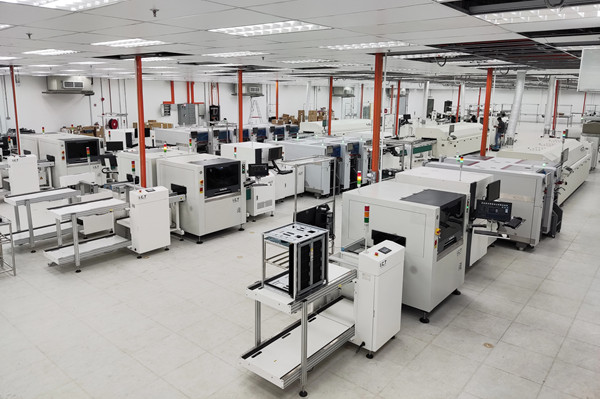
The production floor. Is it working, or staged? Are machines in assembly, and are there units in test running real processes? A supplier who builds machines will have an active floor with work in progress.
The test area. Ask how long a machine is tested before shipping, and what the test covers. A two-hour power-on test and a multi-day process test are very different commitments. Ask to see the test record for a recent shipment.
Incoming quality control. How are incoming components and sub-assemblies checked? Is there a documented process, or does the answer depend on the parts?
Calibration and measuring equipment. Are calibration certificates current? Who performs calibration, and how often?
Warehouse and parts stock. Look at the spare parts area. A well-run supplier keeps common wear parts in stock. An empty warehouse means every spare part becomes a special order.
Engineering and process lab. Is there a place where process work happens — stencil evaluation, profile development, sample builds? This is where your line's commissioning will actually be prepared.
How many lines do you build per month, and how has that changed in the last year?
What is your on-time delivery rate, and how do you measure it?
What happens when a machine fails final inspection?
Which parts of the machine are manufactured in-house and which are outsourced?
What is your current lead time, and what drives it?
Take notes, and compare the answers across suppliers. Inconsistency between what the sales team says and what the factory says is a warning sign you can only catch by asking both.
A factory visit is valuable, and it has limits worth understanding. It shows you manufacturing capability and organization. It does not show you project management, and it does not show you how the company behaves when something goes wrong.
So treat the visit as one input rather than as the decision. The behaviors that predict a good project — clear documentation, honest answers about limitations, fast response when you ask a hard question — are visible in the ordinary course of the evaluation. Watch how they handle your own requests. If a simple document takes a week to produce before the contract, expect the same pace afterwards.
Ask which quality management system the factory operates under. Many manufacturers work to ISO 9001 for quality management, and the certificate should be current and issued to the actual manufacturing site, not to a parent company. Ask for the certificate scope and the certificate number. It takes a minute to check and it tells you whether the process is systematic or improvised.

For buyers outside the supplier's home country, this is where most of the risk lives. The machines will probably work. The question is what happens when they do not.
Get the plan in writing, with named milestones.
How many engineers will attend the installation, and for how many days?
What does the supplier expect to be ready before they arrive — power, air, exhaust, floor, network?
Which products will be used to prove the line?
What acceptance criteria define a successful commissioning?
Who signs off, and against what document?
The last two matter most. Without written acceptance criteria, "commissioned" means whatever is convenient for both sides on the last day.
Training is often treated as a formality. It is not, because training is what turns equipment into capacity.
Ask how many days of training are included, who delivers it, and how many people can attend. Ask whether the training covers process as well as operation — profile development, feeder setup, maintenance, and troubleshooting. Ask whether sessions are recorded or documented, so that new employees can be trained without another visit.
A useful benchmark: at least two operators and one process engineer trained, with documented materials. If training is limited to "machine operation," you will be learning the process on your own, at your own cost.
Ask these in sequence, because the answers build on each other.
Where are your service engineers based?
How many are within a day's travel of my factory?
What is the contractual response time, and does it start when I report a fault or when someone arrives?
Is remote diagnosis available, and does it need special software?
Who pays travel, accommodation, and labor during and after warranty?
Do you have a local partner or distributor, and are their technicians trained by you?
The difference between a good and a weak answer is specificity. "We respond quickly" is not an answer. "Remote diagnosis within four hours, engineer on site within three working days, travel included during the warranty year" is an answer you can hold someone to.
Ask which languages the technical documentation is available in, and whether the training can be delivered in a language your team works in comfortably. This sounds minor until the day an alarm message appears in a language nobody on the night shift reads fluently.
Ask how a fault gets escalated. Who do you call, and what happens if that person is asleep?
Good suppliers have a defined escalation path: a first-line contact, a regional engineer, and a factory-level technical contact. They also have a way to get a response outside local business hours when a line is down. A stopped SMT line costs money by the hour, so a support agreement that only works during the supplier's business day is only half a support agreement.
Ask for that escalation path in writing, with names or roles. It costs a supplier nothing to provide it, and it tells you whether anyone has thought about the problem before you raised it.
A supplier relationship does not end at delivery. In many ways it starts there, and the terms you agree at purchase decide how the next five years feel.
Ask for a spare parts list with part numbers and prices, before you sign. Not a category list — an actual list of the items you will need to keep a line running.
Include the wear items: nozzles, belts, filters, sensors, feeder parts, heater elements, and at least one spare control board for critical functions. Ask which items the supplier recommends holding locally and which can be ordered on demand.
Two more questions matter. What is the lead time for a replacement control board or vision module? And is there a second source if the first is unavailable? If the answer to the second is no, you are accepting a single point of failure.
Warranty documents are often long and vague. Reduce them to a few testable statements.
What period is covered, from what start date?
What is covered and what is excluded — particularly consumables, damage, and third-party parts?
Does the warranty require the supplier's own consumables, and what happens if you use alternatives?
Are travel and labor included, or parts only?
What response time is promised?
If the warranty only covers parts and not travel, then the true cost of a warranty claim is your downtime plus the travel invoice. That is a budget item, not a legal formality.
Ask the supplier how your line could be upgraded in three years. Then ask which components would be reused.
A supplier with a long-term view will answer specifically, because they expect to still be working with you. A supplier focused only on the current order will give a vague answer that protects their current quotation.
This question also protects you. If you later want to add inspection, automation, or traceability, the answer determines whether you are upgrading or rebuilding. The strategic version of this question is covered in upgrade versus new line planning.
Ask one last question: "Who will be my contact in two years?"
Suppliers with stable teams give you a name. Suppliers with high turnover give you a department. When your contact changes every year, you re-explain your factory every year, and small misunderstandings accumulate.
It is worth saying plainly that the supplier relationship is itself a risk category. Everything else in this article — engineering, delivery, support, spares — is delivered through people. If those people change constantly, the capability leaves with them.
Two questions help you judge this. How long has the average sales engineer been with the company? And will the same project manager carry the project from contract to handover?
You are looking for stability, not for longevity alone. A supplier with ten years of staff tenure is telling you something about how they treat people, and companies that treat their engineers well tend to treat their customers the same way.

Every supplier claim beyond a certain point is unverifiable from a catalogue. This section is about verifying the ones that matter.
Ask for three customers, and specify the profiles you want:
A customer in your region, to test support reach.
A customer building products similar to yours, to test technical fit.
A customer who has owned the equipment for more than two years, to test durability.
Then ask the same five questions of each:
Would you buy from them again, and why?
How long did commissioning take compared to the plan?
When something broke, how fast was the response, and who paid?
Did the line reach expected output, and how long did that take?
What would you specify differently now?
The fifth question is the most valuable. Customers who have lived with a line for two years have a perspective nobody else can offer.
Visiting a supplier's reference factory is more informative than visiting the showroom. Watch the line in production. Look at how changeovers are handled, how material flows to the line, and whether the operators look confident.
If you cannot travel, ask for a live video call with the line running. Recorded videos are edited. Live calls are not.
Before you sign, ask which documents you will receive with the equipment. Expect at least: machine manuals, electrical and pneumatic drawings, calibration certificates, spare parts lists, training materials, and a commissioning report with actual measured data.
Ask for the commissioning report format in advance. It tells you what the supplier intends to measure, and therefore what they intend to be accountable for.
Quotations that arrive without a single question about your product.
Spare parts lists that are described but never sent.
Commissioning described in days but with no acceptance criteria.
Warranty terms that cover parts only, with travel excluded and no response time commitment.
No reference in your region, and no willingness to arrange a video call with one.
A different account manager every time you call.
None of these is conclusive on its own. Two or three together, on a project of this size, is a reason to slow down.
Not every red flag has the same weight, and buyers sometimes abandon otherwise good suppliers over cosmetic issues.
The flags that matter most are the ones that predict behavior after you have paid. An unverifiable reference, a missing spare parts list, vague warranty terms, and no named project manager all fall into that category, because they affect what happens during the years when you have no leverage.
The flags that matter less are presentation issues: a poorly formatted quotation, a slow email reply during a holiday, or a website that has not been updated. Notice them, but do not let them decide.
The judgment call is this: does the supplier's weakness affect the machine, or only the paperwork? Weakness in the paperwork is usually recoverable. Weakness in the machine, the process, or the support coverage is not.
If you have been through a purchase before, you will recognize most of these as the same errors described in mistakes to avoid during supplier selection. The mistakes are consistent across markets, which is why the checks are worth repeating even when you feel confident.

Score each supplier from 1 to 5 on every line. Add the weighted result at the end. Do this for at least three suppliers before you decide.
Criterion | Weight | What a 5 looks like | What a 1 looks like |
|---|---|---|---|
Product understanding | High | Asks detailed questions about your boards before quoting | Quotes without questions |
Line balancing capability | High | Provides a cycle-time balance sheet for your product mix | Lists machine speeds only |
Process engineering depth | High | Can discuss stencil design, profiles, and inspection strategy | Refers everything to a catalogue |
Manufacturing base | Medium | Active production floor, documented machine testing | Showroom only, no test records |
Commissioning plan | High | Written day-by-day plan with acceptance criteria | Verbal estimate |
Training scope | Medium | Multiple operators plus process engineer, documented | Machine operation only |
Local service presence | High | Engineers in region, contractual response time | Remote support only |
Spare parts availability | High | Itemized list with part numbers and lead times | Category description |
Warranty clarity | Medium | Parts, labor, and travel defined with response time | Vague or parts only |
Reference quality | High | Three references matching your profiles, verified | No references in your region |
Upgrade path | Medium | Specific reuse plan with components named | No answer |
Documentation | Medium | Full document list including measured commissioning data | Manuals only |
Total the weighted scores and rank the suppliers. Then do one more thing before deciding: identify the supplier with the strongest process engineering, even if it is not the highest total. In first-line projects, engineering depth outweighs almost everything else, because the problems you will actually face are process problems, not commercial ones.
Two useful reference points sit alongside this scorecard. Understanding what drives SMT line pricing helps you tell the difference between a lean quotation and an under-specified one. And if your products fall into a specific category, the requirements shift: SMT lines for consumer electronics put the emphasis on changeover speed and throughput, while power electronics PCBA lines put it on thermal capability and heavy-board handling.
Scores create false precision, and it is worth guarding against that.
Two suppliers can both score 3.8 and be entirely different partners. One is strong on engineering and weak on commercial terms. The other is the reverse. The total hides which risk you are accepting.
So after the totals are in, write one sentence for each supplier describing the single biggest risk you would be taking by choosing them. If that sentence makes you uncomfortable, the score is misleading you. Go with the sentence, not the number.
Also resist the temptation to average across the whole committee. Let engineering own the process and support criteria, let production own the commissioning and training criteria, and let finance own the commercial criteria. Then compare the results. Where the committee disagrees most is usually where the real risk sits, and that disagreement is worth resolving before the purchase order rather than after.
Five final checks, all of them quick.
Does the contract contain a scope table, not just a price?
Are commissioning acceptance criteria written down and measurable?
Is the spare parts list attached as an annex with part numbers?
Is the service response time contractual, with travel terms stated?
Is there a named project manager on the supplier side?
If the answer to any of those is no, you have a negotiation left to finish. Suppliers who are confident in their own delivery do not resist these items. They usually already have the documents ready, which is itself a useful signal.
When you are ready to compare configured options rather than catalogues, the practical starting point is to look at complete SMT production lines alongside a specific configured example, a cost-effective SMT PCB assembly production line. And if this is your first line and the whole process still feels like a lot of moving parts, work through the complete turnkey SMT production line guide first, then come back to the scorecard.
Look for four capabilities you can verify rather than claims you have to trust: process engineering depth, a manufacturing base you can inspect, documented commissioning with acceptance criteria, and service coverage reachable from your factory. Ask for a line balance sheet for your own product mix and a spare parts list with part numbers. If a supplier cannot produce both before you sign, reliability is an assumption rather than a demonstrated fact.
No. Scale helps with manufacturing capacity, spare parts availability, and financial stability, and those matter. But a large supplier may fit your project with a standard line rather than design one around your products. What you actually need is engineering attention proportional to your project's complexity. A mid-sized supplier with a strong process team often outperforms a large one that treats your project as a catalogue sale.
At least three, with different profiles: one in your region, one building similar products, and one that has owned the equipment for over two years. Ask each the same five questions, including what they would specify differently now. That last question tends to produce more useful information than the rest of the conversation combined.
A scope table listing every machine, peripheral, software item, training day, and spare part. Written commissioning acceptance criteria. A spare parts list with part numbers and lead times. A defined service response time with travel and labor terms. And a named project manager on the supplier side. Price alone tells you nothing about what you will receive.
Ask where the service engineers are based, how many are within a day's travel, what the contractual response time is, whether remote diagnosis is available, and who pays travel and labor. Then verify it with a reference customer in your region. A response-time promise backed by local engineers is a different commitment from the same words backed by an international flight schedule.
Terms vary, so the details matter more than the length. Confirm the covered period and start date, what is excluded, whether the supplier's own consumables are required, and whether travel and labor are included or only parts. If travel is excluded, cost out a realistic number of warranty claims per year and add it to your budget. That figure, not the warranty length, is the real value of the coverage.
Evaluating suppliers for a new SMT line?
Send us your product list and your current shortlist criteria. We will review the specification, flag where the scope is likely to be under-specified, and give you a line configuration you can score against the others.