English
 Views: 0 Author: Vinci Zhang Publish Time: 2026-09-17 Origin: Site


Here is the short version: a Manufacturing Execution System (MES) is the software layer that connects your SMT line to the rest of your business. It collects live data from every machine, shows you what is happening on the floor right now, and keeps a record of every board, every component reel, and every process setting.
Without it, your machines run fast but your information runs slow. With it, you can trace any board back to the reel it came from, catch mistakes before they turn into scrap, and stop guessing about your own production.
This article walks through what MES integration actually means on an SMT line. What your machines need to support it. What the project really involves day to day. And the mistakes that quietly sink most MES rollouts. No buzzwords, no sales pitch. Just the things worth knowing before you spend money.
Table of Contents
Every electronics factory runs on three layers of software, whether anyone planned it that way or not.
At the top sits the ERP. It handles purchase orders, customer orders, inventory value, and invoices. It knows what you promised and when you promised it.
At the bottom are the machines. The printer, the SPI, the pick-and-place machines, the reflow oven, the AOI. They do the real work and produce data all day long, whether anyone collects it or not.
MES sits in the middle. It takes orders from the ERP and turns them into instructions the machines can follow. Then it collects everything the machines produce — counts, defects, alarms, parameters — and turns that back into information people can actually use.
A simple way to put it: the ERP decides what to build. The machines decide how fast. The MES watches everything in between and keeps both sides honest.
Most factories already own pieces of this. The ERP has a production module. Every machine has its own software that tracks its own numbers. A quality engineer somewhere keeps a spreadsheet that gets updated when there is time. None of it talks to each other. So on any given day, the ERP says one thing, the machines say another, and the spreadsheet says a third.
That gap is exactly where MES lives. It is not another dashboard to glance at. It is the layer that makes the plan and the reality the same story.
It also helps to know who actually touches the system. Operators scan materials and see their station's tasks on a screen. Team leaders see the whole line: which orders are behind, which machines are down, and why. Quality engineers pull inspection trends from live data instead of last week's guesses. Managers get OEE and yield numbers without asking anyone to compile anything. One system, four very different views, all looking at the same truth.
Why does this matter more in SMT than in most industries? Because an SMT line is a data machine that also happens to make circuit boards. One line can place tens of thousands of components per hour. Those components come from hundreds of reels, loaded into dozens of feeder slots, running dozens of different programs. Changeovers happen daily, sometimes several times a day. Every reel, every slot, every program is a fresh chance for something to go quietly wrong.
MES exists to make sure nothing goes quietly wrong.
Ask anyone who has run an SMT line without a MES and you will hear the same stories. Different factories, same pain.
Start with the classic one. A customer calls. Boards from a shipment failed in the field, and the suspect part is a capacitor from a specific lot. Now the questions start. Which boards used that lot? Which of those boards shipped, and to whom? If answering that means digging through paper travelers, asking three people to check their spreadsheets, and hoping the machine logs were not overwritten, you will spend days on it. And you will never be fully sure the answer is complete. For a customer in automotive or medical, "we think we got them all" is not an answer anyone can sign.
Then there is solder paste. It has a clock on it. Thawed paste has a shelf life. Opened paste has a working life, usually a few hours, before it should be returned to cold storage or discarded. On most lines, somebody writes the time on the jar with a marker. When that somebody is busy fighting a fire two machines away, the paste keeps printing past its window. The defects show up downstream as cold joints and insufficient solder, and nobody connects them back to the jar.
Changeovers bring their own trouble. A new program loads. Feeders get swapped. One reel lands in the wrong slot, and the machine places the wrong component with total confidence for the next few hundred boards. The rule against this existed. It just lived in someone's head instead of in the system.
Alarms are their own quiet problem. Every machine logs its own errors, in its own format, on its own screen. A printer that keeps throwing stencil-cleaning alarms at 2 a.m. will say so only to the printer. By the time the morning shift hears about it, the fix costs a shift of output instead of a ten-minute adjustment.
And every morning, somebody builds the daily report by hand. Machine counters from here. Inspection results from there. Downtime from a whiteboard. Twenty minutes of copy and paste, every single day, with numbers that never quite agree with each other.
None of these are machine problems. The machines are fine. The people are trying hard. What is missing is one trusted flow of information that connects orders, materials, machines, and results. That is the job of a MES.
This is the part people find mysterious, so let us make it plain. MES talks to machines through defined communication protocols. Each protocol is basically an agreed language. Some are old, some are new, and most modern SMT machines speak more than one.
The ones you will hear about most:
SMEMA is the oldest and most limited. It passes simple board-present and board-absent signals between machines so conveyors keep boards moving. It carries no data about the board, the program, or the process. A line wired only with SMEMA can run, but it cannot remember anything.
SECS/GEM came from the semiconductor industry, and SMT equipment makers adopted it widely. It lets a host system read machine status, alarms, counters, and process data, and send commands back. Most mid-range and high-end machines support some version of it.
OPC UA is a modern industrial communication standard. It is platform-independent and secure, and it is becoming the default on newer equipment across many industries, SMT included.
IPC-HERMES-9852 handles the conveyor layer. Instead of a bare SMEMA signal, boards carry their own data as they move down the line, so every machine knows exactly which board it just received.
IPC-CFX is the newer data standard from IPC, now the Global Electronics Association: a plug-and-play model where machines publish events as they happen, in a common format. The goal is that a line built from mixed vendors can share data without custom integration work for every single machine.
Different machines contribute different data to the MES. Roughly speaking:
Machine | Typical data it feeds into the MES |
|---|---|
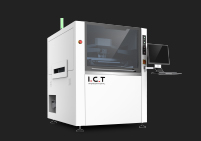
Solder paste printer | Program name, print parameters, paste batch and open time, print counts |
SPI | Paste height and volume results, defect flags per board |
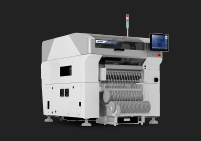
Pick and place | Feeder slot assignments, reel IDs, placement counts, nozzle and error data |
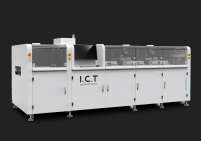
Reflow oven | Profile ID, zone temperatures, conveyor speed, alarm history |
AOI | Board ID, defect types and locations, inspection images |
Two practical notes on the engineering side. First, machines do not talk to the MES over the office Wi-Fi. You need a planned machine network, sensible segmentation from the office environment, and a server or cloud location to receive the data. None of this is exotic. It just needs to be designed instead of improvised.
Second, interfaces differ in how much detail they deliver. Two machines can both be "connected" while one sends full per-board data and the other sends hourly counts. When you compare equipment, ask exactly what data each interface exposes — not just whether an interface exists.
This is also why machine selection matters so much. Equipment bought in the last several years almost always offers at least one data-capable interface. Older machines may offer nothing beyond SMEMA, which limits what the MES can ever learn from them. So when you evaluate a complete SMT production line, treat the communication interfaces with the same seriousness as placement speed.
Vendors love feature lists. Strip the brochures away, and a MES on an SMT line does five jobs.
Job one: dispatching work. The ERP says "build 3,000 of board A this week." The MES breaks that into instructions the line understands: which program to load, which stencil, which feeders, in what sequence. Operators stop interpreting work orders, and the line starts each job with the right setup already in place.
Job two: preventing mistakes. This is where a MES earns its keep fastest. It checks that the reel in slot 12 is actually the part the program expects in slot 12. It tracks solder paste life and warns before the window closes. It can require a first-article confirmation before full production runs. None of these checks are exciting. All of them stop expensive mistakes.
Job three: traceability. Every board gets an identity, usually a barcode or a laser mark, early in the line. From that point on, the MES records what happened to it: which reels, which program version, which oven profile, which inspection results. When a customer asks a hard question later, you answer it in minutes instead of days. Section 5 goes deeper on this, because it is usually the first thing buyers ask about.
Job four: closing the quality loop. SPI and AOI do not just sort good boards from bad. Their results flow back into the MES, where trends become visible. Paste volume drifting down over a shift. A particular feeder producing more rejects than its neighbors. Without a MES, that information exists but sits scattered across five screens. With one, the line tells you it has a problem before the problem gets expensive.
Job five: honest numbers. OEE, downtime reasons, yield, output per shift. The MES records these automatically, from machine data instead of from memory. The daily report stops being twenty minutes of copy-paste and becomes something that is already done when you walk in.
Different vendors package these differently, and many add scheduling, maintenance, or energy modules on top. That is fine. But if a system cannot do these five jobs solidly on your line, the extras will not save it.
Mention MES to a room of SMT factory owners and most features get polite nods. Traceability gets questions. That is not an accident. For a growing share of customers, traceability is not a nice-to-have. It is written into the contract.
Automotive customers, working under quality systems like IATF 16949, expect their suppliers to trace any board back to its materials and process conditions. Medical device makers face similar expectations. Industrial and telecom customers increasingly ask for the same. If you want those customers, you need to speak traceability fluently.
Traceability comes in two levels, and the difference matters for your budget.
Lot and date-code level is the common baseline. The MES records which component lots were used on each board, tied to a board ID. When a component lot turns out to be defective, you can list every board that touched it. For most customers and most audits, this level answers the question.
Component-level traceability goes further. It records which individual component, from which reel position, was placed at which location on each specific board. This requires the placement machines to report placement data board by board, and it creates a much heavier data flow. Some high-reliability customers ask for it. Most do not. Build for what your customers actually require, and upgrade later if that changes.
Here is what good traceability looks like in practice. A customer reports a failure. The board serial number goes into the MES. Within minutes you know: the reel lot used, the machine that placed it, the oven profile that cooked it, and the AOI results from that day. You can list the other affected boards and where they shipped, before the customer finishes their own investigation. Do that twice, and you change how a customer sees your factory.
One honest warning: traceability is only as good as the data going in. If operators bypass scans when they are in a hurry, or reels get merged and relabeled without updating the system, the MES will faithfully record fiction. Discipline at the scanner matters as much as the software. Plan for that from day one.
Here is the part most people underestimate. MES integration is not "install software, connect cables, done." A real project has three layers of work, and the machines are usually the easy part.
Layer one: machine connectivity. Assign the machines to the network, enable their interfaces, configure the connections. On a modern line with SECS/GEM or OPC UA support, this is straightforward engineering. On a mixed line with older machines, it means gateways, and it means accepting that some machines will report less than others.
Layer two: data and process. This is the real work, and it is not glamorous. Every component needs a consistent part number. Every reel needs a scannable identity. Every batch of boards needs a naming rule. The stencil library, the program versions, the oven profiles — all of it needs one owner and one version of the truth. If your master data is messy today, the MES will not fix it. It will simply make the mess visible and searchable. The factories that succeed clean up their data before or during the project, not after.
Layer three: people. Operators have to scan things, even when a customer visit is in ten minutes. Team leaders have to trust the dashboard over the whiteboard. IT has to maintain the server and the backups. If the daily workflow fights the software, operators will find workarounds, and workarounds kill traceability. Good projects involve the operators early and shape the steps around how the line actually works.
A typical project, at realistic speed, looks like this: two to four weeks of preparation — interface inventory, data rules, workflow design — then a few weeks of connection and configuration, then a month or more of running the new system in parallel with the old way before you trust it fully. Rushing that parallel period is how factories end up distrusting their own system during the worst production week of the year.
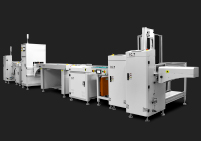
One more thing worth saying: new lines and old lines are different projects. When you are planning a new line, MES compatibility belongs in the equipment specification from the start, right next to speed and footprint. A turnkey SMT full line production setup with open interfaces saves you a round of retrofitting later. Retrofitting an existing line is entirely possible — plenty of factories do it — but go in expecting uneven data depth across machine generations, and sequence the work realistically.
Plenty of MES projects stall, and it is rarely because the software was bad. It is because of how the rollout was run. These five mistakes cover most of the failures.
Mistake one: buying a big screen instead of a system. Some factories use the MES as a wall dashboard and nothing more. The numbers look nice, visitors get impressed, and nothing changes. The value is not in watching the line. It is in the checks, the alarms, and the records the system enforces. Use the enforcement, or do not bother buying it.
Mistake two: going big bang. Rolling out to every line at once maximizes risk and stress. The better pattern is one line, done properly: connect the machines, clean the data for that line, train its people, run for a month, fix what breaks. Then copy the template to the next line. Slow is smooth, and smooth is fast.
Mistake three: nobody owns the master data. Three months in, a component exists under two part numbers, a program version is out of date on one machine, and suddenly the system is "lying." It is not lying. It is faithfully reporting inconsistent inputs. Assign ownership for part numbers, programs, and recipes before go-live, not after the first dispute.
Mistake four: designing the floor workflow on a whiteboard. If scanning a reel takes four taps and a login while the line is starving for material, operators will skip it. Sit with the operators. Count their steps. Make the right way the fast way, because on a live line, fast wins every time.
Mistake five: picking software before checking machine compatibility. A MES is only as good as the data it can pull. Before signing anything, get a concrete answer on which interfaces your machines support and what data each one delivers. An inexpensive system that connects deeply beats an expensive one that connects to nothing.
If you are considering MES integration, here is a preparation list you can start this month. None of it requires buying software.
1. Inventory your machine interfaces. Walk the line and write down what each machine supports: SECS/GEM, OPC UA, HERMES, CFX, or just SMEMA. Ask the supplier for the interface specification sheet if you are not sure. This single document tells you what your MES project will cost and what it can achieve.
2. Set your traceability target. Decide, based on your customers' requirements, whether you need lot-level or component-level traceability. Do not buy component-level complexity for customers who only need lot-level assurance.
3. Clean up part numbers. One part, one number, everywhere — ERP, programs, feeder labels. This is tedious work, and it is the highest-leverage preparation that exists.
4. Standardize the naming rules. Boards, batches, stencils, programs, oven profiles. Write the rules on one page. Everyone who creates data follows the same page.
5. Check your network and IT basics. Machines need a network path to the MES server, with sensible separation between the machine network and the office. Plan the server or cloud setup, the backups, and who maintains them.
6. Name your owners. One person from production, one from engineering or IT. A MES project without named owners becomes everyone's part-time job and nobody's priority.
And if you are not integrating yet but planning a new line or an expansion, put MES interfaces in the equipment requirements now. That one paragraph in the purchase specification is much cheaper than a retrofit later. If you are building an EMS operation and weighing line options, it is worth reading how to choose an SMT line for an EMS factory before you lock the equipment list. And if you are sizing the line itself, the guide to SMT production line configuration for different factory sizes will help you match the machine list to your actual volumes instead of to a brochure.
No, but most modern machines do. Equipment produced in recent years almost always offers at least one data-capable interface, such as SECS/GEM, OPC UA, or IPC-CFX. Older machines, especially those built when SMEMA was the only standard, may offer no data interface at all. Before you buy any machine, ask the supplier for the interface specification and confirm which protocols are supported and what data they deliver. It is a five-minute question that protects the whole value of your MES project.
For one line with modern, interface-equipped machines, expect several weeks to a few months. The machine connections themselves are rarely the bottleneck. The time goes into data preparation, process standardization, and training. A full multi-line factory rollout typically takes longer, often six months to a year, depending on how clean your master data is at the start. Anyone promising a precise timeline before looking at your machines and your data is guessing.
Yes, and many factories do. The practical approach is a gateway or data collection box that reads whatever the machine can offer and passes it upward. The limitation is depth: an older machine may report counts and alarms but not per-board component data. A common pattern in mixed factories is to run full traceability on newer lines and basic monitoring on older ones, then upgrade as equipment gets replaced. Set expectations accordingly and the project will not disappoint you.
No, not when it is set up properly. Data collection runs in the background, asynchronous to the machine cycle. The MES watches; it does not stand in the conveyor path. What does slow production down is a clumsy rollout: scan steps that take too long, terminals in the wrong places, or rules written by people who never stood at a feeder rack. Design the workflow around the operators, and the line runs at full speed with better data than it has ever had.
No, and the confusion causes real problems. The ERP manages the business: orders, purchasing, inventory value, finance. The MES manages the shop floor in real time: which machine is running which job, which reels were used on which boards, which alarms are open right now. Many factories start with an ERP and later realize the factory itself is a blind spot. The two systems are partners. The ERP plans, the MES executes and reports back, and neither works well pretending to be the other.
That is the honest picture of MES integration on an SMT line: real work, real discipline, and a real payoff in traceability, quality, and calm mornings. If you are planning a new line or upgrading an existing one, talk to your equipment supplier about data interfaces as early as you talk about speed. The I.C.T team builds and supports complete SMT lines for customers in more than 70 countries, and we are happy to review your line setup and MES plans together. The earlier the machines and the software are designed to talk to each other, the easier everything after that becomes.