English
Views: 0 Author: Site Editor Publish Time: 2026-05-17 Origin: Site
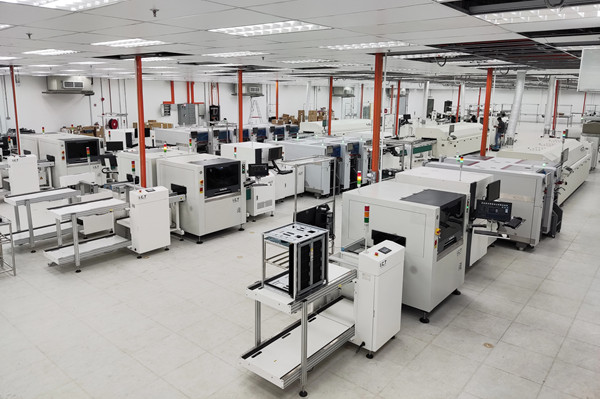
You get the most value when you automate your pcba line where speed and quality are important. MES helps your automation by giving real-time updates and making processes better. Industry data shows that real-time data helps stop delays and lowers the number of bad products.
Benefit | Description |
|---|---|
Minimizes Production Delays | Real-time data finds problems before they stop work. |
Reduces Defective Products | Automated quality checks lower mistakes made by people. |
Optimizes Resource Allocation | Makes sure machines and workers are used well. |
MES helps you make smarter choices and makes work better. You can use resources better and get more good products by always improving your process.
Automate your PCBA line where you need speed and good quality. This helps stop delays and mistakes.
Use real-time data from MES to make better choices. It also helps you use resources in the best way.
Set up automated alerts for inventory and production. This helps you fix problems fast and keep work moving.
Connect MES with your other systems for better data management. This also helps you track things and follow rules for quality.
Use AI and advanced analytics in MES to find problems before they happen. This makes things more accurate and cuts down on waste.
You can automate your pcba line at the order and workflow stage. This helps you finish jobs faster and with fewer mistakes. Automated systems make order entry, checking, and job routing easier. They remove extra steps and cut down on errors made by people. You get all your order information in one place. Automated alerts tell you if stock is low or if there are delays. This lets you fix problems quickly. Quality checks during production stop defects from getting worse. Lean manufacturing helps you make products faster and keeps things running smoothly.
Evidence Type | Description |
|---|---|
Automated Alerts | Alerts for low stock and delays help you act fast. |
In-Process Quality | Checks during production stop defects and save time. |
Lean Manufacturing | Simple workflows and short cycles speed up production. |
Risk Assessment | Finding risks early helps you avoid delays and problems. |
Software solutions can automate your pcba line to make work easier. These tools check orders for mistakes and speed up the process.
Automating material handling and inventory is important for making lots of pcba boards. Automatic conveyor systems move materials between stages quickly. This lowers labor costs and makes the workplace safer. AI, IoT, and big data give you real-time tracking and help you manage materials better. You get more efficiency, better accuracy, safer work, and real-time data.
Automatic conveyor systems move boards gently so they don’t get damaged. Real-time data helps you make good choices about inventory and materials. This keeps downtime low and your production line working well.
Impact | Description |
|---|---|
Inventory Accuracy | Fewer mistakes in picking items means higher accuracy. |
Production Downtime | Faster material movement cuts labor needs and downtime. |
Operational Insights | Real-time data helps you make smart decisions about materials. |
You can automate your pcba line with scheduling and line balancing tools. These tools help you plan tasks and supply materials better. Simulation tools and digital twin technology let you test setups without stopping your real line. Flexible automation, like robots and automated feeders, helps you change products quickly.
Genetic-Artificial Bee Colony Algorithm: Makes task sequences better for PCB assembly.
Mixed Integer Planning Model: Balances materials to boost productivity.
Integrated Research: Helps plan feeding and task assignments together.
Method | Description |
|---|---|
Simulation Tools | Virtual models let you test setups without stopping machines. |
Digital Twin Technology | Lets you watch and improve production in real time. |
Flexible Automation | Robots and feeders help you change products fast. |
Genetic-Artificial Bee Colony | Makes task and material paths better for custom lines. |
Mixed Integer Planning Model | Balances materials and tasks to boost productivity. |
Robots load and unload boards, and conveyors keep things moving. Automated feeders let you swap parts quickly. Software-defined lines let you update programs on all machines at once.
Evidence Description | Impact on Throughput and Resource Utilization |
|---|---|
Automated scheduling saves time and cuts idle time. | Makes work more efficient and boosts productivity. |
The system updates schedules when things change. | Keeps production going and lowers downtime. |
Focus on flow and throughput for the whole line. | Boosts productivity without needing more resources. |
Schedules match with planning for limited capacity. | Helps you deliver on time and meet customer needs. |
You should automate your pcba line for quality control and inspection. This lowers defect rates and helps you follow rules. Automated inspection systems, like AOI and functional testing, watch production all the time. Real-time defect detection lets you fix problems right away. Data insights help you improve how you make things and keep quality high.
Automation lets you watch production all the time.
Real-time defect detection helps you fix problems fast.
Data insights help you make better products.
AI boosts productivity and cuts waste, lowering defects.
Automatic conveyor systems move boards through each stage without stopping. This makes sure every board gets checked the same way and keeps quality steady.
Real-time monitoring is a key place to automate your pcba line. Sensors collect data on voltage, current, and temperature. This helps keep the grid stable and products good. Continuous data analysis finds problems fast and cuts downtime and repair costs. PCBA systems with cameras check boards closely at every stage.
Real-time monitoring with sensors collects important data.
Continuous analysis finds problems quickly and cuts downtime.
PCBA systems spot defects early, saving time and materials.
Advanced cameras help check boards with high precision.
Automation uses feedback to adjust operations in real time.
IIoT makes PCB assembly more efficient.
Automatic conveyor systems link each stage and help collect data. Real-time data lets you fix issues fast and track every board. Digital traceability systems record details like solder paste batch numbers and oven temperatures. This helps you see how each board was made and solve problems quickly.
Measurable Improvement | Description |
|---|---|
Improved Throughput | Continuous flow cuts idle time between machines. |
Reduced Damage Due to Handling | Boards are handled gently without people touching them. |
Consistent Quality | Good alignment and speed keep quality the same. |
Smart Lines Integration | MES tracks production in real time. |
Automating these points with conveyor systems gives you better throughput, accuracy, and traceability across your whole production line.
You need a strong link between your machines and digital tools. The manufacturing execution system is like a bridge. It connects machines and software for smooth production. MES links each part of your PCBA line, from solder paste printing to inspection. Real-time data helps your line run well and keeps quality high. You can automate jobs and track every board as it moves. MES middleware and master data management help you add new machines and update your line when tech changes.
Tip: Plan your integration early. Old systems and tricky data can slow you down. Make sure your team supports automation for the best results.
Old systems can block integration.
Data can get hard to manage.
Your team must agree on automation goals.
A clear plan helps you win.
MES gives you control over your data and traceability. You can track every part, process, and output in your line. This makes a full history for each board. It helps you follow rules and fix problems faster. MES makes your workflow simple and automates jobs. You get real-time feedback. You can see where materials go and manage inventory to stop delays.
Set clear goals and KPIs.
Check your current process.
Connect MES with your other systems.
Make data collection the same everywhere.
Train your team well.
Make changes step by step.
Keep support and updates strong.
Use analytics to keep improving.
MES helps you control your process and cut errors. You can manage material flow and collect real-time data. Each step is the same every time. This lowers mistakes and gives you good data for managing production. MES features like exception workflows, defect tracking, and document management keep your line steady and efficient.
Feature | Benefit |
|---|---|
Exception Workflows | Repeatable steps and steady work |
Defect Tracking | Fix problems faster |
Sampling Strategies | Better control and lower costs |
Document Management | Fewer mistakes and less waste |
Electronic Signatures | Strong rule-following and control |
You can make your MES better with AI and advanced analytics. AI predicts when machines might break and helps you plan repairs. It removes false alarms in inspection, so you check fewer boards by hand. With MES and AI, you get better accuracy, less downtime, and more good boards. You can stop problems before they start instead of fixing them later. Many companies find up to 95% accuracy in spotting quality issues and a 30% drop in scrap rates. MES with AI helps you improve quality, safety, and efficiency.
MES automation helps you work faster and spend less money. It takes away jobs that people used to do by hand. You do not need as many workers. MES stops bad batches from being made. This saves money on materials and waste. You can use your machines and people in smarter ways. You get more products with less work.
Category | Areas of Opportunity | Cost Estimate Methodology |
|---|---|---|
Labor needs | MES cuts down on manual work and checks. | Use value-stream mapping to find cost savings. |
Materials conformance | Fewer bad batches means less waste and lower costs. | Look at nonconformances and figure out the costs. |
Production capacity | MES helps you make more by speeding up cycles. | Check cost savings and investments from MES improvements. |
Waste disposal | Less waste comes from fewer bad materials. | Add up the cost of getting rid of extra waste. |
Resource efficiencies | More products and less work per unit. | Find labor cost cuts from fewer staff and overtime. |
MES helps you match what you make to what people want. You do not make too much or too little. This keeps costs low and uses resources well.
Tip: MES lets you launch new products quickly and keeps costs down.
MES makes it simple to keep high quality and follow rules. You can check if workers have the right certifications. You get alerts when someone needs to renew. Digital instructions show your team each step. This helps everyone do the job right. MES checks quality standards in real time. It lowers mistakes and keeps records neat.
MES checks operator certifications for compliance.
Automated alerts stop missed renewals.
Digital instructions help training and accuracy.
MES keeps quality standards and collects data.
Electronic batch records cut down on human error.
Compliance Standard | Description |
|---|---|
IPC-A-610 | Sets rules for solder joints and where parts go. |
ISO 9001 | Makes sure quality control is strong at every stage. |
MES automation shows its power in real companies. A robotics startup made products 40% lighter. They grew from 10 to 5,000 units a month. An industrial controller company had zero failures in two years. They won a big contract. A medical device company sent out 2,000 units in three weeks during high demand.
Case Study | Impact on PCBA Line Performance |
|---|---|
Robotics Startup | Made products 40% lighter, grew from 10 to 5,000 units/month |
Industrial Controller | Had zero failures in two years, won a big contract |
Medical Devices | Sent 2,000 units in 3 weeks, kept quality high during demand surge |
You should watch key metrics, use data to get better, and focus on quality. MES helps you react fast to market changes and keeps your line running well.
You can use MES to automate your PCBA line by doing these things:
Keep track of materials so you know where everything is. Make sure you get new materials on time.
Use one recipe system to control versions and set up machines.
Check BOMs to make sure all parts are ready before you start.
MES helps you work faster, make better products, and spend less money. You get more control and can see where things go. Pick the steps that help your line the most. Look at how your line works now and plan what to automate next. Talk to experts who know MES to get the best results.
You should start with material handling and order management. These areas give you quick wins in speed and accuracy. Automation here helps you see results fast.
MES tracks every step in your process. You get real-time alerts for defects. This helps you fix problems before they grow. MES also keeps records for audits.
Yes, you can add automation to older machines. You may need adapters or middleware. MES can help connect old and new systems for smooth data flow.
MES collects data like machine status, operator actions, material usage, and test results. You can use this data to improve your process and trace every board.