English
Views: 0 Author: Elsa Long Publish Time: 2026-11-02 Origin: Site


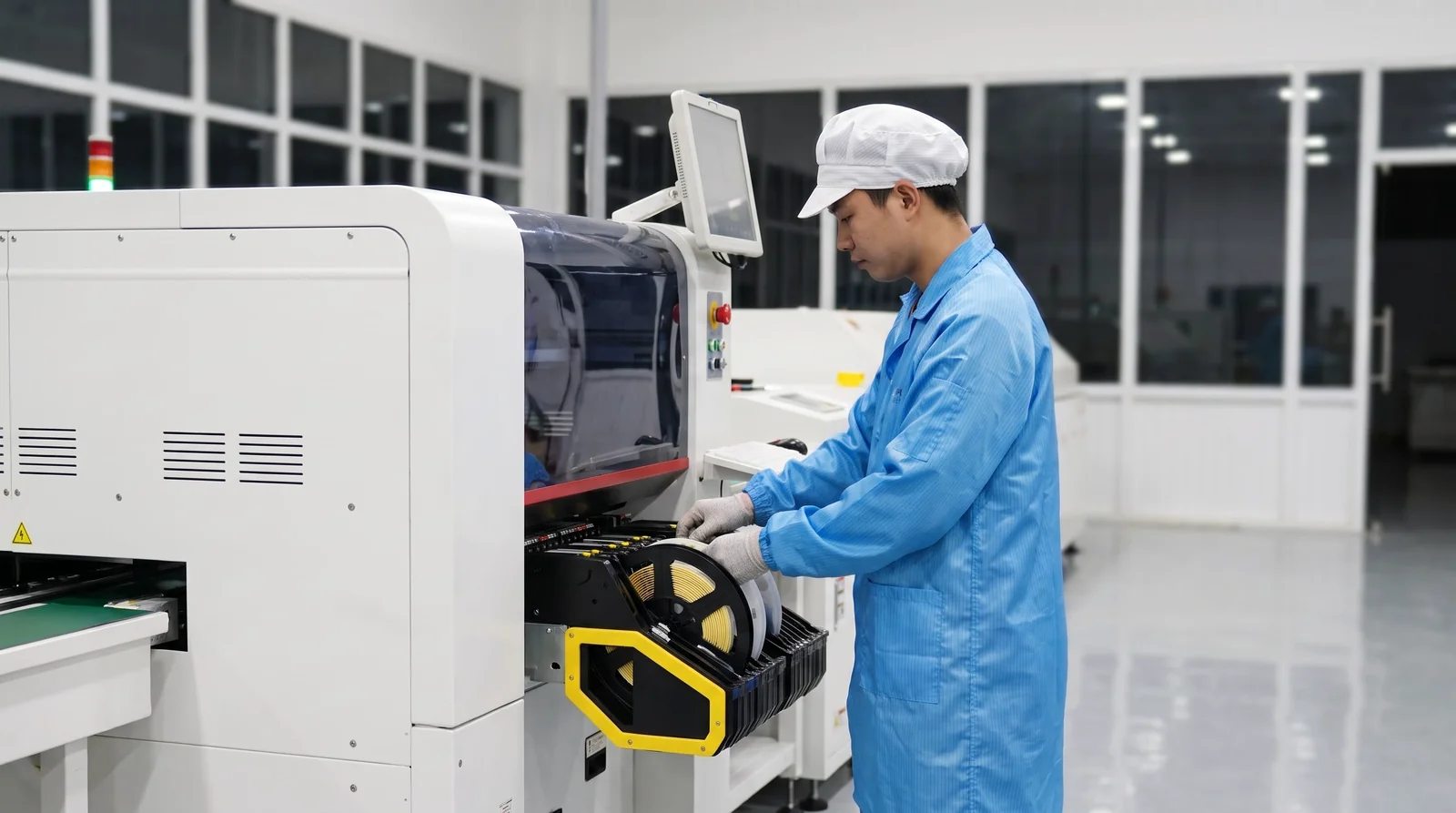
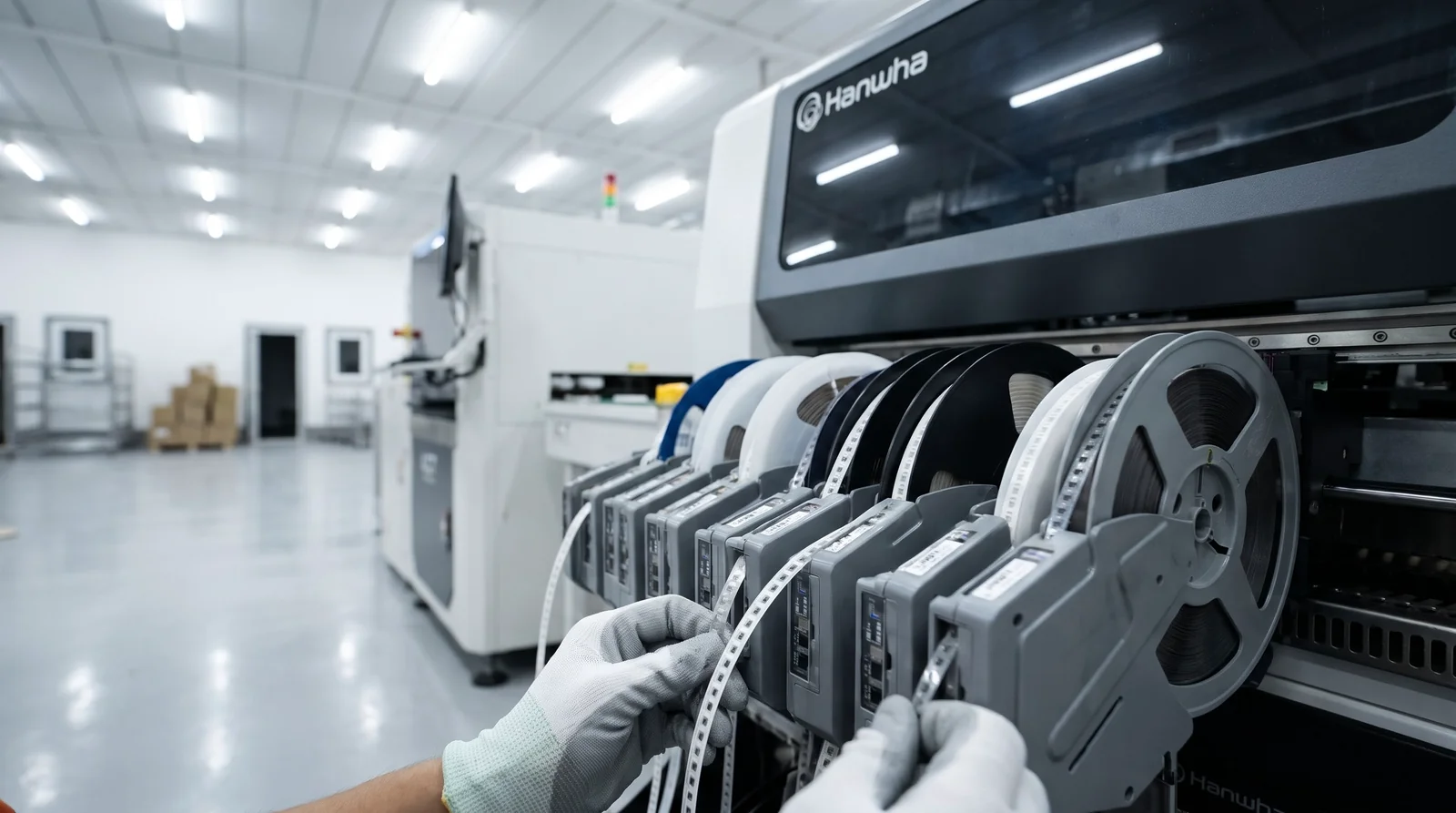
Illustrative SMT equipment scene with a technician beside a placement machine and reel feeders
Use a Hanwha SMT machine installation, programming, and operator training checklist to control four separate release decisions: the site is ready, the machine is installed to its approved configuration, the product program and connected line have passed defined checks, and assigned personnel can perform their roles. A Hanwha pick-and-place machine for an SMT production line can be physically in place yet remain unready for production if utility conditions, board data, feeder mapping, line handshakes, or operator escalation paths are unresolved.
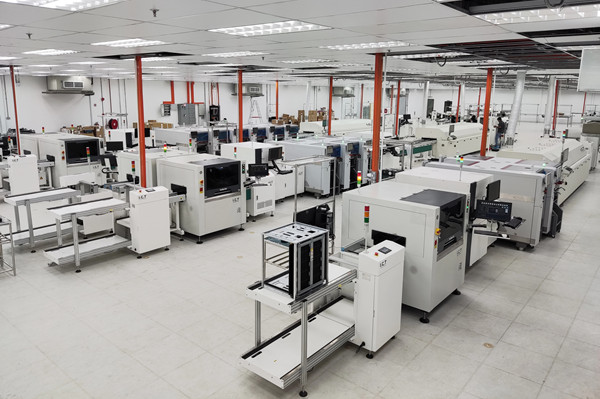
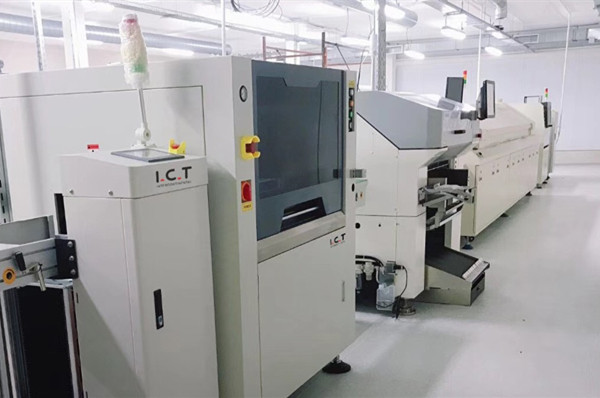
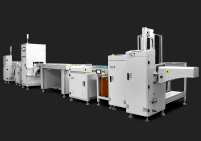
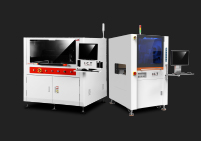
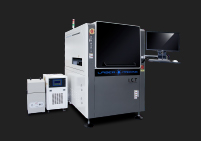
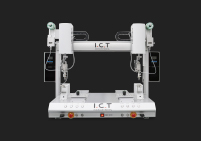
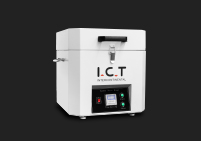
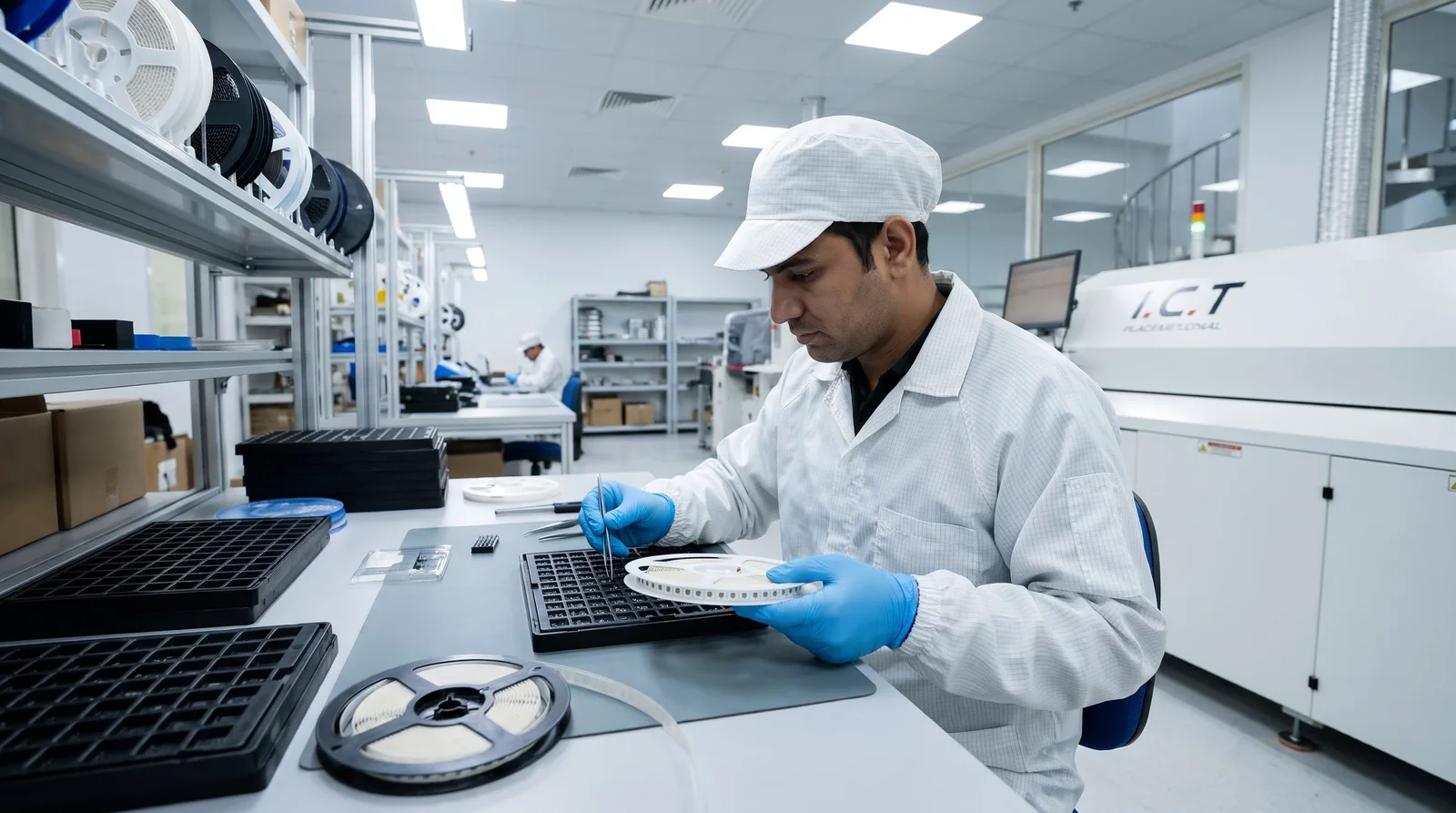
This guide is a project checklist, not a substitute for the manual, purchase specification, approved site design, or service scope for the actual machine. Model, options, software, utilities, floor conditions, interfaces, product data, and acceptance criteria vary. Confirm them against controlled project documents. The images are illustrative equipment and material-preparation scenes, not verified customer installation or training records.
Before scheduling rigging or programming, identify what is changing. A new machine, a replacement in an existing line, a factory relocation, and an additional placement station have different dependencies. A replacement may inherit a known line interface but still require new data, safety review, and first-product approval. A relocation adds transport condition and configuration recovery risks. An added station requires capacity and handshake planning across neighboring processes.
Compare the order and technical offer with the equipment arriving on site. Record the exact model and options, installed head configuration, software and licenses, feeder and nozzle scope, carts, spare parts, installation labor, commissioning boundaries, training deliverables, and documents due at handover. A HM520 placement system reference may help identify the intended product family in a procurement discussion, but a listing alone does not establish the supplied machine's options, condition, software, or service scope. Resolve such details against the signed order and machine records.
Assign a named owner to site readiness, receipt, installation, software backup, product data, line integration, process approval, training, and release. Clarify who supplies lifting resources, utility drops, test boards, materials, and qualified personnel. If supplier commissioning excludes program creation or multi-shift training, put that boundary in the plan before delivery.
Separate at least five states: delivered and inspected; mechanically positioned; utilities and protections checked; configured and functionally tested; product and process accepted for production. A passed gate needs evidence and an accountable signoff. A machine may advance through setup activities while remaining restricted from production. Open issues should identify the affected configuration, risk, owner, due date, and the condition required to close them.
Use a hold point when a missing document, unresolved safety issue, uncontrolled program, or failed quality check could invalidate subsequent work. Do not let schedule pressure convert a planned exception into an undocumented acceptance. Buyers should clarify whether supplier signoff confirms installation only or includes the customer's process qualification.
Site readiness is an engineering check, not a visual impression that there is enough floor space. The facilities, EHS, production, IT, rigging, and supplier teams should use the actual equipment layout and project documents to verify the route from unloading to final position and the conditions needed to operate and service the machine.
Walk the entire delivery route. Check door and corridor clearances, turns, floor transitions, unloading access, staging space, overhead obstructions, and the planned lifting method. Confirm that the people and equipment assigned to rigging are qualified for the load and route. Do not infer the machine's weight or lifting points from a similar model photograph; use the supplied transport documentation.
At the location, check the approved layout, adjacent equipment, operator and service access, exits, material movement, and floor or foundation requirements. Validate floor loading and anchoring with the site engineer using machine documents and building information. Do not invent a leveling tolerance or assume a level floor is an adequate foundation.
When comparing candidate configurations, evaluate the actual board mix, component range, changeover pattern, available floor area, utility capacity, service access, and operator movement together. The machine selection checks for site fit and application needs can help structure that review. Confirm each decision against the delivered specification; a general selection article does not prove that a particular machine fits the site's layout or process.
Create a point-by-point readiness record for electrical supply, protective earth, compressed air if required, network, exhaust or extraction if specified, and other configured options. Record the source document, measured value and unit where applicable, test instrument, test condition, acceptance limit, and responsible person. Exact ratings and limits must come from the configured machine documentation and approved site engineering. A product family name is not a utility specification.
Discuss environmental conditions, temperature, humidity, dust, vibration, ESD controls, and lighting where they apply to the machine or product process. State the measurement method and source limit rather than recording “environment okay.” Confirm network addressing, access approvals, backup destination, time synchronization, and cybersecurity review with IT before connecting the equipment to the production network.
Agree on the installation window, line shutdown boundary, material quarantine, test-board availability, and restoration plan. Back up relevant programs and configuration before removing or replacing existing equipment. Identify whether other stations can continue operating safely during work and define how WIP will be controlled. For a tight schedule, compare a staged delivery, weekend installation, or pretested offline data preparation by their resource and recovery risks. Do not compress rigging, electrical review, or safety signoff to compensate for late planning.
At receipt, compare the crate and machine identifiers with the shipping documents, purchase scope, and planned configuration. Photograph visible shipping damage, broken indicators, missing packages, or moisture concerns before moving or discarding packaging. Record serial numbers and preserve claims or supplier notifications through the agreed process. Keep unresolved transport damage visible in the project punch list.
Use the designated lifting points and handling method in the applicable transport instructions. Qualified personnel should control the move, maintain exclusion zones, and protect floors, utilities, and neighboring production equipment. Do not push or lift on panels, conveyors, covers, or other components that are not identified for handling. After positioning, verify machine identity, orientation, access, service envelope, and line alignment against the accepted layout.
If the machine documentation requires leveling, anchoring, or stabilization, record the prescribed method, instrument, conditions, and results. Check that covers, guards, access panels, emergency devices, and interlocks are present and undamaged. Establish an installation hold point if the machine is visibly damaged, the required documentation is missing, or the site conditions do not match the approved plan.
Have authorized personnel connect each service using the correct site isolation and commissioning procedure. Confirm identifiers, ratings, protective earth, hose or cable routing, strain relief, and connection points against the relevant drawings and machine instructions. Inspect for leaks or abnormal indications only by the prescribed method. Never energize equipment because a connector fits or because a neighboring machine uses a similar supply.
Before motion, review the required safety checks, guards, interlocks, emergency stops, and access controls. Perform controlled startup in the sequence defined for that equipment. Record warnings, software versions, configured options, and any deviations. A no-load movement check demonstrates only the functions exercised by that check; it does not qualify product placement or production quality.
A DECAN F2 machine listing can serve as a product-identification reference while reviewing the project scope. Confirm the delivered serial number, actual options, software, and documentation before using any model-specific installation or capability assumption. An online product page is not a commissioning record and cannot replace site measurements, supplier signoff, or the controlled acceptance checklist.
Program readiness begins with controlled inputs. A machine can execute a technically valid file that still represents the wrong board revision, orientation, component library, feeder assignment, or process authorization. Establish a single source of truth and a review path before loading a production job.
Record the machine software version, options, user roles, license state, date and time, and relevant configuration. Confirm who may create, edit, review, release, and restore programs. Use named accounts and site access controls where available; do not share a maintainer account among shifts. Save a baseline backup before configuration changes and document the approved storage location, retention rule, and recovery owner.
If the controller, network, or recipe storage is unavailable, follow a defined recovery plan rather than loading an untracked USB copy. Record the restored version and verify the machine configuration before production. Test that backups can be identified and restored under an authorized procedure; merely creating a file does not prove recoverability.
For each product, verify the approved PCB data source and revision, board dimensions, panelization, board side, origin, fiducials, component coordinates, reference designators, rotations, polarity, package definitions, and height or other fields required by the configured process. Confirm that component-library definitions match the actual package and customer-approved BOM. Resolve alternative parts explicitly; do not silently substitute a library entry because its name looks similar.
Review coordinate transforms and orientation using known reference points. Check that panel arrays, rails, tooling features, and board-side conventions are interpreted consistently from CAD through the machine recipe. Use an offline viewer or simulation to catch obvious issues when available, but document that these checks do not replace verification on the target machine and board.
Build the material map from the released BOM and setup sheet. Confirm component identity, package, tape width and pitch, reel orientation, feeder type, machine slot, nozzle selection, and quantity. Independently verify high-risk items such as polarized parts, visually similar components, repeated references, and substitutions. Scan or cross-check identifiers if the local process supports it.
Do not assume that feeders or nozzles are interchangeable across machine generations or head configurations. A DECAN S2 equipment reference identifies a product context only; actual feeder, nozzle, head and software compatibility must be verified against the installed configuration and applicable documentation.
For a multi-mounter line, agree how component work is split, how product revisions map to each machine, and which upstream/downstream handshakes constrain the cycle. The multi-mounter balancing guide can support that planning discussion. Keep line-level allocation and machine-specific program release as linked but separately controlled activities.
Use a documented peer review before production release. Compare the program against the approved board revision, BOM, setup sheet, component library, feeder map, nozzle list, polarity notes, and panel definition. Capture reviewer, version, date, machine configuration, test result, and any permitted deviation. Make changes through revision control so a later shift can identify the current approved recipe without guessing.
An installed mounter is one station in a material-flow system. Before the first production board, verify that adjacent machines agree on board direction, width, transfer behavior, stop conditions, alarms, and recovery ownership. Use the actual interface definitions for the connected equipment; signal names and operating logic may vary by line and configuration.
Test upstream board release, mounter entry, clamping or support as applicable, downstream handoff, and blocked or starved conditions using the approved commissioning plan. Include safe stop, restart, and fault recovery scenarios. Confirm that a machine does not pass a board forward when the next station cannot accept it, and that operators can identify which station owns a stopped board.
Check transport width and support settings for the released panel. Inspect board condition and transfer consistency across representative panels. If the line includes loaders, printers, inspection equipment, conveyors, or unloaders, verify their agreed interface and physical alignment rather than assuming the mounter's local test proves the full path.
Begin with the approved test condition and a representative product or test board. Follow the site's process control for first-piece inspection and quality release. Check placement location, orientation, polarity, missing or duplicate components, damage, and any other customer or engineering acceptance criteria. Capture board revision, recipe version, machine configuration, inspection method, sample basis, result, and disposition.
If the first build fails, stop and contain affected boards. Preserve the machine alarms and recipe version, then assess data, setup, material, nozzle, feeder, board support, recognition, and process causes systematically. Change one controlled variable at a time where practical. Do not increase speed, disable an interlock, or edit offsets solely to make a failed check appear acceptable.
Before loading the approved job, verify feeder identity, slot, direction, tape presentation, cover tape, and the initial component location under the site setup method. Check that selected nozzles match the actual part and configured head. The Hanwha and Samsung nozzle reference can help identify a product listing, but does not establish fit for every installed head or component. Likewise, a multi-brand SMT feeder listing should prompt verification of interface and machine support, not an assumption of universal interchangeability.
Production release follows successful process checks and authorized signoff. Record remaining restrictions and the products, shifts, or configurations covered by the approval. A successful board on one setup does not automatically qualify every board family or recipe.
Training should match assigned work and machine configuration. Attendance records show who was present; they do not show that someone can recognize a wrong feeder, respond safely to an alarm, or complete an approved changeover. Use role-specific objectives and direct observation.
An operator should know the authorized startup checks, material identity and orientation checks, feeder loading steps, normal status indications, routine replenishment, stop conditions, and escalation route. Setup personnel need to demonstrate the released changeover sequence, feeder-slot verification, nozzle selection checks, and handoff. Program engineers need a controlled method to validate source revisions, inspect recipe changes, perform approved tests, and release or roll back a version.
Maintenance personnel require the training, authorization, and procedures for their service scope, including isolation and return-to-service controls. Do not imply that operator training authorizes internal repairs, electrical work, safety bypasses, calibration changes, or other restricted tasks. Confirm permissions in the site's role matrix and the applicable equipment documentation.
For LED products or other specialized boards, incorporate the relevant board support, handling, and component-contact risks into the task assessment. The Hanwha equipment considerations for LED PCB assembly can help frame application questions, while the approved product process remains the source for actual settings and acceptance criteria.
Use a competency matrix with task, prerequisite, assessment method, result, assessor, and retraining trigger. Ask a trainee to identify a deliberately mismatched material label in a controlled exercise, explain a stop condition, and show the correct escalation route. Observe a setup task on an approved training configuration. Do not introduce a hazardous fault or defeat a protective device to create a realistic test.
Define pass criteria before assessment. For example, require the person to complete all critical identity checks and correctly stop when a mismatch is presented; record minor coaching separately from a critical failure. If an assessment is not passed, assign supervised practice and a retest date, then restrict the person from the task until qualified under local policy.
Keep concise job aids at the point of use: current startup checklist, changeover verification, alarm escalation contacts, and the location of approved recipes. Control revision and language. Provide a practical handover for night and weekend shifts, including who can approve a program or release a first board. Review competence after a significant software change, new product family, extended absence, or repeated execution error, based on the site's qualification policy.
Before the project team hands the machine to production, assemble a package that allows a new shift or engineer to understand what was installed, what passed, what remains restricted, and how to recover an approved configuration.
Record | Minimum useful content | Acceptance evidence |
|---|---|---|
Asset baseline | Model, serial number, options, software and configuration | Reconciled with the received machine and project scope |
Site and installation | Layout, utility checks, safety checks, deviations and closure | Approved documents, measured values and responsible signoff |
Program control | Source data revisions, recipe versions, feeder map, backup location | Review record and target-machine validation |
Process qualification | Product and board revision, inspection method, sample and result | Quality or engineering release and defined scope |
Training | Roles, tasks, participants, observed results and open gaps | Competency record and restrictions |
Support and open items | Contacts, service boundaries, unresolved issues and owners | Closure criteria, due dates and escalation path |
The preventive maintenance checklist for Hanwha pick-and-place equipment can be added to the post-installation handover plan. Its maintenance intervals and tasks should still be reconciled with the delivered model's manuals and the site's approved maintenance program.
Assume, for planning illustration only, that mechanical installation requires 32 engineering labor-hours, offline program preparation and review requires 24 labor-hours, and role-based training requires 16 labor-hours. If one engineer must spend eight of the program-preparation hours on site installation support, the tasks are not fully parallel: the shared-resource conflict can add at least eight labor-hours to the critical path unless another qualified person is assigned or the sequence is changed.
The arithmetic does not establish an installation duration. Labor-hours are not elapsed hours, and rigging, utility checks, supplier availability, test-board readiness, first-piece inspection, and shift coverage may control the calendar. Use the estimate to expose resource conflicts, then replace every assumption with the responsible team's actual estimate. This is not a Hanwha specification, customer case, or delivery promise.
List every incomplete task, its impact, owner, due date, and operating restriction. Confirm where the approved program, backup, manuals, training records, and service history are stored. Identify who can change recipes, who approves production release, and who contacts the supplier. Have production, engineering, quality, facilities, and the supplier sign only for the responsibilities they actually accepted.
What should be ready before a Hanwha SMT machine is delivered?
Have the approved layout, transport route, rigging plan, utility requirements, installation window, safety controls, IT plan, receiving checklist, and named project owners ready. The actual machine configuration and site documents determine required values and connection details. Also prepare backups if existing equipment or programs will be moved, representative boards and materials, and a containment plan for work in progress. If a required condition is unknown, assign an owner to resolve it before delivery rather than relying on a similar machine's specification.
Does a successful power-on mean the machine is ready for production?
No. Power-on confirms only that the startup checks performed at that point passed. The project still needs the required safety and functional checks, controlled software and product data, feeder and nozzle setup, connected-line transfer tests, first-board inspection, process approval, and documented production release. The acceptance scope depends on the purchase and site process. Keep installation signoff separate from product qualification so that each decision has the right evidence and accountable owner.
Can a placement program be prepared before the machine arrives?
Often, product data and an initial recipe can be prepared offline if the approved board files, BOM, component definitions, panel information, and target machine configuration are available. Record the source revisions and assumptions. Offline review can catch coordinate and library inconsistencies, but it cannot prove that the recipe is correct on the delivered machine or actual board. Complete target-machine verification and the site's first-piece process before releasing the program to production.
How can a supervisor confirm that an operator is trained?
Use observed demonstrations against criteria written before the assessment. Ask the operator to verify material identity and orientation, complete an authorized loading or handover task, recognize a controlled mismatch scenario, and explain when to stop and escalate. Record the task, machine or software version, assessor, result, coaching needs, and any restriction. Attendance or a signed slide deck alone does not demonstrate that the operator can execute the assigned task safely and consistently.
What should the team do if the machine and adjacent stations do not handshake?
Hold the line in a safe state and follow the approved commissioning procedure. Check the physical connection, interface definitions, configured options, board direction, station-ready conditions, alarm state, and software setup against the documents for both machines. Record which state transition fails and the conditions around it. Do not bridge signals, bypass an interlock, or force a board transfer to make the line run. Escalate with the evidence to the responsible controls or equipment specialist, then repeat the defined recovery and transfer tests before release.