English
Views: 0 Author: Vinci Zhang Publish Time: 2026-10-13 Origin: Site


Tombstoning is a chip component standing up on one end after reflow, and it is almost always a heat-balance or geometry problem rather than a mysterious oven fault. The short version: one termination wets and pulls before the other is ready, and the molten solder on the winning side lifts the part upright like a headstone. You prevent it by making both ends reach the same condition at the same time, which means attacking the pad design, the paste deposit, the placement, and the ramp together rather than guessing at the profile. This article works through each lever in the order a line engineer should check them.
If you want the broader method, the complete guide to reflow soldering defects lays out the four-defect-family approach and a five-step troubleshooting routine you can run without stopping the line.

The fastest way to stop chasing tombstones is to understand the mechanism before you touch a machine, because the mechanism tells you where to look. Tombstoning is not random bad luck from the oven. It is a predictable result of one end of a two-terminal part winning a race the other end was never going to win. Name the race and the fix becomes obvious.
A tombstoned part looks like its name suggests. A small chip resistor or capacitor that should lie flat across two pads is instead standing on one termination, with the other end lifted clear of its pad. From the side it resembles a tiny headstone, which is where the name comes from. The defect is easy to spot because the part is visibly upright. What is less obvious is that the part did not magically stand up. It was rotated into that position by a force imbalance during the molten window, and that imbalance is what you must find and remove.
Wetting is molten solder flowing onto a metal surface and pulling it into contact. On a two-terminal chip, both ends should wet at the same moment so the surface tension on each side cancels and the part stays flat. Tombstoning happens when one end wets first, develops pulling force, and the other end is still solid. The early wetted side wins and tips the part upright. The key word is imbalance. Equal and simultaneous wetting is stable; unequal and sequential wetting is unstable, and on a small, light part the wetting force easily beats gravity.
Tombstoning shows up most often on the smallest passive components, because of mass. A 0201 or 0402 chip weighs so little that the surface-tension pull from one wetted termination can lift the whole body. A large capacitor or inductor has enough mass that the same imbalance only shifts it a little instead of standing it up. This is why a process that runs clean on 1206 parts can suddenly throw tombstones the moment a 0402 enters the mix. The defect was always possible; the smaller part just made it visible. When you see tombstoning, look first at your smallest two-terminal components.
Tombstoning is one of several movement defects, and telling it apart from its neighbors matters because the fixes diverge. Shifting and skew are lateral or rotational slides where the part stays flat. Floating and drifting are parts that swim across the pad on molten solder. Lifting, in the fillet sense, is solder separating from the pad after assembly. Tombstoning is the only one where the part stands fully upright on a single end, which points straight at the two-end imbalance rather than at global paste volume or conveyor vibration. For the movement family side by side, our guide to component shifting during reflow covers flat slides, and why components float during reflow covers the swimming cases.
The reflex on most lines is to open the oven recipe and slow the ramp the moment a tombstone appears. Sometimes that helps. Often it does not, because the imbalance was built into the board and stencil long before the oven saw the panel. A tombstone from unequal pad copper will not be fixed by a gentler ramp. A tombstone from one pad receiving half the paste of the other will ignore your profile change. The profile is one cause family among five, not the only one. Check the geometry and deposit first, and treat the oven as the last lever.
Five cause families explain essentially every tombstone, and the discipline is to keep your explanation inside that list instead of inventing a sixth. The five are two-end thermal asymmetry, solder-paste volume or geometry imbalance, oxidized termination causing wetting difference, placement offset, and too-fast ramp rate. Any tombstone is one of these, or a combination of two or three acting together.
This is the classic tombstoning cause and the easiest to miss on a schematic. The two pads of a chip are not always thermally identical. One pad may connect to a wide copper trace or a ground plane that holds heat. The other may connect to a thin trace or sit over a low-copper area that heats and cools faster. When the two ends reach reflow temperature at different times, the hotter end wets first and pulls while the cooler end is still solid. The part stands up. The fix is in the land pattern and layout, not the oven, which is why this cause is so often misdiagnosed as a profile problem.
The second common cause is a paste deposit that is not the same on both pads. If one pad gets more volume, a larger aperture, or a better-release aperture, that side carries more solder and more wetting force when it melts. The side with the bigger, cleaner deposit wins. This is why stencil aperture balance matters for small passives. A few micrometers of area difference, or one aperture with rougher walls that releases poorly, can tip a 0402. The imbalance is built at the printer, so the cure lives at the printer.
A termination that has oxidized or picked up contamination wets more slowly or not at all compared with a clean one on the same part. If one end is in worse condition, that end lags in the race and the good end lifts the part. This is a material and handling problem rather than a process setting, so it does not respond to profile tuning. It points upstream to storage, floor life, and incoming inspection. A defect that ignores your profile changes is a strong hint the termination condition is the culprit.
Components are placed with some tolerance, and surface tension normally pulls a slightly offset part back toward pad center during reflow. That self-alignment has a limit. If the part is placed so far off that one termination sits mostly off its paste deposit, that end never develops the wetting force it needs, and the other end stands the part up. Placement offset alone rarely tombstones a well-balanced part, but combined with a slightly low deposit on one side it becomes decisive. Placement and paste volume must be judged together, because each changes how forgiving the other is.
Ramp rate is the one cause family that is genuinely a profile setting. If the assembly is heated too quickly through preheat into reflow, small differences between the two ends get exaggerated. A fast rise leaves less time for the cooler end to catch up, so any built-in thermal asymmetry becomes a wetting gap. This is why slowing the ramp helps some tombstones and does nothing for others. It only works when the underlying imbalance is small enough that a gentler heat-up can close the gap. When the imbalance is large, the ramp change just makes a slightly slower tombstone.

Before you move a single setting, spend two minutes characterizing the tombstone the way a process engineer would. Most wasted time comes from changing the ramp, the soak, and the placement offset all at once, then never learning which one mattered. Read the defect, write down what you see, and let the pattern point you at the cause family.
Ask whether the tombstones are random across the panel or repeatable at the same position every time. A defect that always hits the same component location points at a design or geometry problem at that spot, such as unequal copper feeding the two pads. A defect that wanders from board to board, with no fixed position, points at process drift or a material problem, such as paste condition or placement variation. The answer changes which machine you walk toward first.
Some tombstones are not a reflow problem at all, even though they show up after reflow. A part whose terminations have oxidized in storage, or one that exceeded its floor life, can present a wetting difference no oven setting will close. The tell is that profile changes do nothing. When the defect ignores your best profile work, stop tuning the oven and go upstream. Check incoming termination condition, storage humidity, and floor life against the component's moisture sensitivity classification. That classification is defined by the IPC/JEDEC J-STD-020 standard, which sets how moisture-sensitive components should be classified, packed, stored, and baked before they see reflow heat.

The highest-leverage tombstoning controls are applied before the first board is built. Pad geometry, copper balance, and stencil aperture design decide whether the two ends of every chip start the race at the same line. Get those right and the window stays wide; get them wrong and you fight tombstones forever with profile tweaks that never work.
The single most effective layout rule is to make the thermal path to each pad as equal as possible. If one pad ties into a wide plane and the other into a thin trace, the two ends heat at different rates and you have built a tombstone into the board. Route symmetric traces to both ends, and avoid dumping one pad onto a large copper area while leaving the other on a stub. Where symmetry is impossible, consider thermal relief or balanced copper on both sides so the heat-up stays even. The goal is not beautiful routing; it is two ends that arrive at reflow together.
The stencil decides the paste volume on each pad, and the two apertures for a chip must deposit equal volume. Aperture area ratio, stencil thickness, and wall finish all affect how cleanly and equally the paste releases. A rough or partially blocked aperture on one side releases less, and that side loses the race. Keep the two apertures identical in area and shape, and keep the area ratio high enough for reliable release. When you tune a stencil for a small passive, tune both apertures together and verify the deposit on each pad, not just the pair average.
Small passives need a small, well-controlled deposit, and the target is a band rather than a single number. Too little paste starves the joint and weakens self-alignment; too much invites bridging and standing. The same paste-volume discipline that keeps a chip flat also prevents solder balls elsewhere on the board, which our article on why solder balls form during reflow covers in detail. The control is measurement, not hope. Paste height and volume data from an SPI system, or periodic height checks on a coupon, tell you whether the two deposits are actually equal across the panel.
Stencil design for surface-mount assembly is addressed by the IPC-7525 stencil design standard, which lays out aperture geometry and release considerations you can apply directly to chip components. The takeaway is that aperture area ratio and wall finish are not cosmetic details; they are what keep the two deposits equal. Treat the standard as a floor, not a ceiling. Where you run very small passives or lead-free paste that releases less freely, tighten the aperture control beyond the minimum and verify with measurement. The deposit you cannot see is the one that tombstones your part.

Once the board and stencil are right, the next controls are placement accuracy and component condition. These are the variables most likely to introduce a small, avoidable imbalance in the minutes before reflow, and they are the easiest to measure, which makes them the right place to look after geometry.
Self-alignment is your friend, but only up to a point. Surface tension will pull a slightly offset chip back to center during reflow, but it cannot recover an offset larger than roughly half a pad width, and it cannot recover a part not sitting on both deposits. Keep placement accuracy inside that window and tombstoning from placement alone becomes rare. The control is a placement-accuracy spec you verify, not assume. Pull placement data from the mounter and confirm the offset distribution stays well inside the self-alignment limit for your smallest parts.
A termination in poor condition wets slowly, and a part with one bad end and one good end is a tombstone waiting to happen. Solderability is decided upstream by plating quality, storage, and handling, not on your line. Your job is to catch it before it reaches the oven. Incoming inspection that checks termination appearance and, where needed, solderability, is the control. A lot with inconsistent terminations should be quarantined and qualified, not run and hoped for.
Moisture and contamination are quiet tombstoning contributors. A component that absorbed moisture or exceeded its floor life can present oxidized or degraded terminations that wet unevenly. The defect looks like a profile problem and reacts like a material problem, which is the confusing part. Control storage humidity, observe opening and floor-life limits, and bake per the component's moisture sensitivity classification before assembly. This is one of the most commonly skipped steps under production pressure, and it produces defects no oven setting can fix.

The profile is the last of the five cause families, and the one most often blamed first. Used correctly, it closes small wetting gaps and widens the process window. Used as a default fix, it hides the real cause and the tombstones return. The right move is to profile the real board, then make a measured, single-variable ramp change only after geometry and deposit are cleared.
The only profile that matters is the one on the board, not the one on the oven screen. Zone settings and chamber-wall thermocouples tell you what the oven thinks it is doing. They do not tell you what the smallest chip on your panel actually experienced. Attach thermocouples to a real assembly, including its heaviest thermal mass and at least one of your smallest two-terminal parts, and run it through at production speed. That trace is your reference for every tombstoning decision. A recipe correct on the display can be quietly wrong on the hardware.
Preheat brings the assembly up without thermal shock and starts activating the flux. Soak, sometimes called thermal equalization, is the stage that matters most for tombstoning, because its job is to even out temperature so different parts arrive at reflow together. A soak that is too short lets the thermal asymmetry between two pads survive into reflow, exactly when the wetting race is decided. Give the soak enough time for the cooler end to catch up, but not so long that the flux is spent before the alloy melts. The measured board trace tells you which way you are leaning.
Ramp rate is the profile lever most directly tied to tombstoning. Heating too fast exaggerates any small difference between the two ends, because the lagging end has no time to close the gap before the leading end wets. Slowing the ramp gives the two ends a better chance to arrive together. This is the change to make when the underlying imbalance is small. If your characterization showed balanced pads, balanced paste, and good placement, a gentler ramp is a reasonable and often sufficient fix. If the imbalance is large, the ramp change alone will disappoint you.
Lead-free SAC alloys, such as SAC305, wet more slowly than tin-lead and are more sensitive to oxidation during the molten window. The solidus of these alloys sits in the region of 217 °C, though you should confirm the exact value with your alloy supplier's data sheet, because the precise number varies with the exact composition. Slower wetting means the race has more time to diverge, which makes tombstoning more likely on small parts. The practical response is a profile that gives lead-free alloys a little more soak and a controlled ramp, plus extra attention to termination cleanliness since oxidation hurts wetting margin more.
When you set or qualify a reflow profile, anchor it to the component's classification rather than to a feeling. The moisture sensitivity and reflow profile expectations for components are described by the IPC/JEDEC J-STD-020 standard, which defines how parts are classified and what reflow exposure they are qualified to survive. Using the standard keeps your profile inside the envelope the components were designed for, which protects against damage while giving you a defensible baseline. Cite the standard by name in your work instruction so the next engineer knows why the soak and peak were set where they were.
Prevention is only half the job. The other half is catching the tombstone that still slips through before it ships, and feeding that information back to the control that failed. Detection without a closed loop produces defect reports; measurement with a loop produces a process that gets better.
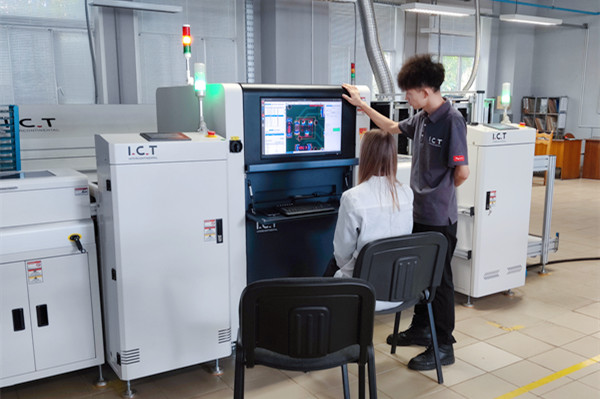
Automated optical inspection is the front-line detector for tombstoning because the defect is visually obvious. A standing part is caught easily by a well-configured AOI system, which makes AOI the right place to flag the defect at end of line. The catch is that AOI tells you a tombstone existed; it does not tell you why. Use the AOI hit as a trigger to pull the board, read the location, and start the cause investigation. An AOI result logged without a cause attached is a missed opportunity to close the loop.
Solder paste inspection is where most tombstones are actually prevented, because it measures the deposit imbalance before reflow. Paste height and volume data from an SPI system, trended over time, show one aperture drifting or one pad pair receiving unequal volume long before the tombstone rate climbs. The control is to watch the trend, not just the pass or fail flag. A printer that drifted a little in volume across three weeks is telling you something a threshold check will miss. Trending turns SPI from a gate into an early-warning system.
When tombstones appear despite good prints, the profile is the next thing to verify, and verification means thermocouples on a real board, not faith in the recipe. Measure peak temperature, time above liquidus, ramp rates, and soak duration, then compare against your baseline and the paste supplier's recommended window. The most common finding is that the measured profile no longer matches the stored recipe. Conveyor speed edits, aged zone heaters, and wrong programs all drift the real profile away from the screen. Profiling is how you find out which one bit you.
Statistical process control ties the whole loop together. Paste thickness, placement accuracy, and oven profile are the three data streams that predict tombstoning, and trending them with SPC turns isolated checks into a system. A drift in any one stream raises a flag before the defect rate moves. The loop closes when the flag triggers a specific action at the specific machine that caused it. SPI drift sends you to the printer and stencil. Placement drift sends you to the mounter. Profile drift sends you to the oven. A defect log that records cause and fix, kept over a year, becomes the most valuable document on the line.
The last set of controls is the equipment itself, because the machine decides how evenly it heats a panel and how consistently it holds a profile. You do not buy your way out of a tombstoning problem, but the right oven makes the window wider and the troubleshooting shorter. Choose against your defect data, not against a specification sheet.
More heating zones and finer zoning control give you a wider, more shapeable process window. That matters most for lead-free alloys, heavy copper, and mixed assemblies where the profile must satisfy parts with very different thermal masses on the same board. The more independently you can shape the heat, the better you can close the two-end gap on a small chip without cooking a large package. This is why zoning is tombstoning-relevant even though it sounds like a throughput feature. A profile you can tune in finer steps is a profile that can be made even across the panel.
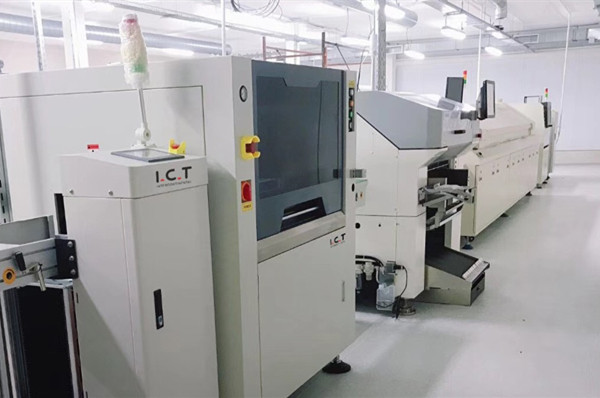
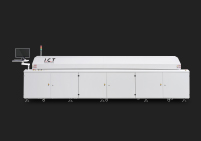
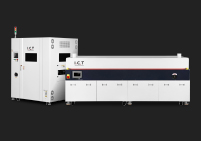
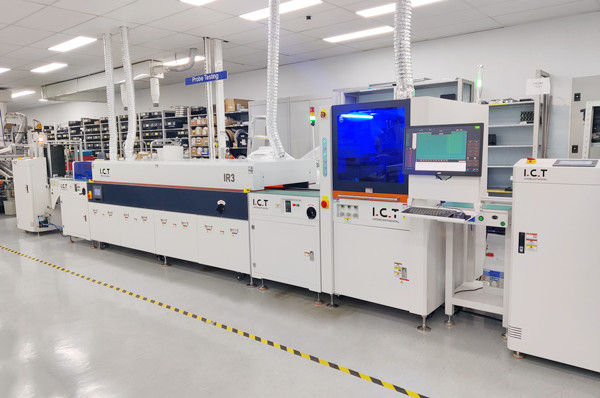
For lines where fine-pitch and lead-free products dominate, a machine built for zoning flexibility and consistent convection tends to pay for itself in reduced profile tuning and fewer marginal joints. A typical example in the I.C.T range is the modular hot air reflow oven in the Lyra series, with PC and Siemens PLC control, optional nitrogen, and an updated cooling zone. The Lyra 622, 733, and 933 series offer different zone counts for different throughput and process-window needs.
The value for a process engineer is room to move when a new product arrives. A configurable multi-zone chamber with a separate cooling stage lets you shape the soak and ramp precisely enough to keep small passives flat without compromising larger parts. For a wider view of how the configurations are positioned, our overview of SMT reflow oven solutions groups them by application and process window.
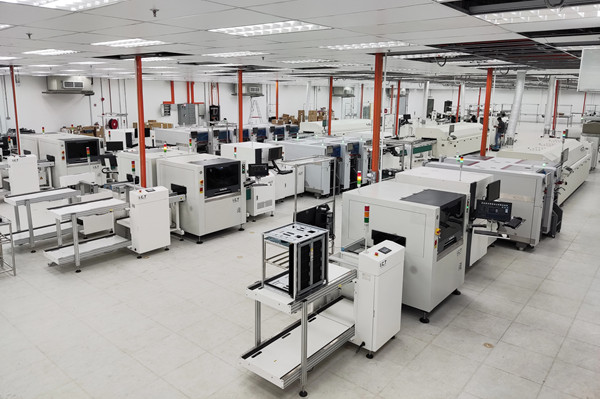
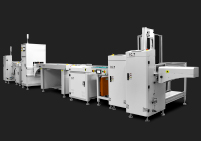
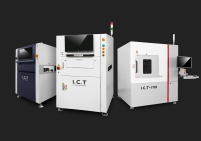
Equipment is only as good as the process wrapped around it. A full SMT turnkey line from I.C.T includes stencil printers, SPI and AOI systems, and multi-zone reflow ovens, backed by factory planning and layout, installation, training, and overseas on-site technical support. That support matters most at the start of a new product, when the first-hour profile and the first-article check decide whether tombstoning becomes a habit or a non-event.
Enforce a simple start-of-shift routine: confirm paste condition and open time, stencil condition, conveyor speed and recipe, oven temperature stability, and a first-article verification. The first hour of production is when a misloaded recipe or a cold oven does its damage, and it is the cheapest hour to police. If you are working through a persistent tombstoning problem, our process engineers are happy to review your profile data and board construction with you.
Q: What is the most common cause of tombstoning during reflow?
A: The most common cause is two-end imbalance, usually from unequal pad copper or an unequal paste deposit between the two pads of a small chip. Thermal asymmetry and paste-volume imbalance together account for most cases. Profile ramp rate is a real cause but a less common one than geometry and deposit, which is why slowing the ramp alone often fails to fix it.
Q: Why do small components tombstone more than large ones?
A: Small parts have very little mass, so the surface-tension pull from one wetted termination can lift the whole body. A larger component has enough weight that the same imbalance only shifts it slightly instead of standing it up. That is why 0201 and 0402 parts are the usual victims and why the same process can run clean on big parts but throw tombstones on tiny ones.
Q: Can a slower ramp rate alone fix tombstoning?
A: Sometimes, when the underlying imbalance is small enough that a gentler, more even heat-up lets the two ends arrive at reflow together. It will not fix a large imbalance from unequal pads, unequal paste, or a contaminated termination. Use the ramp change only after you have confirmed the geometry and deposit are balanced, otherwise you are treating the symptom and not the cause.
Q: How do I tell whether a tombstone is a profile problem or a design problem?
A: Characterize it first. If the tombstone is repeatable at the same location, it is likely a design or geometry problem at that pad pair. If it ignores profile changes entirely, suspect the termination condition or the paste deposit. A measured board profile plus SPI paste-volume data will usually separate the two within a few checks.
Q: Does nitrogen reflow help prevent tombstoning?
A: Nitrogen reduces oxygen during the molten window, which improves wetting and widens the process window for lead-free alloys that wet slowly. It helps most on products already close to the tombstoning edge, but it will not fix a starved deposit or an unbalanced pad. Use it where your defect data shows the wetting margin is genuinely tight.
Q: What is the single best habit for keeping tombstones off the line?
A: Measure and trend the three predictors: paste deposit balance from SPI, placement accuracy from the mounter, and a real-board profile from thermocouples. Keep a defect log that records the confirmed cause and the fix. Without those measurements you cannot tell a real fix from a coincidence, and you cannot catch the slow drift that causes most chronic tombstoning.
I.C.T supplies complete SMT assembly lines, including multi-zone reflow ovens, stencil printers, SPI and AOI systems, and turnkey line planning with installation, training, and on-site technical support. If you are working through a persistent tombstoning problem and want a second opinion on the process or the equipment configuration, our process engineers are happy to look at your profile data and board construction with you.