English
Views: 0 Author: Vinci Zhang Publish Time: 2026-11-07 Origin: Site


A PCB handling machine at the end of the inspection block faces a question the rest of the line does not: every board that arrives has already been judged, and the unloader has to sort the judged from the unjudged and the good from the bad without letting one contaminate the other. After AOI, SPI, or X-Ray, the disposition is known, and how you unload those boards decides whether a reject silently rides into the good bin and reaches the customer. This guide explains why the split belongs at the unloader, how an NG/OK unloader works, how it integrates with each inspection type, and how to plan one so the diverter is a feature and not a future recall, so you can specify the unloading correctly before the line is built instead of discovering the mixing risk after a bad board ships.

The inspection stations exist to find defects, but finding a defect only helps if the board is then treated differently, and the unloader is the last physical point where that difference can be enforced before boards are boxed or fed downstream.
AOI catches solder and component defects on the visible side, SPI measures the solder paste deposit before placement, and X-Ray sees through packages to check hidden joints like BGAs and QFNs, and each station attaches a pass or fail verdict to the board. That verdict is only useful if the handling system reads it and acts on it, because an inspection result printed on a report does nothing for a board that is unloaded into the wrong magazine. The unloader is where the verdict has to become a physical separation, and that is the job an NG/OK unloader is built for.
The verdict also has a time dimension, because SPI judges before placement while AOI and X-Ray judge after, and the unloader has to be planned for the inspection that actually feeds it, so a cell with only post-reflow AOI needs a different unloader placement than one where SPI already gates the paste, and the plan has to follow that sequence rather than assume one generic split.
When a failed board is unloaded into the same flow as good ones, it can be reworked, but it can also slip forward, and the cost of that slip is a field return, a customer complaint, or a recall that traces straight back to the moment the line failed to separate good from bad. Rework itself is cheaper than scrap or returns, but only if the board is caught and routed to rework rather than buried in a good bin, and the unloader is the control point that makes catching reliable instead of hopeful. The mixing risk grows with line speed, because a manual sort at the end of a fast line is exactly where a tired operator misses the one flagged board among hundreds.
The mixing risk is also asymmetric, because a good board sent to rework is an inconvenience while a bad board sent to the customer is a liability, so the unloader should be biased toward never losing a reject even if that occasionally double-checks a good one, and that bias should be explicit in how the diverter is set up and verified.
The split can be made earlier, but the unloader is the natural and most reliable place, because it is the last handling step before boards leave the cell and it is already receiving every board in sequence. Putting the diversion at the unloader means the decision is enforced at the boundary of the line rather than relying on someone to read a label later, and it keeps the good and bad streams physically separate from the moment of judgment to the moment of collection. Any plan that defers the split to a later manual step is really just betting that the manual step will be done perfectly every time, which is a bad bet on a production floor.

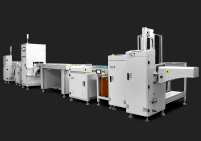
The device itself is a specialized unloader that receives boards from the inspection block and routes each one to one of two destinations based on the disposition it is given, and understanding that routing is the key to planning it.
Some lines try to do the split visually with a marker or a label read by an operator, but a manual read at line speed is exactly where a single flagged board slips through, so the unloader-based split is the reliable alternative, and the plan should treat the manual read as a backup at most rather than the primary control, because the primary control has to be automatic to be trustworthy.
An NG/OK unloader listens for the pass or fail verdict from the upstream inspection machine, usually over the line's signal link, and pairs that verdict with the specific board currently at the unload point. The signal has to arrive in time and be tied to the right board, because a verdict that is one board late sends a good board to rework or a bad board to the customer. Good installations carry the disposition with the board through the conveyor handshakes so the unloader never has to guess which verdict belongs to which physical board arriving at the gate.
In practice the verdict has to travel with the board through the conveyor handshakes, not just appear on a separate report, because a verdict that is one board out of phase sends the wrong board to the wrong magazine, and that one-board drift is the classic failure mode that turns an NG/OK unloader into a false sense of security, so the signal architecture is the real heart of the device.
The core function is a diverter that sends a good board to the OK magazine and a flagged board to the NG magazine, typically with a lift, a pusher, or a small transfer that steers the board into the correct lane without stopping the line. Both lanes are real magazines with their own capacity, and the unloader fills them in parallel so the good stream never waits on the bad one. The mechanical simplicity of steering at a stop, rather than on the fly, is what keeps registration and reliability high, because the board is diverted deliberately rather than flicked while moving.
The two-lane design also means the good stream is never held hostage by a reject, which is the subtle benefit most specifications miss, because a single-lane sorter would stop the whole line on every reject while a twin-lane design just fills the NG magazine and keeps the OK side moving, and that difference is what makes automated splitting viable on a fast line.
Because rejects arrive unpredictably, the NG magazine fills at a varying rate, and the unloader has to let an operator swap a full NG magazine without halting the good stream. A NG/OK unloader designed for this pairs the two magazines so the OK side keeps running while the NG side is changed, which is the feature that makes the split sustainable on a real shift instead of a clever idea that stops the line every time a reject bin fills. Without that independence, the diverter becomes a throughput tax every time a single bad board shows up.

Each inspection type feeds the unloader a slightly different verdict and a slightly different board state, and the plan has to account for all three if your cell uses more than one.
Operators also need a clear indication of which lane is which and how full each magazine is, because a diverter is only as good as the person swapping the NG magazine, and a clear status at the corner turns the reject handling from a guessing game into a routine task that fits into the normal line rhythm without special attention.
AOI usually runs after reflow and judges the assembled top side, and its verdict is the most common trigger for an NG/OK split because it catches the highest volume of visible defects. The unloader reads the AOI result and diverts accordingly, and because AOI throughput is high, the diverter has to keep pace without buffering the line, which is why the two-magazine design matters more here than anywhere else. Planning the unloader right after AOI is the default configuration for most lines, since it is the first place a finished-board verdict exists.
For cells that run AOI after both SPI and reflow, the unloader should be planned for the final verdict, usually the post-reflow AOI or X-Ray, so the split reflects the last judgment rather than an intermediate one, and the plan has to specify which station's verdict drives the diverter when more than one inspection exists.
SPI judges the solder paste before components are placed, which means a fail at SPI is a board that has not yet been built, and the right response is often to hold or re-print rather than to send it onward. An NG/OK unloader after SPI therefore diverts bare or pasted boards before placement, which protects the placement machine from wasting components on a board that already failed. The plan has to decide whether the SPI reject goes to rework or to scrap, and the unloader should support that decision rather than forcing every SPI fail down the same path as an AOI fail.
Planning the unloader after SPI also means deciding the fate of a paste-fail board, because re-printing it is different from reworking an assembled one, and the unloader should support routing the paste-fail to the correct rework path rather than lumping every fail into one NG magazine, which would mix a simple reprint with a complex rework and confuse the rework queue.
X-Ray inspects hidden joints after reflow and judges the hardest defects to see, and its verdict is the most expensive to ignore because a bad BGA joint is exactly the failure that escapes visual checks. An NG/OK unloader after X-Ray has to handle boards that are fully assembled and often heavier, and the diversion has to be gentle on finished components while still being decisive. Planning the unloader here means matching its lift and transfer to assembled-board mass, because a diverter sized for bare boards can be rough on a fully populated panel and create the very damage the inspection was meant to prevent.

The board population at the unloader is whatever the line builds, and the diverter has to treat every type gently while still sorting it correctly.
After X-Ray the boards are fully built and often heavier, so the diverter's lift and transfer should be rated for assembled mass, and the plan should also consider that X-Ray rejects may need careful handling if they contain expensive components, so the NG lane should be set up so a valuable reject is not damaged on its way to rework, which would waste the component you are trying to recover.
For standard rigid boards the diversion is uneventful, because a rigid board tolerates the steer at a stop and the two magazines accept it without drama. Edge support during the transfer is simple, and registration into the correct magazine is held by the stop rather than by hope, which is why most NG/OK unloaders default to rigid-board handling. The only caution is large panels, where the diverter's lift must be rated for the panel mass so a big board is steered square instead of wobbling into the wrong lane during the move.
For high-volume rigid boards the two magazines fill at very different rates, because the OK lane fills constantly while the NG lane fills only on rejects, and the plan should size the OK magazine for the run length and the NG magazine for the expected reject rate, so neither side forces an early swap that interrupts the line during a long production run.
Thin and bowed boards are harder to steer cleanly because a warp that was invisible on a straight belt becomes a misregistration risk the moment the board is lifted and turned toward a magazine. A vacuum-assisted lift on the diverter holds a flexible or warped board flat through the transfer so it lands square in the correct magazine, and for flex circuits the lift has to support the whole width to stop sag. The cost is vacuum plumbing at the diverter, but for lines that run delicate boards the flat hold is what keeps a reject from being misrouted because it drifted during the turn.
The vacuum option at the diverter is also worth specifying when the line runs a meaningful share of delicate boards, because the small premium for vacuum hold is trivial next to the cost of a misrouted or damaged reject, and a diverter that treats every board gently is simpler to qualify than one that switches behavior by board type at the corner.
When boards arrive in carriers or trays, the diverter handles the carrier rather than the bare board, which simplifies the grip but complicates width change and magazine fit. A frame sized for carriers keeps the split from becoming the point where carriers jam or misalign, and it lets the NG/OK unloader accept the same carrier family on both lanes. Specify the unloader around the carrier when carriers are in play, because the carrier is the object the machine touches, and a diverter designed for bare boards will fight a framed board at exactly the moment it has to choose a lane.

A diverter only helps if it does not become its own bottleneck, and the throughput plan around the split is where many installations go wrong.
For tray-based or framed boards the magazine interface has to accept the tray, and the diverter should be specified so the tray is handled identically on both lanes, otherwise the NG and OK sides develop different handling rules and the operator manages two standards at one machine, which is the kind of local complexity that produces exactly the errors an NG/OK unloader is meant to prevent.
The NG magazine fills only as fast as rejects arrive, which is intermittent and hard to predict, so the cadence question is how often an operator swaps a full reject magazine without disturbing the good stream. A dual-rail or twin-magazine unloader lets the NG side be changed while the OK side runs, which is the feature that keeps the line moving during reject handling. Without independent magazines, every NG swap is a line stop, and at a high reject rate that stop becomes the limiting factor rather than the inspection itself.
At a high reject rate the NG magazine can fill faster than expected, and the twin-magazine design with independent swapping is what prevents that from becoming a line stop, because the operator can change the NG magazine while the OK side keeps running, and that independence is the feature that makes automated splitting sustainable rather than a clever idea that stops the line on every bad board.
Placing a buffer before the unloader decouples the inspection block from the diverter, so a brief stop at the split does not starve or flood the AOI or X-Ray upstream. The NG side in particular benefits from local accumulation, because rejects can be collected in a buffer and swapped in a batch rather than interrupting the line for every single bad board. Buffering the split is far more valuable than shaving the diversion time, because it turns an intermittent event into a managed one and keeps both streams flowing instead of stuttering every time a defect appears.
A dedicated NG buffer also lets rejects be collected in a batch and swapped once, instead of interrupting the line for every single bad board, which is a meaningful labor saving on a line with a steady reject stream, and it keeps the diverter from being the place where the operator spends the shift babysitting a full reject magazine.
The diverter's own cycle is a lift and a steer, which is a fraction of a second, so it is rarely the slowest thing on the line, but it becomes a bottleneck if it has to wait on a magazine swap or a signal that arrives late. The plan should guarantee the signal arrives with the board and that either lane can be serviced without halting the other, because a diverter that is fast but blocked is still a bottleneck. Treat the split as a normal handling point for cadence, give it independent magazines and a buffer, and the diversion will not surprise you during a shift of mixed yield.
The split is only trustworthy if the right verdict reaches the right board and is recorded, and that is a signal and data problem as much as a mechanical one.
The diverter's own cycle is rarely the limit, but it becomes one if it waits on a magazine swap or a late signal, so the plan should guarantee the signal arrives with the board and either lane can be serviced without halting the other, because a diverter that is fast but blocked is still a bottleneck, and the split should be treated as a normal handling point for cadence planning.
The NG/OK unloader should speak the standard signal set with the upstream inspection machine so it knows when a board is present and when to hold, and the inspection verdict rides alongside that handshake. A clean handshake means the unloader never pulls a board while the inspector is still deciding, which avoids the classic one-board-late error where the verdict and the physical board drift apart. Linking the two machines at the signal level is what makes the diversion automatic instead of a manual sort that an operator performs by reading a screen.
Linking the two machines at the signal level also means a temporary inspection pause holds the unloader rather than letting it pull a board it has no verdict for, which avoids the one-board-late error, and that handshake discipline is what makes the diversion automatic instead of a manual sort an operator performs by reading a screen.
For real traceability the unloader should associate the board identifier with its pass or fail decision, so a later query can show that a specific board was routed to NG and why. Traceability expectations for assembled boards are informed by IPC guidance on process control and data, and aligning the unloader's logging with those practices means the diversion produces an audit trail rather than just a physical split. That trail is what lets a quality team prove a reject was contained instead of shipped, and it turns the NG/OK unloader from a sorter into a compliance control point.
The audit trail is also what lets a quality team prove containment after the fact, because a query can show that a specific flagged board was routed to NG and never reached the good bin, and that evidence is what turns the unloader from a sorter into a compliance control point that satisfies customers and auditors who ask how rejects are kept out of shipments.
When the signal is lost or a board is misread, the unloader must fail safe and stop the line rather than guess, because a guessed disposition is worse than a stoppage. Proper alarm propagation means a missing verdict halts the upstream feed and flags the operator, so a board with no decision is never unloaded into either magazine by default. Good signal discipline is what keeps the split honest, because the mechanism will divert whatever it is told, and the only protection against a wrong diversion is making sure the verdict it is told is always real and always tied to the board in front of it.
Deciding whether you need an NG/OK unloader is mostly a function of how much a missed reject would cost you, and a short path keeps you from skipping it on a line that needs it.
Fail-safe behavior also means the unloader should never default a board into the OK magazine on a signal loss, because defaulting good is the dangerous choice; it should stop and flag, and only a deliberate override should move a board, which keeps the split honest even when the inspection link glitches, as it eventually will on any line.
Begin with where inspection sits and what it decides, because the unloader plan follows the inspection plan, not the other way around. If AOI, SPI, or X-Ray already judge finished or pasted boards, an NG/OK unloader is the natural terminus for those verdicts, and the only question is which station feeds it. If inspection is manual or downstream of unloading, the split has to move with the inspection, because an unloader cannot sort on a verdict it never receives, and the plan has to place the diverter where the decision actually exists.
If inspection is downstream of unloading, the split has to move with it, because an unloader cannot sort on a verdict it never receives, and the plan has to place the diverter where the decision actually exists, which sometimes means moving the inspection earlier in the line so the unloader can act on it rather than sorting blindly.
Next, weigh how many boards flow and how often they fail, because a high-volume line with any meaningful reject rate is exactly where manual sorting fails and a diverter pays for itself. The upstream loader choice also matters, because a line built for high mix benefits most from automated routing at the end. A low-volume, near-zero-defect line can sometimes tolerate a manual sort, but the moment the reject rate or the customer risk rises, the automated split becomes the cheaper option by far.
A line with near-zero defects can sometimes tolerate a manual check, but the moment the reject rate or the customer risk rises, the automated split becomes the cheaper option by far, because the cost of one shipped defect dwarfs the price of the unloader, and the decision should be made on that risk rather than on the line's current good luck.
A practical checklist is short: does inspection produce a pass or fail verdict, would a missed reject be costly, is the line fast enough that manual sorting fails, and can the unloader receive the verdict tied to the board? If most are yes, an NG/OK unloader is the right plan, and if most are no, a simpler unloader with a manual check may serve. The split is a control point for a known risk, and using the checklist keeps it from being skipped on a line where a single shipped defect would cost more than the machine.
Like any handling device tied to inspection, the NG/OK unloader should be proven before it carries production, and the diversion accuracy is exactly what commissioning tends to skip.
The checklist also guards against over-building, because not every line needs the most capable diverter, and a simple, well-integrated split that meets the room and the reject risk is better than a feature-heavy one, so the goal is the unloader that fits the problem, and the plan should specify the diverter against the actual inspection layout and board volume rather than a generic wish list.
At factory acceptance, verify the diversion accuracy with boards carrying both verdicts, and confirm the unloader routes every fail to NG and every pass to OK across a representative run including the borderline cases. Confirm the signal link with the inspection machine actually carries the verdict with the board, and test the fail-safe behavior when the verdict is missing, because a diverter that guesses on a missing verdict is a recall waiting to happen. Run your real boards, including the thinnest and the largest, through the split to prove registration holds on both lanes.
The fail-safe test at FAT is the most important and the most often skipped, because a diverter that guesses on a missing verdict is a recall waiting to happen, and proving it stops instead of guessing is what separates a real NG/OK unloader from a sorter that only works when everything is perfect, which production never is.
At site acceptance, run the unloader under real line speed with real inspection verdicts and a real operator, and track diversion accuracy over a full shift rather than a tidy demo, because the device behaves differently when rejects arrive in bursts. Count any board that reaches the wrong magazine, treat that count as the real acceptance metric, and watch the NG magazine swap cadence to confirm the line keeps running while rejects are collected. The first articles through the split are the true test, since a device that looks correct in a booth can drift once the line is busy.
Tracking any board that reaches the wrong magazine over a full shift is the real acceptance metric, and the SAT should deliberately include busy periods with bursts of rejects, because those are the conditions where a diverter either proves itself or drifts, and a clean demo run tells you almost nothing about how the split behaves when the line is actually working.
Handover should include the signal mapping, the magazine assignments, the fail-safe behavior, and the traceability logging, because the next person to service the line needs to know which verdict goes to which lane and what happens when the signal drops. Training the operator on NG magazine swaps and on the diverter's fault responses turns the split from a mystery into a routine, and good documentation is what keeps an NG/OK unloader from being bypassed out of frustration when a signal glitch makes it stop, which is the most common way a perfectly good split stops protecting the line.
What is the difference between an NG/OK unloader and a normal unloader? A normal unloader collects every board into one magazine, while an NG/OK unloader reads the inspection verdict for each board and routes passes to one magazine and fails to another, so good and rejected boards are physically separated at the end of the line instead of mixed together.
Can one NG/OK unloader handle AOI, SPI, and X-Ray verdicts? Yes, as long as each inspection machine passes its pass or fail verdict to the unloader over the line signal link tied to the board, and the plan specifies which station feeds the diverter, because the unloader routes on the verdict it receives regardless of which inspection produced it.
What happens if the inspection signal is lost or late? A properly configured unloader fails safe and stops the line rather than guessing, because a guessed disposition risks sending a bad board to the good bin, so a missing verdict should halt the upstream feed and alert the operator instead of defaulting a board into either lane.
Does an NG/OK unloader slow the line down? No, not measurably, because the diversion is a lift and a steer at a stop that takes a fraction of a second, and it only becomes a bottleneck if the NG magazine cannot be swapped without halting the OK stream, which is why independent twin magazines are the feature that keeps the line moving during reject handling.
How do I avoid mixing rejects into the good bin? Plan the split at the unloader where every board is judged, tie each board's identifier to its pass or fail decision through the signal link, give the NG and OK lanes independent magazines, and verify diversion accuracy at FAT and SAT so a fail is never routed to the good magazine by default.
Is the NG/OK routing traceable for quality records? Yes, when the unloader logs the board identifier with its disposition, it produces an audit trail showing which boards were routed to NG and why, and aligning that logging with widely accepted process-control guidance turns the split from a physical sorter into a verifiable compliance control point.
Documentation of the fail-safe behavior is especially important, because an NG/OK unloader that stops on a signal glitch can be bypassed out of frustration if the operator does not understand why it stopped, and a device that gets bypassed stops protecting the line, so the handover has to make the fail-safe logic obvious enough that the corner is trusted rather than worked around.