English
Views: 0 Author: Vinci Zhang Publish Time: 2026-11-05 Origin: Site


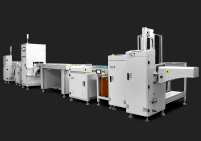
Choosing the right upstream and downstream board handling is the difference between a line that runs itself and one that needs an operator standing at each end all shift. A PCB handling machine family covers loaders that feed bare boards into the line and unloaders that collect finished assemblies, and the selection has to be made against your board profile, throughput, floor space, and the way the rest of the line talks to itself. This guide walks through a practical selection framework so you can shortlist the right SMT loader and unloader instead of buying on price alone.

Every loader and unloader decision starts with the physical object it has to move. A board that is thick, flexible, heavy, or mixed in size changes the entire design of the handling station, so get the numbers on paper before you look at any machine.
The length, width, and thickness of your typical PCB define the conveyor width range and the lift capacity you need. Thin boards below roughly 0.6 mm deflect and can jam or mis-pick, while thick backplanes and metal-core boards need careful clamping and slower transfer. Weight matters for magazine stack height and for vacuum suction force. Write down the minimum, typical, and maximum board you expect to run, because the machine you buy will be specified for that envelope for its whole life.
Most loaders and unloaders work with standard stackable magazines, and the magazine pitch (the vertical spacing between slots) decides how many boards a full magazine holds and how the lift indexes. Common pitches are 10, 15, and 20 mm, and the wrong pitch means your existing magazines will not fit the new machine. Confirm the magazine width, length, and side-wall height, and check whether your current magazines are compatible before committing.
If your line runs many different board types, you need fast changeover and a width adjustment that is repeatable without tools. A family of products with similar sizes is easy; a job shop with wildly different boards needs programmable width recipes and clear magazine labeling. The more variety you handle, the more you should value auto-width and recipe storage over a slightly lower sticker price.
Some boards are loaded, processed, flipped, and unloaded, while others only travel one way. If you process double-sided boards, you may also need an inverter or flipper somewhere in the line, and your loader and unloader should be specified with transfer edges that suit both passes. Planning for the second side up front avoids an expensive retrofit later.
A loader is only as fast as the operator swapping an empty magazine for a full one. If your takt time is tight, the magazine changeover becomes the bottleneck, and you should either use larger magazines, a dual-magazine loader, or a buffer that decouples loading from the line. Think about the whole cycle, not just the pick-and-place rate of the machine.
Modern lines are expected to know where every board is, and the loader is the first place a board enters the tracked world. If you scan or read a board identity at load, that identity can follow the board through printing, placement, reflow, and inspection without manual re-entry. Even if you only record the magazine lot and time, that is enough to narrow a quality issue to a batch. Decide early whether the loader needs a scanner or simply a time-stamped magazine event, because adding identity capture later means opening the machine and re-validating the integration.
Boards that bow or twist need handling that supports them across the full width rather than at two edge points, because a warped board can bridge the magazine slot or mis-seat on the conveyor. Magazine loaders handle mild warp by sliding, but severe warp favors vacuum pickup that lifts the board flat. Include your worst-case warp specification in the loader evaluation, and test it during the FAT with deliberately bowed sample boards so you learn the limit before production does.

A loader or unloader is part of a chain, and the chain only works if every link is at the same height and transfers boards on the same edge. Mismatched height causes tilted transfers, scratches, and repeated jams.
The de facto industry conveyor height is 900 mm plus or minus a small tolerance, typically 920 mm to the top of the rail in many regional variants. Your loader and unloader must match the rest of the line exactly, because even a few millimeters of difference forces the board to step up or down at every handoff. Confirm the exact height of your printers, placement machines, and reflow ovens before ordering.
SMEMA defines a fixed rail (conveyor) edge so that boards always align to the same side. Your loader and unloader must respect the same fixed edge as the upstream and downstream equipment, or boards will be off-center when they arrive at the printer or AOI. This is a small detail that causes a large number of field problems, so verify it on the specification sheet.
Width adjustment can be manual, screw-driven, or fully automatic. Manual is fine for a dedicated line running one board forever; automatic is essential for a line that changes products several times a day. Auto-width loaders and unloaders read the board width from a recipe and adjust the rails without an operator, which removes a common source of setup error.
Inline loaders and unloaders sit inside the conveyor chain and pass boards hand to hand with the rest of the line. Benchtop or semi-auto units are cheaper but break the automation and need an operator at that point. Match the form factor to your automation level, because mixing one manual station into a fully automated line creates a permanent labor cost.
Boards travel left-to-right or right-to-left depending on the line layout, and some layouts need the loader at the far end after a U-turn. The direction must be specified, and in L-shaped or U-shaped lines you may need a 90-degree transfer. Getting the direction wrong means the machine cannot be installed where you planned.
Boards are most exposed to handling damage at the load and unload points, so ESD grounding and clean contact surfaces matter most there. Use grounded rails, ionizers where static is a risk, and keep the transfer belts free of debris that could mark a bare board. A loader that drags boards across a dirty belt can introduce defects that only show up at AOI, which is exactly the kind of problem that looks like a process fault but is really a handling fault.

The loading method is the core mechanical choice. Magazine loaders pick boards from a stacked magazine; vacuum loaders suck boards from the top of a stack or magazine using suction cups; combination units do both.
A PCB magazine loader lifts the magazine and pushes boards out one at a time onto the conveyor with a pusher or sweep mechanism. It is robust, handles a wide range of rigid boards, and is the default choice for most lines. The trade-off is that it needs compatible magazines and a clean, flat board that slides easily.
A vacuum and magazine loader uses suction cups to lift the top board from a stack and place it onto the conveyor. It shines when boards are thin, warped, flexible, or have surfaces where a pusher would scratch or catch. A translational vacuum loader adds a translational motion that separates boards more reliably and reduces double-picks.
Bare FR-4 fresh from storage often bows slightly, and very thin boards can flex and jam in a pusher-type magazine loader. Flexible boards and boards with delicate surfaces are poor candidates for sliding contact. In those cases a vacuum loader with well-tuned suction and a separation blow-off is the safer choice and reduces handling defects.
Some lines run both rigid and semi-flexible boards, and a combination loader that supports magazine and vacuum modes covers both without swapping equipment. The cost is higher and the mechanism is more complex, but the flexibility pays back on a contract manufacturer's floor where product mix changes weekly.
If your boards are flat, rigid, and run in magazines, a magazine loader is the economical default. If they are thin, bowed, or delicate, move toward vacuum. If you cannot predict, buy the combination. This single decision drives most of the downstream reliability of the line.
Magazine loaders are fast and reliable for rigid boards because the pusher motion is simple and repeatable. Vacuum loaders add a pick-and-place cycle that is slightly slower per board but handles boards the pusher cannot. Combination loaders trade some speed for flexibility. When you compare methods, measure the full cycle including any separation blow-off and verification dwell, not just the headline pick rate, because the verification step is where real-world speed is won or lost.
Magazine loaders are usually the lowest cost for rigid boards, vacuum loaders add mechanism and tuning cost, and combination loaders cost the most. But the purchase price is only part of the comparison; a vacuum loader that prevents scratched and double-picked boards can save more in scrap than the price gap. Compare total handling cost per board over a year, including scrap, downtime, and labor, rather than the sticker, and the right method often becomes clear.

A loader that cannot keep the line fed forces the placement machine to starve, and an unloader that cannot keep up forces the line to stop. Sizing is about matching the handling rate to the line rate with margin.
Larger magazines mean fewer changeovers and less operator attention, but they also mean a heavier lift and more floor space. Balance magazine size against how often an operator can realistically attend the station. In an unattended night shift, capacity becomes critical.
A dual-rail unloader or dual-lane loader processes two boards in parallel and roughly doubles handling throughput without doubling footprint. For high-volume lines this is often the only way to match a fast placement machine. The cost is higher, but the alternative is a starved line.
A magazine buffer or vertical buffer placed between processes decouples stations so that a stoppage at one machine does not stop the whole line. Buffers are the cheapest insurance against line-wide downtime and should be part of the original handling plan, not an afterthought.
Calculate the time to pick, transfer, and release one board, then compare it to your takt time. Include magazine index time and any verification dwell. If the handling cycle is close to the takt, any slowdown pushes the line into starvation, so design with a comfortable margin rather than an exact match.
Unattended or lights-out operation demands larger magazines, reliable sensing, and remote alarms. A station that needs an operator every twenty minutes is a poor fit for a night shift with no staff. Match the autonomy of the loader and unloader to how you actually run the plant.
Loaders and unloaders are often ignored in OEE calculations, yet they directly cause availability losses through jams and performance losses through starved placement machines. A loader that jams once an hour can quietly remove several percent of line throughput without anyone attributing it to handling. Tracking loader and unloader uptime and jam counts is a cheap way to find hidden losses on an otherwise well-run line.

A modern loader and unloader is not a standalone box; it has to handshake with printers, placers, inspection, and the line controller using a known signaling standard.
The classic SMEMA interface uses a pair of signals, board-available and request-to-send, to pass boards between machines without a central controller. It is simple and everywhere, but it only carries board-presence information, not board identity. Confirm both signals and the correct pin-out with your other equipment.
Newer lines use the Hermes standard, published by IPC as IPC-Hermes-9852, which carries board identity, results, and routing information over TCP/IP. If your line or MES expects Hermes, specify it, because a SMEMA-only machine will not feed the data your traceability system needs. The IPC standards body maintains the specifications that keep these handshakes interoperable across brands.
Beyond the board handshake, the loader and unloader should expose status to the line PLC and, ideally, to the MES. That means alarm bits, run-state, and magazine-near-empty signals that the controller can act on. Decide early what the machine must report, because retrofitting communications is far harder than specifying it.
When the line stops, the loader must stop feeding and the unloader must stop collecting without dropping or crashing boards. Check how the machine behaves on a line stop, an E-stop, and a power loss, because graceful stop behavior prevents jams and board damage during the everyday hiccups of production.
If boards are labeled or identified at load or unload, the station needs a scanner or printer and a way to pass that data upstream. A barcode scanning conveyor or integrated scanning at the loader keeps each board tied to its data from the first moment it enters the line.
When a loader talks to the MES over the network, it becomes part of your plant IT surface, so ask how it is secured and whether it needs a fixed IP, a VLAN, or certificate pairing. A machine that ships with a default password or open port is a risk on a connected line. Confirm the cybersecurity posture with the vendor, because a handling station that opens the line to the network is a different class of purchase than a standalone box.
Decide what the loader records: board count, magazine lot, time, and any scanned identity. That data feeds OEE, traceability, and quality investigations, and capturing it at the loader means it exists from the first moment a board enters the line. Keep the captured fields consistent with what the MES expects, so the loader's log drops straight into the larger record without manual re-entry.
Where the machine sits and how much room it takes determines whether your line fits the building and whether operators can service it.
A full-size loader and unloader adds length to the line at both ends, and that length has to fit between the wall and the next machine. Measure the available linear space and compare it to the machine length with magazines loaded, not the catalog drawing with empty magazines.
When space is tight, a mini loader and unloader delivers the same automation in a shorter body, at the cost of smaller magazine capacity. Compact lines, lab lines, and rework cells are exactly where the mini format earns its place.
An L-shaped line needs a 90-degree transfer, and a turn conveyor can rotate the board direction within the chain. Plan these transfers as part of the handling selection, because they affect board orientation and the space the line occupies.
Magazine loading and unloading happen at human height, and a poor layout means back strain and slow changeovers. Position the stations so magazines slide in at a comfortable height and operators are not reaching across the conveyor. Good ergonomics is a throughput feature, not a luxury.
Leave clearance behind and around the machine for maintenance, belt changes, and sensor adjustment. A loader jammed against a wall is a loader that stays broken, because nobody can reach the back. Specify the service envelope in the floor plan.
Lines grow, and a loader or unloader specified too tightly becomes the constraint when you add a process or a second lane. Choose a machine whose width range, communications, and footprint leave room for the next two years of product mix. A slightly larger or more capable unit bought now is cheaper than replacing the handling when the line is rebalanced later.
Handling equipment moves boards and magazines with motors, lifts, and pneumatics, so power and safety are not optional checkboxes.
Confirm the voltage and phase your facility provides and whether the machine needs clean dry air for pneumatics. A machine specified for the wrong voltage is a delay and a transformer cost; a pneumatic machine without a reliable air supply is a stopped line.
For the European market and many others, CE marking with the relevant machinery and low-voltage directives is required. Ask for the declaration of conformity and the safety circuit design, because importing non-compliant equipment creates legal and insurance problems you do not want.
The lift, pusher, and conveyor must have accessible E-stops and guarding that prevents an operator from reaching moving parts. Verify the E-stop topology and how it interacts with the line E-stop, because a handling station that does not stop with the line is a hazard.
In cleanroom or ESD-sensitive areas, the materials, ionizers, and grounding of the loader and unloader matter. Specify the cleanliness class and ESD requirements up front, because retrofitting grounding and particle control is disruptive.
Find out which wears parts are consumable, what the lead time is, and whether common items are stocked locally. A worn belt or sensor should be a same-day fix, not a two-week wait that idles the line.
Operators and technicians need to know how to load magazines, clear jams, adjust width, and read alarms, and that knowledge should live in a short manual and a few labeled photos on the machine. Good documentation turns a skilled operator dependency into a repeatable procedure. Ask the vendor for the maintenance manual and a spare-parts diagram, and keep them at the line so the first jam is not a phone call.
The final step is to turn the analysis into a purchase and then prove the machine does what was promised.
Ask the vendor for reference installations with similar boards, the spare-parts list, the communications options, and the commissioning plan. A vendor who cannot answer these clearly is a risk regardless of price.
Run a factory acceptance test with your own boards and magazines before shipment. Verify pick reliability, transfer alignment, width adjustment, SMEMA or Hermes handshakes, and alarm behavior. Catching a problem at the vendor's floor is far cheaper than after installation.
A site acceptance test on your actual line, with your real upstream and downstream machines, confirms the integration. Run a full shift if possible and watch for jams, alignment drift, and communication glitches under real load.
Visit or call a reference site that runs the same board types. Nothing predicts your experience better than a peer who has lived with the machine for a year.
Price is the smallest part of the cost. Add freight, installation, training, spare parts, downtime risk, and the labor the station needs. A slightly more expensive loader that never starves the line is usually cheaper over three years than a cheap one that needs an operator.
The warranty period, response time, and whether on-site service is available locally decide how a failure affects you. A handling station down for a week idles the whole line, so service level matters more than the warranty paper. Confirm spare-parts stocking and the typical field-response time, and weigh a stronger service package against a lower price when the two compete.
Keep a small kit of the parts that wear or fail most: belts, sensors, suction cups, fuses, and the lift cable or chain if applicable. These are cheap to stock and expensive to wait for, because a stopped loader idles the whole line. Ask the vendor for the recommended minimum-spares list and order it with the machine so the first failure is a ten-minute fix, not a freight delay.
Before you issue a purchase order, write a one-page shortlist that captures board envelope, conveyor height and edge, loading method, throughput, communications, footprint, power, compliance, and the FAT and SAT plan. Hand that template to every vendor so quotes are comparable, and keep it with the line documentation. A disciplined shortlist is what turns a confusing equipment market into a confident buying decision.
Q: Do I need a vacuum loader or is a magazine loader enough? A: If your boards are flat, rigid, and already in compatible magazines, a magazine loader is the economical default and handles most lines. Choose a vacuum or combination loader when boards are thin, bowed, flexible, or have delicate surfaces that a pusher would scratch or jam.
Q: What conveyor height should my loader and unloader use? A: Match the rest of your line exactly, which is typically around 900 to 920 mm to the top of the rail depending on regional practice. Even a few millimeters of mismatch causes tilted transfers and repeated jams at every handoff.
Q: Is SMEMA enough, or do I need Hermes? A: SMEMA is enough if you only need board-presence handshakes between machines. Choose Hermes, defined by IPC as IPC-Hermes-9852, when your MES or inspection needs board identity and results data passed along the line.
Q: How do I avoid the loader becoming the bottleneck? A: Size the magazine capacity and cycle time against your takt, use dual-lane handling for high volume, and add a buffer between processes so a stoppage upstream or downstream does not starve or flood the line.
Q: Can a mini loader really replace a standard one? A: A mini loader and unloader fits tight lines, lab cells, and rework stations, but it holds smaller magazines and needs more frequent changeovers. Use it where floor space is the constraint, not where unattended runtime is the priority.
Q: What should I check during the FAT? A: Run your own boards and magazines through the machine and verify pick reliability, transfer alignment, auto-width, the SMEMA or Hermes handshake, and alarm and E-stop behavior. Resolve any defect at the vendor's floor before shipment.