English
Views: 0 Author: Site Editor Publish Time: 2026-05-14 Origin: Site
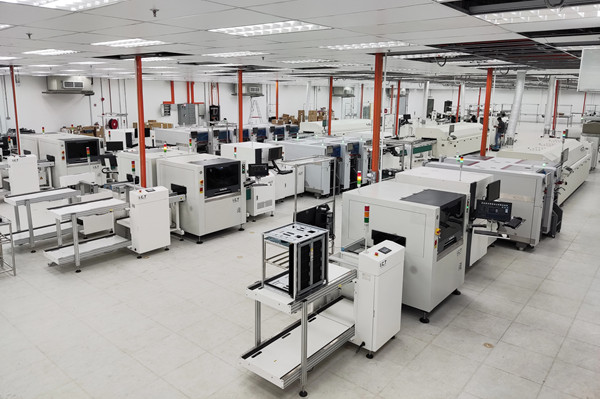
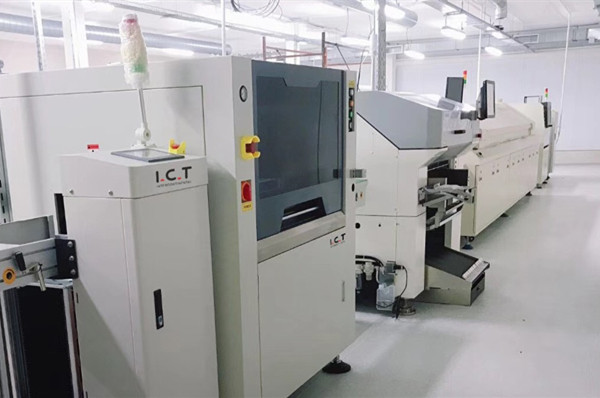
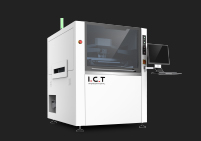
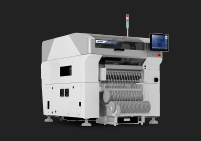
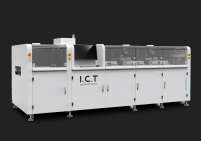
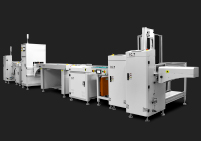
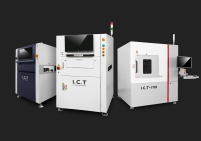
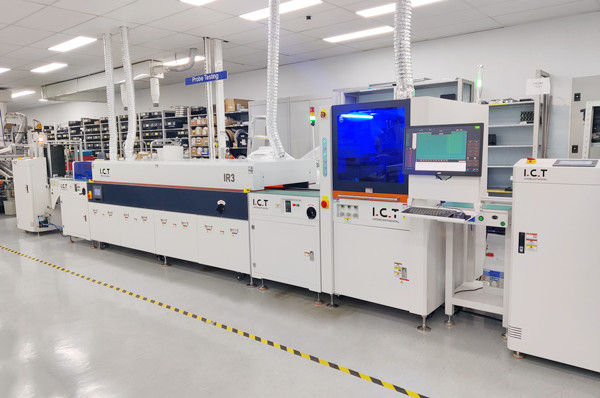
When you walk into a fully digital line, you see a system that connects SMT, DIP, and coating in one easy process. This system uses machines like solder paste printers, pick and place machines, reflow ovens, wave soldering machines, and conformal coating machines. You use digital controls to manage every part. The system checks each step, so every product is high quality. A fully digital line makes manufacturing smarter and helps things run better.
If you want a system that fits modern manufacturing, you need a fully digital line. The system watches, changes, and makes your process better. You can count on the system to give good results. A fully digital line means your whole system works together. The system gives you trust from beginning to end. Today, a fully digital line is the future of manufacturing. The system keeps working for you all the time.
A fully digital and automated SMT + DIP + coating line links all steps in making things. This makes production faster and the quality better.
Automation cuts down on mistakes and makes things more consistent. This means every batch of products is reliable.
Real-time data tracking makes work flow better. It helps people fix problems fast and manage inventory well.
Centralized control systems make running things easier. They let people watch and change all production lines easily.
Using automation in steps helps businesses get used to changes. This way, old processes are not interrupted and changes go smoothly.
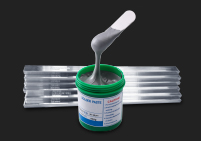
Surface mount technology helps make modern electronics. With SMT, you put parts on top of a pcb. You do not need to push them through holes. First, you start with a pcb. You use a solder paste printer to add solder paste. Solder paste inspection checks if the paste is in the right spot. Then, pick-and-place machines put surface mount devices on the pcb. These machines move quickly and are very accurate. They can place many parts every minute. After that, the pcb goes into a reflow soldering oven. The oven melts the solder and sticks the parts to the pcb. At the end, you check the solder paste again to make sure everything is right. SMT line machines help you build things faster and better.
Digital control systems let you manage the whole SMT process. These systems help you at every step. Digital controls make SMT faster and more accurate. The table below shows how these features help your assembly line:
Feature | Description |
|---|---|
High Efficiency | Dual-lane board feeding and multi-head designs boost productivity |
Intelligent Systems | Vision inspection and digital controls enhance precision and speed |
Flexible Configurations | Modular designs fit many production needs |
Eco-Friendly Solutions | Noise reduction and pollution control for green manufacturing |
Pick-and-place machines can place parts with 99% accuracy. You can finish a prototype in just one day. SMT placement is much faster than doing it by hand. You save time and make fewer mistakes.
There is a clear workflow in surface mount technology. You load an empty reel and line up the tape ends. You use splicing tape or clamps. Sensors check your work as you go. You run a test splice and move the reel forward. You watch the results and keep logs. Automation helps you control feeders and track data. Predictive maintenance keeps machines working well. SMT automation makes setup much faster. You get quick and steady assembly for every pcb. Surface mount technology helps you build good products fast and with few errors.
An automated dip-coater line helps with through-hole parts on your pcb. This line uses many machines to make assembly fast and easy. The dip-coater system has auto-feeders, conveyors, pin straighteners, and lead cutters. It also has flux application modules and auto lead formers. Each machine helps you get the same good results every time. The table below lists the main machines in an automated dip-coater line:
Equipment Type | Description |
|---|---|
DIP Automatic Insertion Assembly Line | Automates the process of inserting through-hole components into PCBs. |
Auto-feeders | Enhance assembly lines with automation for axial/radial components. |
PCB Conveyors | Feature anti-static controls to ensure safe handling of PCBs. |
Post-insertion Inspection Systems | Verify placement accuracy after component insertion. |
Advanced Pin Straighteners | Ensure components are ready for assembly by straightening leads. |
Lead Cutters | Prepare leads for optimal fitting into PCBs. |
Flux Application Modules | Optimize soldering quality by applying flux precisely. |
Auto Lead Formers | Streamline through-hole soldering processes. |
Integrated AOI Systems | Detect defects mid-process, significantly reducing rework rates. |
You can pick a programmable dip-coater or a cheaper automated dip-coater. Both choices help you do the same thing again and again. They help you reach your manufacturing goals.
When you use automation in your dip-coater line, you save time and money. Insertion machines put parts into your pcb very fast. You see fewer mistakes and better results in your assembly. The machines can do more than 20,000 insertions each hour. You get lots of work done and keep the quality steady. Automation also helps you keep track of your parts and makes the dip-coating process smooth. A cheaper automated dip-coater helps you get your money back fast. You can trust the automated dip-coater to give you the same good results every time.
Automation in your dip-coater line gives you:
The same quality and amount each time
Lower costs for workers
Better control of your parts
You need good inspection systems to keep your dip-coater line working well. Automated optical inspection checks your pcb after each step. You use post-insertion inspection and solder joint inspection to find problems early. Integrated AOI systems in your automated dip-coater line help you find mistakes and do better next time. Digital monitoring lets you watch every part of the dip-coating process. You can see data right away and make changes quickly. A cheaper automated dip-coater with digital controls gives you the quality and repeatability you need for modern assembly. You build trust in your work by using inspection and automation together.
A conformal coating line helps protect your pcb during assembly. The line uses special machines to put thin coatings on your pcb. You can pick different coating machines for your dip-coater line. Some machines use non-contact jetting for careful coating. Other machines use a liquid system with elevators, inspection tables, and curing ovens. These machines work in many fields, like car electronics and LED making. Conveyors move your pcb from one place to another. Each pcb gets the same amount of coating every time. This keeps your assembly smooth and helps you get good quality.
Main types of coating machines in a dip-coater line:
Precision conformal coating machines for even coating
Fully automatic liquid systems with conveyors and inspection tables
Automated curing is needed to finish the coating on your pcb. Curing ovens use UV or heat to dry the coating fast. This step makes your pcb strong and ready for hard jobs. You can count on automated curing for good results. Inspection systems check each pcb for coating problems. You see any issues right away and fix them before moving on. This keeps your quality high and your dip-coater line working well.
Evidence Description | Key Benefits |
|---|---|
Integrated curing systems (UV or thermal) speed up production. | Makes products more reliable in cars, planes, medical, and industry. |
Meets IPC-CC-830 standards. | Makes sure products last in tough conditions. |
Uses less material for eco-friendly work. | Lets you use solvent-free options. |
Automated coating is like an insurance policy. | Makes circuit boards stronger and tougher. |
Can last over 15 years. | Helps PCBs last longer in hard places. |
Data tracking helps keep your dip-coater line in order. The MES system shows where each pcb is right now. You scan materials and track them at every station. The system counts each pcb as it leaves the furnace and checks the number with your plan. If something is wrong, you get an alert right away. You scan barcodes when loading and at key stations. The equipment locks if the batch or process does not match. Robots and AGVs use batch checks to stop mistakes. You see all the data for your assembly, materials, and machine settings. This gives you full traceability and helps you follow quality rules in manufacturing.
Tip: Real-time data tracking in your dip-coater line helps you find problems early and keep your coating process running well.
You can link your smt, dip-coater, and coating lines with one control system. This system lets you manage everything from one place. You see all your machines and lines on one screen. You can check your smt machines, dip-coater equipment, and coating stations anytime. The system gathers data from every step. You do not have to walk around to check each machine. You can make changes from your control room.
A centralized control system helps you work faster and smarter. You get live data from your smt, dip-coater, and coating lines. You can see if a dip-coater needs more parts or if an smt machine needs a new reel. The system helps you avoid mistakes. You can track every pcb and batch. You always know where each product is in the process.
Here is a table that shows the main features of a centralized control system:
Feature | Description |
|---|---|
Timely data collection | Enhances work efficiency through automation and intelligent guidance. |
Precise positioning management | Comprehensive monitoring of warehouse states. |
Full intelligence in inventory management | Automates the allocation of products to avoid human error. |
Real-time inventory control | Maintains reasonable corporate inventory levels. |
Traceability | Achieves product traceability through automatic batch information collection. |
Digital analysis management | Improves supply chain response speed and overall competitiveness. |
This system keeps your smt, dip-coater, and coating lines running without stopping. The system helps you plan your work and fix problems before they get big. You can use predictive maintenance to check your smt and dip-coater machines. This cuts down on downtime and keeps your coating line moving.
You need your smt, dip-coater, and coating lines to work together. Workflow synchronization helps you do this. The system links your smt, dip-coater, and coating machines. You can set the order of jobs. The system sends each pcb from the smt line to the dip-coater and then to the coating line. You do not have to move boards by hand. The system uses conveyors and robots to move everything.
Workflow synchronization helps you avoid common problems. You do not get cold solder joints or disturbed joints in your smt or dip-coater lines. You do not see icicles or bridging in your coating process. The system checks for pin misalignment and flux residues. You get fewer mistakes and better products.
You can use live data to make your workflow better. The system shows you how many boards are in each line. You can change the speed of your smt, dip-coater, or coating machines. You can stop a line if you see a problem. The system helps you use your machines in the best way. You can plan repairs and keep your lines running.
"Real-time data enables immediate insights. Information is processed instantly, allowing organizations to respond quickly to changes and make informed decisions."
Here are some ways real-time data helps your workflow:
You can improve your production plans.
You can use your smt, dip-coater, and coating machines in the best way.
You can guess when a machine needs repair.
You can make choices fast.
You can also use digital integration to cut downtime. Predictive maintenance helps you fix smt and dip-coater machines before they break. You can make more products and improve your quality. The table below shows how digital integration helps your factory:
Metric | Improvement |
|---|---|
Machine downtime reduction | Up to 50% |
Increased throughput | 10% to 30% |
Cost of quality improvement | 10% to 20% |
Forecasting accuracy | 85% |
Productive time increase | 10-20% |
You need traceability in your smt, dip-coater, and coating lines. The system tracks every pcb and batch. You can use barcodes, RFID, and IoT sensors to follow each product. You can see where each pcb is in your smt, dip-coater, and coating lines. You can find problems fast and fix them. The table below shows the main technologies for traceability:
Technology Type | Description |
|---|---|
Batch Traceability | Tracks groups of items produced under the same conditions, allowing for targeted recalls. |
Unit-level Traceability | Provides individual tracking of items via unique identifiers, crucial for high-value products. |
Geospatial Traceability | Uses GPS for real-time tracking of product locations during transit. |
RFID Technology | Employs radio waves for quick data transmission, enhancing tracking efficiency. |
Direct Part Marking (DPM) | Permanent marking methods for products facing harsh conditions, ensuring durability of identification. |
IoT Sensor Networks | Enables real-time monitoring of parts in manufacturing, optimizing material flow. |
Warehouse Management Systems (WMS) | Integrates logistics data for full inventory visibility and management. |
You must also follow industry standards. The system helps you meet IPC and ISO rules. These standards make sure your smt, dip-coater, and coating lines give you high quality and safe products.
Standard | Description |
|---|---|
IPC | Sets standards for excellence in design, manufacturing, and assembly of electronic products, including PCBs, to reduce defects and improve reliability. |
ISO | Develops and publishes standards for quality, safety, efficiency, and interoperability across industries, facilitating international trade and promoting best practices. Key standards include ISO 9001, ISO 14001, ISO 13485, ISO/IEC 17025, and ISO 26262. |
Your clients want to check your smt, dip-coater, and coating lines before they accept your products. You can use digital tools to help them. Here is how you can do a client inspection and acceptance:
Set what you and your client want to check.
Get the inspection area ready. Make sure it is clean and bright.
Do the inspection using digital checklists. Use software to guide the inspection.
Find and check for problems. Decide if they are serious.
Write down what you see for traceability.
Fix problems and make sure they do not happen again.
Look at your data and make your smt, dip-coater, and coating lines better.
You can use the system to show your clients live data from your smt, dip-coater, and coating lines. You can prove that your products meet all standards. You build trust with your clients and make your factory stronger.
Automation helps your factory make more products. The system moves each pcb from SMT to DIP and then to coating. You do not need to stop and check every step by hand. Sensors and conveyors keep everything moving fast. You see faster throughput and less waiting. AOI systems check for defects early. This saves time and stops rework. Your production line runs smoothly. You finish more boards each day.
Automation saves money and time. You can see these improvements in your factory:
Benefit | Improvement Percentage |
|---|---|
Production capacity | 40-60% increase |
Labor costs | 30-50% reduction |
Quality defects | 50-80% reduction |
Inventory accuracy | 70-80% to 95-99% |
Equipment utilization | 60-70% to 90%+ |
Safety incidents | 40-60% reduction |
Operating costs | 20-35% reduction |
You can trust the system to keep your coating line and production running fast.
You want every product to be high quality. Automation gives you better quality and fewer mistakes. The system checks each step, from SMT to DIP to coating. AI vision systems find defects with over 99.8% accuracy. You do not need to rely on manual checks. The system reduces scrap. Your team can focus on important tasks.
Automated inspection leads to:
Lower scrap costs
Better process control
Less manual work for your team
You can count on the system to give reliable coating and production results every time.
You need every batch to look and work the same. The system uses tools like spectrophotometers and controlled illumination to check color and finish. This keeps your production consistent, even with many batches. The system standardizes each step. You get the same results every time.
Measurement Technique | Description |
|---|---|
Spectrophotometers | Analyze light with samples to give color data. This keeps color consistent across production lines. |
Controlled Illumination | Copies human color perception. This helps keep color consistent across different runs. |
Valmet tools help you measure and control consistency, even in tough conditions. You can trust the system to keep your coating and production lines steady and repeatable.
Tip: Automation gives you better control, higher quality, and more reliable coating results.
You see a fully digital SMT + DIP + coating line as a smart system that connects every step. This system gives you fast production, high quality, and strong traceability. You use the system to manage coating, check each board, and keep your process steady. The system links SMT, DIP, and coating so you get the same results every time. You trust the system to reduce errors and improve coating. AI in the system connects data and speeds up decisions. You see less manual work and more accurate coating. The system helps you lower logistics costs and improve inventory levels.
Metric | Improvement |
|---|---|
Reduction in logistics costs | 15% |
Improvement in inventory levels | 35% |
You can start with small changes to your system. You build phases and set milestones for your coating line. You form teams and train workers to use the system. You plan for new hires or partners if your coating needs grow. You use feedback to make your system better. You show clients your coating process and prove your system meets standards. You build trust with your system and coating results.
Steps for your transition:
Develop phases and deadlines for your system.
Set up teams to manage coating and system upgrades.
Involve workers and get feedback on the system.
Plan for new hires or partners for coating.
Train your team to use the system.
A phased approach lets you adopt new coating technology without stopping your system. You respond quickly to market needs and keep your system strong.
A fully digital and automated SMT + DIP + coating line is a system that integrates surface mount, through-hole, and conformal coating processes into one seamless production workflow. It improves efficiency, ensures consistent PCB quality, and provides real-time tracking of every board in office or factory environments. Use this line to reduce manual steps and enhance repeatable results.
Coating is essential to protect PCBs from dust, moisture, chemicals, and short circuits. It extends the life of electronics in harsh environments, including automotive, industrial, and multi-device applications. Using coating ensures reliable operation and prevents early failures.
Automation ensures even coating on every PCB with minimal waste. Machines apply coating consistently, and sensors detect defects in real-time. This reduces mistakes, improves quality, and makes the process repeatable in small labs or high-volume production lines.
You can use acrylic, silicone, or urethane coatings depending on product requirements. Each type provides different protection levels. Automated digital lines allow fast switching between coatings, ensuring optimal performance for home, office, automotive, or industrial electronics.
Quality is verified using automated inspection machines that scan each PCB for gaps, bubbles, or uneven coating. Alerts notify operators of defects, allowing fixes before boards leave the line. Regular inspection ensures reliable, high-quality electronics suitable for multi-device or industrial use.