English
Views: 0 Author: Site Editor Publish Time: 2026-07-18 Origin: Site
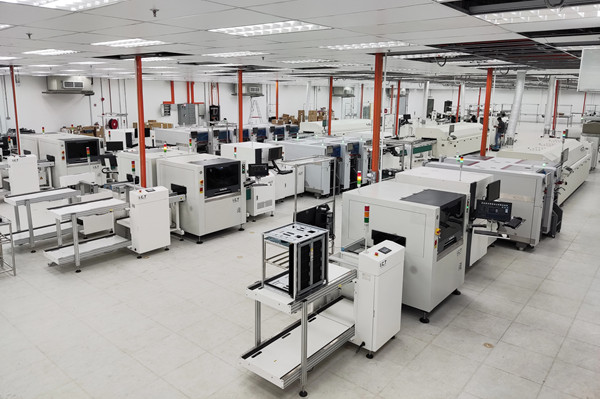
You get the most help from automation in these PCBA steps: solder paste printing, pick-and-place, reflow soldering, automated inspection and testing, depaneling, and packaging. Automation makes each step more exact and steady. You can make things faster and save money, especially when you make a lot of PCBA at once.
Industry reports say that spreading tooling costs over many products lowers costs. Automated workflows lower mistakes and make quality better. You save time, pay less for each unit, and get good results you can trust. Automation helps you make fewer mistakes and keeps the assembly the same every time.
Automation helps important PCBA steps like solder paste printing, pick-and-place, and reflow soldering. It makes production faster and more correct.
Using automated systems lowers mistakes. This means boards are better and need fewer repairs. It also saves time and money.
Automated inspection methods like AOI and AXI find problems fast. They make sure only good boards leave the factory.
Automated depaneling and packaging make production smoother. This lets factories work faster and lowers the cost for each unit.
Putting money into automation helps factories meet demand. It also makes work better and keeps quality the same.
You can make your factory work better by using automation in pcba. The main steps are solder paste printing, pick-and-place, and reflow soldering. Automation helps you work faster and more accurately. You get more good boards from each batch. Surface mount technology uses these automated steps to make lots of high-quality products. When you use machines, you make fewer mistakes. Your boards turn out the same every time.
Here is a table that shows how automation helps each step in pcba:
Step | Description | Improvements |
|---|---|---|
Solder Paste Printing | Uses 3D-SPI equipment to check solder paste at a tiny level. | Makes perfect solder joints. |
High-Speed Placement | Pick-and-place machines put parts with ±25µm accuracy very fast. | Places thousands of parts each hour. |
Reflow Soldering | Multi-zone ovens use exact heat to bond parts. | Makes sure every joint is strong. |
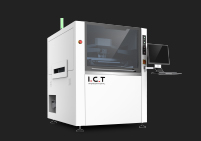
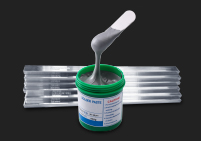
Solder paste printing is the first step in pcb assembly. This step puts small amounts of solder paste on the pads. You need to be very careful to make strong solder joints. Automation helps you do this job well.
Automated solder paste printers use cameras and robots. These tools help you get the right amount of paste every time. You do not have to worry about mistakes.
3D solder paste inspection systems check the paste very closely. You can find problems early and fix them before they get worse.
Automatic solder mask inspection systems add another check. They help you keep your boards the same.
When you use automation for solder paste printing, you see fewer mistakes. Here is a comparison:
Printing Method | Defect Rate |
|---|---|
Manual Stencil Printing | 5-10% rework rate |
Semi-Automated Stencil Printing | 2-5% rework rate |
Fully Automated Stencil Printing | Under 1% rework rate |
You save time and money because you do not fix as many boards. You also get better boards every time.
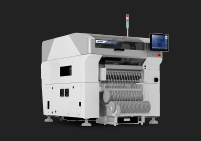
Pick-and-place machines are very important in pcb assembly automation. You use these machines to put lots of parts on your board quickly. These machines can place parts with 0.01 mm accuracy. You can make both small and big batches with the same quality.
Pick-and-place machines are fast. You can place thousands of parts each hour.
You get the same results every time. Every board looks the same. You do not worry about mistakes from people.
You save money in the long run. Most companies get their money back in 8 to 24 months. If you make lots of boards, you save even faster.
Pick-and-place robots make pcb assemblies better. Machines put parts in the right spot every time. This lowers mistakes like crooked parts and bad soldering. You get more good boards and better electronics.
You can see the good results from high-speed pick-and-place and pcb assembly automation in your numbers and profits.
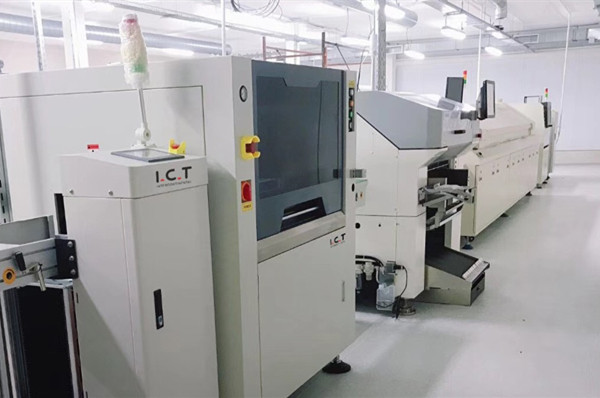
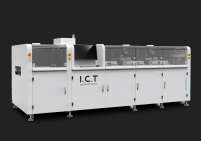
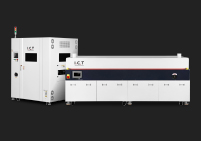
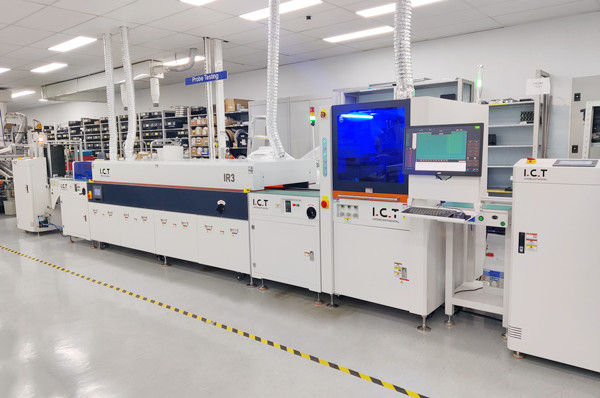
Reflow soldering sticks parts to the pcb. You use ovens with different heat zones to melt the solder paste. Automation gives you exact heat control. You make sure every joint gets hot enough to stick well.
Automated reflow soldering lowers mistakes. You do not need to touch the boards as much.
You get strong solder joints on every board. This makes your boards last longer and need less fixing.
You can handle bigger parts and surface-mounted devices in one line. This makes your factory work better.
Automation in reflow soldering also cuts labor costs. You do not need as many workers to watch the process. You can spend more time checking quality and making things better.
By automating these main steps in pcba, you work faster and more accurately. You also save money and make your boards more reliable.
You can make your pcba process better with automation for inspection. Automated optical inspection (AOI) and automated X-ray inspection (AXI) help you find problems fast. AOI uses cameras to look for surface problems like missing parts, bad solder joints, or parts that are not straight. AXI looks inside the pcb to find hidden problems that AOI cannot see.
AOI systems check a pcb in less than 10 seconds. AXI takes more time, but it finds inside problems in hard boards. AOI costs less and works well for normal boards. AXI is good for boards with lots of parts and advanced designs.
Feature | AOI | AXI |
|---|---|---|
Defect Detection Capabilities | Great for surface problems | Great for finding inside problems |
Speed | Checks boards in 10-20 seconds | Takes 1-5 minutes for each board |
Cost | Cheaper, starts at about $50,000 | More costly, starts at $200,000 |
Application Suitability | Best for normal SMT boards | Best for hard, crowded boards |
Automation in inspection helps you work faster and better. AOI finds problems like not enough solder, too much solder, and solder balls. You get quick feedback, so you can fix things before they get worse. AXI helps you meet quality rules by finding hidden problems. Both systems save data, so you can check later and follow rules.
You can use automation for testing to make sure your pcb works right. In-circuit testing (ICT) checks if the electrical parts are connected and finds problems early. Functional testing makes sure the board does its job. Automation makes testing faster and keeps work moving.
Benefit | Description |
|---|---|
Early defect detection | Electrical testing checks connections and jobs, so fewer bad boards move forward. |
Improved reliability | Using ICT makes factories work better and boards last longer. |
Optimized processes | Finding the same problems and fixing how you build saves time and money. |
Automated testing systems collect data right away and link results to each board. You can track every pcb and get test reports for checks or repairs. Digital tools help you see patterns and make boards better. Testing the same way every time means fewer mistakes, less fixing, and people trust your products more.
Final checks and automated testing keep your brand safe. Good boards mean fewer repairs and happier customers.
Automation in inspection and testing gives you more good boards, faster work, and better quality. You can stop problems before they leave the factory and make your products last longer. Automated systems help you follow rules and keep your pcba process running well.
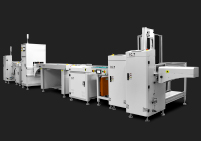
You can make pcb manufacturing faster with automated depaneling systems. These machines cut pcbs from panels very accurately. You do not have to cut by hand, which can cause mistakes and waste. Automated systems use laser cutting, AI, and full automation. Laser cutting makes smooth edges and less mess. AI helps plan the best way to cut, so you use less material and waste less. Fully automated systems work quickly and fit into your factory.
Depaneling Method | Key Features | Applications |
|---|---|---|
Laser Cutting | High precision, minimal waste | Advanced electronics, automotive, medical devices |
AI Integration | Optimizes cutting paths, reduces waste | Complex PCB designs, high-volume production |
Fully Automated | High-speed operation, integrates with production lines | Consumer electronics, automotive, telecommunications |
Automated depaneling systems help you save money. One machine can do the work of many people. You can let workers do other important jobs. Automatic loading and unloading means less touching by hand. Vision cameras check every cut to make sure it is right. You can set up jobs fast with special software, so you do not lose time.
Impact Area | Description |
|---|---|
Production Speed | Automated systems process panels in seconds, increasing throughput compared to manual methods. |
Operational Cost Reduction | One machine replaces multiple operators, saving labor costs. |
Quality Control | Cleaner edges and fewer defects lower rework costs. |
Maintenance and Uptime | Quick-release fixtures keep downtime near zero. |
Automated depaneling is also good for the environment. Laser cutting makes less mess and uses less energy. You use more of your materials and throw away less.
Automated depaneling systems make pcb manufacturing faster, cleaner, and more reliable. You can make your factory better and improve quality.
You can make pcb manufacturing better with automated packaging. Robots and conveyors do the same jobs over and over, so you need fewer workers. Automated pcba production lets you package boards fast and the same way each time. You can change how things are packed quickly, so you stay flexible and keep working fast. Data from the line helps you fix problems before they stop work.
Automated packaging makes more boards in less time.
Robots work all the time, so you get more done.
Barcode readers track parts and help check quality.
Automated testing checks that every board is good.
Assembly Technology | Automation Level | Cost Implications | Production Suitability |
|---|---|---|---|
SMT | High | Low cost per unit | Volume production |
THT | Low | High unit costs | Small lots |
Hybrid | Medium | Intermediate costs | Varies |
When you use automation for packaging, you pay less for each board. Making 1000 pcbs costs less for each one than making just 10. Automated packaging helps you make more boards and keep costs low. You get the same good boards every time and send them out faster.
Automation in pcba packaging makes your factory work better and saves money. You can fill big orders, waste less, and ship products on time.
You get the most help from automating solder paste printing, pick-and-place, reflow soldering, inspection, depaneling, and packaging. These steps make your factory faster and your boards better. Automation helps you spend less money and make more good boards. Your production is steady and you can make more boards when you need to. You can finish orders on time with less hard work.
Automation uses smart machines and AI to stop mistakes and keep your line working.
Benefit | Description |
|---|---|
Increased Output | Machines work all day and make lots of boards very fast. |
Improved Quality | You get fewer errors and better boards, so you do not have to fix as many. |
If you want to keep up with others, you should use automation for these important steps.
Automation makes production faster and improves quality. Machines repeat the same task every time. This means fewer mistakes and less money spent fixing boards.
You can use automation for small batches too. Machines help keep quality high. You might not save as much money, but your boards turn out steady.
Automated inspection finds problems fast. You can fix issues before boards leave the factory. This gives you more good boards and fewer boards sent back.
Automated packaging saves time and labor. Robots pack boards quickly and make each package the same. You ship orders on time and waste less.