English
  |


I.C.T
| Quantity: | |
|---|---|
| Overview of SMT Full Line Production
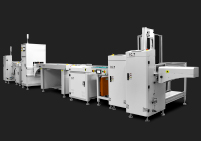
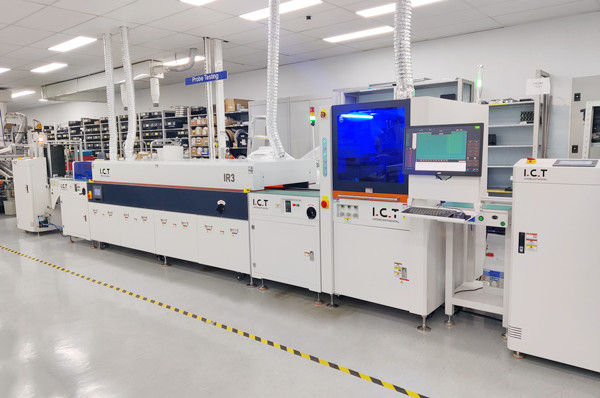
An SMT full line production is not simply a collection of machines placed together. It is a coordinated manufacturing system where every process step is designed to support stable output, predictable quality, and efficient daily operation. For many factories, the real challenge is not buying equipment, but making sure the entire SMT production line runs smoothly as one unit. A well-designed full automatic SMT line reduces manual handling, shortens production cycles, and keeps product consistency under control. I.C.T focuses on building complete solutions instead of isolated machines, so the SMT Full Automatic Smd Production Line can be managed, adjusted, and expanded as production needs change. This approach helps manufacturers move from manual or semi-automatic assembly toward a more structured and scalable production model.
| Feature
Complete Line Configuration Concept
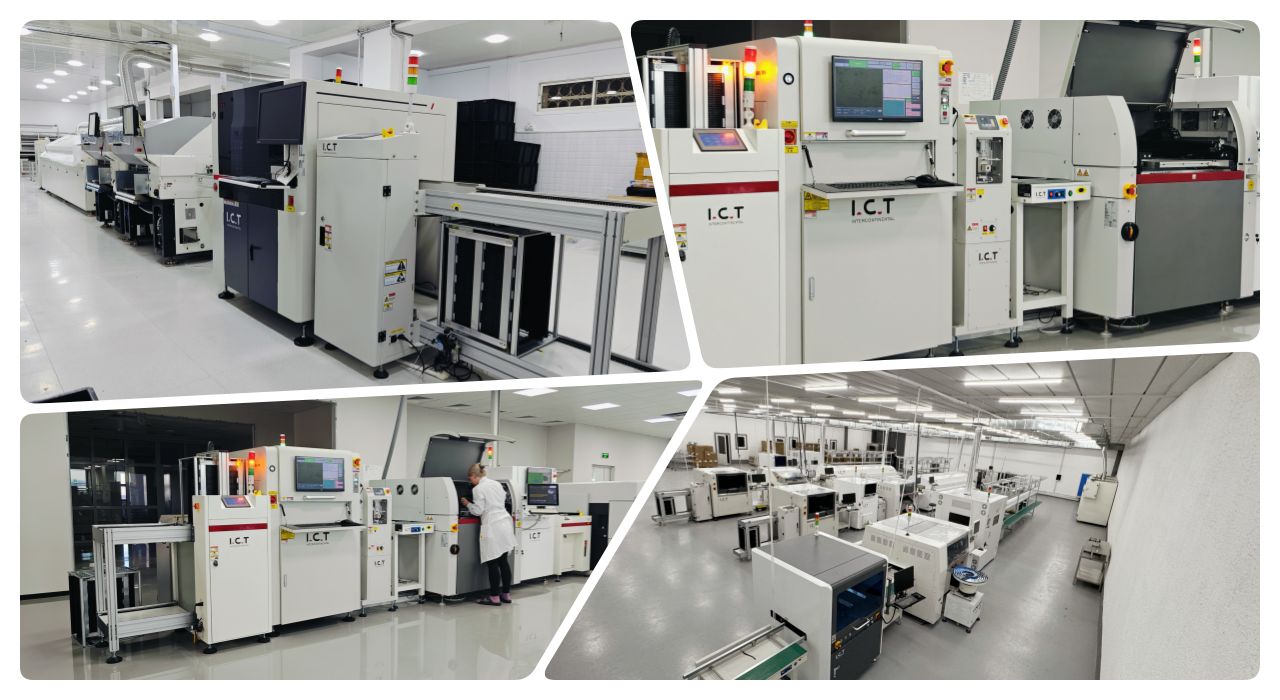
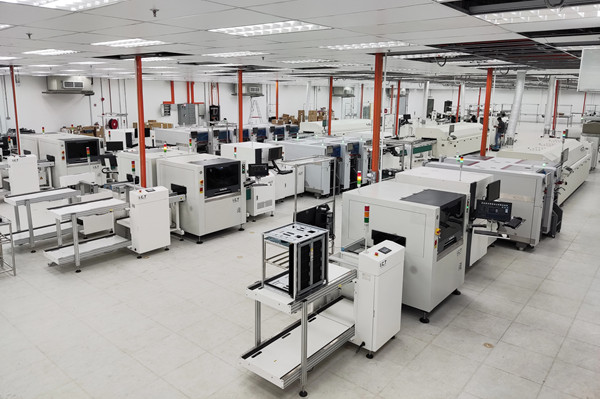
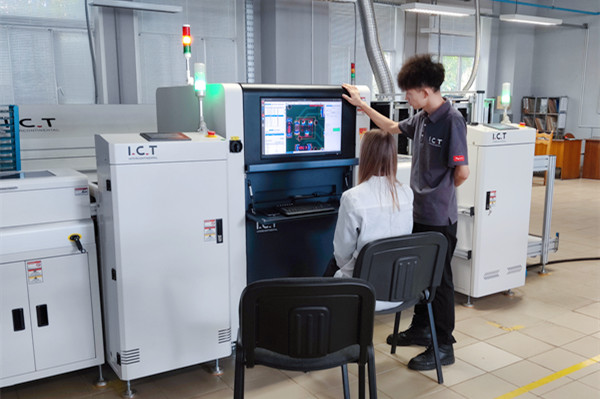
The value of an SMT full line production lies in how each section supports the next one. From board loading to final unloading, the line is planned as a continuous flow rather than independent stations. This approach reduces waiting time between processes and avoids hidden bottlenecks that often appear in poorly matched lines. I.C.T designs the SMT production line starting from real product requirements, not from a fixed template. Line length, layout shape, buffer design, and transfer logic are all adjusted to match the factory space and production rhythm. The result is a full automatic SMT line that feels natural to operate, easy to supervise, and stable under long-term production pressure, even when product models or batch sizes change.
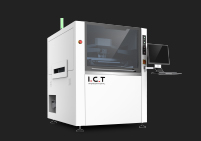
Printing System and Process Stability
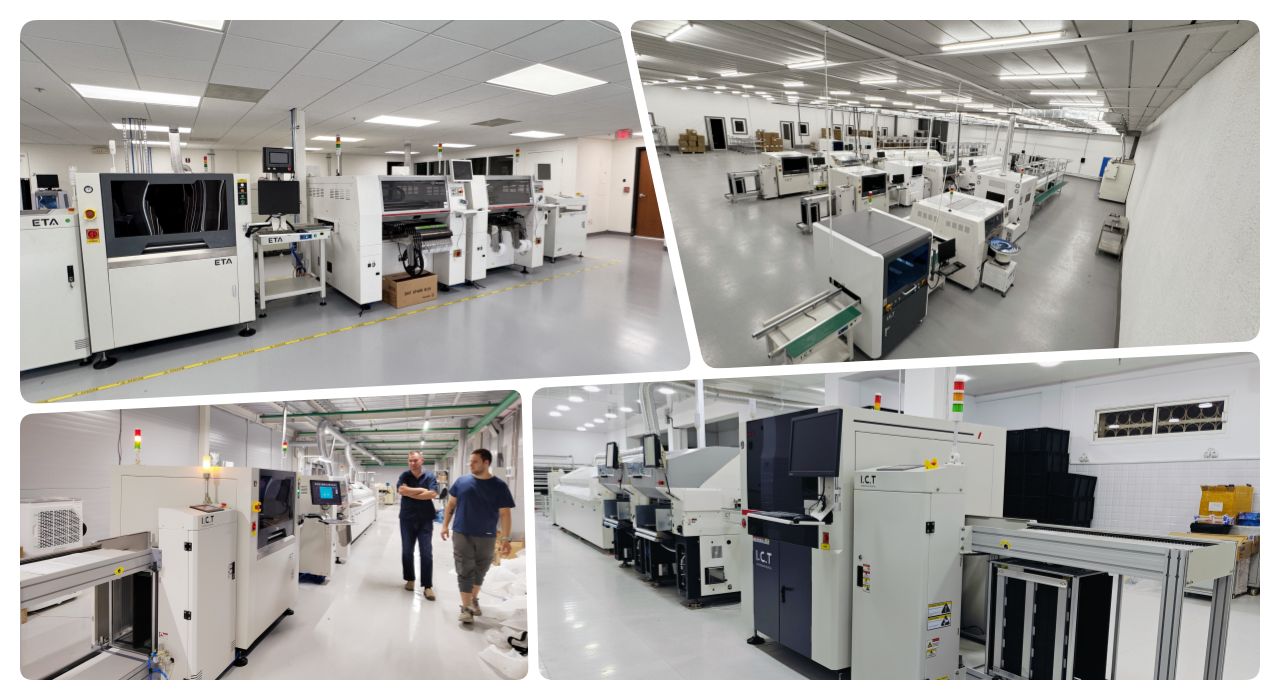
In any SMT Full Automatic Smd Production Line, the printing process sets the foundation for all following steps. Instead of treating printing as a standalone machine, I.C.T integrates it into the overall line rhythm. Board transfer, alignment, and downstream handover are all synchronized to avoid stop-and-go operation. This helps maintain consistent solder paste quality across long production runs. The printing section is also designed for fast stencil change and simple daily cleaning, so operators can keep the line moving without long interruptions. By focusing on process continuity rather than only printing speed, the SMT production line achieves a more predictable output and reduces the risk of quality fluctuations caused by unstable upstream conditions.
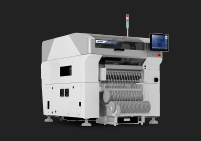
Placement System and Production Flexibility
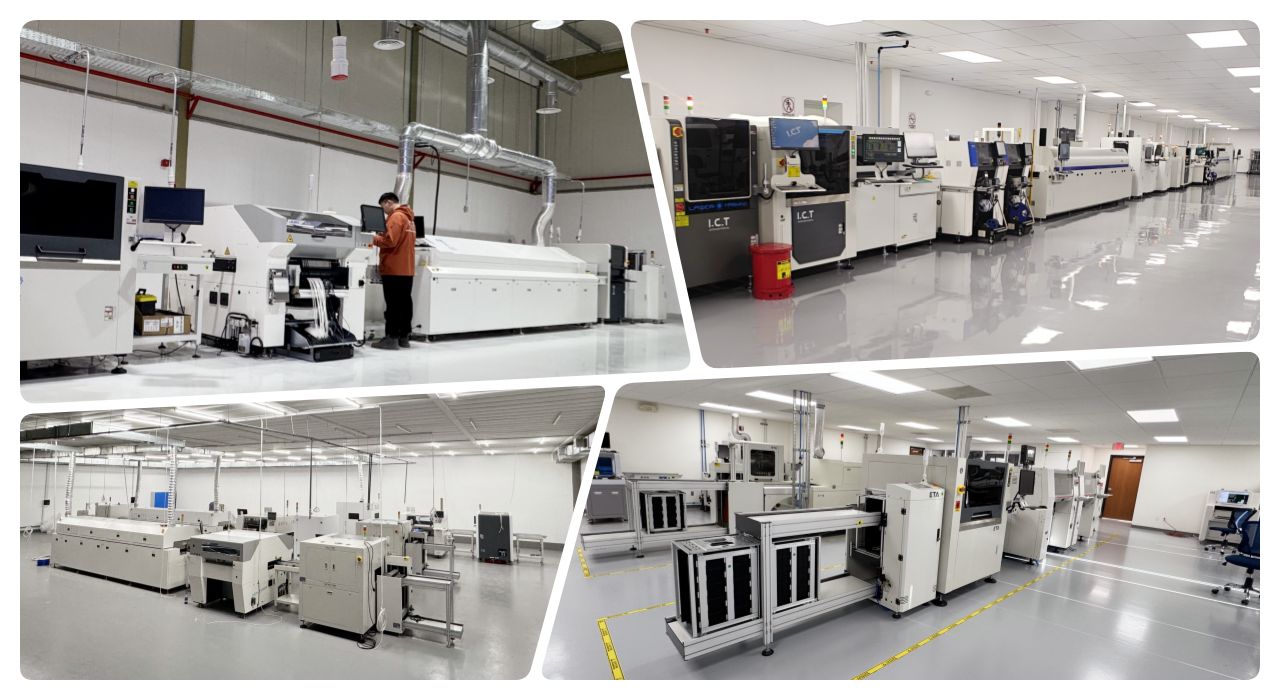
Placement is where speed and accuracy must be balanced with product diversity. In an SMT full line production, the placement section is configured not only for peak performance, but also for real-world product changes. I.C.T arranges the placement system to handle different component types, board sizes, and production mixes without forcing complex reconfiguration. Feeder management, component supply logic, and line communication are designed to support smooth changeovers. This makes the full automatic SMT line suitable for both stable mass production and mixed-model manufacturing. Instead of chasing only headline speed numbers, the SMT Full Automatic Smd Production Line is optimized for daily efficiency, stable yield, and predictable planning.
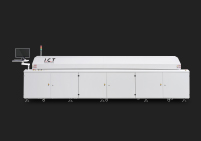
Reflow System and Thermal Process Control
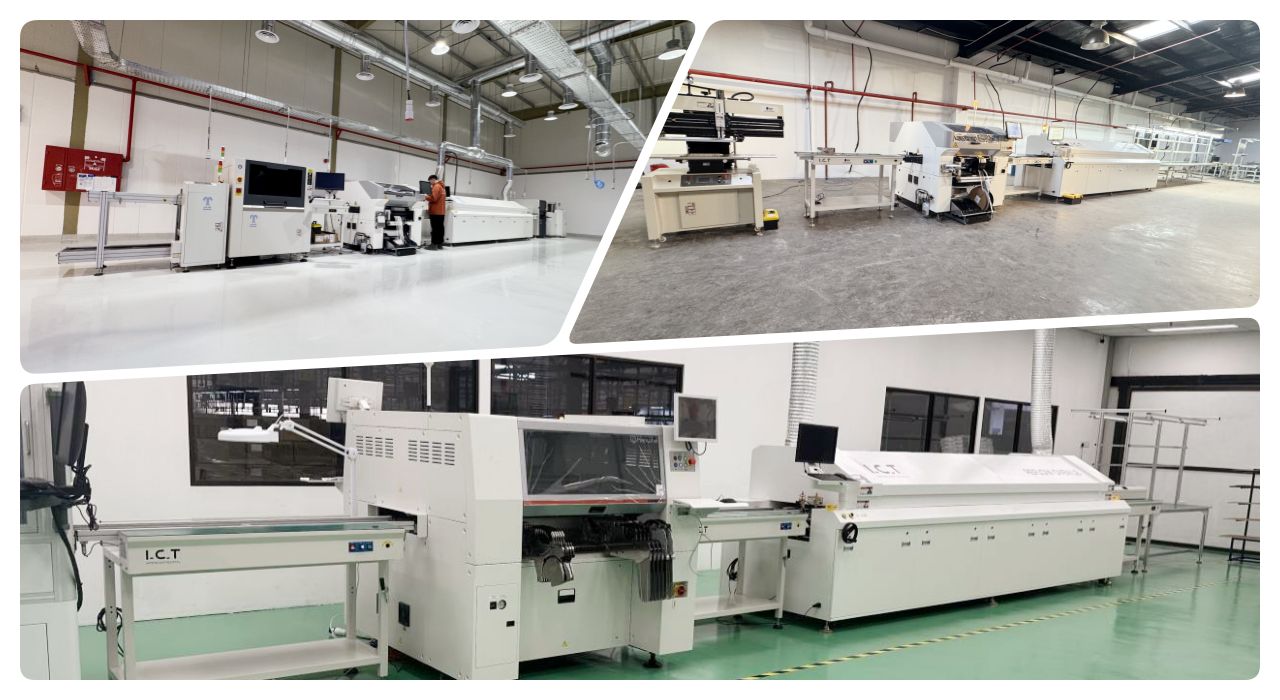
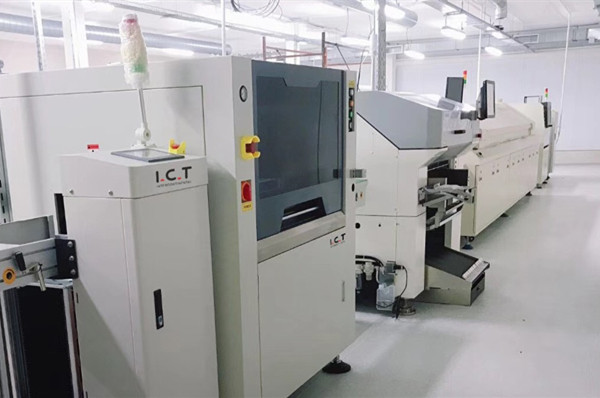
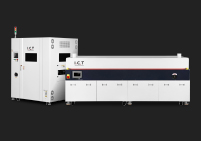
Reflow is the stage where all previous work is either confirmed or lost. In an SMT production line, thermal stability and repeatability matter more than theoretical peak temperature performance. I.C.T integrates the reflow system into the line with a focus on consistent transport, stable heating zones, and smooth board handling before and after the oven. The full automatic SMT line is designed so that boards enter and exit the reflow stage without congestion or unnecessary waiting. This reduces thermal variation between boards and helps maintain solder joint consistency. Over time, this approach makes the SMT full line production easier to control, easier to document, and easier to keep within process limits.
Inspection and Quality Control Integration

Inspection is not treated as a separate checkpoint, but as a feedback mechanism inside the SMT Full Automatic Smd Production Line. Instead of only finding defects, the inspection section is used to guide process improvement and daily adjustment. Data flow, board tracking, and line feedback are considered during the initial line design. This allows operators and engineers to quickly locate the source of problems rather than only sorting out defective boards. By embedding inspection into the SMT production line logic, the full automatic SMT line becomes a self-correcting system rather than a simple assembly chain. This significantly improves long-term stability and reduces the cost of quality issues.
| Specification
| Category | Projects | Details |
|---|---|---|
| Factory Layout Requirements | Factory Air Circuit Layout | Use factory air source or separate oil-free compressed air machine. Pressure should be greater than 7kg/cm². |
| Factory Electrical Layout | Single-phase AC220 (220±10%, 50/60Hz) Three-phase AC 380V (380±10%, 50/60Hz) | |
| Factory Exhaust Layout | The minimum flow rate of the exhaust duct is 500 cubic feet per minute (14.15m³/min) | |
| Factory Lighting Layout | The ideal illumination in the factory is 800~1200LUX, at least not less than 300LUX. | |
| Factory Temperature Layout | The ambient temperature of the production workshop is 23±3°C, generally 17~28°C, and the relative humidity is 45%~70%RH. | |
| Material Preparation | BOM List | List all parts and quantities needed for PCBA Production Line assembly. |
| CAD File | Digital design file to plan PCB layout and machine setup. | |
| Gerber File | Standard file for PCB manufacturing and printing stencil. | |
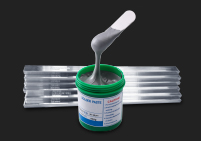
| Solder Paste | Material applied on pads before placing components in printer. | |
| SMD Component Materials | Surface mount parts like chips and resistors for placement. | |
| Industrial Alcohol | Used to clean boards and stencils during setup process. | |
| Splice Belt | Tape to connect feeder reels without stopping the line. | |
| Stencil | Metal sheet with holes to print solder paste accurately. |
| SMT Line Equipment List

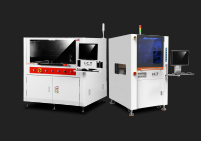
I.C.T make real High-Quality PCBA Production Line. Vacuum loader give board clean. Auto printer put paste right. Placer set chip true. Many zone reflow solder hard. Good AOI find all bad. Line stay tight. Yield high. Cost low. No play. Make for hard work car health light. Board come ready real world. We back full.
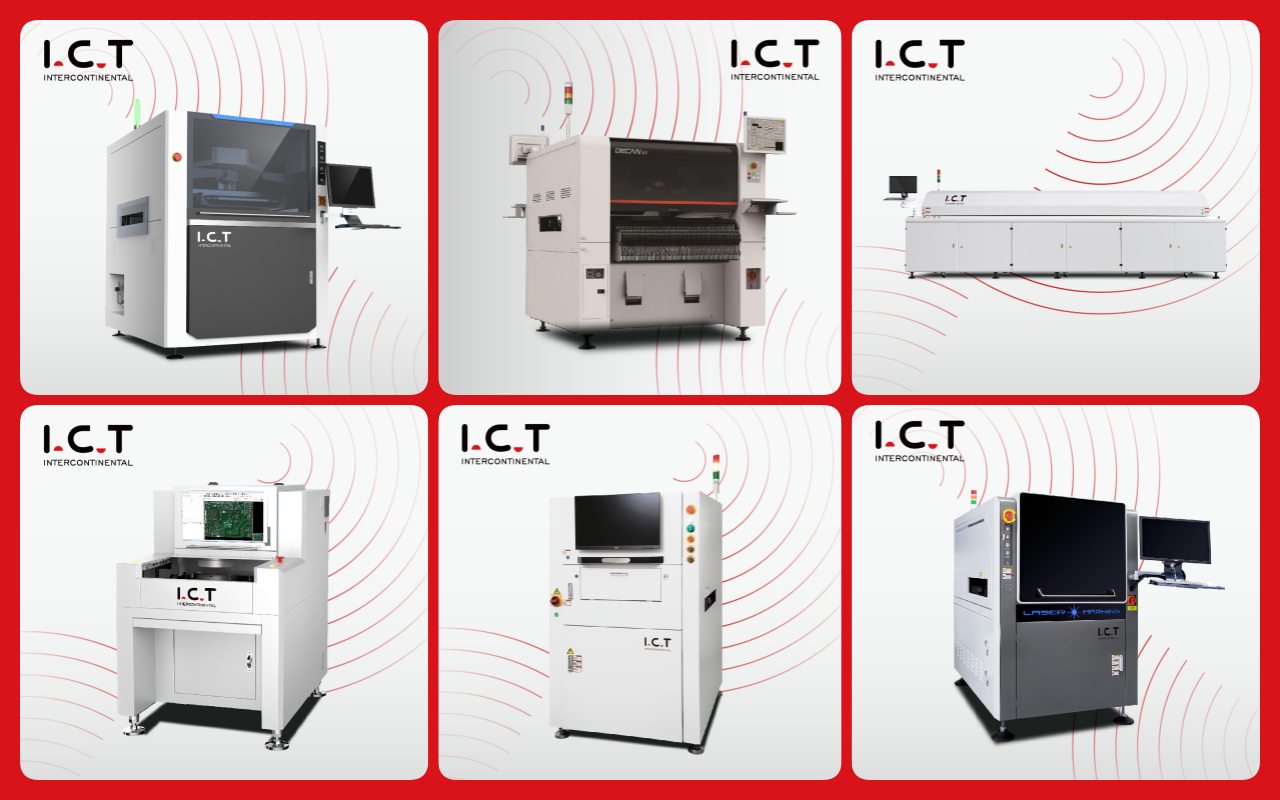
| Product Name | Purpose in SMT Line |
|---|---|
| PCB Loader | Automatically loads bare PCBs to the line. |
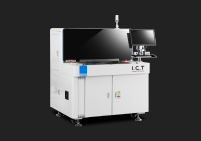
| Solder Paste Printer | Prints solder paste on PCB pads accurately. |
| Pick and Place Machine | Mounts components onto PCBs precisely. |
| Reflow Oven | Melts solder to form solid joints. |
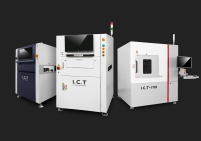
| AOI Machine | Inspects solder joints and placement defects. |
| SPI Machine | Checks solder paste height and quality. |
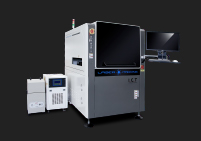
| Traceability Equipment | Records and tracks production data: Laser Marking Machine/Label Mounter/Inkjet Printer |
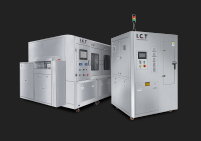
| SMT Cleaning Machine | Used for cleaning PCBs, stencils, fixtures, nozzles, etc. |
| Laser PCB Routing Machine | Cut the PCBA into the final product |
| Customer Project Case
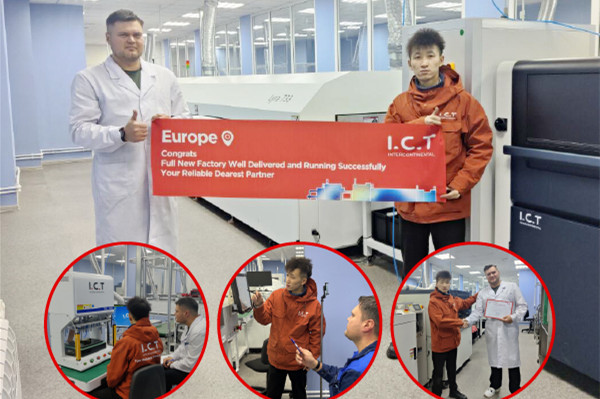
In one overseas project, I.C.T delivered a complete SMT production line together with a conformal coating line for a manufacturer producing USB charging modules used in aircraft passenger seats. The goal was not only to build capacity, but to create a stable and traceable production flow suitable for high-reliability electronics. The solution combined automatic printing, high-speed placement, smooth board transfer, controlled reflow, coating, and curing into one coordinated system. I.C.T engineers worked on-site with the customer’s team to align the line with their real production habits and quality expectations. After the line was fully running, the customer achieved a much more organized workflow, clearer process control, and more predictable output for this demanding aviation application.
| Global Service and Training Support
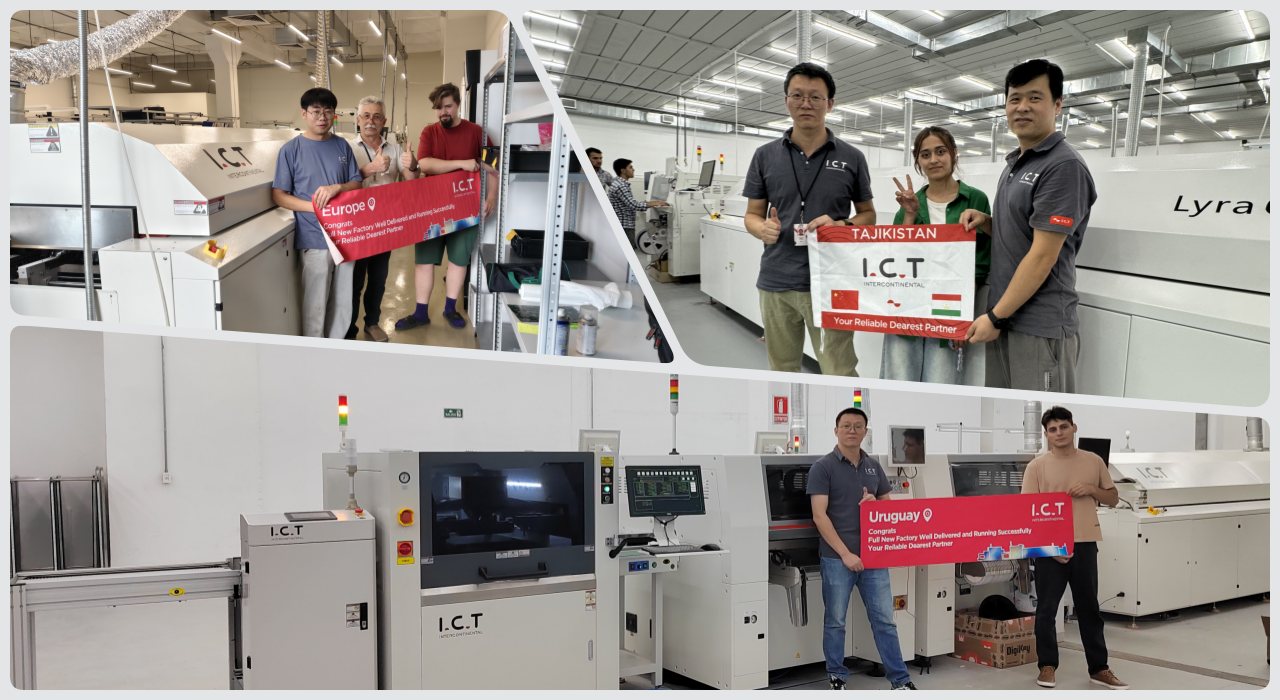
For I.C.T, delivering an SMT full line production is not the end of the project, but the start of long-term cooperation. The service concept focuses on helping customers truly use the full automatic SMT line instead of just owning it. From installation guidance to operator training and process tuning, the technical team works with the customer to build confidence in daily operation. The goal is to make the SMT production line understandable, controllable, and maintainable by the local team. When production models change or capacity needs to grow, I.C.T can also support line adjustment and expansion planning. This service philosophy helps customers protect their investment and keep the SMT Full Automatic Smd Production Line performing consistently.
| Customer Feedback and Market Response
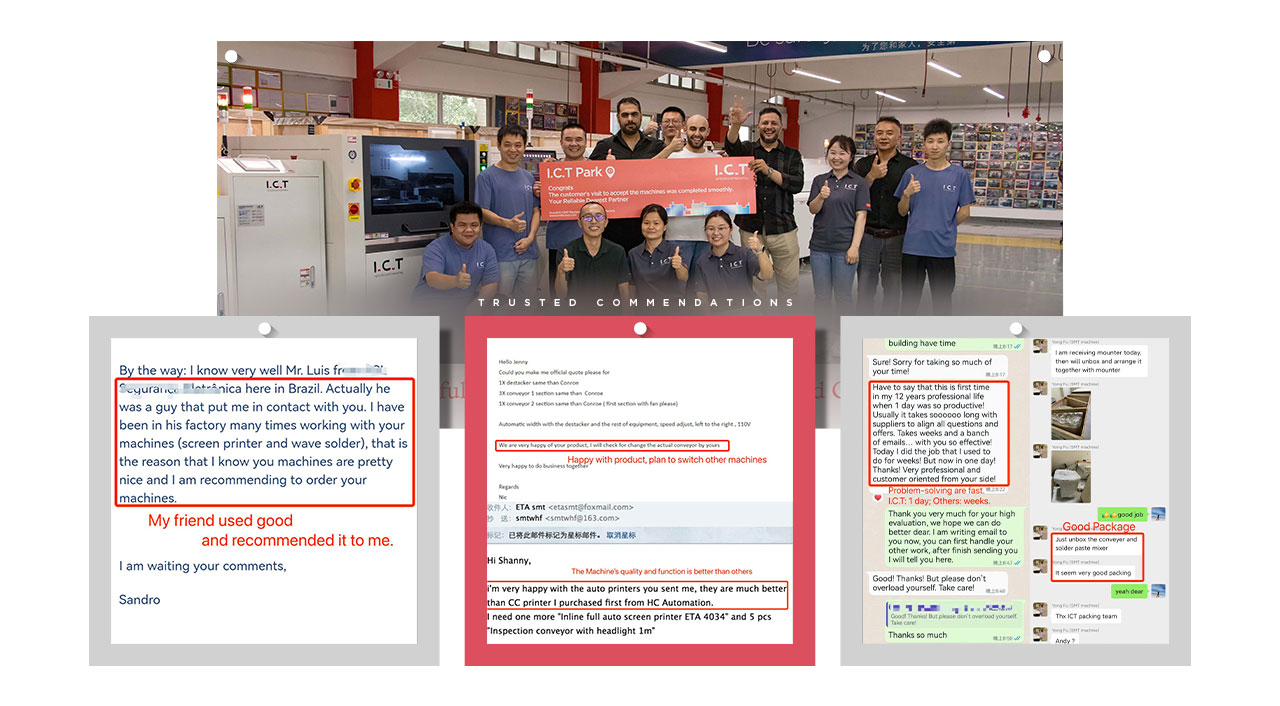
Customers who adopt a complete SMT full line production often notice changes beyond simple output numbers. Many report that daily planning becomes easier, production meetings become more focused, and problem analysis becomes more data-driven. Because the full automatic SMT line is designed as a system, operators spend less time firefighting and more time following standard procedures. For management, the SMT production line becomes more predictable in both capacity and quality. This shift from reactive to structured operation is often seen as one of the most valuable results. Over time, the SMT Full Automatic Smd Production Line helps build a more disciplined manufacturing culture, not just a faster assembly process.
| Certifications and Standards
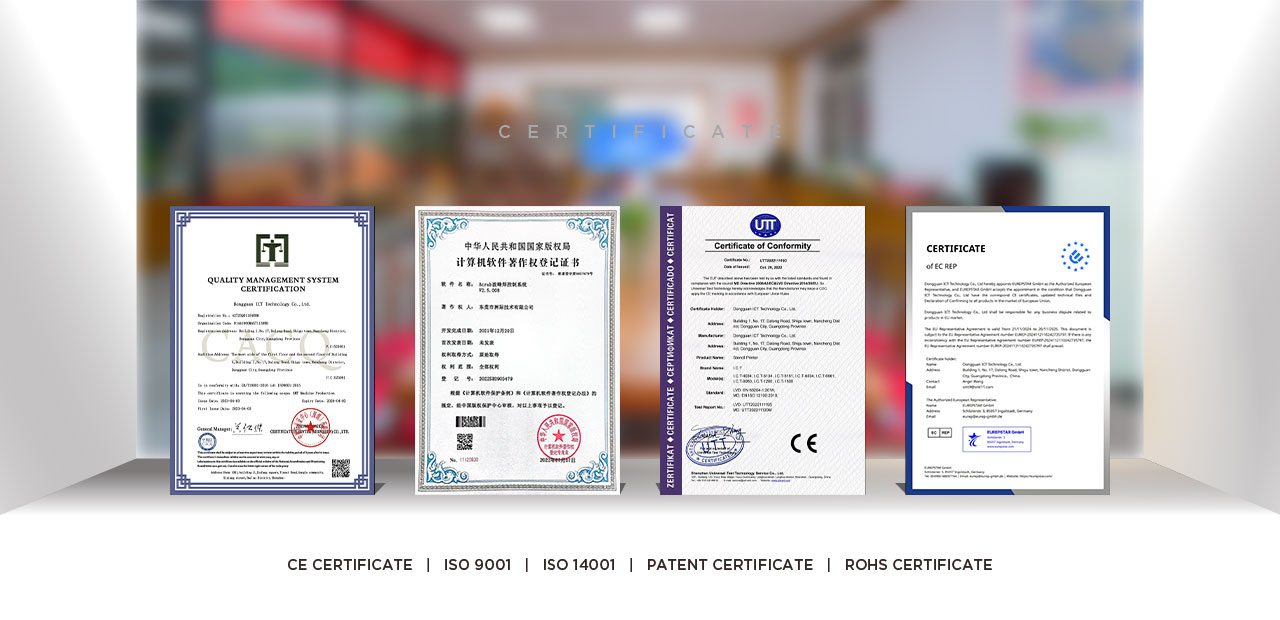
A well-designed SMT full line production must fit into a factory’s quality and management system, not work against it. I.C.T builds its solutions with documentation, traceability, and process stability in mind. The full automatic SMT line can be integrated into existing quality systems and supports standard operating procedures, maintenance plans, and process records. This makes it easier for factories to pass internal and external audits and to keep their production under consistent control. Instead of being a black box, the SMT production line becomes a transparent and manageable asset. This structured approach is especially important for customers working in industries with strict quality and reliability requirements.
| About I.C.T Company and Factory
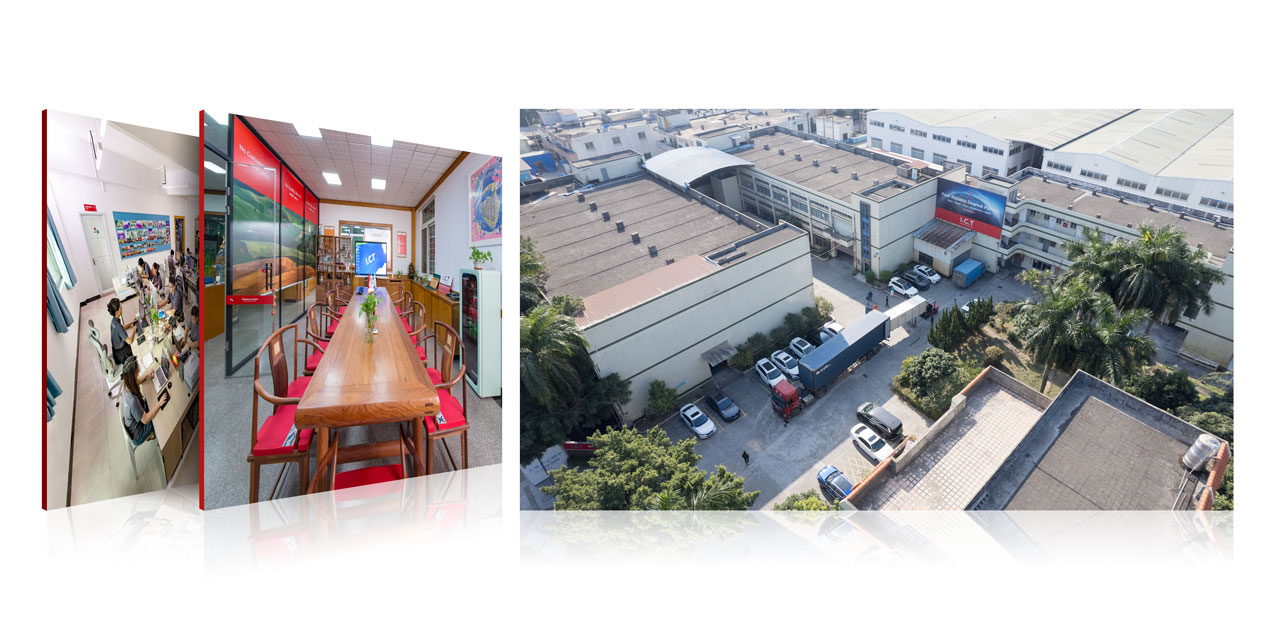
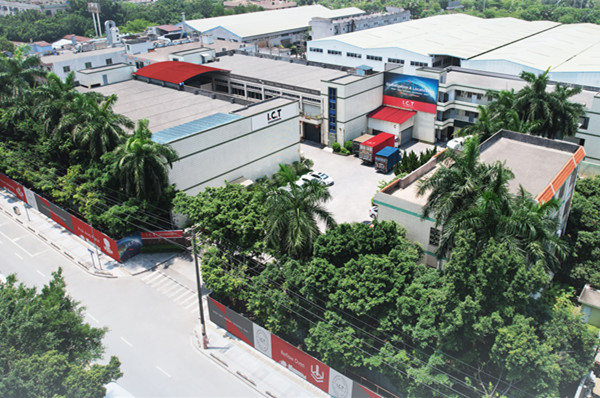
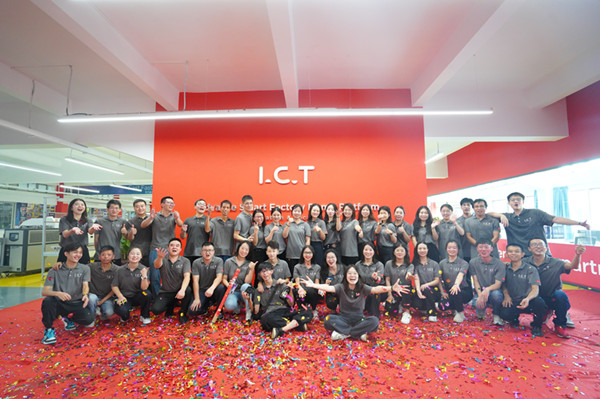
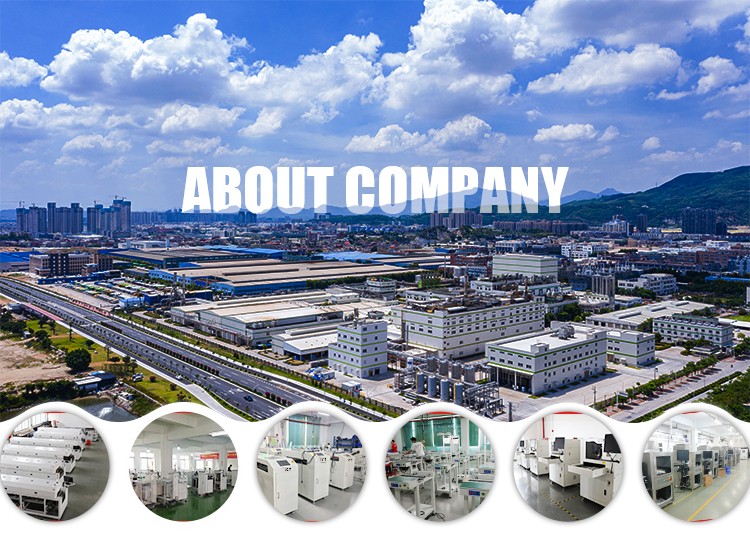
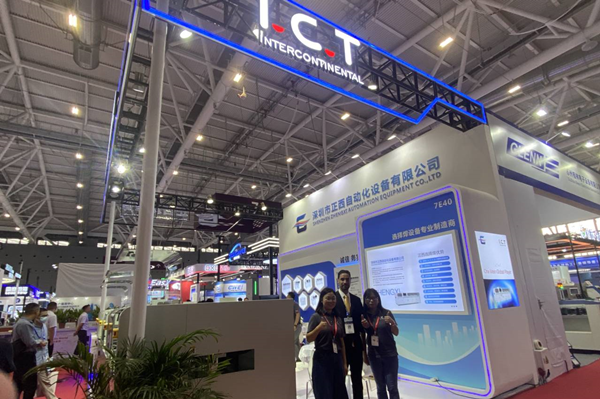
I.C.T is dedicated to providing complete manufacturing solutions rather than isolated equipment. The company focuses on helping customers build stable, efficient, and scalable SMT full line production systems based on real factory conditions. With experience across different industries and application scenarios, I.C.T understands that every SMT production line must balance space, capacity, product type, and future plans. Beyond equipment supply, I.C.T provides global technical support, process guidance, and long-term service cooperation. This allows customers to not only start their full automatic SMT line successfully, but also continue improving and expanding it as their business grows and their product strategies evolve.