English
 Views: 0 Author: Vinci Zhang Publish Time: 2026-10-09 Origin: Site


During the week of September, 2026, I.C.T completed on-site commissioning of an OFM-series odd-form insertion machine and 3D AOI review stations at an EMS Customer’s factory in India. I.C.T sent an engineer to support equipment setup, product programming, and hands-on training. Acceptance was completed on September 12, with follow-up training and technical support continuing through September 14.
The Customer provides electronics manufacturing services for products including EV chargers, computer motherboards, LED lighting, high-power power supplies, variable frequency drives, and inverters. These applications involve different component types and board layouts, making product-specific setup an important part of automated PCB assembly.
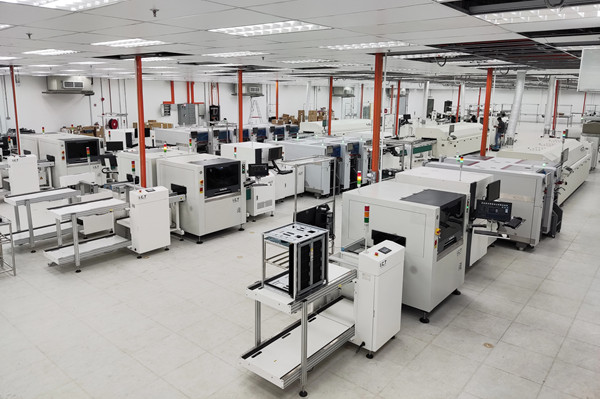
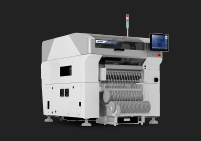
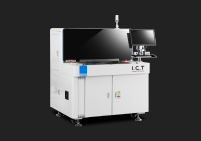
For this project, I.C.T’s work centered on the OFM-6D odd-form insertion machine. Training used the Customer’s actual materials and board samples, including radial capacitors, connectors, power terminals, and MOSFETs. The service also covered 3D AOI review stations for reviewing inspection results.
Equipment | Role in the Project |
|---|---|
OFM-6D odd-form insertion machine | Automated insertion of through-hole components, with feeder setup and programming for two PCBA models |
3D AOI review stations | Inspection-result review, NG image viewing, and statistical process control (SPC) training |


On arrival, the I.C.T engineer checked the machine’s condition and supplied accessories. Electrical connections, leveling, positioning, and line height adjustment had already been completed. The engineer then powered on the machine and confirmed that its homing sequence worked correctly.
Next came feeder installation and adjustment. Training covered tape feeders, stick feeders, linear vibratory feeders, bowl feeders, and the automatic tray cabinet. The engineer aligned the feeding paths and explained loading, material detection, vibration settings, timing, and pneumatic controls. These checks helped components feed smoothly to the pickup position.
After feeder setup, training moved to the machine’s hardware and software. The team learned how to control the X, Y, Z, and rotation axes, operate the board conveyor and clamps, and use the cameras, grippers, and nozzles.
Using the Customer’s boards, the engineer demonstrated how to create a program, enter component data, set PCB fiducial marks, teach insertion holes, and define pickup positions. Training also covered panelized boards and bad-board recognition. Customer engineers practiced programming and adjustment alongside the demonstrations.
The engineer then fine-tuned settings for the actual components. Gripper timing and speed were adjusted for a connector, while terminal insertion data was corrected through automatic hole teaching. A bowl feeder’s pneumatic connection was also adjusted to restore proper feeding.
Before further trials, the team checked the first assembled board and component orientation. For radial capacitors, training included lead clinching and insertion-sequence changes. The four capacitors requiring clinching were inserted before other connectors to reduce the risk of components coming loose during that operation.
Repeated small-batch trials confirmed normal machine operation for the first PCBA model, with a recorded cycle time of 56.57 seconds. The second model was then programmed and tested, with component polarity checked and a recorded cycle time of 73.81 seconds. These figures apply to the tested board configurations.
Training also covered production alarms, rejected components, safe operation, and daily, monthly, quarterly, and annual maintenance. Programming videos and maintenance materials were shared for later reference.
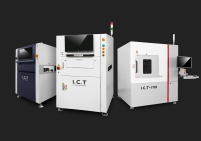
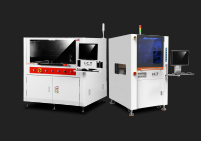
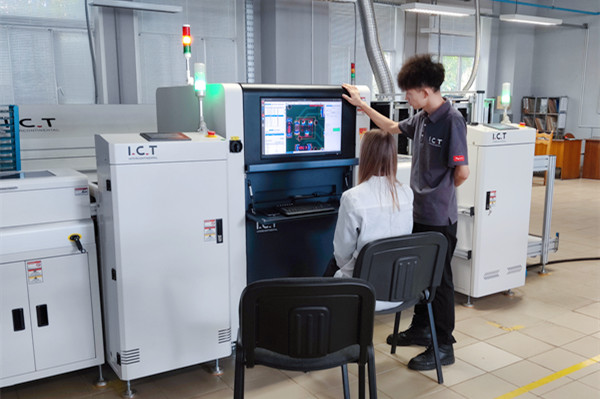
I.C.T installed and connected two 3D AOI review stations. Repeated restart tests confirmed normal connections. Training covered copying inspection programs between the two lines, viewing NG images, and using SPC functions. The engineer also addressed bad-board fiducial recognition and a review-station image and voice notification issue.
The OFM-6D and 3D AOI review stations passed acceptance on September, 2026. Follow-up sessions gave the Customer’s engineers more practice with both PCBA programs and time to ask questions. By combining equipment commissioning with actual product trials, I.C.T helped the Customer establish a working automated insertion process and build the skills needed for daily operation and maintenance.
Every new machine comes with a learning curve, and your team deserves support through those first steps. If you’re planning to automate odd-form insertion or expand your EMS production, share your products and challenges with I.C.T. We’ll work with you to find a practical solution and help your engineers feel confident using it—from the first setup to everyday production.