English
 Views: 0 Author: Site Editor Publish Time: 2026-09-24 Origin: Site


High-density PCB assembly in 2026 demands surface-mount technology platforms that balance extreme placement speeds with necessary changeover agility. Electronics manufacturers face a strict operational trade-off on the factory floor. You must maximize single-run throughput for mass production while maintaining the flexibility needed for high-mix, low-volume environments. Achieving this without suffering prohibitive downtime separates profitable lines from failing ones. Evaluating the architectural realities of these platforms is essential. Plant managers must determine which system aligns with specific production scaling, floor space constraints, and long-term reliability requirements. A misaligned machine choice creates immediate production bottlenecks. It limits a facility's ability to adapt to rapid changes in consumer electronics and automotive component designs. Understanding the distinct engineering philosophies behind these two industry giants provides the foundation for a resilient manufacturing floor.
FUJI platforms excel in high-mix manufacturing environments, prioritizing rapid changeover speeds, modular line flexibility, and advanced feeder technologies over brute-force single-run throughput.
Panasonic traditionally dominates ultra-high-volume, low-mix production, offering sustained maximum throughput and heavy-duty hardware designed for continuous, uninterrupted operation.
Both platforms offer exceptional durability; modern FUJI SMT Machines match Panasonic's renowned 10+ year lifecycle reliability with robust frame construction that does not compromise modular agility.
Final selection hinges on matching the machine's specific architectural strengths to the facility's 3-to-5-year product mix forecast and existing operator expertise.
Table of Contents
High-volume production focuses on maximum placement speed and continuous operation, while high-mix production requires faster changeovers between different PCB designs. Factories with stable products should focus more on CPH, while those with frequent product changes should consider setup time and flexibility. The right choice depends on your current and future product mix.
Floor space affects both SMT line capacity and future expansion. Manufacturers should compare machine footprint, safety clearance, feeder preparation areas, and output per square meter. Modular systems can also make it easier to add capacity as production grows without rebuilding the entire SMT line.
Small components such as 0201 metric parts require accurate vision systems and precise nozzle force control. Machine vibration, calibration errors, and thermal changes can cause placement defects such as tombstoning, skewing, or missing components. Manufacturers should therefore compare both placement speed and long-term accuracy when evaluating SMT machines.
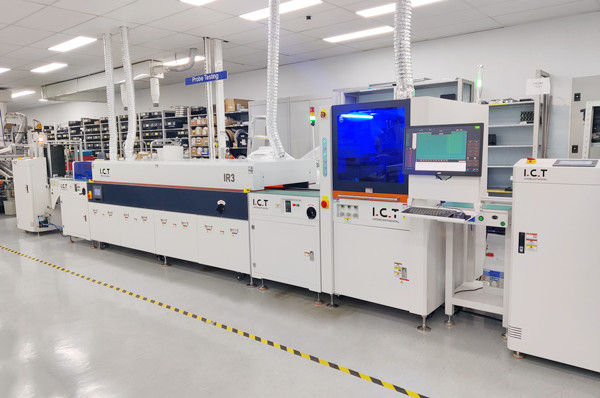
FUJI engineers its platforms around extreme modularity. The latest NXTR series exemplifies this architectural approach. Facilities configure the line precisely to current needs and modify it later as product designs evolve. The NXTR platform divides into two distinct models to address different operational bottlenecks.
The NXTR S model represents the standard configuration, offering exceptional modular head swapping and feeder flexibility. The NXTR A model introduces advanced automation features. It utilizes an automated feeder loading system. This system physically transports and loads tape reels into the machine without human intervention. This automation drastically alters labor allocation on the floor. Operators transition from manual loading tasks to line supervision and optimization. This reduces human error and keeps the machine running continuously during material replenishment.
Changeover agility remains the strongest asset of a FUJI SMT Machine. The feeder ecosystem drives this efficiency. FUJI utilizes intelligent splicing technologies. Operators splice new component reels onto expiring ones without stopping the machine. This eliminates the micro-stoppages that plague older production lines.
Furthermore, offline setup capabilities allow operators to prepare the next product run on spare feeder carts while the current run executes. Once the batch finishes, operators simply swap the entire cart. The machine recognizes the new feeders instantly via RFID or barcode scanning. This intelligent ecosystem reduces machine idle time to absolute minimums during product switches. It transforms high-mix production from a scheduling nightmare into a streamlined, predictable process.
FUJI uses high-resolution cameras for on-the-fly component inspection and checks component position before placement. Its placement heads can handle micro-components and larger odd-form parts, while force control helps prevent component damage. This combination supports accurate placement and reduces rework on high-density PCBs.
FUJI uses heavy, rigid base frames to reduce vibration and maintain placement accuracy during long-term operation. Its modular units are designed to stay stable through repeated production cycles. According to the source, these machines can operate for more than ten years while maintaining reliable placement performance.
Panasonic SMT machines focus on stable, high-speed production for low-mix, high-volume lines. Their rotary placement heads can handle multiple components quickly, while dual-lane processing allows two boards to move through production at the same time. This design is well suited for continuous production of automotive electronics and consumer devices.
Panasonic machines use heavy, rigid frames to reduce vibration during high-speed placement. Stable frames, linear motors, and precise drive systems help maintain placement accuracy during long production runs. This design also reduces the need for frequent calibration and supports continuous 24/7 production.
Panasonic uses PanaCIM to manage production lines, materials, and component inventory in real time. It can also monitor motor torque, vacuum pressure, and placement accuracy to identify possible maintenance needs. This helps factories reduce unexpected downtime, improve production control, and lower defect rates.

Comparing theoretical maximum speeds often misleads buyers. Manufacturers must evaluate the FUJI vs Panasonic SMT Machine based on actual throughput. Theoretical speeds ignore board handling, vision inspection, and component variations. Panasonic often boasts higher theoretical numbers due to its rotary head design. However, real-world throughput depends entirely on the specific board layout.
If a board requires frequent nozzle changes or handles a wide variety of odd-form components, the theoretical speed drops significantly. FUJI's modular heads often maintain a higher percentage of their theoretical speed in complex, high-mix scenarios. Buyers must run benchmark tests using their actual CAD data to reveal true production capabilities on their specific product lines.
FUJI uses modular heads and offline feeder preparation to support faster product changeovers and reduce machine idle time. Panasonic mainly uses cart-based changeovers, which are efficient but require more floor space. FUJI is better suited to frequent product changes, while Panasonic works well for longer production runs with fewer changeovers.
Both FUJI and Panasonic can place small components, large parts, and odd-form connectors with high accuracy. FUJI uses specialized modular heads for different component types, while Panasonic uses versatile heads that handle a wider range without frequent swaps. Manufacturers should compare both systems using their actual component sizes and production needs.
Evaluation Metric | FUJI Architecture | Panasonic Architecture |
|---|---|---|
Primary Strength | High-mix agility and rapid changeovers | Sustained high-volume throughput |
Head Technology | Modular, swappable heads for specific tasks | Versatile rotary heads for continuous speed |
Changeover Method | Granular modular swaps and intelligent splicing | Large-scale cart-based changeovers |
Ideal Environment | Contract manufacturing, frequent product changes | Automotive, consumer electronics mass production |
The debate between these two brands exists within a broader market context. Alternatives like ASM and Yamaha offer highly capable platforms. ASM frequently targets the ultra-high-end automotive sector with extreme precision requirements. Yamaha provides excellent mid-to-high tier solutions with strong integrated inspection systems.
However, FUJI and Panasonic lead their respective niches. FUJI remains the undisputed leader for high-mix agility and modular scaling. Panasonic sets the benchmark for continuous, high-volume mass production. Facilities choose between these two when they outgrow mid-tier limitations and require uncompromising performance in either flexibility or raw speed.
The value of an SMT machine depends on long-term yield, not only placement speed. FUJI uses modular heads and precise force control to reduce component damage, while Panasonic uses a rigid frame to maintain placement accuracy during long production runs. Manufacturers should compare both speed and defect rates when choosing a machine.
Regular maintenance helps SMT machines maintain stable output and reduce downtime. Nozzles, feeder gears, filters, motors, and drive systems should be checked and serviced regularly. Maintenance frequency and calibration requirements should also be considered because frequent service stops can reduce overall production efficiency.
Both FUJI and Panasonic can connect with Manufacturing Execution Systems (MES) for material tracking, traceability, and quality control. Support for IPC-CFX and SECS/GEM helps production data move between the SMT machine and factory systems. Buyers should confirm compatibility with existing software before installation to avoid extra integration work.
Extract your three most complex PCB CAD files and send them to both vendors for a simulated throughput benchmark.
Audit your existing factory floor space to determine exact clearance dimensions for cart staging and module expansion.
Inventory all legacy tape feeders and tray components to verify backward compatibility with the proposed new placement heads.
Establish a strict service level agreement with the equipment provider that guarantees on-site response times for hardware failures.
A: Both platforms routinely exceed a 10-year operational lifespan in demanding manufacturing environments. Panasonic utilizes massive, monolithic frames for extreme durability. FUJI matches this longevity through heavy cast base frames that support its modular units, ensuring precise calibration over millions of placement cycles.
A: The NXTR S model provides standard modular head and feeder flexibility, requiring operators to manually load tape reels. The NXTR A model features advanced automation that physically transports and loads tape reels into the machine automatically, significantly reducing manual labor and preventing material starvation.
A: FUJI generally offers superior changeover speeds for high-mix environments. Its highly modular architecture, intelligent splicing, and offline feeder setup capabilities allow operators to switch product runs with minimal machine idle time compared to traditional cart-based systems.
A: Panasonic maintains strong backward compatibility across many of its platforms. However, achieving the maximum placement speeds of their newest machines often requires utilizing the latest generation of intelligent feeders. Always verify specific model compatibility with your vendor.
A: Both brands handle 0201 metric components with exceptional accuracy. They utilize advanced on-the-fly vision inspection and precise nozzle force control to prevent tombstoning and component damage. The difference lies in how their specific placement heads optimize the picking process for these micro-components.
A: Yes, both platforms support integration with third-party Manufacturing Execution Systems. They utilize standard industry protocols like IPC-CFX and SECS/GEM to transmit real-time production data, traceability metrics, and machine status to factory-wide management software.