English
Views: 0 Author: Site Editor Publish Time: 2025-12-22 Origin: Site

Solder Paste Inspection (SPI) is a critical part of modern Surface-Mount Technology (SMT) assembly. However, there are cases where SPI might not be necessary. Whether due to low production volumes, simple designs, or specific manufacturing processes, some scenarios can bypass this automated inspection step. This article explores situations where SPI may not be required and the trade-offs that come with skipping it.
In low-volume prototyping, often used in one-off or small-batch production, solder paste is applied manually using syringes or small stencils. After paste application, hand soldering or vapor phase reflow is employed to create the final product. Operators can monitor and adjust the paste application in real-time, correcting any inconsistencies immediately. This direct oversight eliminates the need for automated SPI, which is typically used to manage variability in high-speed, high-volume printing. For prototyping, where paste volumes are smaller and variations less critical, manual intervention is usually sufficient.
For hobbyists, makers, or small engineering teams producing fewer than 10 boards, automated SPI is often not cost-effective or necessary. These runs typically involve manual placement of components on boards with manually printed or dispensed paste. Visual checks under magnification, combined with functional testing, are usually sufficient to ensure the assembly is correct. In these cases, the time and cost required to set up and maintain SPI systems can far outweigh the benefits, especially when working with simple designs.
Setting up and programming an SPI system requires significant time and investment. This is often justifiable for high-volume runs, where the benefits of automated inspection pay off over time. However, in runs of fewer than 50 boards, the fixed costs of SPI systems outweigh the potential savings from fewer defects. Without SPI, operators can accelerate prototyping cycles and reduce costs, which is especially critical when iterating designs quickly in research and development phases.

Boards that rely solely on through-hole components do not require solder paste at all. Instead, components are inserted into plated holes, and solder is applied via wave soldering or hand soldering. Since there is no paste printing process, there is no need for SPI to inspect the paste volume or alignment. These types of boards are often found in legacy designs or in high-power applications where the reliability of the solder joints is not as dependent on paste precision.
For hybrid boards that combine through-hole and surface-mount technology (SMT), where only a few SMT components are used, manual paste dispensing or pin-in-paste methods may be sufficient. These designs have low component density, minimizing the risk of bridging or insufficient paste. Operators can visually inspect paste on the few SMT pads before placing components, making SPI unnecessary.
Older designs that use larger packages (such as SOIC, 1206, and larger components) with wider pad spacing are often more forgiving when it comes to paste volume and alignment. These robust layouts rarely experience print-related defects, even when assembled manually. In such cases, the risk of errors due to paste printing is minimal, so SPI is not essential, even in low-volume production.

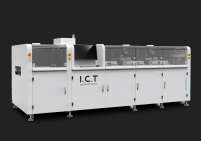
Wave soldering is commonly used in double-sided boards where bottom-side SMT components are soldered after the top-side components have been placed. In this process, glue dots hold components in place, and the wave applies molten solder to the joints. Since no solder paste is used on the bottom side, there is no need for SPI to inspect the paste, as no paste printing occurs.
Selective soldering is used for components that require precise soldering, often in mixed-technology boards with both through-hole and SMT components. In these applications, solder is applied only to specific joints using mini-waves or fountains, bypassing the need for paste printing altogether. As a result, SPI is not needed for these applications.
For applications that require high mechanical strength and reliability, such as in the automotive or aerospace industries, conductive adhesives or press-fit connections are commonly used. These methods do not require solder paste and therefore eliminate the need for SPI. In these cases, the reliability of the joints is ensured through other means, and the risk of defects due to paste variations is negligible.

Designs that consist primarily of large passive components (1206 or larger) placed on wide pads are inherently forgiving when it comes to paste variations. Manual or semi-automated printing typically does not cause significant defects, and paste volume or alignment errors are less likely to lead to functional issues. This makes SPI unnecessary for these designs, even in low-volume runs.
Boards with a low component density and oversized pads offer a wide process window for printing paste. Minor variations in paste volume or alignment do not typically result in opens or shorts. These layouts are forgiving and allow for reliable assembly without the need for SPI.
In simpler boards with low-density components and wide pads, operators can visually inspect the solder paste after it has been applied. Magnified visual checks can easily catch gross defects, such as missing paste or severe bridging. Post-reflow visual or functional testing can provide final assurance that the board is functioning correctly, making SPI unnecessary.

While skipping SPI may be acceptable for certain designs and volumes, it comes with the risk of undetected defects. For example, insufficient paste volume can lead to weak solder joints that may pass initial functional tests but fail later under stress. Hidden defects such as head-in-pillow or voids may not be visible to the naked eye and can only be detected with 3D measurement, which SPI provides.
Skipping SPI can lead to increased risks of latent solder joint failures, especially in high-reliability applications such as medical devices, aerospace, or automotive products. Even small risks can compromise the long-term performance of critical products. For these sectors, SPI is recommended to ensure that solder joints meet the required quality standards.
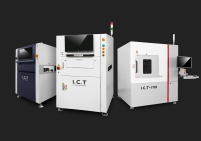
As designs incorporate finer component pitches and higher densities, the risk of paste-related defects increases significantly. Industry data shows that 60-80% of SMT defects are related to paste printing issues. In complex designs, skipping SPI often leads to higher defect rates and increased rework. As a result, SPI is essential for ensuring quality and minimizing costly mistakes, even in lower-volume runs. For a comprehensive guide on SPI machines and their role in SMT lines, check out our Complete Guide to SPI Machines in SMT Line.

In general, SPI is essential for ensuring high-quality solder joints in modern SMT production. However, there are several scenarios where it can be skipped safely, such as ultra-low volume prototyping, through-hole dominant boards, non-reflow processes, or extremely simple large-pitch designs. While skipping SPI can reduce costs and speed up production in these cases, it also carries risks, including the potential for hidden defects and long-term reliability concerns. In most modern SMT production environments, especially those involving complex designs, SPI is a valuable tool that helps improve yields and reduce rework.
Yes, but rarely. SPI is essential for detecting paste volume, height, and alignment issues, which account for 60-80% of SMT defects. However, pure through-hole boards, hand-soldered prototypes, and simple large-pitch designs can often be produced without SPI.
While production volume is a factor, the complexity of the board is more important. Low-volume prototyping often skips SPI, but mid-volume (50-500 boards) and high-volume (>500 boards) production generally benefit from SPI, especially with fine-pitch components.
Higher complexity increases the likelihood of defects related to paste volume and alignment. Fine-pitch and high-density boards require precise paste application, making SPI essential. Simple, large-pitch designs have a wider tolerance and can often succeed without SPI.
Manual inspection can catch gross defects like missing paste or severe bridges but cannot accurately measure small variations in paste volume that can lead to latent failures. For low-volume runs, manual inspection combined with functional testing can often suffice for non-critical applications.
Yes, alternatives include syringe dispensing with visual checks, pin-in-paste reflow, conductive adhesives, and first-piece height.
Contact our SMT experts to find the best inspection strategy customized to your needs.