English
Views: 0 Author: Site Editor Publish Time: 2026-07-15 Origin: Site
When comparing JUKI and Europlacer, most manufacturers are not simply looking for the fastest placement machine—they're trying to determine which platform will generate the best long-term return on investment.
A factory producing millions of identical PCB assemblies each year has very different priorities from an EMS provider managing hundreds of low-volume product variants. Choosing the wrong SMT platform can lead to longer changeovers, unnecessary engineering costs, inefficient feeder utilization, and limited scalability as production requirements evolve.
Although both JUKI and Europlacer serve the SMT industry, they are built around different manufacturing philosophies.
JUKI focuses on balancing speed, flexibility, and cost efficiency across a wide range of production environments, particularly high-mix, mid-volume manufacturing, while emphasizing optimized SMT/THT workflows and long-term equipment value.
Europlacer, by contrast, positions software, intelligent feeder management, and digital connectivity as the drivers of productivity in modern high-mix manufacturing, arguing that flexibility and software increasingly outweigh raw placement speed.
Instead of asking:
Which machine is better?
Manufacturers should ask:
Which platform fits my production model?
Which system minimizes engineering time?
Which solution delivers the lowest total manufacturing cost?
Which platform supports future smart factory expansion?
This guide compares JUKI and Europlacer across production efficiency, software, feeder technology, automation, ownership costs, and application scenarios to help you choose the right SMT solution for your factory in 2026.
If your factory mainly produces medium- to high-volume electronic assemblies while seeking an excellent balance between performance, flexibility, and investment cost, JUKI is often the stronger choice.
If your business specializes in high-mix, low-volume production where engineering efficiency, software, and rapid product changeovers are critical, Europlacer generally provides greater long-term value.
Neither platform is universally better. The right decision depends on production strategy rather than machine specifications alone.
Europlacer, founded in 1970 and based in the United Kingdom, has earned a solid reputation as a reliable and innovative manufacturer of SMT machines. The company is known for its commitment to producing equipment that combines flexibility, precision, and user-friendliness. Over the decades, Europlacer has built strong relationships with customers worldwide by focusing on modular designs and backward-compatible systems, ensuring that new machines work seamlessly with previous models. This approach has earned Europlacer respect in industries requiring high-mix, complex PCB assembly.
Europlacer offers a comprehensive range of SMT machines tailored to various production needs:
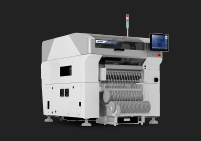
Lineo+: A flexible, high-capacity pick-and-place machine designed for high-mix production runs. It supports large PCB sizes up to 1610 mm x 600 mm and offers a peak placement speed of approximately 30,000 components per hour (CPH).
Li-A1 and Li-A2: Compact pick-and-place models ideal for smaller production spaces or lower volume runs, maintaining high precision and ease of use.
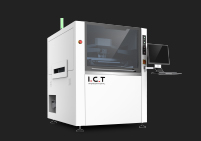
Screen Printers: Including longboard printers and high-flexibility models suitable for precise solder paste application on diverse PCB sizes.
SMT Storage Solutions: Both semi-automatic and fully automated storage units designed to streamline material handling and reduce downtime.
These models cover a broad spectrum from compact lines to complex, high-speed production environments.
Europlacer machines stand out due to several cutting-edge features:
Intelligent Feeders: These feeders automatically recognize component types and adjust settings accordingly, reducing manual setup time and errors.
Dual Rotary Heads with Intelligent Nozzles: Enhance placement speed and accuracy by allowing simultaneous multi-component handling and adaptive nozzle control for various part sizes.
Software Suite ii-4.0: A powerful, user-friendly software platform that integrates machine control, production monitoring, and data analytics. It supports Industry 4.0 standards, enabling smart factory integration and real-time performance tracking.
Backward Compatibility: New machines maintain compatibility with older feeders and software, protecting existing investments and simplifying upgrades.
Europlacer machines excel in handling high-mix production scenarios where frequent changeovers and diverse component types are common. Key aspects include:
High Feeder Capacity: The Lineo+ model offers one of the largest feeder slot counts in the industry, minimizing downtime during product changes.
Large PCB Size Handling: Ability to accommodate oversized boards supports complex assemblies like automotive or industrial control systems.
Modular Design: Enables customization of machine configurations to match specific production requirements, from speed-focused to precision-oriented tasks.
Ease of Changeover: Intelligent feeders and software make switching between product types faster and less error-prone, ideal for contract manufacturers or R&D environments.
This flexibility supports manufacturers aiming to balance productivity, quality, and cost-effectiveness in diverse assembly lines.
Tip: When considering Europlacer SMT machines, evaluate your production mix and feeder requirements carefully to leverage their high feeder capacity and intelligent feeder technology for efficient high-mix manufacturing.
JUKI’s RX-8 model leads in placement speed, capable of up to 100,000 components per hour (CPH). This high throughput suits large-scale, high-volume production environments. Europlacer’s Lineo+ offers a peak speed near 30,000 CPH, which is slower but still competitive for many applications. However, Europlacer focuses on flexibility and high-mix production rather than sheer speed. Its dual rotary heads and intelligent nozzles optimize placement efficiency, especially when handling diverse component types.
Both brands deliver excellent placement accuracy. JUKI claims ±0.04 mm precision on the RX-8, supported by advanced vision systems and linear encoders. Europlacer achieves similar precision levels, often around ±0.04 mm to ±0.05 mm, leveraging dual rotary heads and adaptive nozzle technology. This precision ensures reliable solder joints and reduces rework rates, critical for fine-pitch and complex boards.
Europlacer machines excel in flexibility. The Lineo+ supports large PCBs up to 1610 mm × 600 mm, accommodating oversized and complex boards. Its high feeder slot count also suits high-mix production with frequent changeovers. JUKI machines handle a wide range of PCB sizes too, with the RX-8 supporting boards from 50×50 mm up to 510×450 mm. JUKI’s modular design allows customization but generally targets medium to large boards rather than ultra-large formats.
JUKI machines, especially high-speed models like RX-8, tend to have a higher upfront cost due to advanced speed and precision features. Maintenance costs are moderate, thanks to robust build quality and user-friendly software that reduces downtime. Europlacer machines may have a lower initial investment for flexible, mid-speed models, making them attractive for high-mix, lower-volume producers. Their intelligent feeders and backward compatibility reduce long-term costs by protecting existing investments and simplifying upgrades.
JUKI offers user-friendly software that simplifies programming and operation, speeding setups and minimizing errors. It integrates well with production lines but may require more training for complex configurations. Europlacer’s ii-4.0 software suite stands out for its comprehensive control, real-time monitoring, and Industry 4.0 compatibility. It supports smart factory integration and data analytics, helping manufacturers optimize throughput and quality.
Tip: When choosing between JUKI and Europlacer SMT machines, prioritize your production needs: opt for JUKI for ultra-high-speed, high-volume runs and Europlacer for flexible, high-mix assembly with advanced software integration.
Many buyers assume that a lower purchase price automatically results in a lower production cost. In reality, the cost-effectiveness of an SMT platform is determined by how efficiently it supports daily manufacturing over its entire service life.
A truly cost-effective SMT solution should reduce:
Engineering hours
Product changeover time
Machine downtime
Maintenance costs
Component placement errors
Operator training requirements
Future upgrade expenses
This is why two machines with similar purchase prices can generate significantly different returns over five to ten years.
When selecting an SMT machine, several critical factors influence performance, efficiency, and cost-effectiveness. Understanding these helps you pick a machine that aligns perfectly with your production goals.
Speed matters, especially in high-volume production. Machines like JUKI’s RX-8 reach up to 100,000 components per hour, ideal for mass manufacturing. Europlacer’s Lineo+ offers about 30,000 CPH but shines in flexibility for varied production runs. Accuracy is equally vital—both brands deliver ±0.04 mm precision, ensuring components fit perfectly and reducing defects. Assess your production volume and quality standards to balance speed and precision.
Feeder slots hold components before placement. More slots mean less downtime during changeovers, crucial for high-mix manufacturing. Europlacer’s Lineo+ boasts one of the largest feeder capacities, easing frequent product switches. JUKI machines support flexible modular feeder setups but generally cater to medium-mix environments. Consider your product variety and changeover frequency to choose the right feeder capacity.
Positioning systems guide component placement. Linear encoders, used by JUKI, provide the highest precision by measuring exact component positions. Europlacer’s dual rotary heads with intelligent nozzles adapt placement dynamically, balancing speed and accuracy. Machines with advanced positioning reduce errors and rework. Evaluate the positioning technology to ensure it meets your board complexity and component size needs.
Software controls machine operation and integration. JUKI offers user-friendly interfaces that simplify programming and reduce setup times. Europlacer’s ii-4.0 suite adds smart factory capabilities, real-time monitoring, and data analytics, enhancing production insights. Easy-to-use software speeds training and lowers operator errors. Check for compatibility with your existing systems and the availability of offline programming tools.
Reliable machines minimize downtime. JUKI’s robust build quality and intuitive software help reduce maintenance frequency and complexity. Europlacer emphasizes backward compatibility and intelligent feeders that simplify upkeep and protect investments. Regular maintenance schedules—daily checks, weekly cleaning, quarterly inspections—are essential. Choose a machine known for durability and accessible support to ensure smooth long-term operation.
Tip: Match your SMT machine choice to your production mix and volume by prioritizing feeder capacity and software ease for high-mix lines, or speed and precision for high-volume runs.
Both JUKI and Europlacer integrate advanced placement technologies to boost efficiency and precision. JUKI’s high-speed models often feature multi-head systems, allowing the machine to place several components simultaneously. This reduces cycle time and increases throughput, especially in high-volume environments. Europlacer’s dual rotary heads paired with intelligent nozzles provide adaptive handling of various component sizes and shapes. These intelligent nozzles adjust suction and placement force dynamically, ensuring delicate parts are placed without damage and improving overall accuracy.
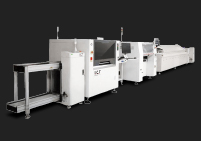
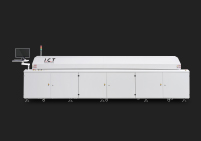
Smooth integration across the SMT line is vital for maximizing productivity. JUKI offers modular solutions that connect pick-and-place machines with screen printers and reflow ovens, creating a cohesive production flow. Their systems often include synchronized software to coordinate timing and reduce bottlenecks. Europlacer also emphasizes line integration, providing compatible screen printers and automated storage units that work seamlessly with their pick-and-place machines. This holistic approach minimizes manual handling, cuts cycle times, and improves yield.
Efficient material management is key to reducing downtime and errors. Europlacer stands out with its automated storage solutions, including semi-automatic and fully automated feeders and component storage systems. These reduce manual feeder changes and speed up changeovers in high-mix production. JUKI offers flexible feeder systems that can be configured for various component types and sizes, supporting quick feeder swaps and replenishment. Both brands focus on reducing operator intervention, which helps maintain steady production flow and reduces human error.
Modern SMT machines must align with energy-saving goals and smart factory trends. Europlacer’s ii-4.0 software suite supports Industry 4.0 standards, enabling real-time monitoring, predictive maintenance, and data-driven decision-making. This connectivity helps optimize energy consumption and machine uptime. JUKI machines also incorporate energy-efficient designs, with features such as low-power standby modes and optimized motion control to reduce electricity use. Both brands prioritize sustainability while enhancing machine intelligence and connectivity for future-ready manufacturing.
Tip: When evaluating SMT machines, consider advanced placement tech, seamless line integration, and smart material handling to boost productivity and support Industry 4.0 goals.
When evaluating SMT equipment, many purchasing teams focus only on machine specifications and quotation prices. However, the largest expenses often appear after installation.
Common hidden costs include:
Additional feeder investment
Software licensing
Spare parts inventory
Operator training
Preventive maintenance
Production downtime
Future capacity expansion
Evaluating these factors provides a more accurate picture of total ownership cost than comparing equipment prices alone.
JUKI SMT machines serve a broad range of industries that demand speed, precision, and reliability. In consumer electronics, manufacturers rely on JUKI’s RX-8 and RX-6 models to assemble smartphones, tablets, and wearables efficiently. The automotive sector uses JUKI machines for electronic control units and sensor assemblies, where accuracy and durability are critical. Medical device makers appreciate JUKI’s ability to place tiny, complex components for diagnostic and monitoring equipment. Telecommunications companies depend on these machines to produce networking devices, while industrial equipment producers use JUKI for control system boards. These machines help streamline production, reduce errors, and maintain high throughput across these varied sectors.
Europlacer excels in environments requiring frequent product changeovers and diverse component types. For example, a contract manufacturer specializing in automotive electronics adopted the Lineo+ model to handle complex, large PCBs with over 300 feeder slots. This setup enabled rapid switchovers between different product variants, reducing downtime by 25%. Another case involved a telecommunications firm using Europlacer’s intelligent feeders and ii-4.0 software to optimize production scheduling and component tracking. This integration led to a 15% increase in line efficiency and improved traceability. These cases demonstrate Europlacer’s strength in flexible, high-mix assembly, enabling manufacturers to meet varied customer demands without sacrificing quality.
Customers praise JUKI for its unmatched placement speed and precision, noting significant gains in production volume. One electronics manufacturer reported a 30% reduction in rework rates after switching to JUKI’s RX-8, thanks to its advanced vision system. Maintenance teams appreciate the modular design, which simplifies repairs and reduces downtime. Europlacer users highlight the ease of changeover and intelligent feeder technology, which cuts setup time and lowers labor costs. The ii-4.0 software’s real-time monitoring helps identify bottlenecks early, saving costs related to production delays. Both brands receive positive reviews for reliability and support, though JUKI tends to be favored for high-volume runs, while Europlacer suits complex, variable production.
Both JUKI and Europlacer SMT machines contribute to higher yields by combining precise component placement with intelligent process control. JUKI’s linear encoders and vision systems minimize placement errors, reducing defects and rework. Europlacer’s dual rotary heads and adaptive nozzles handle diverse parts gently and accurately, maintaining solder joint integrity. Their software platforms enable real-time quality checks and traceability, allowing quick detection and correction of issues. Automated feeder management reduces component misfeeds, which can cause defects. Together, these features ensure consistent assembly quality, higher first-pass yields, and ultimately, lower manufacturing costs.
Tip: When evaluating SMT machines, consider industry-specific case studies and customer feedback to gauge how each brand’s strengths align with your production goals and cost-saving targets.
JUKI SMT machines excel in ultra-high-speed placement with exceptional precision, ideal for large-scale production. Europlacer offers superior flexibility and high-mix capabilities, perfect for varied and complex assemblies. Choosing the right machine depends on your production volume and component diversity. Future SMT technology will focus on smarter integration and efficiency. Dongguan ICT Technology Co.,Ltd. provides these advanced solutions, delivering value through reliable, precise, and adaptable SMT machines tailored to diverse manufacturing needs.
Yamaha is often selected for large-scale, high-volume manufacturing because of its strong placement speed and mature automation solutions. JUKI, however, provides an excellent balance of productivity, flexibility, and investment cost, making it attractive for manufacturers that handle both medium-volume and mixed-product production. At SMT Factory, we recommend comparing production volume, PCB complexity, and long-term operating costs before deciding between the two platforms.
Europlacer is known for its intelligent feeder management and flexible production capabilities, while Mycronic is widely recognized for advanced programming software and engineering efficiency. If your factory frequently introduces new PCB designs or manages hundreds of product variants, software workflow and changeover efficiency should be evaluated alongside placement speed. SMT Factory helps customers compare both platforms based on actual production requirements.
Yes. Many electronics manufacturers successfully operate mixed-brand SMT production lines.
Integrating JUKI and Europlacer equipment is technically feasible when feeder management, production planning, inspection systems, and MES connectivity are properly coordinated. Rather than focusing on brand consistency, manufacturers should ensure that the overall production line supports efficient scheduling, balanced throughput, and simplified maintenance to maximize equipment utilization.
The answer depends on how your factory plans to grow.
JUKI offers scalable solutions suitable for manufacturers gradually increasing production capacity while maintaining cost efficiency. Europlacer emphasizes modular software, intelligent feeder management, and flexible manufacturing that adapts well to changing product portfolios. Before investing, manufacturers should evaluate expected production growth, product diversity, and future automation goals. At SMT Factory, we often recommend considering five- to ten-year expansion plans rather than current production volume alone.
A used SMT machine can reduce initial investment, but it is not always the lowest-cost option.
Beyond the purchase price, buyers should evaluate machine condition, software version, maintenance history, feeder compatibility, spare parts availability, and technical support. An older machine with limited software upgrades or difficult-to-source components may generate higher operating costs over time. SMT Factory helps customers assess both new and pre-owned equipment to identify the solution that offers the best long-term return on investment.
SMT Factory provides application-focused recommendations instead of promoting a single brand.
Our engineering team evaluates PCB complexity, annual production volume, product mix, automation objectives, budget, and future expansion plans before recommending suitable SMT solutions. By comparing brands such as JUKI, Europlacer, Yamaha, FUJI, ASM, Panasonic, and Mycronic against real production requirements, we help manufacturers reduce investment risk and improve long-term manufacturing efficiency.
The lowest purchase price does not always translate into the lowest long-term cost.
Total Cost of Ownership (TCO) includes equipment investment, feeder costs, software licensing, maintenance, spare parts, engineering efficiency, operator training, and production uptime. A machine with a higher initial price may deliver a better ROI if it reduces changeover time, improves productivity, or lowers maintenance expenses. SMT Factory recommends evaluating TCO over a five- to ten-year operating period rather than focusing solely on the initial quotation.
The most important factor is whether the machine matches your production strategy.
While placement speed and accuracy are important, buyers should also compare engineering efficiency, feeder management, software capabilities, smart factory integration, maintenance requirements, and scalability. A platform that aligns with your product mix and future growth plans will usually provide greater value than one chosen based only on technical specifications. At SMT Factory, we encourage manufacturers to evaluate the complete production ecosystem before making a final investment decision.