English
Views: 0 Author: Site Editor Publish Time: 2026-03-06 Origin: Site
You play a vital role in electronics manufacturing when you select coating and dispensing equipment. Your choices impact not just yield, but also the long-term reliability and cost of your PCBA production. For example, thermal cycling and salt spray testing show that equipment must ensure coatings withstand temperature changes and resist corrosion. Reliable machines help you achieve strong adhesion and protect against humidity and vibration, which is essential for producing durable products.
You can boost your estimated yield by choosing the right coating and dispensing equipment. These machines help you apply protective coatings to your printed circuit board assemblies with high accuracy. When you use automated systems, you reduce mistakes and keep your process steady. This leads to fewer defects and higher estimated yield. The table below shows how these machines improve your results:
Mechanism | Description |
|---|---|
Precision | The dispensing head uses pre-programmed routines to apply coating only where needed, ensuring clean boundaries. |
Efficiency | Automation reduces the need for manual masking, thus improving production throughput significantly. |
Consistency | Automated processes ensure uniform coating thickness and coverage, adhering to industry standards. |
Material Savings | On-demand dispensing reduces waste of conformal coating materials. |
You see these benefits in your daily operations. Precision means you avoid coating areas that do not need protection. Efficiency lets you finish more boards in less time. Consistency ensures every board meets your quality standards. Material savings help you control costs and improve your estimated yield.
If you select the wrong coating and dispensing equipment, your estimated yield can drop quickly. Machines that lack accuracy or speed can cause uneven coating or missed spots. This leads to rework, scrap, and higher costs. You may also see problems with placement quality if your equipment cannot handle different board sizes or shapes. Poor placement can result in weak protection, which affects the reliability of your products.
You must also consider how equipment interacts with other steps in your process. For example, if your cleaning or depaneling steps leave residue or rough edges, your coating may not stick well. This can lower your estimated yield and hurt your reputation for quality. Always match your equipment to your production needs and board types to avoid these risks.
Placement quality is a key factor in your estimated yield. You want every placement of coating to be accurate and repeatable. Good process control helps you reach this goal. You can use several methods to keep your placement quality high:
Viscosity stabilization keeps your coating material at the right thickness for smooth placement.
Precise coating application uses robotic systems to place coatings exactly where you need them.
Inspection and verification systems check each placement in real time, so you catch errors before they affect your estimated yield.
You should also pay attention to cleaning and depaneling before coating. Clean surfaces and smooth edges help your coating stick better. This improves both placement quality and estimated yield. When you combine strong process control with the right equipment, you get reliable placement and better results for every board.
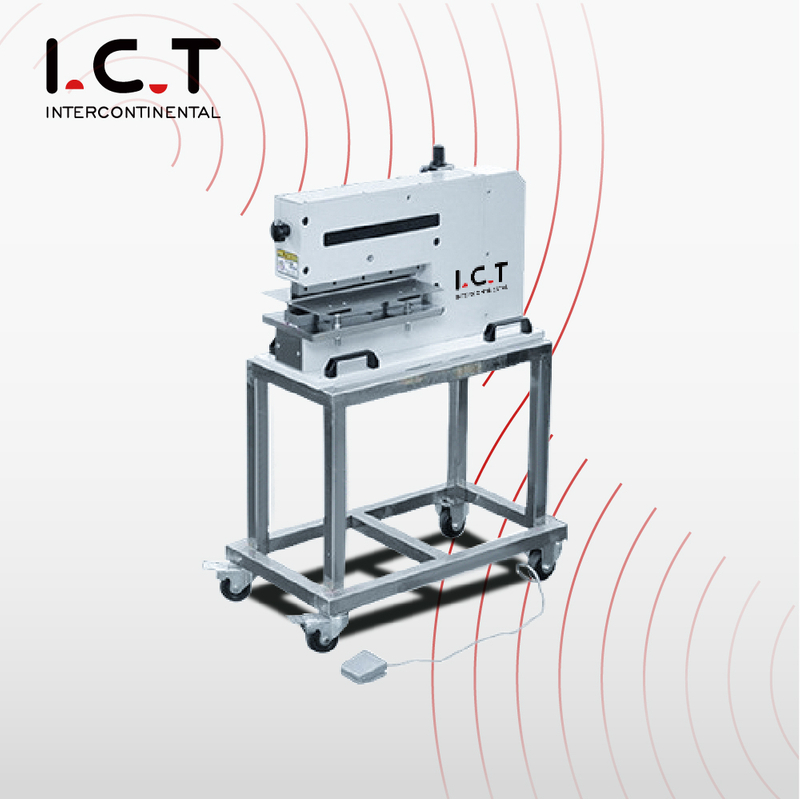
You rely on depaneling machines to separate PCBs cleanly and efficiently. The I.C.T PCB Depaneling Machine stands out as a tool that boosts placement quality and yield. It uses advanced V-Cutting and router technology to minimize burrs and protect delicate components. When you use precise depaneling, you see improvements in probe accuracy, mechanical stability, and solder joint reliability. The table below shows how depaneling machines enhance your production outcomes:
Key Findings | Improvement |
|---|---|
Reduction in strain during ICT | 35% |
Improvement in probe accuracy | 22 µm |
Reduction in rework | 12% |
Increase in first-pass yield (FPY) | 3–5% |
Cp/Cpk indices improvement | 1.33 → 1.57 |
Mechanical stability and alignment | Enhanced |
Solder joint reliability | Improved |
Overall yield and long-term reliability | Increased |
You must minimize mechanical stress during depaneling to protect your assemblies. Mechanical routing and sawing can create dust and particles that contaminate your boards. Burrs and debris increase the risk of reliability failures. Laser depaneling offers a contactless method that eliminates tool wear and debris, giving you a clean process. This method reduces mechanical stress and helps maintain the integrity of high-reliability electronics.
To further reduce PCB damage, you can follow these strategies:
Use dust extraction systems during router depaneling.
Minimize vibrations by securing panels properly.
Ground equipment to avoid static discharge.
Design panels with depaneling in mind, placing V-cuts away from sensitive components.
Optimize tab design and placement.
Use fixtures and supports to hold panels securely.
Slow down mechanical processes to reduce vibration and stress.
Consider non-contact methods like laser depaneling.
You achieve the best results when you integrate depaneling and coating equipment seamlessly. DFM-driven panel design helps you set clear guidelines early in the process. You optimize utilization by maximizing panel fill before fabrication, which reduces waste. Automation-ready panels allow you to streamline SMT, testing, and depaneling. Efficient layouts prevent wasted board material and reduce manual handling. Proper depaneling ensures your boards stay free from stress and breakage, supporting downstream coating and dispensing for higher yield and reliability.
Tip: Plan your panel design and depaneling process together to ensure smooth integration with coating and dispensing steps.
You need to understand the technology types available for coating and dispensing equipment. Automated robotic dispensing uses vision technology to apply coatings with precision. Vacuum coating processes remove air from gaps, which helps you achieve uniform coverage on high-density boards. Dip coating optimization gives you consistent thickness, even when boards have different heights. Selective coating techniques use specialized nozzles for pinpoint accuracy, which is important for compact designs. Needle-style dispensers target areas as small as 0.1 mm, preventing overspray and improving quality. Vision-guided systems adjust in real time, detecting component edges and ensuring precision. SimpleCoat from SW Systems handles various coating materials and maintains repeatability, which protects fine pitch components.
You must evaluate compatibility with your production line. The table below shows key features:
Feature | Details |
|---|---|
Quick Changeover | Changeover time less than 30 minutes |
PCBA Size Compatibility | Supports sizes from 50mm × 50mm to 450mm × 450mm |
Coating Types | Acrylic, silicone, and urethane coatings |
Check conveyor compatibility, footprint, and software connectivity. Request a live demo using your actual PCB and coating material. Assess the suitability of coating materials and possible chemical interactions. These steps help you maintain high quality and avoid issues.
You must use effective quality control systems to monitor coating and dispensing processes. UV inspection checks coverage quickly, but not all coatings have fluorescent properties. Automated optical inspection gives you high accuracy and repeatability, which is ideal for mass production. Thickness measurement techniques provide quantitative data for process control. Choose non-destructive methods for ongoing quality checks.
Comprehensive traceability records every component, enabling precise recalls and analysis. Intelligent material management prevents incorrect materials from entering the line. Real-time process monitoring and feedback integrate test data and trigger alerts for abnormal defect rates. Paperless production ensures workers use the latest revisions. Smart control systems detect deviations in real time, allowing immediate adjustments. This leads to fewer defects and higher customer satisfaction. Precision dispensing ensures uniform application, resulting in fewer quality failures. Stronger moisture barriers and longer storage stability contribute to overall quality.
Modern coating and dispensing systems adapt to different PCB types and production volumes. Automation, precision, and modularity make these systems flexible. Integration into interconnected production lines supports real-time data collection and process optimization. Increased automation and robotic integration enhance flexibility, especially in customized environments. Modular designs allow quick reconfiguration to meet varying demands.
You must consider the flexibility of the equipment, which depends on the material used. Material viscosity changes with temperature, so you need a conformal coat that maintains viscosity in varying environments. Understand material characteristics, curing, and integration issues. Production throughput requirements influence your choice of coating method. Board design requirements, such as connectors and sensitive components, affect the process. Assess equipment based on the frequency of coating needs. Pre-coating processing, like masking, prevents unintentional coating. Quality requirements dictate the need for more automated and reliable application methods for critical electronics.
Tip: Collaborate with knowledgeable manufacturers to ensure your equipment meets your quality standards and adapts to your PCB applications.
You must weigh the costs of pcb assembly equipment against the benefits for your production. Initial investment can seem high, especially for automation and advanced assembly tools. However, you gain efficiency and reduce defects in every production cycle. When you use pick-and-place machines, solder paste application, and smt inspection equipment, you lower dpmo and improve fpy. You also decrease reflow soldering defects and minimize waste. The overall cost of placement drops as you streamline assembly and boost production speed. You see fewer defects during solder paste printing and reflow, which means less rework and higher first pass yield.
Note: Investing in quality pcb assembly equipment helps you meet quality standards and reduces defects in every assembly step.
You should focus on the long-term value of your investment. Automation requires upfront costs, but you save money over time. You cut labor costs and improve production efficiency. You also see fewer defects and higher fpy. Your assembly process becomes more reliable, and you achieve better dpmo rates. The overall cost of placement stays low as you maintain consistent production quality. You get more value from your investment as you reduce defects and improve production outcomes. Your manufacturing operation benefits from stable assembly and fewer defects in reflow and solder paste printing.
Investment Factor | Short-Term Impact | Long-Term Impact |
|---|---|---|
Upfront costs | High | Offset by savings |
Defects | Reduced | Minimized |
Production efficiency | Improved | Sustained |
fpy | Increased | Maintained |
dpmo | Lowered | Stable |
You must consider reliability and maintenance when choosing pcb assembly equipment. Reliable machines keep your production running smoothly. You avoid unexpected downtime and reduce defects in assembly. Regular maintenance ensures your pick-and-place process, reflow, and inspection systems work at peak efficiency. You protect your investment by keeping assembly tools in good condition. You also maintain high fpy and low dpmo. Your production stays consistent, and you meet quality standards every time. You see fewer defects in reflow and solder paste printing, which helps you control costs and improve overall cost of placement.
Tip: Schedule routine maintenance for all pcb assembly equipment to prevent defects and maximize production efficiency.

You need to assess coating and dispensing equipment carefully before making a purchase. Start by reviewing the compatibility of each machine with your PCB types and production volumes. Check if the equipment supports the materials you use and fits your process requirements. Request demonstrations using your actual boards and coatings. Look for features like quick changeover, easy maintenance, and reliable automation. Consider the supplier’s reputation and after-sales support. Compare models based on throughput, precision, and integration with your existing line. Ask for references from other manufacturers who use similar equipment.
You can maximize PCBA yield and placement quality by following proven best practices. Cleaning no-clean flux residue is essential for long-term reliability. Removing contaminants like ink and fingerprints prevents solder ball formation and improves coating adherence. A clean surface also makes inspection easier.
Best Practice | Description |
|---|---|
Design Optimization | Enhance PCBA design to improve yield and placement quality. |
Process Optimization | Streamline manufacturing to reduce defects and boost efficiency. |
Quality Control Measures | Apply rigorous checks to maintain high standards throughout production. |
Supplier Collaboration | Work closely with suppliers to ensure quality materials and components. |
Employee Training | Train staff to improve skills and knowledge in PCBA manufacturing. |
Root Cause Analysis | Analyze defects to find and eliminate their causes, improving yield. |
Data Analytics | Use data to monitor processes and identify areas for improvement. |
Continuous Improvement Initiatives | Foster a culture of ongoing improvement to adapt and enhance quality. |
Tip: Clean every board thoroughly before coating to ensure strong adhesion and reliable performance.
You can avoid many problems by paying attention to common pitfalls during equipment implementation:
Use materials compatible with your adhesives to prevent unwanted reactions.
Choose black or opaque fluid lines to protect adhesives from light exposure.
Purge fluid lines after replacing containers to remove air bubbles.
Select the right pressure pot based on fluid viscosity.
Keep air pressure below 30 psi to avoid dissolving air in adhesives.
Use shorter and wider fluid lines to reduce bubble formation.
Avoid pumps that produce high shear, which can cause clogging.
Test valves for compatibility with light-curable materials.
Note: Careful planning and regular checks help you prevent defects and maintain high yield.
You can achieve higher PCBA yield and better placement quality by choosing the right coating, dispensing, and depaneling equipment. Strategic equipment selection improves both your manufacturing efficiency and your financial results. Equipment Cost Efficiency (ECE) gives you a clear way to measure how your choices affect productivity and costs.
Automated Optical Inspection and X-ray lower escape rates and boost product integrity.
Flying probe testing supports agile development for prototypes.
In-circuit testing works best for high-volume production.
Company Name | Description | Outcome |
|---|---|---|
Hella Electronics Corporation | Used cobots for automation | Cut setup time from weeks to days |
FCC (Adams) | Improved reporting in clutch manufacturing | Increased cost-efficiency and simplified processes |
JR Machine | Added automation in limited space | Reduced setup and cycle times |
World Wide Fittings | Streamlined with robotic automation | Gained a stronger competitive edge |
Apply these recommendations to your operations. You will see more reliable results and stronger returns.
You get higher accuracy and consistency. Automated systems apply coatings exactly where needed. This reduces defects and saves material. You also improve your production speed and product reliability.
A PCB depaneling machine, like the I.C.T model, separates boards cleanly. You avoid burrs and stress on components. This keeps your boards safe and ready for coating or assembly.
Always check compatibility with your PCB size and coating material. Look for easy maintenance, automation features, and strong supplier support. Request a demo with your actual boards for best results.
You should follow the manufacturer’s schedule. Regular maintenance keeps your machines running smoothly. This prevents unexpected downtime and helps you maintain high yield and quality.