English


Factory Automation in PCB Assembly: How SMT Lines Improve Quality and Production Control
PCB assembly is no longer just a simple production step. For many electronics manufacturers, it has become one of the most important parts of product quality.
A small mistake on the production line can lead to poor soldering, missing components, unstable performance, or field failures. This is why more factories are moving from manual or semi-manual assembly to automated SMT production.
SMT, or Surface Mount Technology, allows electronic components to be placed directly onto the surface of a PCB. It supports smaller components, higher production speed, and better process control. But the real value of SMT is not only speed. A good SMT line helps factories build a more stable and traceable process.
For companies making control boards, power modules, automotive electronics, LED products, industrial devices, or consumer electronics, factory automation in PCB assembly can make daily production much easier to manage.
In PCB assembly, many things happen in a short time.
Solder paste must be printed in the right position. Components must be placed accurately. The board must pass through the reflow oven with a suitable temperature profile. After that, inspection equipment must check whether the board meets the required quality level.
If these steps are handled separately, problems are harder to find. Operators may notice a defect only after many boards have already been produced. By that time, materials, labor, and production time have already been wasted.
Automation helps connect these steps into one controlled process.
A modern SMT line can reduce manual handling. It can also make each process easier to monitor. When equipment is matched properly, the whole line becomes more predictable. This is a big help for factories that need stable output every day.
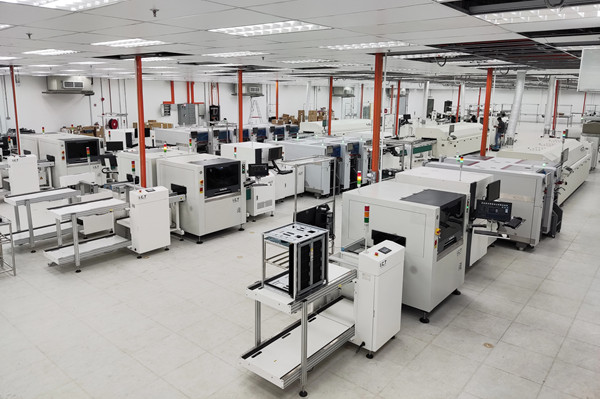
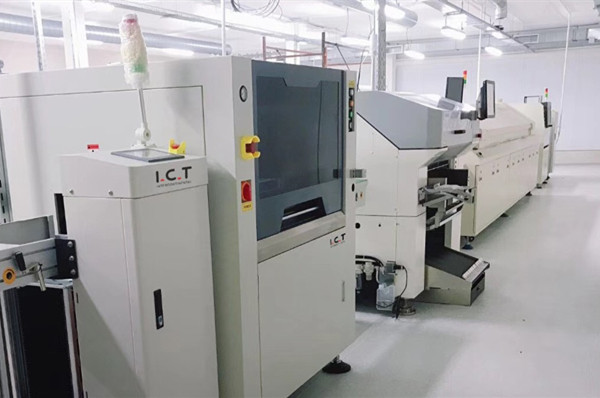
A complete SMT line usually includes several machines. Each one has its own job, but the machines must work together.
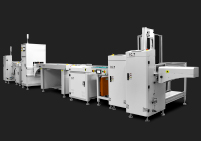
The PCB loader sends bare boards into the production line. It helps keep the feeding process stable and reduces manual contact with the boards.
This step may look simple, but it is still important. If boards are not fed smoothly, the whole line can stop. For high-volume production, stable loading saves a lot of time.
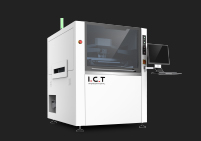
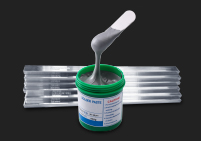
The solder paste printer applies solder paste to the PCB pads through a stencil. This is one of the most important steps in SMT assembly.
Many soldering defects begin here. If the paste is too much, too little, or printed in the wrong position, later machines cannot fully fix the problem.
Good printing depends on stencil quality, pressure, speed, PCB support, and alignment. For this reason, many factories pay close attention to the printer setup.
SPI means Solder Paste Inspection. It checks the solder paste after printing.
This machine can inspect paste height, volume, area, and offset. It helps the factory find printing problems early, before components are placed.
This is useful because early detection is always cheaper than late repair. If the solder paste is wrong, the line can stop and adjust the printing process before more boards are affected.
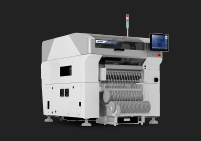
The pick and place machine places components onto the PCB. It is the main machine for SMT assembly.
It needs to handle different component sizes, packages, feeders, nozzles, and placement positions. For modern PCBs, components may be very small and densely packed. This makes accuracy very important.
The placement machine must also match the factory's real production needs. Some factories need very high speed. Others need more flexibility for small and medium batches. The best choice depends on the product type, BOM complexity, and production plan.
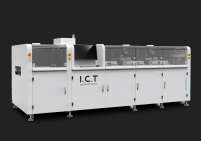
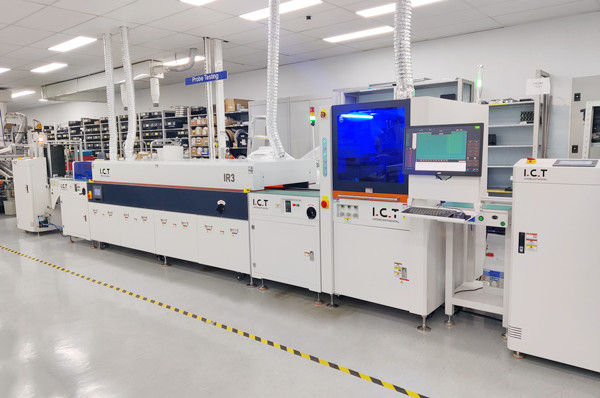
After placement, the PCB enters the reflow oven. The solder paste melts and forms solder joints between components and pads.
A stable reflow process is very important for solder quality. The temperature profile must fit the solder paste, PCB material, board thickness, and component requirements.
If the temperature is not controlled well, the factory may see cold solder joints, tombstoning, voids, or component damage. This is why reflow oven settings should not be guessed. They should be tested and adjusted based on the real board.
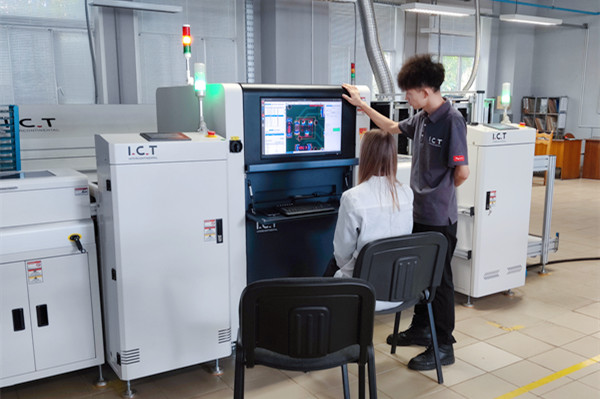
AOI means Automated Optical Inspection. It checks the assembled PCB after reflow.
AOI can detect common defects such as missing parts, wrong direction, offset, poor solder joints, bridging, and polarity issues. It helps operators find problems quickly and improve the process.
For many factories, AOI is not only an inspection machine. It is also a feedback tool. The inspection results can show where the process needs attention.
A good SMT line gives the factory more than assembled boards. It gives the factory useful process information.
When solder paste inspection, placement, reflow, and AOI are connected in one production flow, the factory can understand where problems happen. Operators can respond faster. Engineers can adjust process parameters based on real data.
This is especially important when a factory handles different PCB types.
One day the line may run LED boards. The next day it may run industrial control boards. After that, it may produce power supply boards or automotive electronics. Each product has different sizes, components, soldering needs, and inspection points.
Automation makes changeover more organized. It also reduces dependence on personal experience. Skilled operators are still important, of course. But a stable line helps the team work with clearer standards.
Many factories focus on production speed first. That is understandable. Everyone wants higher output.
But in PCB assembly, speed without control can create bigger losses.
Before mass production, the factory should review the PCB size, panel design, component list, solder paste type, stencil design, feeder plan, inspection standards, and reflow profile. These details affect the final quality.
A practical SMT solution should be planned around the real product, not only around machine specifications.
For example, a factory making simple LED boards may need a different line from a factory making automotive control boards. A factory with high-mix, low-volume production may care more about flexible changeover. A factory with large orders may care more about speed and continuous output.
This is why many manufacturers prefer to work with a supplier that can review the complete production process. I.C.T provides SMT production line solutions for different PCB assembly applications, including machine selection, process discussion, installation, and training support.
The goal is not only to buy machines. The real goal is to build a line that can run smoothly in daily production.
Automation cannot remove every problem. PCB assembly still needs good engineering, good materials, and good production management.
But it can reduce many common issues.
Manual handling can cause scratches, contamination, wrong board direction, or unstable feeding. Automated handling equipment reduces unnecessary contact with the PCB.
This is helpful for products that require clean and stable production.
SPI and AOI allow factories to find problems earlier. Instead of waiting until final testing, the team can see process issues during production.
This reduces rework and helps protect delivery schedules.
A controlled printer and reflow oven can improve soldering consistency. This is important for products used in industrial control, power electronics, and automotive electronics, where reliability matters a lot.
When each process step is monitored, it becomes easier to find the root cause of a defect.
If there is too much solder, the team can check printing. If a component is shifted, they can check placement. If solder joints are weak, they can review the reflow profile.
This makes troubleshooting faster and more practical.
Smart manufacturing does not always mean a very complex factory.
For many electronics manufacturers, it starts with simple improvements. The line should run in a more stable way. Production data should be easier to collect. Operators should find problems faster. Engineers should make decisions based on facts, not guesses.
Some SMT lines can also connect with traceability systems, MES, barcode scanning, and production monitoring. These tools help factories record key production information.
For products that require quality tracking, traceability is very useful. If a quality issue appears later, the factory can check production history and understand which batch, machine, material, or process may be related.
This is becoming more important in automotive electronics, medical electronics, industrial control, and energy products.
There is no single SMT line that fits every factory.
Before choosing equipment, a manufacturer should think about several questions:
What PCB sizes will be produced?
What is the smallest component?
How many different products will run on the line?
What is the expected daily output?
Is SPI required?
Is 2D AOI enough, or is 3D AOI needed?
Will the factory need MES or traceability later?
Is there enough space for a straight line, or does the layout need to be adjusted?
These questions sound basic, but they can prevent many problems later. A well-planned SMT line should fit the product, the building layout, the team, and future growth.
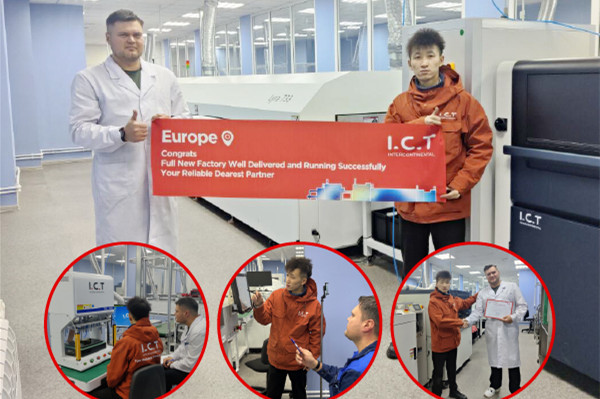
It is also useful to review real production examples before making a decision. Different factories may have different line layouts and process choices. I.C.T shares several PCB assembly project cases that show how SMT, DIP, coating, inspection, and automation solutions are used in real customer factories.
Real cases are helpful because they show how equipment is applied in daily production, not only how it looks in a catalog.
Factory automation in PCB assembly is not just about replacing people with machines. It is about making production more stable, more visible, and easier to control.
A good SMT line helps reduce manual errors. It improves inspection. It supports better soldering quality. It also gives engineers more information to improve the process.
For electronics manufacturers, this can make a real difference. Better process control means fewer defects, smoother delivery, and more confidence in product quality.
As PCB products become smaller, more complex, and more widely used in critical applications, SMT automation will continue to play an important role in modern electronics manufacturing.