English
Views: 0 Author: Site Editor Publish Time: 2023-10-20 Origin: Site
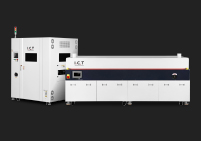
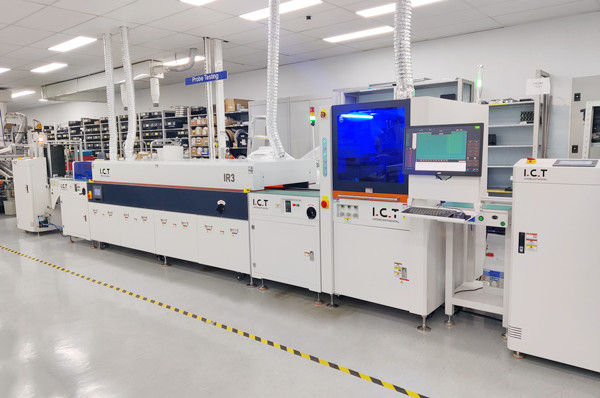
IR (Infrared) Curing Ovens are an increasingly popular industrial choice for heating materials quickly and safely. With its ability to heat any type of material uniformly, an IR Curing Oven can offer remarkable efficiency in operations that involve drying, curing, or preheating many different substrates ranging from plastic and papers to metals, composites, and textiles. In both large and small production facilities as well as research settings, IR curing has shown it can significantly improve product quality while lowering costs. The advantages and purpose of IR Curing Oven are as follows.
Here is the content list:
High thermal efficiency
Quick response time
The versatility of infrared systems
Saving cost and space
One benefit of using an IR Curing Oven is its thermal efficiency in heating the material to be treated. Infrared radiation heats the material directly rather than just surrounding air. This allows the highly localized immediate delivery of energy which makes the drying process much more consistent and predictable compared to other methods such as conduction through hot air. In addition, due to its direct heating method, it requires less energy overall for quicker returns on investment for industrial operations or commercial research projects.
Another advantage of using an IR Curing Oven is its quick response time. This efficient operation drastically reduces wait times without compromising performance or results. For instance, when drying organic paints used during car body repairs, one key concern centers around avoiding potential paint defects such as discoloring or cracking due to prolonged exposure in temperature-sensitive processes like cure cycles or preheating parts before sanding or painting. An infrared curing oven greatly cuts down wait time without sacrificing quality while ensuring a safe environment through reduced safety hazards associated with hotter oven temperatures often required by traditional systems
Notably, the versatility of infrared systems also makes them ideal candidates for smart manufacturing processes where versatility is paramount such as sublimation printing (e.g., apparel decoration), metal thermoforming/molding, composite resin preparation/curing, ribbon wire bonding/insulation coating). Furthermore, since IR Curing Ovens come with integrated near-instantaneous temperature features only what’s needed can be delivered to adaptively fit rapid changes in workflow with minimal latency issues caused by delays in temperature ramp-ups
The cost and space-saving benefits are equally compelling too since smaller designs are available; these enable producers who may have limited floor space to maximize their productivity via mobile solutions while providing higher control accuracy than single-purpose solutions designed specifically for non-stationary work such as customized installation on vehicles processing runs (e.g., food transport trucks). Additionally, due to relatively low running costs associated with lower operational demands IR Curing Ovens become increasingly attractive as everyday furnaces used by automotive stores repairing alloy wheels anodizing hardware components, etc.
In summary, thanks largely due to their high levels of precision localized application while keeping safety and cost-saving measures firmly under consideration and improved throughput – an IR Curing Oven certainly deserves its place among the ranks of today’s top industrial component treatment choices. If you want to know more about IR Curing Oven, welcome to visit the website of I.C.T., our website is https://www.smtfactory.com.